


The 2025 CHL-USHL Prospect Challenge delivered another compelling chapter in the growing rivalry between North America’s top junior hockey leagues, with the U.S. National Team Development Program claiming victory in dramatic fashion. After splitting the first two games, Victor Plante scored the winner at 5:53 of super overtime to give the Americans the series win, evening the score after the CHL swept the inaugural event in 2024. The showcase, held in Calgary and Lethbridge, featured the premier 2026 NHL draft prospects and provided scouts with a crucial evaluation opportunity before the mid-season push.
What stood out most wasn’t just the competitive balance—each side now holds one title in the two-year history—but the specific ways players elevated their games under the bright lights. From undersized forwards dominating to a potential changing of the guard among defensemen, the event offered valuable insights into how these teenagers handle pressure against elite competition.
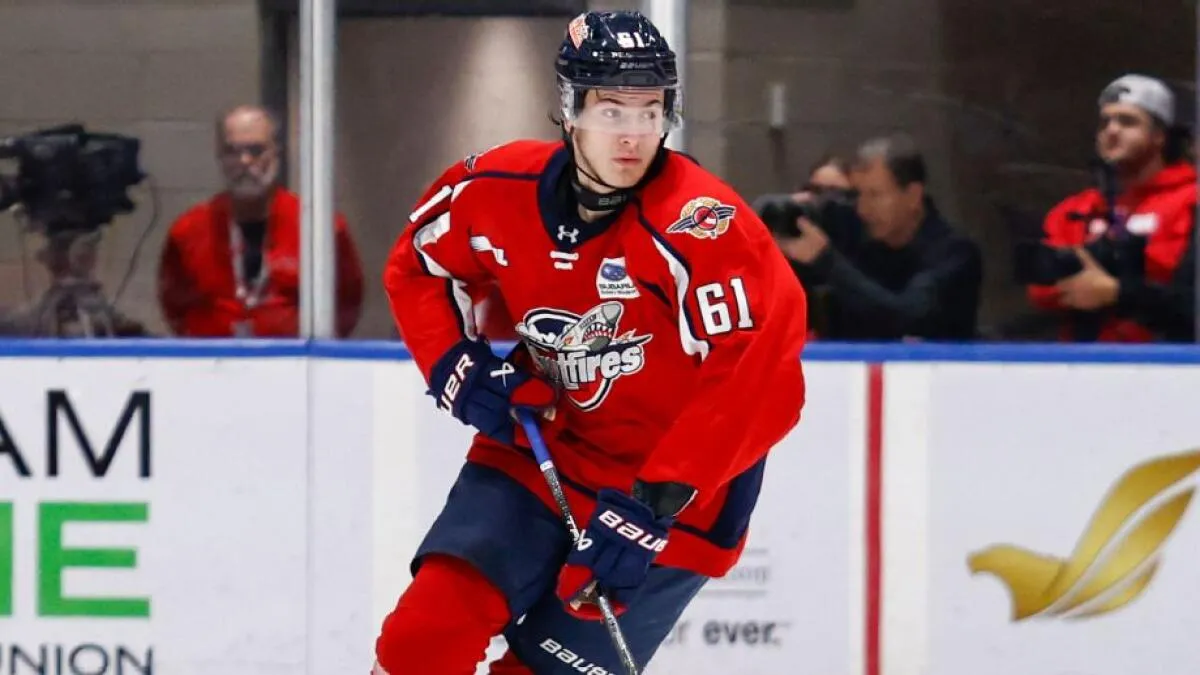
2025 CHL-USHL Prospect Challenge key takeaways: Defensemen steal the spotlight
The conversation about the best defenseman in the 2026 draft class gained serious momentum in Alberta, with several blueliners making compelling cases that this could be the year of the defenseman. The depth and quality on display suggested teams in need of blue-line help should think carefully before trading their first-round picks.
Xavier Villeneuve emerges as potential top blueliner
Xavier Villeneuve was arguably the CHL’s most impactful player throughout the series, despite his 5-foot-11 frame raising traditional size concerns. His elite edgework and skating ability consistently allowed him to escape pressure, beat checkers up ice, and create offense from the back end. What separated Villeneuve was his constant engagement—he was mentally and physically involved from the opening puck drop, even instigating scrums when his team needed energy.
Villeneuve’s playing style drew natural comparisons to Lane Hutson and Quinn Hughes, combining exceptional footwork with an aggressive offensive mindset. While he had occasional miscues, those came from having the puck on his stick so frequently in high-pressure situations. His three shots in the first period of Game 2 and subsequent power-play goal that forced super overtime demonstrated his ability to deliver when it matters most. Many observers now see him as a legitimate contender to be the first defenseman selected in June.
The case for Daxon Rudolph and Carson Carels as reliable defenders
While Villeneuve grabbed headlines with his flashier style, Daxon Rudolph and Carson Carels showcased why reliability and defensive awareness remain invaluable traits. Rudolph, serving as CHL alternate captain, was excellent in both games with smooth puck retrievals on both forehand and backhand. His alert scanning for forecheckers and ability to make quick, accurate passes to beat coverage highlighted his transition game efficiency.
Carels, similarly, won’t “wow” you with high-end skill but his defensive play was arguably the best among all blueliners. He excelled at shutting down opponents on the rush while adding a physical element that surprised many. Both players kept their game simple, avoiding the temptation to overhandle the puck—a common pitfall in showcase events. Their performances have some scouts suggesting they deserve consideration for Canada’s World Junior team, a testament to their two-way dependability.
Chase Reid’s two-way impact fuels debate
Chase Reid entered the challenge with many scouts already projecting him as a potential top-three pick, and his performance did nothing to diminish that excitement. He demonstrated excellent play-reading abilities and showed why few players can match his quick, intelligent decision-making. Reid’s first-game goal came after numerous high-end scoring chances, and his ability to join the rush as a fourth forward without sacrificing defensive responsibilities made him a constant threat.
The debate about who should be the first defenseman drafted now includes at least four legitimate candidates, with Reid’s two-way game giving him a strong argument. His combination of size, skill, and hockey sense represents the complete package that rebuilding teams covet.
Undersized forwards prove size isn’t everything at 2025 CHL-USHL Prospect Challenge
One of the most refreshing narratives to emerge from the series was the dominance of players who don’t fit the traditional size profile. The majority of standout forward performances came from players listed at 6-foot or shorter, directly challenging the outdated notion that smaller players can’t excel at the highest levels.
Wyatt Cullen’s breakout performance
Wyatt Cullen was arguably the most impressive American forward before injury cut his series short. The son of former NHLer Matt Cullen scored twice in the opening game and demonstrated exceptional skating that allowed him to beat defenders in multiple ways. Having grown to six feet tall, he’s put to rest concerns about his size that followed him through last season.
What made Cullen special was his compete level—he hounded defenders, physically engaged despite any size disadvantage, and created turnovers that led to prime scoring opportunities. He won just about every puck battle in both games, driving the net with authority and finishing his chances with NHL-ready composure. His injury in Game 2 was disappointing, but his performance left a lasting impression on the scouting community.
Mikey Berchild and Victor Plante showcase skill over size
Mikey Berchild and Victor Plante embodied the skill-over-size philosophy that defined the series. Berchild displayed high-end puck skill and playmaking ability, including a highlight-reel pass to set up the first goal of Game 1 that had scouts buzzing. Despite his size disadvantage, he used his elite puck-handling to maneuver around defenders and consistently positioned himself in soft areas to capitalize on turnovers.
Plante, who scored the series-clinching goal in super overtime, brought infectious energy to every shift. His speed and attacking skill forced hurried passes and turnovers, and while he still needs to add strength to win more board battles, his offensive tools and work rate are undeniably attractive. As Plante noted, “Not too many guys get this opportunity, so [I’m] very grateful for that,” reflecting the appreciation these players have for the showcase platform.
Mathis Preston’s consistency shines through
Mathis Preston turned in a quietly effective series, posting three points including the Game 2 winner for the CHL. His speed and quick hands allowed him to find advantageous positions, and his defensive effort was equally impressive. Preston tracked back with speed to force American attackers wide and proved to be a capable forechecker. For a player who entered with questions about his complete game, he demonstrated the well-rounded profile that NHL teams value in middle-six forwards.
Goaltending excellence defines 2025 CHL-USHL Prospect Challenge
While the skaters grabbed most of the headlines, the goaltending battle was equally compelling and could significantly impact draft boards come June. Both teams received exceptional netminding that kept games close and highlighted the importance of the position in short-series situations.
Brady Knowling and Harrison Boettiger stand tall
Brady Knowling was brilliant for the Americans in Game 1, facing nearly 30 shots in the opening 40 minutes and finishing with over 40 saves. His 6-foot-5 frame, sharp movements, and high-end athleticism were on full display, but it was his rebound control that truly impressed. The CHL generated numerous grade-A chances that would have been tap-ins if Knowling hadn’t shown the ability to squeeze pucks to his body and limit second opportunities.
Harrison Boettiger was equally stellar for the CHL, particularly early in Game 1 when he kept his team in the game while they found their legs. Both goalies made difficult saves in key moments, with Boettiger’s performance allowing the CHL to rally and ultimately force the super overtime scenario. Their performances reinforced that goaltenders who can steal games will always be in high demand.
The importance of big-game goaltending for draft stock
In a showcase like the CHL-USHL Prospect Challenge, where every shift is scrutinized by dozens of NHL scouts, goaltenders have a unique opportunity to elevate their stock dramatically. A strong performance against elite competition can answer questions about a prospect’s ability to handle pressure and perform when the stakes are highest. Both Knowling and Boettiger can now point to this series as evidence they can be difference-makers at the next level.
2025 CHL-USHL Prospect Challenge key takeaways: Rising prospects
Beyond the established names, the challenge served as a launching pad for several players looking to solidify their draft positions or announce themselves as future stars. The intensity of the competition provided a perfect testing ground for prospects at various stages of development.
Caleb Malhotra solidifies first-round status
Caleb Malhotra entered the series with considerable buzz, and he delivered on those expectations with a dominant two-way performance. As CHL captain, he provided sparks when his team needed them most—whether through dominant offensive zone shifts, big defensive plays, or scoring a shorthanded breakaway goal in Game 2. His willingness to play in traffic and physically engage through contact reinforces the belief that he could be a future NHL captain. Malhotra’s stock will likely continue to rise as the season progresses.
Sammy Nelson looks ahead to 2027 draft
Though Sammy Nelson won’t be eligible until the 2027 draft, his performance demanded attention. He was in the middle of everything—forechecking effectively, playing strong defense, and physically engaging despite being a year younger than most competitors. Nelson’s extraordinary hockey sense, stick positioning, and ability to identify threats suggest he’d be a top-10 pick if eligible this year. His two-point Game 1 and defensive mastery in Game 2 provide a tantalizing glimpse of what’s to come.
Alessandro Di Iorio makes strong return from injury
Alessandro Di Iorio missed the first couple of months of the season with injury, making this showcase critical for his draft positioning. When he engaged physically and protected the puck, American defenders simply couldn’t contain him. His catch-and-release goal in Game 2 tied the contest and showcased the scoring touch that has many projecting him as a first-round pick. While he didn’t finish all his chances, he demonstrated why his pre-injury reputation was well earned.
Format debate: Should USHL expand beyond NTDP?
A broader conversation emerged from the series about the format itself. While the CHL pulled players from all three Canadian leagues—WHL, OHL, and QMJHL—regardless of birthplace, the USA side consisted almost entirely of NTDP players with limited additions.
The argument for broader USHL representation
The current structure means talented USHL players like Tynan Lawrence and Jack Hextall miss the opportunity to compete against the CHL’s best simply because they’re not part of the NTDP program. A true USHL versus CHL showcase would allow each league to field its best possible roster, creating an even more valuable evaluation tool for scouts and a better development opportunity for players. The games would remain fiercely competitive while providing a more accurate representation of the depth in American junior hockey.
Balancing development and showcase opportunities
The NTDP model serves a specific development purpose, creating a centralized environment for America’s top young talent. However, the Prospect Challenge represents a unique opportunity that currently excludes many deserving players. Finding a way to incorporate top USHL talent not in the NTDP could enhance the event’s credibility and provide a more comprehensive look at the American prospect pool. As the series grows in importance, this structural question will likely receive more attention from USA Hockey and participating leagues.
The 2025 CHL-USHL Prospect Challenge reinforced that the gap between these programs is narrow and that individual skill, compete level, and hockey sense matter more than raw physical tools. For teams heading into the 2026 NHL draft, the evidence suggests this year’s class is deep on the blue line and features several undersized forwards who can impact the game in multiple ways. As CHL head coach Willie Desjardins reflected, “Losing really sucks, and, you know, hopefully it bothers them so they don’t lose again”—a sentiment that captures the competitive spirit that made this showcase so valuable for everyone involved.
Frequently Asked Questions

Par Mike Jonderson
Mike Jonderson is a passionate hockey analyst and expert in advanced NHL statistics. A former college player and mathematics graduate, he combines his understanding of the game with technical expertise to develop innovative predictive models and contribute to the evolution of modern hockey analytics.