




Alexander Romanov right shoulder surgery: Montreal Canadiens defenseman faces five to six months out
Montreal Canadiens defenseman Alexander Romanov is expected to miss the remainder of the 2025 season after undergoing successful surgery on his right shoulder. The procedure, performed earlier this week, comes with a recovery timeline of five to six months, placing his return to competitive play squarely in the 2025-26 NHL season. This development represents a significant blow to the Canadiens’ defensive corps and raises questions about how the team will navigate the final months of their campaign without one of their most reliable blueliners.
The injury, which Romanov reportedly sustained during a game against the Toronto Maple Leafs in late October, progressively worsened despite initial conservative treatment attempts. Team doctors recommended surgical intervention after imaging revealed structural damage that would not heal adequately without operation. For a player known for his physical, hard-hitting style and shot-blocking prowess, the recovery process will require patience and careful rehabilitation to ensure he returns at full strength.
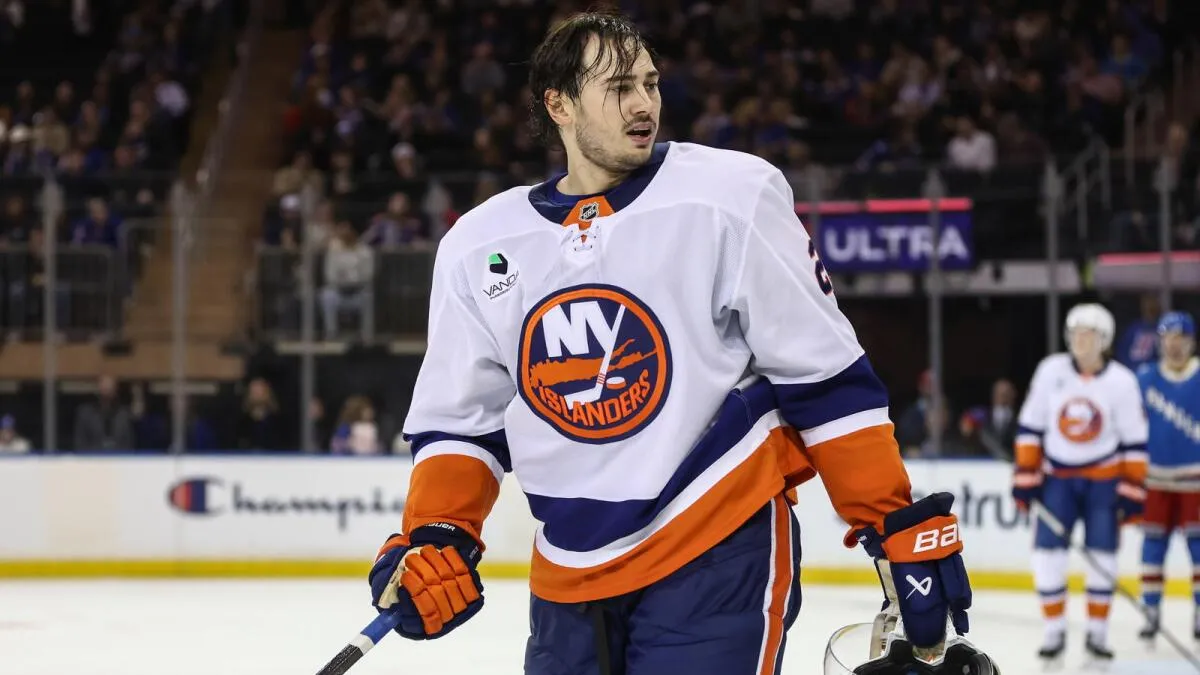
Impact of Alexander Romanov right shoulder surgery on Canadiens defensive depth
The absence of Romanov creates an immediate void in Montreal’s top-four defense pairing that cannot be easily filled. Through the first 15 games of the season, Romanov had logged an average of 21:34 of ice time per game, comprising critical minutes on both the penalty kill and even-strength situations. His departure forces head coach Martin St. Louis to redistribute these responsibilities among a defensive unit already dealing with the extended absence of veteran David Savard.
Defensive pairings without Romanov
Without Romanov’s services, the Canadiens will likely rely on Mike Matheson and Kaiden Guhle to anchor the top pairing, while Jordan Harris and Justin Barron receive expanded roles on the second unit. This reshuffling presents both challenges and opportunities for younger defensemen like Logan Mailloux and Jayden Struble, who may see increased NHL minutes as the organization evaluates its long-term defensive prospects.
The trickle-down effect extends beyond just ice time distribution. Romanov’s physical presence—averaging 3.2 blocked shots and 2.8 hits per game—removes a key element from Montreal’s defensive identity. As one of the few Canadiens defensemen who consistently plays with a physical edge, his absence may embolden opposing forwards to attack the net with greater confidence, particularly during playoff-bound matchups where intensity naturally escalates.
Special teams ramifications
On the penalty kill, Romanov’s absence proves particularly problematic. He had become St. Louis’ most trusted defender when down a man, averaging 2:45 of shorthanded ice time per game and posting an impressive 82.1% on-ice save percentage during penalty kill situations. The coaching staff must now identify which defender can replicate his defensive positioning and active stick work that consistently disrupted passing lanes.
The power play, while not Romanov’s primary domain, also loses a valuable secondary option. His heavy slap shot from the point provided a credible scoring threat that prevented penalty killers from collapsing entirely around the net. Future power-play configurations may need to incorporate more movement and rotation to compensate for the lost shooting option.
Recovery timeline: Understanding the five to six months prognosis
The five to six months recovery timeline represents a standard but extensive rehabilitation period for professional athletes undergoing shoulder surgery. This duration encompasses several distinct phases, each critical to ensuring Romanov can return to the physical, contact-heavy style that defines his game. The medical community generally categorizes shoulder recovery into three primary stages following surgical repair.
Phases of rehabilitation
Initial healing (0-6 weeks): During this phase, Romanov will wear a protective sling while the surgical repairs begin to heal. Physical therapy focuses on gentle range-of-motion exercises to prevent stiffness without stressing the repaired structures. No weight training or stick handling occurs during this period.
Strength rebuilding (6-16 weeks): As healing progresses, Romanov will gradually increase activity intensity. This phase introduces resistance training for surrounding muscles—particularly the rotator cuff and scapular stabilizers—while avoiding contact drills or heavy lifting. Off-ice conditioning can include stationary biking and lower-body work to maintain cardiovascular fitness.
Sport-specific progression (16-24 weeks): The final phase incorporates hockey-specific movements, including shooting, passing, and eventually, contact drills. Medical clearance for full contact typically occurs around the five-month mark, assuming no setbacks. The final month allows for full participation in practices and potentially conditioning assignments with the AHL’s Laval Rocket before NHL game action.
Factors influencing recovery duration
Several variables can affect whether Romanov’s recovery falls at the five-month or six-month end of the spectrum. His age (25 years old) and overall fitness level bode well for an efficient healing process. Younger athletes typically regenerate tissue more effectively and respond better to intensive rehabilitation protocols than their older counterparts.
The specific nature of the shoulder injury also matters. While the Canadiens organization has not released detailed medical information, surgical intervention for shoulder instability or labral tears in hockey players commonly requires the five-to-six-month timeline mentioned. The repetitive overhead motion of shooting, combined with the physical trauma from body checks and falls, creates a challenging environment for shoulder joints that must be fully stable before returning to play.
Historical comparisons: NHL players with similar shoulder injuries
Romanov joins a lengthy list of NHL defensemen who have faced similar shoulder challenges. Examining comparable cases provides context for what Canadiens fans might expect regarding his eventual return to form and any potential long-term effects on his playing style.
Recent cases of defensemen shoulder surgeries
Ryan Ellis (Philadelphia Flyers): Ellis underwent shoulder surgery in 2022 with a similar five-to-six-month recovery window. Unfortunately, complications and lingering issues ultimately led to his early retirement, underscoring the seriousness of shoulder injuries for defensemen who rely on physical play.
Miro Heiskanen (Dallas Stars): Heiskanen had shoulder surgery during the 2023 offseason and returned ahead of schedule at approximately 4.5 months. His smooth, positionally sound game transitioned back effectively, though he noted feeling ” tentative ” about initiating contact during his first month back.
Brett Pesce (Carolina Hurricanes): Pesce’s 2021 shoulder surgery kept him out for exactly five months. He successfully returned to his role as a shutdown defenseman, maintaining his physical style while wearing additional protective padding for the remainder of that season.
Lessons from successful recoveries
Players who successfully returned from shoulder surgery consistently emphasize two factors: patience during rehabilitation and mental readiness for contact. Romanov’s competitive nature, which has been both a strength and occasional liability throughout his career, must be channeled appropriately during recovery. Rushing back before the shoulder can withstand the torque from a Zdeno Chara-level slap shot or absorb a crushing hit from Milan Lucic could result in re-injury.
The Canadiens’ medical staff will likely implement a comprehensive return-to-play protocol that includes not only physical milestones but also psychological assessment. Defensemen must feel confident extending their arms to deliver a check or battle for position in front of the net without hesitation. Any mental reservation about the shoulder’s stability can lead to compromised positioning and increased vulnerability to further injury.
What this means for Romanov’s contract situation and future
Romanov enters this injury period at a crucial juncture in his career. With two years remaining on his current contract at an annual cap hit of $3.34 million, his performance upon return will significantly influence his next negotiation cycle. The Canadiens must balance their long-term commitment to the young defenseman with the reality that shoulder injuries can have lingering effects on a player’s durability and effectiveness.
Long-term implications for playing style
Questions naturally arise about whether Romanov will need to modify his aggressive, physically punishing approach to defense. At 6’1” and 208 pounds, he has consistently played larger than his size, delivering bone-jarring hits and willingly sacrificing his body to block shots. This high-risk, high-reward style endears him to fans and teammates but also exposes him to the type of traumatic injuries currently sidelining him.
Some hockey analysts suggest Romanov could benefit from adapting elements of his game to reduce future injury risk without sacrificing effectiveness. This evolution might include improved positional defense to decrease reliance on last-second dive blocks, or refined angling techniques that accomplish the same physical separation from puck carriers while reducing direct impact forces on his shoulders.
Canadiens’ organizational depth tested
Montreal’s defensive prospect pipeline faces its first real test at the NHL level. General manager Kent Hughes has spent three years accumulating defensive talent through the draft and strategic acquisitions, preaching organizational depth as a core philosophy. Romanov’s injury provides an unexpected opportunity to evaluate whether prospects like Logan Mailloux and William Trudeau can handle increased responsibility.
The situation also impacts potential trade deadline strategy. Originally positioned as potential sellers, the Canadiens might now be forced to retain their veteran defensemen for stability rather than collecting additional draft assets. Alternatively, Hughes could accelerate a rebuild timeline by testing younger players now, accepting short-term struggles for long-term developmental gains.
The Alexander Romanov right shoulder surgery timeline confirms the defenseman will miss the remainder of the 2025 season, with a targeted return for training camp in September. For a Canadiens team navigating the fine line between competitive development and strategic positioning for the future, this injury represents both a significant setback and an opportunity. The coming months will test Montreal’s organizational depth while Romanov embarks on a rehabilitation journey that could ultimately define the next phase of his promising career. His successful recovery and potential adaptation of playing style will be closely monitored by a fan base that has embraced him as a cornerstone of the franchise’s defensive future.
Frequently Asked Questions

Par Mike Jonderson
Mike Jonderson is a passionate hockey analyst and expert in advanced NHL statistics. A former college player and mathematics graduate, he combines his understanding of the game with technical expertise to develop innovative predictive models and contribute to the evolution of modern hockey analytics.