





The Colorado Avalanche and Carolina Hurricanes stand alone as the only undefeated teams in the 2026 Stanley Cup playoffs. Both squads sit at 6-0 after sweeping their first-round opponents and claiming the initial two victories in their second-round matchups.[1][2] Topping their respective conferences in the regular season, they’ve carried that momentum into the postseason with ruthless efficiency.
BetMGM lists them as the clear frontrunners for the Cup, with Colorado at around +160 to +190 odds and Carolina close behind at +155 to +180. This dominance raises a compelling question: when was the last time the regular-season leaders from each conference clashed in the Stanley Cup final?
Perfect playoff starts fuel historic pursuits
The Avalanche dispatched their first-round foes in four games, showcasing their high-octane offense led by stars like Nathan MacKinnon and Cale Makar. In the second round against the Minnesota Wild, they’ve grabbed a 2-0 lead, outscoring opponents convincingly.[3]
Carolina mirrored this path, sweeping the Philadelphia Flyers before taking a pair from their current adversaries. Their balanced attack and stout defense have stifled opponents, allowing few quality chances.
Both teams’ regular-season supremacy—Colorado with the Presidents’ Trophy chase in the West and Carolina dominating the East—sets the stage for a potential dream final. No losses yet means every game tests their mettle further.
This unbeaten streak ties franchise marks and evokes memories of past juggernauts. Fans and analysts alike watch closely as these powerhouses push boundaries.[4]
Stanley Cup odds reflect top billing
Betting markets heavily favor these two. Colorado’s odds hover near +190, bolstered by their explosive play and home-ice advantage potential.[5] Carolina sits right there at +155 to +180, their depth and goaltending keeping them in the conversation.
Oddsmakers point to their perfect records and conference dominance as key factors. Other contenders like the Vegas Golden Knights lag far behind at +600 or worse.
This positioning echoes past playoffs where top seeds advanced deep. Yet sustaining it requires navigating tougher series ahead.
Shifts could happen with a single loss, but for now, these odds underscore their elite status.
Echoes of the 2000-01 Stanley Cup final
The last time regular-season conference leaders met in the final was 2000-01, pre-salary cap era. The Avalanche represented the West against the New Jersey Devils from the East.
Colorado triumphed 4-3 in a grueling seven-game series, clinching Game 7 by a 3-1 score. That victory capped a remarkable playoff run for the Avs.
Key figures from that roster now influence the game as executives and coaches. Joe Sakic, Rob Blake, and Chris Drury became NHL leaders, while Patrick Roy and Adam Foote coached.
Alex Tanguay and Dan Hinote served as assistants. This legacy adds layers to Colorado’s current quest.
Ray Bourque’s fairy-tale ending
At 40, Ray Bourque finally hoisted the Cup with the Avalanche in 2001 after over two decades without one. Acquired midseason from Boston, he anchored the blue line.
In the final series, Bourque logged an average of 26:13 per game, all regulation wins. Across the playoffs, his ice time hit 28:32, proving age was no barrier.
His story symbolizes perseverance, transforming from perennial bridesmaid to champion. Bourque’s contributions were pivotal in key moments.
This narrative resonates deeply in hockey lore, inspiring veterans today.
Brent Burns draws the modern parallel
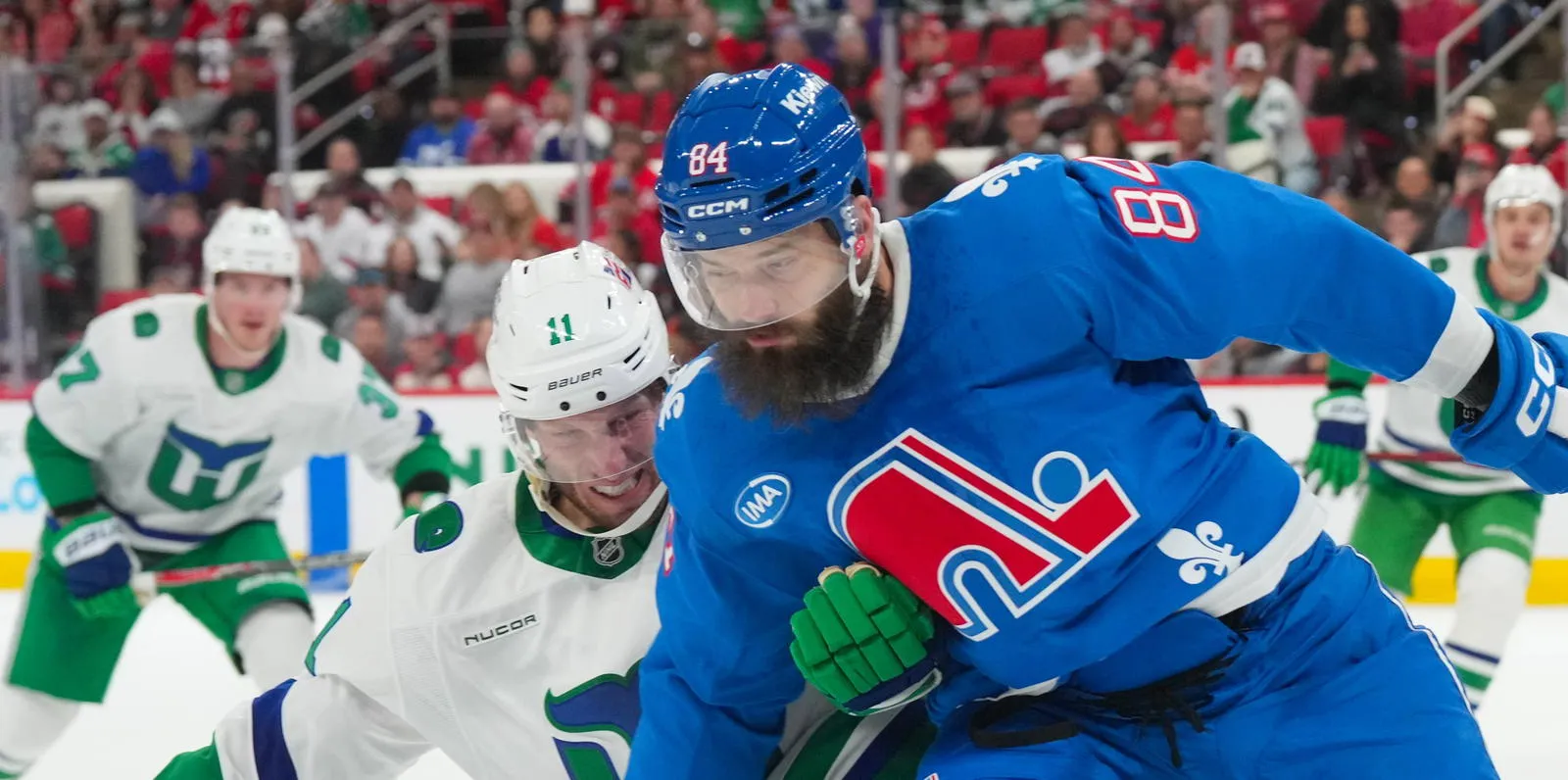
Fast-forward to 2026, and 41-year-old Brent Burns chases a similar ending on the Avalanche. In his 22nd NHL season, he remains Cup-less despite elite production.[6]
Burns’ lone final appearance came in 2016 with San Jose, falling to Pittsburgh. Now in Colorado after stints elsewhere, he brings veteran savvy.
His offensive flair defined eras, much like Bourque’s. Averaging heavy minutes, Burns hopes for that storybook close.
Teammates rally around him, mirroring the 2001 support for Bourque. A deep run could cement his Hall of Fame path.
Could history repeat with an Avs-Can es final?
Both teams boast the talent and momentum for a championship clash. Sweeps and strong starts position them ideally.
Rivalries would ignite if they meet, pitting West Coast speed against Eastern grit. Burns’ quest adds emotional stakes.
Analysts see this as plausible given their form. Yet playoffs demand consistency.
As second-round action unfolds, the hockey world holds its breath. A conference leaders’ final would be a rarity worth celebrating.
The Avalanche and Hurricanes have the pieces to recreate 2001 magic. Whether Burns lifts the Cup or not, their runs already captivate. What comes next could redefine this postseason.
Frequently Asked Questions

Par Mike Jonderson
Mike Jonderson is a passionate hockey analyst and expert in advanced NHL statistics. A former college player and mathematics graduate, he combines his understanding of the game with technical expertise to develop innovative predictive models and contribute to the evolution of modern hockey analytics.