











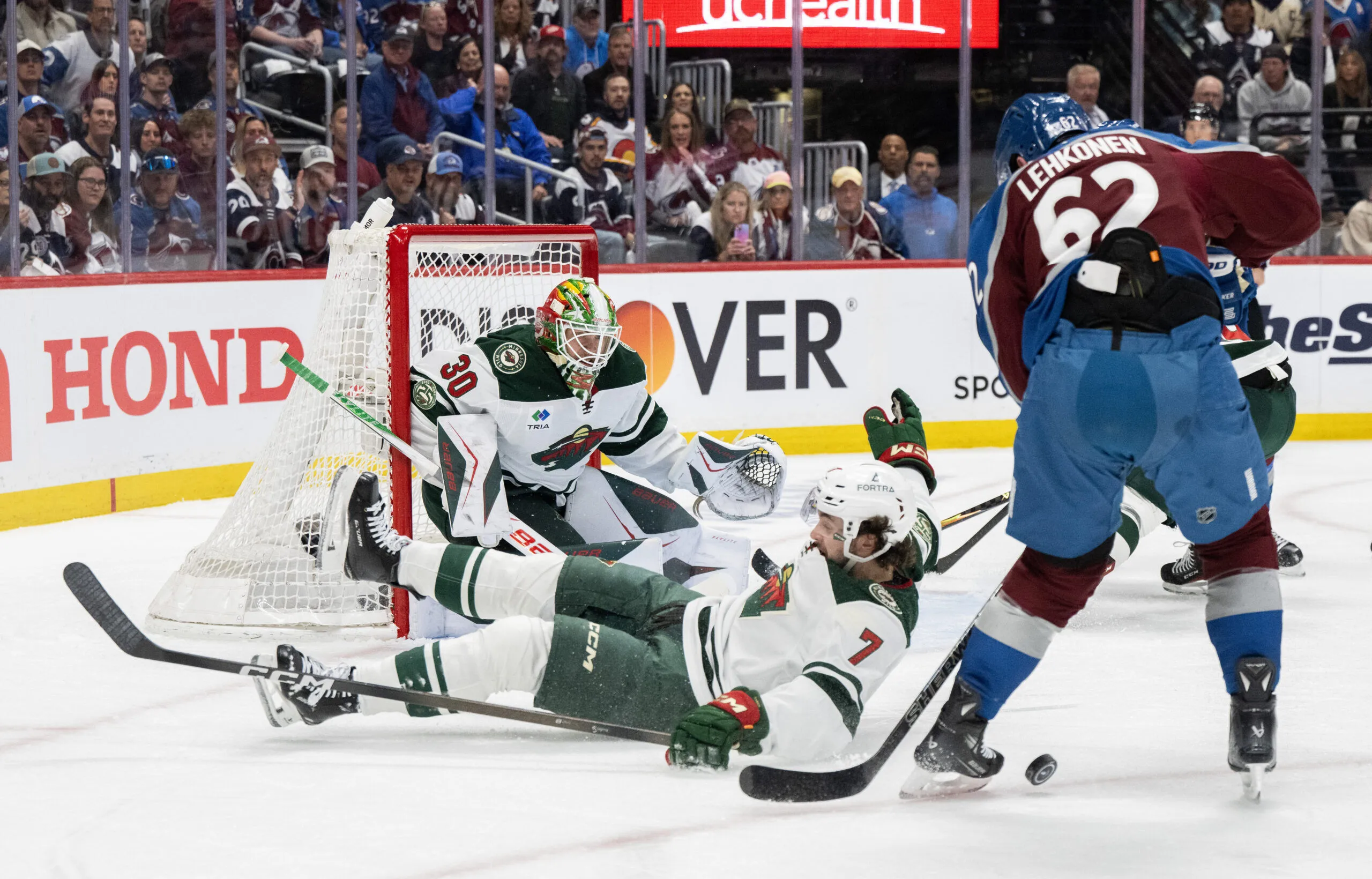
The Colorado Avalanche’s 9-6 thriller over the Minnesota Wild in Game 1 of their second-round series felt like a Western Conference final showdown.[1][2] Fifteen goals, momentum swings, bone-rattling hits, and chaos kept every fan gripped from puck drop to final buzzer. Cale Makar scored twice upon his return from injury, while the teams combined for visible blood and relentless end-to-end action.[3]
This slugfest highlights a core flaw in the NHL’s playoff structure. Two Stanley Cup contenders are clashing earlier than their talent suggests they should. In a format prioritizing divisional alignment, elite Central Division teams like the Avalanche, Dallas Stars, and Wild knock each other out before the conference final, frustrating fans and players alike.
A chaotic Game 1 that screamed conference finals
Colorado jumped out to a 4-1 lead, only for Minnesota to storm back and tie it at 5-5 midway through the third. The Avalanche then unleashed three more goals, including empty-netters, to seal the win. Devon Toews tallied four points, underscoring the offensive fireworks.[1]
Physicality defined the night, with hits that echoed playoff lore and injuries lurking. Wild coach John Hynes called it a “game-changing” battle, while Avalanche bench boss Jared Bednar was left speechless postgame.[4] Fans in Ball Arena witnessed what looked like deep-June intensity, not mid-May madness.
This matchup stems from the first round, where the Wild upset the Stars in six games. Minnesota’s resilience propelled them into a rematch with the top-seeded Avalanche, both Central powerhouses. For details on the 2026 NHL playoffs second-round schedule, check our preview.
The series previews a grueling path ahead. With both teams boasting elite records—Colorado as Western leaders—the winner advances, but at what cost to roster depth? Early fireworks like this thrill, yet amplify format gripes.
How the current playoff format works
The NHL’s structure, locked in since 2014, sends the top three teams from each division plus two wild cards per conference into the playoffs. Division winners get top seeds and face wild cards or lower divisional foes first. The bracket is fixed—no reseeding—ensuring divisional rivals often collide early.[5]
This setup rewards regular-season division dominance. Colorado (C1) swept the Kings (WC2), while Dallas (C2) fell to Minnesota (C3). Vegas (P1) awaits the Anaheim Ducks (P WC?).[6]
Pros include heightened rivalries and physicality from puck drop:
- Intense first-round series rival NBA or NFL later rounds.
- Reduced travel via geography.
- More games overall, boosting revenue.
Yet, it locks second- and third-place divisional teams into immediate intra-division battles.
Commissioner Gary Bettman defends it: “It gives us a sensational first round. Probably the best playoff first round in any sport.”[7]
Central Division heavyweights cannibalize each other
The 2026 Central Division epitomizes the issue. Colorado, Dallas, and Minnesota posted elite records—top three in the West—yet geography forces them to eliminate one another sequentially. Only one reaches the conference final, regardless of overall strength.[8]
Dallas Stars center Matt Duchene vented after their first-round loss: “It’s not just us. There are teams that are eliminated that are ahead of teams that aren’t. It’s all over the league.”[9] The Stars’ 112 points ranked third league-wide, but a divisional clash ended their run.
Our 2026 NHL playoff bracket preview highlighted this risk pre-playoffs. Minnesota’s upset of Dallas sets up the Avs-Wild rematch, but a Pacific survivor awaits the winner—potentially mismatched.
This “cannibalization” repeats yearly in loaded divisions. In 2026, the weak Pacific let lower seeds advance easily, while Central grinds down contenders.
Historical shifts and proposed fixes
The league used a 1-8 conference seeding with reseeding from 1993-2013, mirroring the NBA. It rewarded points totals purely, avoiding early geography-based clashes.[10]
Post-2013 realignment birthed the hybrid, then full divisional in 2014 amid lockout compromises. Critics pine for reversion, arguing it better crowns the “best.”[8]
A 2026 1-8 simulation reshapes the West:
- No. 1 Colorado vs. No. 8 Los Angeles.
- No. 2 Dallas vs. No. 7 Anaheim.
- No. 3 Minnesota vs. No. 6 Utah.
- No. 4 Vegas vs. No. 5 Edmonton.[7]
Fans debate on platforms like Reddit, with some noting Bettman touts the format’s design.[11] Change feels distant without owner buy-in.
Ratings surge overshadows competitive flaws
ESPN and TNT report strong 2026 playoff viewership rebounds, cooling reform urgency. First-round intensity delivers commercially, even if later rounds falter.[7]
Conference finals trend short—no Game 7 since 2018—partly from early attrition. Yet, business thrives: longer series, packed arenas.
The league’s stance: Beat the best whenever they come. This philosophy sustains the status quo amid healthy numbers.
As playoffs progress, watch if Avs-Wild fatigue impacts the bracket’s survivors.
The format debate endures, fueled by nights like the 9-6 epic. While entertainment peaks early, competitive purity suffers in powerhouse divisions. With ratings soaring, expect tweaks only if later rounds underwhelm—leaving fans to savor the chaos while hoping for purer paths to the Cup. For full recaps, see NHL.com’s Game 1 summary.[2] What unfolds could sway the conversation further.
Frequently Asked Questions

Par Mike Jonderson
Mike Jonderson is a passionate hockey analyst and expert in advanced NHL statistics. A former college player and mathematics graduate, he combines his understanding of the game with technical expertise to develop innovative predictive models and contribute to the evolution of modern hockey analytics.