Frederik Andersen has not started more than 35 games in any NHL season since 2021-22.
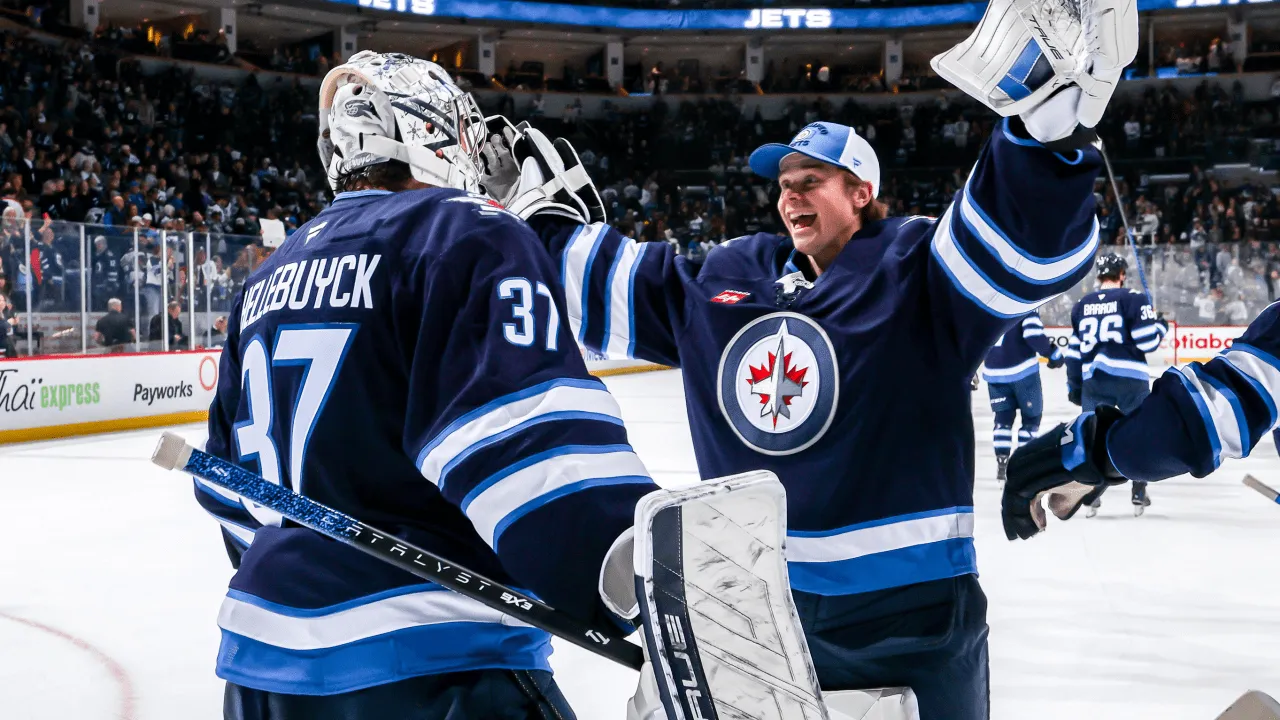
Andersen’s Recent Workload and Durability Concerns
Andersen posted an .874 save percentage and 3.05 goals-against average across his appearances in the 2025-26 regular season with the Carolina Hurricanes. This output contrasts sharply with his three shutouts in the first three playoff rounds before posting an .885 save percentage or worse in the first three games of the Cup final against the Vegas Golden Knights. Carolina coach Rod Brind’Amour then replaced him with Brandon Bussi for the remainder of the series. The 36-year-old Andersen, who turns 37 in October, now enters a high-pressure market with the Oilers after Carolina won the Cup without him in the decisive games.
Jarry remains under contract for two more seasons at a $5.375 million annual cap hit. Edmonton traded away Connor Ingram rather than attempt to move Jarry despite his 19 games with the Oilers in 2025-26 that produced a .858 save percentage and 3.86 goals-against average. Those figures stand in direct opposition to the .909 save percentage and 2.66 goals-against average Jarry recorded in 14 games with Pittsburgh earlier that season.
Babcock therefore inherits a tandem where Andersen is positioned as the primary option yet carries a documented injury and performance history that limits his availability. An even 41-game split would expose the older netminder to the exact overuse pattern that has kept him below 35 starts annually since 2021-22.
Tactical Deployment Options for 2026-27
An even split between Andersen and Jarry fails to address the statistical gap between the two. Jarry’s combined 33 games across Pittsburgh and Edmonton in 2025-26 already demonstrated inconsistency that produced more losses than wins in Edmonton. Assigning Jarry 40 or more appearances would likely repeat those results and leave the Oilers searching for answers by midseason.
Babcock can instead schedule Andersen for a maximum of 40 starts while monitoring Jarry’s early-season results. This approach mirrors the usage that allowed Andersen’s three shutouts in the first three rounds of the 2026 playoffs before his later collapse. The plan also leaves room for 24-year-old prospect Levi, acquired from Buffalo, to receive AHL development time before any potential NHL call-up if Jarry’s performance declines further.
Waiving Jarry later in the season remains a viable contingency if no trade market emerges for his contract. Edmonton cannot afford repeated goaltending experiments while McDavid seeks his first Cup as an Oiler.
Forward-Looking Risks to Edmonton’s Window
The Oilers must win now because McDavid’s desire to stay in Edmonton is finite. Repeated goaltending shortfalls have already cost the franchise multiple deep playoff runs. Overloading Andersen beyond 40 games in 2026-27 directly increases the probability that injury removes him from the postseason picture for an extended period.
Jarry’s $5.375 million cap hit blocks flexibility unless he is demoted after a prolonged slump. Levi’s prior NHL struggles in limited 2024-25 action further underscore why the tandem must be managed conservatively from opening night rather than adjusted reactively after losses mount.
Babcock’s deployment decisions in the first 30 games will therefore determine whether the Oilers enter the 2027 trade deadline with a functional tandem or another emergency search for goaltending help.
Frequently Asked Questions
Sources

Par Mike Jonderson
Mike Jonderson is a passionate hockey analyst and expert in advanced NHL statistics. A former college player and mathematics graduate, he combines his understanding of the game with technical expertise to develop innovative predictive models and contribute to the evolution of modern hockey analytics.