


Darren Dreger reported multiple teams have inquired about trading for Buffalo Sabres defenseman Bowen Byram ahead of his final contract year.
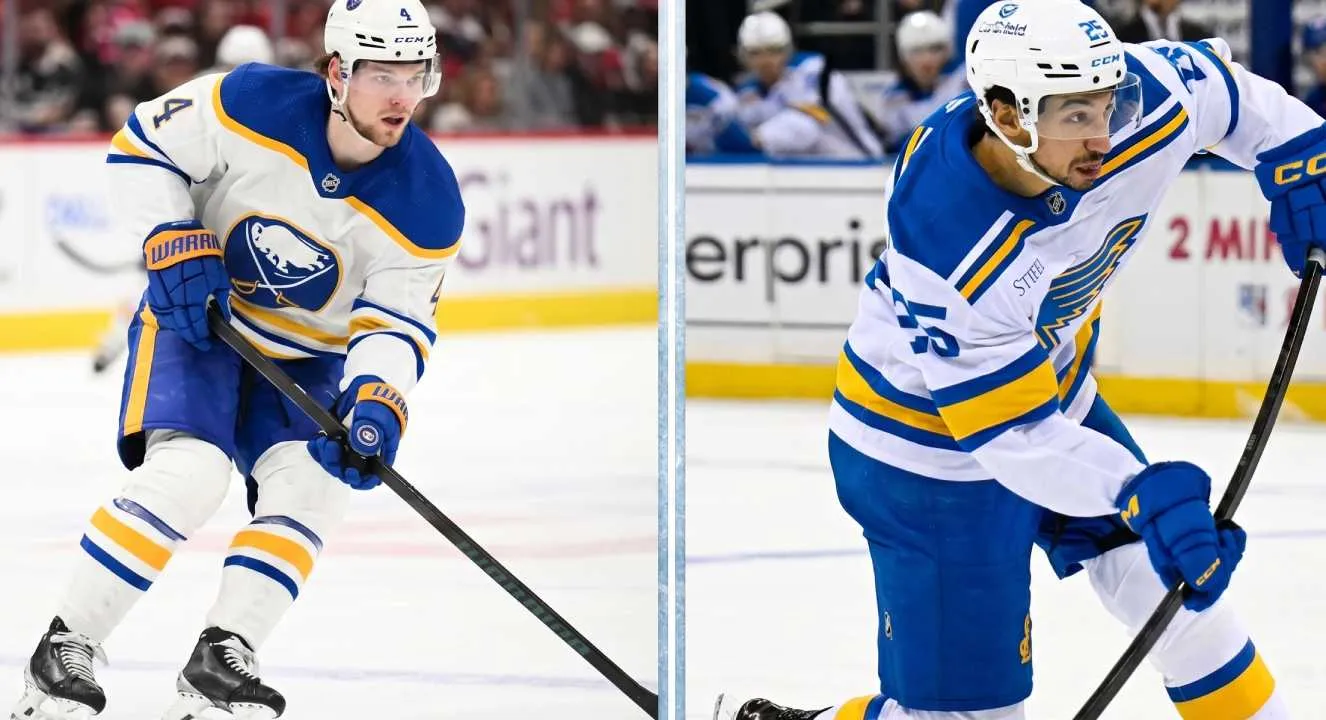
Sabres weigh rental returns against internal need
Bowen Byram carries a $6.25 million cap hit with one year remaining on the two-year extension he signed in July 2025. That figure places him among mid-tier top-four defensemen whose trade value drops when the acquiring club receives only a one-year rental before unrestricted free agency arrives on July 1 2027. Paul Hamilton of WGR 550 noted that any deal would resemble a deadline rental in which the buyer pays future pieces rather than premium assets.
The Sabres front office under Jarmo Kekalainen has already demonstrated a preference for on-ice contribution over speculative futures. They declined to trade Alex Tuch last season despite similar rental-market dynamics and instead kept the forward through the playoff push. Hamilton explicitly linked the two cases, arguing that Tuch’s presence delivered more tangible value than any package of draft picks or prospects would have returned.
Byram turned 25 in 2026 and remains under the $6.25 million bridge deal that expires after the 2026-27 campaign. Multiple teams have called Buffalo according to TSN reporting yet no indication exists that the Sabres are actively shopping the blueliner. The contrast between external interest and internal retention logic mirrors the Tuch decision from twelve months earlier.
Limited trade market collides with extension uncertainty
Agent Darren Ferris has guided other clients directly to unrestricted free agency which reduces the leverage Buffalo holds in any negotiation. A sign-and-trade would require the acquiring club to commit long-term dollars immediately while the Sabres receive only modest compensation. Hamilton described the resulting return as future pieces at rental prices rather than established assets.
Buffalo’s defensive depth chart already shows Byram slotted behind established partners. Moving him now would create an immediate hole that draft capital alone cannot fill before training camp. The causal chain runs from short-term roster stability to longer-term evaluation of whether Byram can anchor a top pairing during the 2026-27 season.
Historical precedent favors the keep-and-evaluate path. When the Sabres retained Tuch they reached the postseason and extracted playoff minutes that exceeded the speculative value of any trade package discussed at the time. Applying the same calculus to Byram produces a similar outcome: one additional year of cap-controlled production measured against uncertain future assets.
Outlook hinges on 2026-27 performance
If Byram posts top-pairing minutes and the Sabres improve their standing the organization gains clarity on his long-term fit before the 2027 free-agent window. A subpar season would still leave Buffalo with the same draft capital they would have received this summer plus the benefit of on-ice evaluation. The numerical gap between a 2026 rental return and a 2027 unrestricted free-agent signing remains the decisive variable.
By July 2027 the Sabres will have seen whether keeping Byram produced playoff value comparable to the Alex Tuch precedent from 2025.
Frequently Asked Questions
Sources

Par Mike Jonderson
Mike Jonderson is a passionate hockey analyst and expert in advanced NHL statistics. A former college player and mathematics graduate, he combines his understanding of the game with technical expertise to develop innovative predictive models and contribute to the evolution of modern hockey analytics.