





The Calgary Flames find themselves in an uncomfortable position less than a month into the 2025-26 season. After extending Ryan Huska’s contract through the 2027-28 season in early October, the organization now faces mounting pressure as the team sits at the bottom of the NHL standings with a dismal 2-8-2 record. What was supposed to be a season of continued progress has turned into a nightmare start, raising serious questions about whether the Flames acted too hastily in committing to their head coach. With losses piling up and the team showing regression in nearly every area, the conversation has shifted from playoff aspirations to whether Huska can survive this catastrophic stretch.
The extension itself seemed premature to many observers, coming after a 2024-25 campaign where the Flames missed the playoffs by a single point with a 41-27-14 record. While that season appeared promising on paper, a deeper examination reveals a team that relied heavily on goaltender Dustin Wolf’s heroics rather than systematic excellence. Now, with Wolf struggling and the team’s underlying issues exposed, the decision to lock in Huska looks increasingly questionable. General Manager Craig Conroy and the Flames’ brass find themselves in a bind—having just shown faith in their coach, they must now decide how long to tolerate historically poor results.
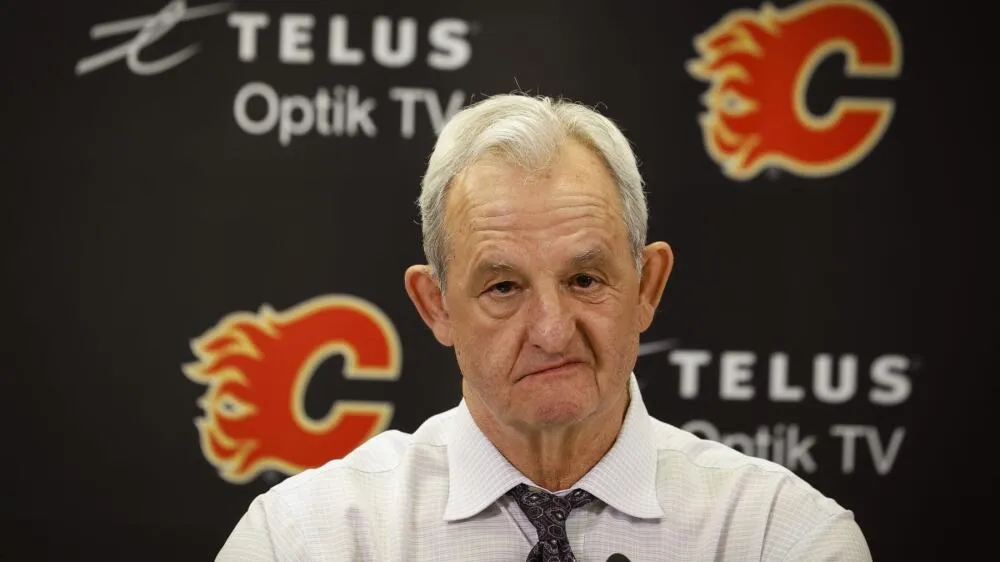
Understanding Ryan Huska’s current situation with the Calgary Flames coach role
Ryan Huska entered his third season as Calgary’s head coach with what appeared to be organizational support. The two-year extension signed just before the season demonstrated confidence from management, particularly from Conroy, who took over as general manager in 2023. However, the timing of that extension now looks suspect given the team’s precipitous fall from competitive to catastrophic in such a short span.
Through the first 12 games of 2025-26, the Flames have managed just one regulation victory—a shocking statistic for a team that believed it was ready to take the next step toward playoff contention. The recent 4-3 shootout loss to Ottawa may have earned them a single point, but it did little to mask the deeper problems plaguing this roster. The eye test confirms what the standings suggest: this team lacks identity, structure, and the competitive fire that defined them a season ago.
What makes Huska’s situation particularly precarious is the context surrounding the extension. Had management waited even a few weeks into the season, it’s entirely possible no extension would have been offered. Now, the organization finds itself in an awkward position—having just committed to their coach, they’re faced with results that would typically warrant immediate termination. The extension provides Huska with some insulation, but that protection won’t last indefinitely if the losing continues.
The contrast between expectations and reality has been jarring. Players who took significant developmental strides last season have regressed. The defensive structure that kept games tight has crumbled. Special teams units that were merely below average have become liabilities. Most concerningly, there’s little evidence of systematic adjustments or tactical evolution from the coaching staff. This stagnation raises fundamental questions about Huska’s ability to adapt at the NHL level.
Conroy’s decision-making is also under scrutiny. The general manager assembled what he believed was an improved roster, kept faith in his coach, and projected confidence heading into the season. Instead, he’s watching one of the league’s worst starts unfold, with his coaching decision already being second-guessed across hockey media. The next month could define not just Huska’s tenure, but Conroy’s credibility as a decision-maker.
Why the Calgary Flames coaching decision faces mounting scrutiny
The fundamental issue with Huska’s coaching tenure isn’t a single failure—it’s a pattern of tactical limitations and questionable decisions that have become impossible to ignore during this disastrous start. Last season, the Flames finished 27th in goals scored, a statistic that should have prompted significant system changes. Instead, the offensive struggles have intensified, with the team showing even less creativity and attacking threat than before.
Huska’s defensive system, which looked adequate when Wolf was making spectacular saves, has been thoroughly exposed. The Flames consistently allow high-danger scoring chances, relying on goaltending to bail them out rather than preventing quality opportunities in the first place. This approach worked temporarily when Wolf was playing at a Calder Trophy level, but with the young netminder posting a 3.44 goals-against average and .887 save percentage this season, the team’s structural deficiencies are on full display.
The most damning criticism involves player deployment and development. Matt Coronato, who signed a seven-year, $45.5 million contract after scoring 24 goals last season, has been reduced to a healthy scratch. The 22-year-old has just three goals and four points through 11 games, showing none of the confidence or offensive instincts that earned him that substantial deal. Rather than working through struggles with his young star, Huska sent him to the press box—a decision that raises questions about his developmental philosophy.
Similar concerns surround Zayne Parekh, the team’s top defensive prospect in a decade. Despite his elite offensive skills, Parekh was scratched from the first two games in favor of veterans Jake Bean and Daniil Miromanov—players who were statistically poor last season and have continued that trend. When your veteran options are demonstrably worse than your prospects, prioritizing experience over talent suggests a coach more concerned with short-term comfort than long-term building, according to analysis from The Win Column.
The line combination decisions have been equally baffling. Connor Zary, one of the team’s most skilled forwards, spent games playing alongside AHL-caliber players Ryan Lomberg and Adam Klapka on the fourth line. The special teams have been abysmal, yet Huska continues running the same units with minimal adjustment. The power play desperately needs Parekh’s creativity, yet he barely sees ice time with the man advantage.
Comparing Ryan Huska’s tenure to previous Calgary Flames coaching situations
Historical context matters when evaluating whether a coach deserves more time or should face termination. The Flames organization has experienced both patient rebuilding periods and quick-trigger firings, providing useful comparison points for Huska’s current predicament. Most notably, the Darryl Sutter era offers a stark contrast in coaching effectiveness.
Under Sutter, the Flames played a structured, defensively responsible game while still generating significant offense. The system was clear, players knew their roles, and the team consistently competed above its talent level. Sutter’s final season resulted in a disappointing finish, but the tactical framework was never in question—the issue was primarily roster construction and veteran decline. With Huska, the opposite appears true: the roster has improved on paper, but the coaching seems to be holding players back.
Comparisons to other recent NHL coaching casualties are instructive. Teams typically show patience with coaches during rebuilds, but the Flames entered this season with playoff expectations. Management publicly stated their belief in this roster’s ability to compete, which fundamentally changes the evaluation criteria. When you’re supposed to be progressing toward contention and instead post the league’s worst record, patience evaporates quickly.
The timing of Huska’s extension also invites unfavorable comparisons. The Edmonton Oilers extended Kris Knoblauch around the same time, but Knoblauch had guided his team to the Stanley Cup Final. The Flames extended a coach whose team missed the playoffs and relied overwhelmingly on one player—Wolf—to remain competitive. The disparity in accomplishments makes Calgary’s decision look even more questionable.
What separates Huska’s situation from typical rebuild patience is the regression. If the Flames were losing close games while young players developed, there would be reason for optimism. Instead, established players are performing worse, prospects are being mishandled, and the team shows no systematic identity. This isn’t growing pains—it’s systematic failure, as detailed by The Hockey Writers.
The franchise’s recent history of coaching changes also matters. After cycling through multiple coaches in recent years, there’s organizational desire for stability. However, stability means nothing if the coach isn’t developing the roster effectively. The Flames risk confusing patience with paralysis if they allow this disaster to continue unchecked simply because they just extended Huska’s contract.
The impact of will Ryan Huska be fired as Calgary Flames coach on team performance
The mere existence of coaching uncertainty creates tangible impacts on team performance, separate from the coach’s actual decisions. Players inevitably sense when their leader’s job security is threatened, which can manifest in multiple ways—some players rally to support their coach, others mentally check out, and still others press too hard trying to solve problems individually rather than systematically.
For the Flames, the performance indicators suggest deepening dysfunction rather than the galvanizing effect a hot seat sometimes produces. The team has taken steps backward in virtually every measurable category. Their goals-for rate has declined from an already poor 27th in the league to even worse levels. Defensively, they’re bleeding chances at alarming rates. Special teams have been catastrophic, with both the power play and penalty kill ranking near the bottom of the league.
Individual player performance provides more concerning evidence. Beyond Coronato’s struggles, multiple forwards who showed promise last season have disappeared offensively. Nazem Kadri, the veteran center signed to provide leadership and production, has been ineffective. The defense corps, which should theoretically be improved with a year of development for younger players, looks lost in its own zone. The issues are too widespread to blame solely on player execution—systematic coaching problems appear evident.
The psychological impact of constant losing cannot be understated. Every game becomes higher stakes, every mistake magnified, every loss adding weight to the next contest. This team entered the season believing it could make the playoffs; instead, they’re enduring one of the NHL’s worst starts. The mental toll of that gap between expectation and reality can be devastating, particularly for younger players who haven’t experienced prolonged losing at the professional level.
Huska’s response to adversity has been uninspiring. Rather than making bold changes or implementing new systems, he’s largely stuck with the same approaches that aren’t working. The lineup tinkering that has occurred—like scratching Coronato—appears more reactive than strategic. There’s little evidence of the kind of systematic overhaul that struggling teams need to break negative cycles.
The extension itself may be contributing to the problem. Knowing he has job security through 2027-28 might be reducing Huska’s sense of urgency to make drastic changes. Alternatively, it could be creating pressure—the visible gap between the faith management showed and the results being delivered makes the failure more pronounced. Either way, the early extension has become a complicating factor rather than the stabilizing force intended.
What November holds for will Ryan Huska be fired as Calgary Flames coach
The next month represents a critical juncture for Huska’s future in Calgary. While his recent extension provides some protection, history shows that NHL teams won’t hesitate to absorb the financial cost of firing a coach if they believe a change is necessary. The Flames’ November schedule and performance during that stretch will likely determine whether Huska finishes the season behind the bench.
November’s importance cannot be overstated. If the Flames continue losing at their current pace, they’ll be mathematically eliminated from realistic playoff contention before American Thanksgiving—traditionally considered the point where standings begin to solidify. Management might tolerate early-season struggles, but watching the season spiral into lottery positioning while insisting everything is fine would test any executive’s patience, including Conroy’s.
The composition of November’s schedule matters. If the Flames face several contending teams and lose those games while remaining competitive, management might view that differently than getting blown out by basement dwellers. Context will matter—are they losing because they’re overmatched, or are they losing because they’re fundamentally broken? The answer to that question will influence how long Huska’s leash remains.
Player development will be another key evaluation metric. If young players like Coronato, Zary, and Parekh show progress despite team losses, that might buy Huska additional time. However, if the entire roster continues regressing, it becomes difficult to argue the coach deserves more opportunities. Development is supposed to be the silver lining during losing seasons; without it, there’s no justification for patience.
Conroy’s own job security factors into this equation. As general manager, he’s responsible for both roster construction and coaching selection. If the team remains in freefall, questions about his decision-making will intensify. At some point, he may decide that firing Huska—despite the recent extension—is necessary to demonstrate accountability and prevent further damage to his own standing within the organization.
The financial considerations, while real, likely won’t be the deciding factor. NHL teams can afford to pay multiple coaches simultaneously, and ownership groups typically prioritize winning over saving a few million dollars on coaching salaries. If ownership concludes that Huska is the problem, the remaining term on his extension won’t save his job. The question is whether one month provides enough evidence to make that determination.
Evaluating alternatives if will Ryan Huska be fired as Calgary Flames coach
Should the Flames decide to make a coaching change, the question becomes who could realistically replace Huska and whether such a move would actually improve the situation. Mid-season coaching changes carry risks—new systems take time to implement, and often the interim coach is simply a placeholder rather than a long-term solution. However, sometimes a change of voice and approach can jolt a team back to competitiveness.
The internal options are limited. Assistant coaches who’ve been part of the same struggling system rarely represent meaningful change. An interim promotion might steady the ship temporarily, but it wouldn’t address the fundamental tactical and strategic issues plaguing this team. The Flames would likely need to look externally for a proven coach who could implement immediate changes.
Several experienced coaches remain available on the market. Names like Bruce Boudreau, Rick Tocchet before his Vancouver hiring, and other recently dismissed bench bosses could theoretically step in. However, attracting a quality coach mid-season to take over a team in crisis presents challenges. The best available coaches often prefer waiting for off-season opportunities where they can properly implement their systems from training camp.
The timing creates additional complications. If the Flames fire Huska in November or December, they’re essentially writing off the season and planning for next year. At that point, does it make sense to hire someone immediately, or do they go with an interim arrangement and conduct a proper search in the off-season? The strategic calculus extends beyond simply removing Huska—it requires a comprehensive plan for what comes next.
There’s also the question of whether coaching is really the primary problem. While Huska’s decisions merit criticism, the roster has limitations that no coach could fully overcome. The Flames lack elite offensive talent, their defense corps is young and inconsistent, and they’re asking a lot of a second-year goaltender. A new coach might squeeze out a few more wins, but this roster likely isn’t a playoff team regardless of who’s behind the bench.
That reality might actually work in Huska’s favor. If management concludes the team needs another year of development regardless, they might let him finish the season rather than making a change that won’t alter the fundamental trajectory. The extension, despite looking premature now, could serve as justification for patience—“We just committed to him, let’s give it a full season before making a judgment.”
The final weeks of the calendar year will tell the story. The Flames need to show tangible improvement—not necessarily in wins and losses, but in process, structure, and player development. If those elements remain absent, the question won’t be whether Huska should be fired, but rather when the inevitable decision will be made. For now, he remains behind the bench, but his margin for error has evaporated completely. Every loss adds weight to the mounting evidence that the Flames’ decision to extend him was a mistake that will need correcting sooner rather than later.

Par Mike Jonderson
Mike Jonderson is a passionate hockey analyst and expert in advanced NHL statistics. A former college player and mathematics graduate, he combines his understanding of the game with technical expertise to develop innovative predictive models and contribute to the evolution of modern hockey analytics.