









The Calgary Flames find themselves at a critical crossroads in 2025, with trade rumors swirling around several key roster players as the organization contemplates its direction. As the season progresses, names like Zayne Parekh, Nazem Kadri, and Blake Coleman have dominated headlines, each representing different aspects of the franchise’s uncertain future. The Flames’ early season struggles have intensified speculation about potential roster moves, forcing management to make difficult decisions about whether to compete now or accelerate a rebuild that could reshape the team for years to come.
The situation has become increasingly complex as general manager Craig Conroy balances the development of young prospects like Parekh with the need to maximize value from veteran assets. With multiple players holding trade protection clauses and others representing significant cap commitments, the Flames’ front office faces a delicate balancing act that will define the franchise’s trajectory heading into the trade deadline and beyond.
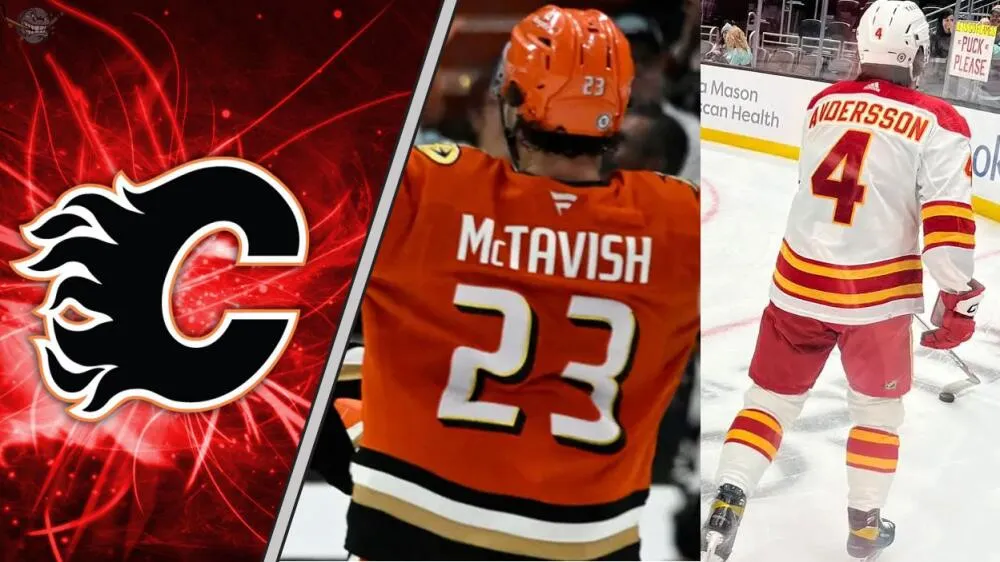
Calgary Flames trade rumors parekh kadri coleman 2025: Zayne Parekh’s NHL commitment
The organization made a definitive statement about Zayne Parekh’s future when they opted to play the 19-year-old defenseman in his tenth game of the season, effectively burning the first year of his entry-level contract. This decision came after Parekh was healthy scratched for games against the Ottawa Senators and Nashville Predators, which had sparked speculation about a potential return to the Ontario Hockey League.
General manager Craig Conroy addressed the decision head-on, making it clear that the Flames view Parekh’s development as best served at the NHL level. “With Zayne, there’s going to be a lot of mistakes,” Conroy admitted. “He’s gonna give up two-on-ones. He’s gonna turn pucks over for breakaways. But junior is not the place for him.”
The commitment to Parekh represents a significant philosophical shift for the Flames organization. Rather than sheltering their first-round pick from the rigors of NHL competition, they’ve chosen to embrace the growing pains as part of his development process. Parekh dominated at the junior level, recording back-to-back 33-goal campaigns and adding 74 assists in just 61 games with the Saginaw Spirit.
The decision also reflects the Flames’ long-term planning around their defensive prospects. With several right-shot defensemen in the pipeline, keeping Parekh at the NHL level allows the organization to better evaluate how these pieces might fit together. While his ice time has been managed carefully, the Flames clearly believe the daily practice routine and exposure to NHL-caliber opponents will accelerate his development more effectively than another season in junior hockey.
Parekh’s retention in the NHL also signals that the Flames are willing to endure short-term pain for long-term gain. His occasional mistakes are viewed as necessary steps in his evolution into a potential top-pairing defenseman. For a franchise that appears to be positioning itself for a deeper rebuild, investing in Parekh’s development now makes strategic sense, even if it means absorbing some defensive breakdowns along the way.
Calgary Flames trade rumors parekh kadri coleman 2025: Nazem Kadri approaches milestone amid speculation
Nazem Kadri’s upcoming 1,000th career game has created an interesting dynamic in the swirling trade rumors surrounding the veteran center. The Flames have made it clear they want to honor this significant milestone before entertaining serious trade discussions, but the question remains: what happens after the ceremony?
Sportsnet’s Elliotte Friedman reported that “there is zero chance” the Flames would trade Kadri before he reaches his 1,000-game milestone. This decision speaks to the organization’s respect for the veteran and his contributions to the team since arriving in 2022. However, the timing of this statement has done little to quell speculation about his future beyond that point.
At 35 years old, Kadri remains a productive NHL center, capable of providing offense and veteran leadership. However, his contract situation presents challenges for a rebuilding team. With significant term remaining on his deal and a full no-movement clause currently in effect, any potential trade would require Kadri’s cooperation. That no-movement clause does transition to a modified no-trade clause for the 2026-27 season, which could open up more possibilities.
The Flames reportedly received trade calls about Kadri during the 2024-25 season but elected to hold onto him while they remained in playoff contention. With the team’s early season struggles making postseason participation increasingly unlikely, management may reconsider their stance. The question becomes whether Kadri himself would welcome a move to a contender or prefer to remain with the organization that has embraced him.
For potential suitors, Kadri represents an intriguing option. His experience winning a Stanley Cup with Colorado in 2022 gives him credibility, and his ability to contribute in multiple situations makes him versatile. However, his age and contract would make any deal complex. Teams looking to add a veteran presence down the middle might view him as a rental with an extended commitment, which could limit the market. As discussions around Nazem Kadri trade rumors continue to heat up, the Flames will need to carefully weigh their options.
Calgary Flames trade rumors parekh kadri coleman 2025: Blake Coleman’s market value rising
Blake Coleman has emerged as perhaps the most likely Calgary veteran to be moved ahead of the trade deadline. The 33-year-old two-time Stanley Cup champion represents exactly the type of player contending teams covet in the final months of the season: a responsible two-way forward with playoff pedigree and offensive upside.
Coleman’s contract makes him particularly attractive to potential suitors. With a $4.9 million cap hit and one additional year remaining after this season, he offers both short-term impact and medium-term value. Unlike Kadri, Coleman’s contract doesn’t extend into the later years when age-related decline becomes a more significant concern. His deal represents a manageable commitment for teams looking to bolster their depth without mortgaging their future flexibility.
The veteran winger has proven he can produce, coming off a career-high 30-goal season in 2023-24. Through the early portion of the 2025-26 campaign, Coleman has maintained his scoring pace with five goals through 14 games. This production, combined with his physical style of play and defensive responsibility, makes him an ideal fit for a third-line role on a Stanley Cup contender.
David Pagnotta of The Fourth Period highlighted Coleman’s trade appeal: “Another year on his contract, very palatable cap hit for what he produces, has a ring… This is going to be a guy that I think a lot of contenders are going to look at to target.” The combination of playoff experience, reasonable salary, and proven production creates a perfect storm of desirability for teams looking to add secondary scoring and championship experience.
The Flames would likely welcome a trade involving Coleman if it brings back assets that align with their rebuild timeline. Draft picks and prospects would be the expected return, with the potential for a decent haul given Coleman’s value proposition. Unlike Kadri, Coleman has less personal attachment to reaching specific milestones with the Flames, potentially making a deal easier to execute. The broader landscape of Calgary Flames trade rumors suggests multiple veterans could be on the move.
Calgary Flames trade rumors parekh kadri coleman 2025: Additional trade candidates to watch
Beyond the headline names of Kadri and Coleman, several other Calgary players could find themselves in new uniforms before the trade deadline. Rasmus Andersson stands out as perhaps the most certain to be moved, having been subjected to trade rumors throughout the offseason. The 28-year-old right-shot defenseman is in the final year of his contract with a $4.55 million cap hit and will command a significant raise in unrestricted free agency.
Andersson’s situation differs from the veteran forwards because he represents a player in his prime who doesn’t fit the Flames’ timeline. With multiple right-shot defensive prospects in the pipeline, including Parekh, committing long-term money to Andersson doesn’t align with the organization’s apparent direction. His combination of age, skill, and contract status makes him an ideal trade chip for a team looking to add a top-four defenseman without sacrificing future flexibility.
Joel Hanley and Jake Bean represent depth defensemen who could appeal to teams seeking blue-line reinforcement without making major commitments. Hanley has carved out a reliable role since being claimed off waivers late in the 2023-24 season, while Bean provides marginal NHL depth at a reasonable price. Both carry cap hits of just $1.75 million, making them easy fits for teams managing tight salary cap situations.
Ryan Lomberg presents an interesting case as a pending unrestricted free agent who has become beloved in the Calgary dressing room. The physical fourth-liner doesn’t provide much offense but brings energy, physicality, and intangible leadership qualities that teams value during playoff runs. His popularity within the locker room might give management pause, but his pending free agency makes a trade logical from an asset management perspective.
The common thread among these potential trade candidates is their ability to help contending teams while providing Calgary with future assets. Whether through draft picks or prospects, each deal would theoretically add pieces that align with the Flames’ apparent shift toward a youth-focused rebuild. The willingness to move these players will depend on the offers received and how quickly management commits to a full teardown versus maintaining competitive balance.
Calgary Flames trade rumors parekh kadri coleman 2025: Contract complications and no-trade protection
One of the most significant obstacles to executing trades involving Calgary’s veteran players is the prevalence of trade protection clauses in their contracts. These provisions give players significant control over their destinations and can complicate negotiations even when both the team and potential trade partners are motivated to complete a deal.
Kadri’s full no-movement clause represents the most restrictive form of trade protection. This clause means he cannot be traded, placed on waivers, or assigned to the minors without his explicit consent. For any Kadri trade to materialize, he would need to approve the destination, giving him considerable leverage in negotiations. This changes to a modified no-trade clause for the 2026-27 season, which would provide a list of teams he can be traded to without his approval, but that doesn’t help the Flames if they want to move him sooner.
Coleman operates under different restrictions, with a 10-team approved trade list. This means he can be traded to those specific teams without his consent, but any other destination would require his approval. This provides more flexibility than a full no-movement clause but still limits the Flames’ options. If Coleman’s preferred destinations aren’t among the teams most interested in acquiring him, negotiations could stall regardless of the potential return.
These contract complications reflect signing decisions made when the Flames had different competitive timelines and aspirations. Veterans sign with teams partially based on the stability and control these clauses provide, making them standard features in free agent contracts for established players. However, they become obstacles when franchises shift direction unexpectedly, as Calgary appears to be doing.
The practical impact of these clauses means the Flames must approach trade discussions carefully. Rather than simply accepting the best offer, they need to ensure potential deals involve teams their players would approve. This dynamic can suppress trade value, as other general managers know the Flames have limited leverage. It also means some trades that make sense on paper may never materialize simply because a player prefers to remain in Calgary or has other preferred destinations.
Managing these complications will test Craig Conroy’s negotiation skills and relationship-building with his players. Open communication about the organization’s direction and each player’s role in those plans will be essential. Players are more likely to cooperate with trades when they understand the team’s rationale and feel respected throughout the process.
Calgary Flames trade rumors parekh kadri coleman 2025: The path forward for Calgary’s rebuild
The Flames’ early season struggles have forced an uncomfortable reckoning about the franchise’s immediate future. What appeared to be a team on the playoff bubble has instead revealed itself as one potentially in need of a more comprehensive rebuild. This realization will shape all decisions made between now and the trade deadline, with implications extending well beyond this season.
According to reporting from The Hockey Writers, the one near guarantee at this point is that Calgary won’t be buyers at the deadline. While management may have originally considered adding scoring depth to address offensive struggles, the team’s performance has made short-term fixes illogical. Instead, the focus will shift to accumulating draft capital and prospects who can contribute during the next competitive window.
This approach represents a significant pivot from last season when the Flames remained in playoff contention and held onto their veteran assets. The difference between being a fringe playoff team and a lottery team is stark, both in terms of present-day operations and future planning. Accepting the reality of a down season—particularly one that could yield a high pick in the 2026 Draft—may be the most prudent path forward.
The challenge for management lies in executing this pivot while maintaining the proper development environment for young players like Parekh. Stripping away too many veterans could leave prospects without adequate mentorship and support, potentially stunting their growth. Conversely, holding onto veterans out of sentimentality or a misguided attempt to remain competitive serves no purpose if it only prevents the team from securing premium draft assets.
Craig Conroy’s decisions over the coming months will define his tenure as general manager. The easy path would be to maintain the status quo and hope for improvement, but that approach risks leaving the franchise in perpetual mediocrity. The harder but potentially more rewarding path involves making difficult trades, accepting short-term pain, and trusting in the development of young players and draft picks to eventually deliver sustainable success.
The Flames’ situation mirrors that of many teams caught between competitive windows. The question isn’t whether to rebuild, but how aggressively to pursue it and whether to maintain some veteran presence or commit to a full youth movement. As the trade deadline approaches, these philosophical questions will translate into concrete roster decisions that shape the franchise for years to come. Based on current reporting from Sportsnet and other outlets, the organization appears increasingly willing to embrace a seller’s role and accelerate the timeline toward sustainable competitiveness rather than chasing short-term results.
The coming months will reveal whether Calgary’s commitment to rebuilding is genuine or if they’ll hesitate when faced with difficult decisions about trading popular veterans. For now, the trade rumors surrounding Parekh’s development, Kadri’s milestone, and Coleman’s market value represent the opening chapter of what promises to be a transformative period for the Calgary Flames franchise. How management navigates these complex decisions will determine not just the outcome of the 2025 season, but the competitive trajectory of the organization for the next several years.

Par Mike Jonderson
Mike Jonderson is a passionate hockey analyst and expert in advanced NHL statistics. A former college player and mathematics graduate, he combines his understanding of the game with technical expertise to develop innovative predictive models and contribute to the evolution of modern hockey analytics.