


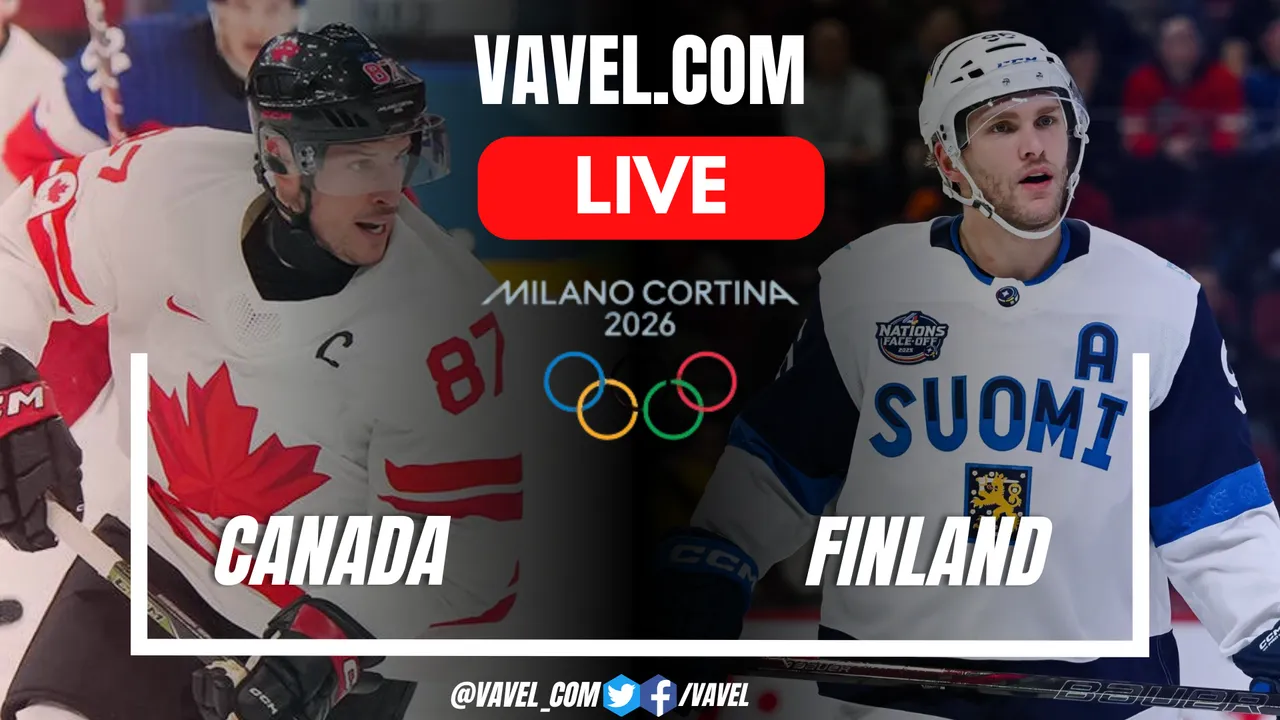
Canada pulled off another dramatic comeback in the 2026 Winter Olympics men’s hockey tournament, defeating Finland 3-2 in the semifinal on Friday. Trailing by two goals early, the Canadians scored three unanswered tallies, capped by Nathan MacKinnon’s power-play winner with 35.2 seconds remaining to advance to Sunday’s gold-medal game.[1][2]
The victory came without captain Sidney Crosby, who was sidelined by injury from the quarterfinal win over Czechia. Coach Jon Cooper shuffled lines and power-play units effectively, leaning on stars like Connor McDavid, Cale Makar and Macklin Celebrini to fuel the rally. Jordan Binnington steadied the ship in net after a shaky start, while Finland’s Juuse Saros kept his team in it until the end.[3]
Power play shines without Crosby
Canada’s top power-play unit faced early adversity without Sidney Crosby, but adjustments turned it into the game’s difference-maker. Sam Reinhart stepped into the vacancy, joining Macklin Celebrini, Cale Makar, Nathan MacKinnon and Connor McDavid—a lineup loaded with elite talent. Finland capitalized first on a turnover, with Erik Haula scoring shorthanded to make it 2-0.
Reinhart redeemed the unit quickly, deflecting Makar’s point shot past Juuse Saros to cut the deficit to one. This goal showcased the Panthers center’s net-front presence, a skill honed in Stanley Cup playoffs. The unit’s patience paid off later when Niko Mikkola’s high-stick penalty with 2:35 left gave Canada a crucial opportunity.
The Canadians controlled the puck relentlessly during that power play, only reloading once after a missed shot. McDavid’s cross-ice pass found MacKinnon for the tap-in winner, sending Canada to the final. Finland’s penalty kill, stout earlier, crumbled under sustained pressure.
This power play has been lethal throughout the tournament, converting at a high clip even in high-stakes moments. Reinhart’s promotion highlighted Cooper’s flexibility, proving depth beyond Crosby. The unit’s success underscores Canada’s offensive firepower.
Historical parallels abound; Canada’s power play was pivotal in past Olympics, like Vancouver 2010. Here, it overcame Finland’s aggressive forecheck that led to the shorthanded tally.
Canada thrives playing from behind
For the second straight elimination game, Canada trailed by two but refused to panic. After Czechia in quarters, Finland tested their resilience again. Averaging over six goals in round-robin play, early deficits raised questions about mental toughness.
The second period flipped the script: Canada dominated with 14 shots to Finland’s three, forcing counters rather than chances. Waves of pressure hogged possession, wearing down Finland’s defense. Shea Theodore’s point blast tied it in the third, exemplifying blue-line threats.
Possession stats favored Canada heavily post-2-0, limiting Finland to sporadic rushes. Binnington’s tracking prevented further damage, like on Haula’s lift over the glove. This poise echoes great comebacks, such as the 2014 Sochi gold-medal thriller.
Sustained zone time created power-play chances organically. Finland couldn’t match the cycle game. Canada’s forecheck turned turnovers into offense.
Adaptability shone; lines shuffled seamlessly. This comfort from behind bodes well for gold-medal pressure.
Jon Cooper’s decisions prove masterful
Jon Cooper’s fingerprints were all over this win, validating his status as NHL’s longest-tenured coach. Replacing Crosby, he elevated MacKinnon to the top line with Celebrini and McDavid for balance. Second-line tweaks swapped Brandon Hagel and Nick Suzuki for Bo Horvat and Seth Jarvis, adding two-way play.
Tom Wilson joined Horvat’s group for grit. Third line with Mitch Marner, Mark Stone and Suzuki became a shutdown unit, flipping forechecks into chances. These combos offered matchup flexibility.
Cooper’s power-play call with Reinhart upfront exploited Finland’s box. Keeping the first unit intact late maximized scoring odds. His in-game adjustments neutralized Finland’s early momentum.
Cooper’s history with Tampa Bay—back-to-back Cups—translates to Olympics. Line juggling mid-game is his hallmark. Friday’s moves turned deficit into destiny.
Players praised his calm post-game. “Coach had us ready,” MacKinnon said. This win elevates Cooper’s legacy.
Standout performers and player grades
Sam Reinhart: A – Net-front goal sparked rally; seamless PP fit.
- Nathan MacKinnon: A+ – GWG clutch; tournament leader in points.
- Connor McDavid: A – Playmaker extraordinaire; assist on winner.
- Shea Theodore: A – Tied game with bomb; PP quarterback.
- Jordan Binnington: B+ – Rocky start, strong finish; 20 saves.
Juuse Saros (Finland): A – Player of the game; 36/39 saves, nearly forced OT.[1]
Cale Makar: A- – Primary assist on Reinhart; point shots lethal.
These grades reflect impact beyond scoring. Bench depth shone too.
Questions ahead of gold-medal game
Can Canada replicate this against USA or Slovakia? USA’s two-way roster ramps difficulty; their pressure matches Canada’s. Slovakia might mirror Czechia/Finland—overwhelmable via possession.
Crosby’s status looms; lower-body injury clouds availability. Binnington’s rebound control must improve.
Power play faces stiffer tests; USA kills penalties elite. McDavid-MacKinnon duo key.
Gold on line Sunday in Milan-Cortina. Rivalry with USA evokes 2010, 2014 drama.
Finland challenged MacKinnon’s goal offside—upheld. Momentum shifts fast.
Canada’s comeback DNA strong; history favors them in finals.
Overall assessment: A- for Canada
Canada overcame captain’s absence via smart hockey. Two comeback goals highlight growth. Power play delivered twice; possession overwhelmed.
Early lapses—faceoff win, shorthanded—areas to sharpen. Binnington tracked well late.
Tournament trajectory upward; gold within reach. Finland bowed out heads high, Saros heroic.
This sets stage for epic final. Canada eyes first gold since 2014. Pressure builds, but talent teems.
What it means: Gold cements dynasty; loss tempers expectations. Sunday decides legacy.[4]
Frequently Asked Questions

Par Mike Jonderson
Mike Jonderson is a passionate hockey analyst and expert in advanced NHL statistics. A former college player and mathematics graduate, he combines his understanding of the game with technical expertise to develop innovative predictive models and contribute to the evolution of modern hockey analytics.