







Seattle demanded either Zeev Buium or Tom Willander in return for Shane Wright during direct Canucks inquiries this offseason.
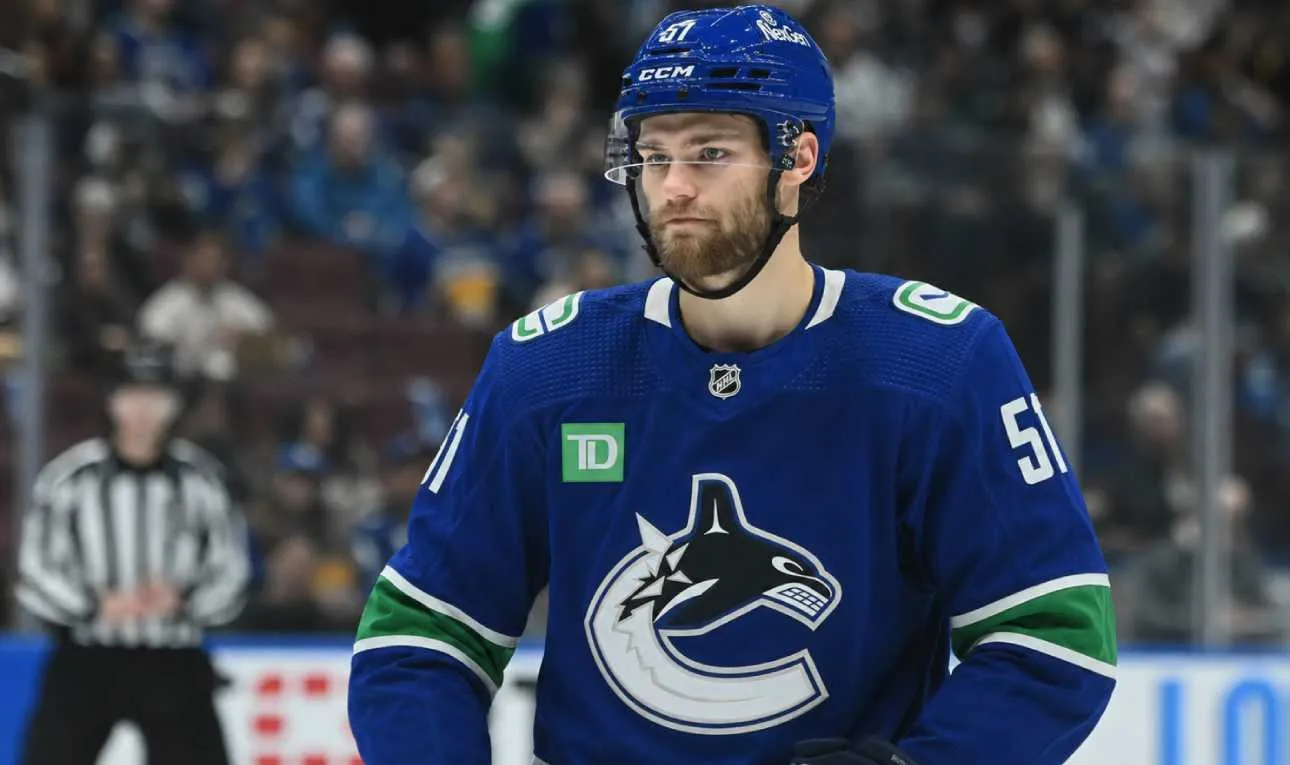
Canucks weigh veteran retention against youth acquisitions
The Canucks hold no-movement clauses on both Jake DeBrusk and Brock Boeser, limiting immediate trade options according to Thomas Drance of The Athletic. Free-agent alternatives such as Michael Bunting and Anthony Mantha reduce pressure to move the pair, yet keeping both caps future flexibility at 11.5 million dollars combined. Rick Dhaliwal noted on Oilers Now that Vancouver owners have enforced strict money-in money-out accounting during the rebuild. Trading DeBrusk for a second-round pick and replacing him with Bunting on a two-year deal would free 2.4 million dollars in long-term cap space.
Elias Pettersson’s situation contrasts sharply with the wingers. Drance outlined a possible structure modeled on Edmonton’s Darnell Nurse deal with San Jose, where Vancouver would absorb a bad contract to receive a younger depth player with upside. The Canucks prefer a fresh start for Pettersson if the right offer arrives rather than risk another season of diminished production. Linus Karlsson’s speed could complement Pettersson on the wing, but such a left-shot carrier remains unavailable in the current market.
Kraken and Ducks offers shape Vancouver’s timeline
The Kraken set an asking price of one of Vancouver’s two young defensemen for Shane Wright, a 23-year-old center with no trade protection. Dhaliwal confirmed the Canucks like Wright yet rejected the steep ask that also included Kent Johnson and Matthew Knies on parallel wish lists. All three targets fall under 25 years old and carry zero movement clauses, allowing Vancouver to move them later without consent.
Anaheim contacted Vancouver about Frank Vatrano to clear cap space for Cutter Gauthier’s extension. The Ducks must attach sweeteners after the offer-sheet loss, creating a money-in money-out opportunity that fits the Canucks’ tight budget. Vatrano’s 3.5 million dollar cap hit would pair with a prospect or pick, but Vancouver has signaled patience and preference for draft-and-develop assets over immediate roster fillers.
The contrast between Seattle’s high ask and Anaheim’s sweetener requirement forces Vancouver to decide between paying assets now or waiting for prices to drop before the 2026-27 season. Dhaliwal emphasized that owners have restricted spending, making any deal that adds future cap flexibility the priority over short-term wins.
Rebuild path narrows to cost-controlled talent
Acquiring players under 25 without no-trade clauses directly addresses the owners’ directive for a patient rebuild. Wright, Buium, Willander, Johnson, and Knies represent the exact profile Dhaliwal listed as obtainable targets. Each carries three to five years of team control before unrestricted free agency, providing a bridge past the current tight budget.
Retaining Boeser and DeBrusk would lock in 11.5 million dollars through 2027-28, limiting the ability to add similar young talent. Trading one winger for a second-round pick and signing Bunting reduces that commitment while preserving draft capital. The causal effect is clear: every million dollars saved now compounds into additional prospect signings or extension room by the 2027 deadline.
Dhaliwal stressed that the Canucks hold a coherent plan and will not rush into overpays. The next six months will determine whether Seattle or Anaheim lowers its price or whether Vancouver turns elsewhere for comparable under-25 assets.
Frequently Asked Questions
Sources

Par Mike Jonderson
Mike Jonderson is a passionate hockey analyst and expert in advanced NHL statistics. A former college player and mathematics graduate, he combines his understanding of the game with technical expertise to develop innovative predictive models and contribute to the evolution of modern hockey analytics.