





Ovechkin averaged 17:27 of ice time per game last season while posting 32 goals and 64 points in 82 contests.
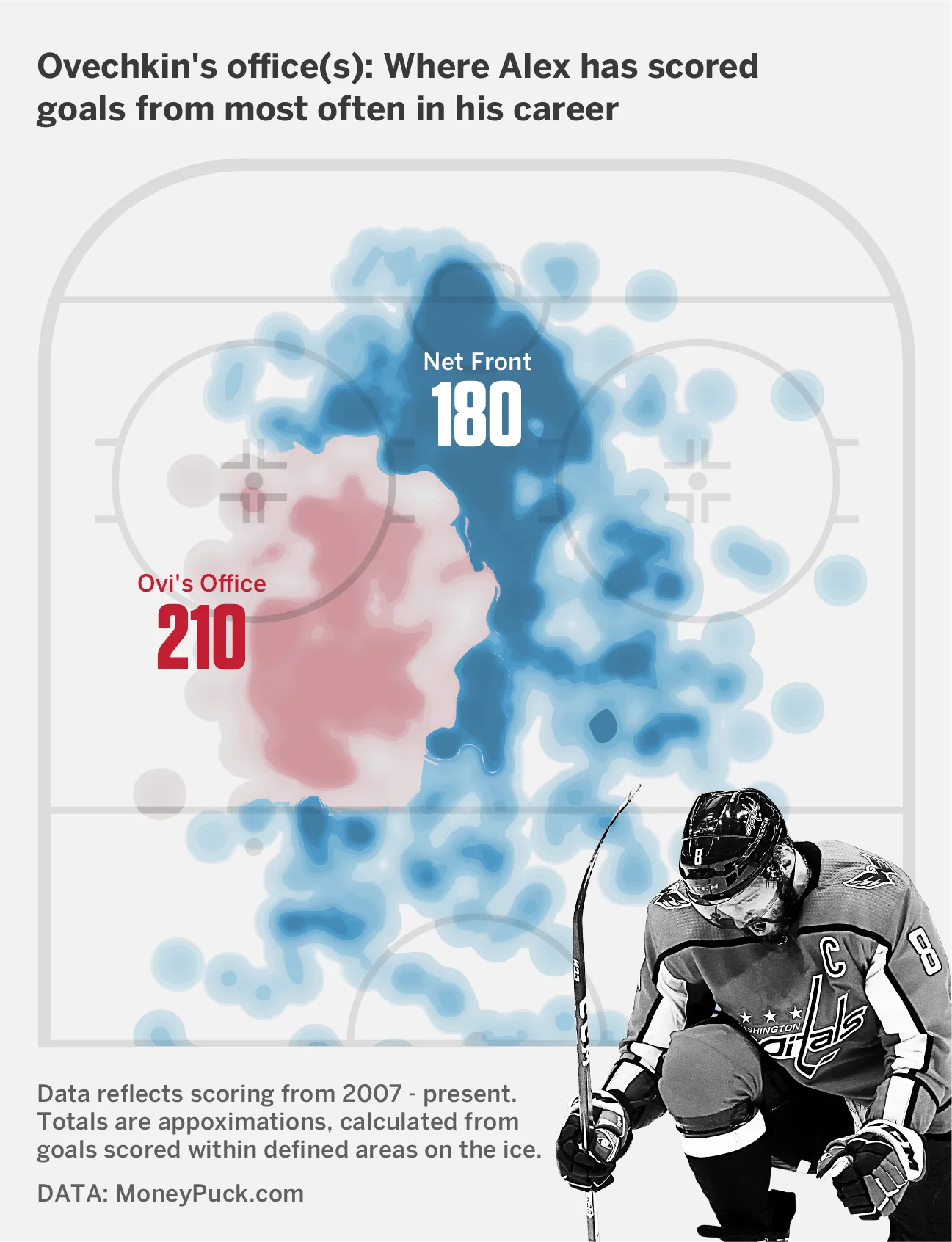
New Additions Force Usage Shift
The Capitals acquired Alex Tuch, who recorded 33 goals and 66 points, Jordan Kyrou, who posted 30 or more goals in three of the prior four seasons, and Boone Jenner during the off-season. These signings create multiple forward combinations that reduce Ovechkin’s necessity as the top-line focal point. Ovechkin led the team in scoring yet the club still missed the playoffs, contrasting sharply with the offensive upside now available across the top nine.
Washington can deploy Ovechkin alongside 19-year-old Ilya Protas and 21-year-old Ryan Leonard on a physical third line. This placement contrasts with last season’s top-line alignment that produced 108 even-strength points and a 53.06 shots-for percentage. The new depth allows the team to maintain possession while protecting Ovechkin’s minutes for critical situations.
Capitals reporter Tarik El-Bashir stated that management presented a vision of 18-20 minutes per night and limited power-play time, which Ovechkin accepted upon re-signing. This reported conversation directly supports the causal link between roster upgrades and the decision to lower Ovechkin’s workload for a potential second Stanley Cup.
Third-Line Placement Improves Balance
Placing Ovechkin on the third line with younger, bigger bodies generates a physical unit capable of wearing down opponents. This setup contrasts with continuing to lean on a 40-year-old for primary offensive production when Tuch and Kyrou supply proven scoring. The result is a more even distribution of ice time that preserves Ovechkin for the postseason.
Last season’s 17:27 average included heavy top-line duties that yielded only a playoff miss. Shifting Ovechkin downward creates room for Aliaksei Protas and Pierre-Luc Dubois in higher roles, directly increasing the number of reliable scoring lines from two to four. The causal mechanism is simple: spread talent to avoid over-reliance on one aging player.
The 32 goals Ovechkin scored in 82 games remain valuable but no longer need to anchor the attack. With Kyrou’s consistent 30-goal output and Tuch’s 66 points the Capitals gain redundancy that protects against regression. This depth advantage explains why reduced minutes represent the logical next step rather than a demotion.
Path to Second Cup Requires Sacrifice
Ovechkin re-signed for one year knowing the organization’s plan emphasized team success over individual usage. The contrast between his prior 40-goal expectations and the current reality of shared responsibility highlights the evolution of the roster. Accepting the change keeps him on a contender instead of forcing another season of heavy lifting without results.
The 108 even-strength points generated by the prior top line now serve as a benchmark the new combinations must surpass through collective effort. By limiting Ovechkin the Capitals gain flexibility to match lines against opponents and shelter younger players. The numerical foundation for this approach rests in the 53.06 shots-for percentage that proved unsustainable without additional talent.
If Ovechkin embraces 15-16 minutes nightly the team gains both immediate balance and long-term sustainability heading into the playoffs.
Frequently Asked Questions
Sources

Par Mike Jonderson
Mike Jonderson is a passionate hockey analyst and expert in advanced NHL statistics. A former college player and mathematics graduate, he combines his understanding of the game with technical expertise to develop innovative predictive models and contribute to the evolution of modern hockey analytics.