


Key takeaways from the 2025 CHL-USHL prospect challenge and the top prospects who stood out
The second annual CHL-USHL Prospect Challenge delivered electrifying hockey and reshaped draft conversations across North America. Played in Calgary and Lethbridge, Alberta, the two-game series featured the Canadian Hockey League’s top talent against the U.S. National Team Development Program, culminating in the event’s first-ever super overtime. Victor Plante’s series-clinching goal at 5:53 of 3-on-3 sudden death gave Team USA a dramatic victory, but the true winners were the scouts and fans who witnessed exceptional performances that will echo through the 2026 NHL Draft.
This year’s showcase proved particularly revealing, dispelling long-held myths about player size while highlighting extraordinary defensive depth. The series also sparked important discussions about player selection criteria, as the CHL pulled from all three Canadian major junior leagues while the U.S. fielded primarily NTDP players, leaving several top USHL prospects on the sidelines.
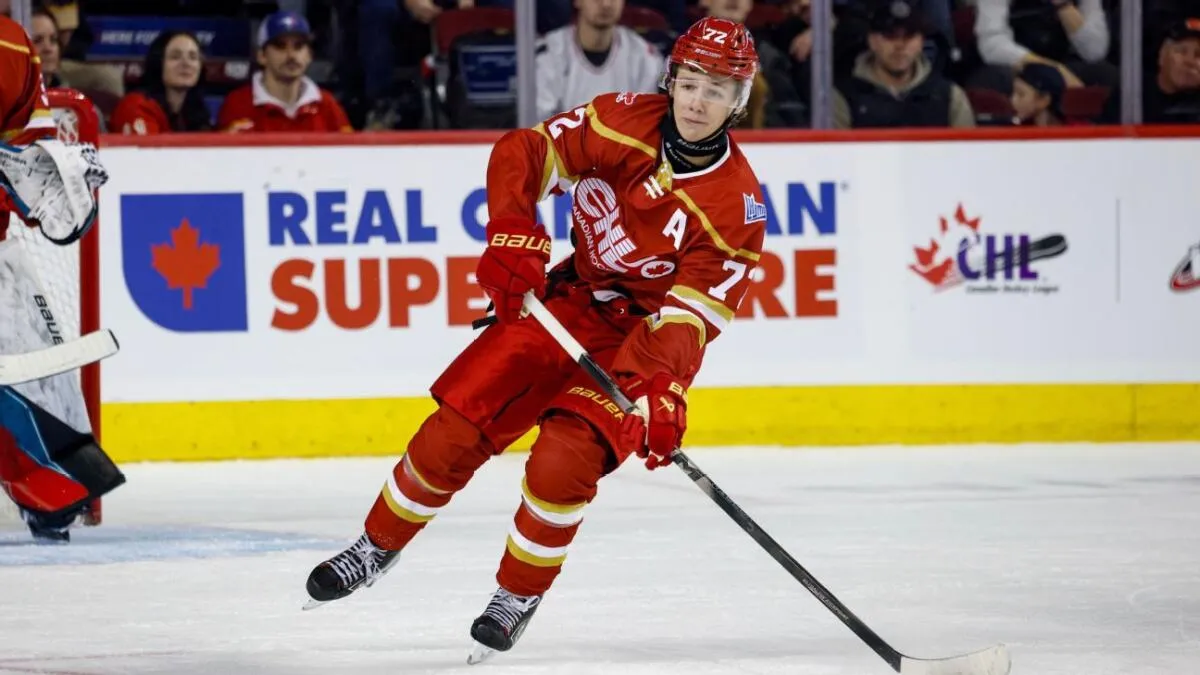
Xavier Villeneuve establishes himself as elite defensive prospect
Xavier Villeneuve dominated the conversation as the series’ most impactful player, making an irrefutable case for consideration as the draft’s top defenseman. The 5-foot-11 blueliner showcased elite edge work and skating ability that consistently allowed him to escape pressure and create offensive opportunities. His mental engagement never wavered, and his physical presence surprised many observers—he initiated scrums, won physical altercations, and even threw a hard pick to create Team CHL’s tying goal in Game 2.
Villeneuve’s hockey intelligence shone brightest when the puck was on his stick. He constantly scanned the ice, identifying threats and opportunities while maintaining possession through heavy traffic. While occasional miscues occurred, they were understandable given his high usage rate. His playing style drew understandable comparisons to Quinn Hughes, combining exceptional edgework with consistent offensive play driving. For teams seeking a dynamic, modern defenseman, Villeneuve demonstrated he belongs in the top-five conversation.
Undersized forwards redefining the modern game
The 2025 CHL-USHL Prospect Challenge delivered a decisive blow to outdated notions about size requirements for NHL success. The majority of standout forward performances came from players 6-foot and under, who consistently attacked with speed and skill that overwhelmed larger defenders. Wyatt Cullen epitomized this trend, delivering what might have been the most complete performance of any forward in the series.
Cullen’s impact extended far beyond his 5-foot-11 frame. He didn’t lose a single puck battle across both games, regardless of opponent size, and his relentless forechecking created constant turnovers. His speed beat defenders regularly, and his power-play goal in Game 1 demonstrated his ability to leverage quick feet and changes of pace to create shooting lanes. Playing on a dominant line with Mikey Berchild and Dayne Beuker, Cullen showcased the exact skill set NHL teams covet in modern middle-six forwards.
Victor Plante, another smaller forward, provided the series’ defining moment while exemplifying the importance of energy and details. Despite being outmuscled at times, he never retreated from battles, forcing hurried passes and capitalizing on opportunities. His super-OT winner—scoring from his stomach after holding the puck in the zone—perfectly encapsulated his determination. Mathis Preston and JP Hurlbert similarly proved that skill, speed, and competitiveness matter more than physical stature in today’s game’s.
The 2026 draft year belongs to defensemen
scouts searching for franchise defensemen should circle the 2026 NHL Draft in red. Beyond Villeneuve, three additional defenders elevated their stock significantly. Carson Carels and Daxon Rudolph both showcased the understated efficiency that defines reliable NHL top-pair defensemen. Neither player wows with flash, but their defensive positioning, smooth puck retrievals, and quick, accurate passes consistently moved play in the right direction.
Carels particularly impressed with his ability to read rushes and use his skating to create advantages. Defensively, he and Rudolph stood as the series’ best blueliners at preventing zone entries and winning retrieval races. Chase Reid, meanwhile, demonstrated why scouts debate him as the class’ top defenseman despite some early tentative play. When confident, he skated through coverage effortlessly, using deceptive head and shoulder fakes to create scoring chances. His ability to activate as a fourth forward while maintaining defensive responsibility showcased the rover quality NHL teams increasingly value.
Goaltenders deliver when it matters most
The crease provided some of the series’ most compelling storylines as both Brady Knowling and Luke Carrithers delivered performances that should significantly boost their draft stock. Facing 85 shots over two games, the American goaltenders stood tall when the USNTDP was consistently outplayed territorially. Knowling stopped 42 of 44 shots in Game 1, looking “nearly unbeatable down low and glove side” while controlling rebounds impressively.
Carrithers matched his counterpart’s excellence in Game 2 and the decisive super overtime, stopping 33 of 37 shots and all four overtime attempts. His sequence of diving to stop a rebound attempt before recovering to make two additional saves highlighted his athleticism and competitiveness. For two prospects who entered the series with questions about their consistency, these performances provided the high-pressure showcase NHL scouts demanded.
Emerging stories and future considerations
Sammy Nelson, a 2027 draft-eligible forward, made observers wish age requirements were flexible. His two-point performance in Game 1, combined with defensive mastery in Game 2, revealed extraordinary hockey sense and positioning. Nelson consistently outmuscled CHL players to gain advantages, showing instincts and work ethic that would place him in the top 10 if he were eligible this year.
Caleb Malhotra reinforced his reputation as a future captain and potential first-round pick. His shorthanded goal and ability to provide momentum shifts through physical, traffic-heavy play demonstrated the intangible qualities NHL teams covet. Alessandro Di Iorio, returning from injury, showed why he belongs in first-round discussions with a powerful catch-and-release goal that tied Game 2.
The series concluded with an important structural takeaway: the event could better serve prospects by expanding Team USA’s selection beyond the NTDP. While the CHL drew from all three leagues—including U.S., Czech, and Russian players—several top USHL prospects missed this valuable showcase opportunity. A true best-on-best format would benefit everyone involved, providing scouts a complete picture of North American talent and giving deserving players like Tynan Lawrence and Jack Hextall their moment on this stage.
Frequently Asked Questions

Par Mike Jonderson
Mike Jonderson is a passionate hockey analyst and expert in advanced NHL statistics. A former college player and mathematics graduate, he combines his understanding of the game with technical expertise to develop innovative predictive models and contribute to the evolution of modern hockey analytics.