










Now I have enough information to write a comprehensive article about Chris Drury’s best and worst moves as Rangers GM. Let me create the article.
Since taking over as general manager and president of the New York Rangers in May 2021, Chris Drury has navigated one of the most challenging positions in professional hockey. The former Rangers player and Connecticut native inherited a franchise with championship aspirations but also significant salary cap challenges and roster questions. Over four-plus years, Drury has made bold moves that have propelled the Blueshirts to multiple Eastern Conference Finals and a Presidents’ Trophy, but he’s also made decisions that continue to haunt the franchise. His tenure has been marked by aggressive trades, questionable contract decisions, and a willingness to shake up even the most sacred elements of the roster.
Understanding the full scope of Drury’s management requires examining both his triumphs and his missteps. While some moves have proven prescient, others have left gaping holes in the lineup that persist to this day. As the Rangers continue their pursuit of their first Stanley Cup since 1994, evaluating Drury’s track record offers crucial insight into where this franchise stands and where it’s headed.
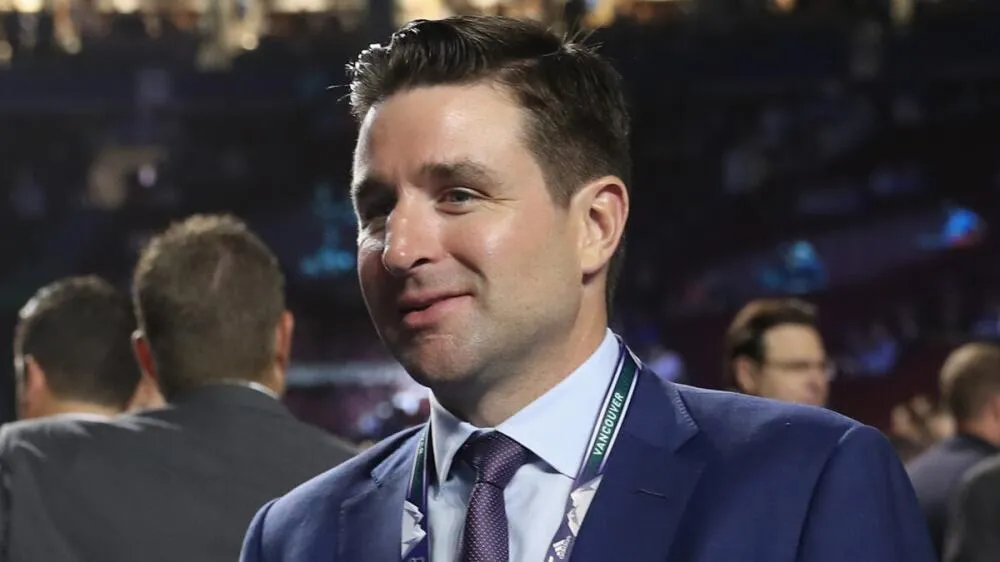
Best moves by New York Rangers GM Chris Drury
Locking up Adam Fox long-term
Though Jeff Gorton executed the heist that brought Adam Fox to New York in 2019, it was Drury who secured the Norris Trophy winner for the long haul. On November 1, 2021, Drury signed Fox to a seven-year, $66.5 million extension with an average annual value of $9.5 million through the 2028-29 season.
The timing and price point of this deal cannot be overstated. Coming just months after Cale Makar signed his six-year, $54 million contract with Colorado, Fox’s extension looked like it might become expensive quickly. Instead, it has aged like fine wine as the salary cap has climbed and the market rate for elite defensemen has skyrocketed.
Fox has been everything the Rangers could have hoped for and more. His ability to quarterback the power play, contribute offensively while maintaining defensive responsibility, and serve as a cornerstone of the franchise makes this contract one of the team’s most valuable assets. As comparable defensemen now command $10-12 million annually, Drury’s foresight in locking up Fox before the market exploded stands as one of his signature achievements.
The extension also sent a message to the fanbase and the locker room: the Rangers were committed to building around their young stars. Fox represents the kind of homegrown talent that franchises dream about, and Drury ensured he would be wearing the Blueshirt for the prime years of his career.
The 2022 trade deadline additions
In his first trade deadline as Rangers GM, Drury displayed the same fearlessness that defined his playing career. With the team exceeding expectations and heading toward a 110-point season, Drury refused to stand pat. He executed four separate deals that transformed the Rangers into legitimate Cup contenders.
The acquisitions of Andrew Copp, Frank Vatrano, Tyler Motte, and Justin Braun provided exactly what the Rangers needed. Copp delivered 18 points and a plus-13 rating in just 16 regular-season games after the trade, then added 14 points in 20 playoff contests. Vatrano proved to be a perfect fit on the top line with Chris Kreider and Mika Zibanejad, his shooting complementing their styles ideally.
What made these moves even more impressive was the price Drury paid. All four players were pending free agents, which was critical given the Rangers’ tight cap situation. According to The Hockey Writers, only Copp proved expensive, costing a 2022 first-round pick, a 2023 second-rounder, Morgan Barron, and a fifth-round selection. Vatrano and Motte each cost just a fourth-round pick, while Braun was acquired for a third-rounder.
The Rangers came within two victories of the Stanley Cup Final that spring. While they ultimately fell short, Drury’s aggressive approach gave the team its best chance and established him as a GM willing to take calculated risks when the moment called for it.
Signing Vincent Trocheck as a free agent
When Drury inked Vincent Trocheck to a seven-year, $39 million contract on July 1, 2022, the reaction was mixed at best. Many questioned whether a player who had reached 20 goals just once in his career was worth $5.625 million annually for seven years. Those concerns have been thoroughly extinguished.
Trocheck has developed into one of the Rangers’ most important players, embodying everything the team values. His two-way game, faceoff proficiency, leadership, and competitive fire have made him indispensable. During the Rangers’ Presidents’ Trophy season in 2023-24, Trocheck was arguably as important as anyone on the roster, driving play at both ends of the ice.
The contract has proven to be a bargain. As centers with similar skill sets now command $7-8 million annually, Trocheck’s deal looks better with each passing season. He’s the rare big-ticket free agent signing that not only works out as expected but exceeds those expectations. Drury identified a player whose intangibles and work ethic would translate perfectly to New York’s system, and he was absolutely right.
Trocheck’s presence has also allowed the Rangers to deploy Mika Zibanejad in more offensive-minded situations, knowing they have a responsible, defensively-sound option down the middle. The acquisition addressed multiple needs with a single signing, which is the hallmark of quality general management.
Reacquiring J.T. Miller in a blockbuster trade
Perhaps no move better illustrates Drury’s boldness than bringing J.T. Miller back to New York in January 2025. After Miller’s well-documented struggles and desire to leave Vancouver, Drury pounced on the opportunity to reunite the former Rangers first-round pick with his original organization. The Rangers sent Filip Chytil, Victor Mancini, and a first-round pick to the Canucks while also receiving Erik Brannstrom and Jackson Dorrington.
On paper, this trade was a massive win for New York. While Chytil showed flashes of brilliance, his concussion history created uncertainty about his long-term viability. Mancini was a serviceable prospect but hardly untouchable. In return, the Rangers landed one of the most coveted players available, a legitimate top-line center with championship experience and proven production.
Miller’s impact has been transformative. His physical style, offensive creativity, and leadership filled multiple voids for the Rangers. The fact that Drury was able to bring him home while acquiring additional assets in Brannstrom and Dorrington made the deal even more impressive. Miller was subsequently named captain, replacing the traded Jacob Trouba and cementing his status as a cornerstone of the franchise’s future.
The Jacob Trouba trade masterclass
When Drury decided it was time to move on from captain Jacob Trouba in December 2024, he faced a nearly impossible situation. Trouba’s modified no-trade clause limited options, his $8 million cap hit was significant, and trading a captain mid-season would send shockwaves through the organization. Yet Drury navigated these challenges brilliantly.
By giving Trouba an ultimatum—accept a trade or go on waivers—Drury forced a resolution. The trade to Anaheim for Urho Vaakanainen and a draft pick was remarkable considering the alternatives. Not only did the Rangers shed Trouba’s entire cap hit, but they also acquired a young defenseman and additional draft capital in the process.
The move demonstrated Drury’s willingness to make difficult decisions when necessary. Rather than allowing a deteriorating situation to fester, he acted decisively, clearing both salary cap space and a leadership void that would eventually be filled by Miller. It was surgical in execution and showed that no player, regardless of status, was untouchable when the team needed change.
Worst moves by New York Rangers GM Chris Drury
Trading Pavel Buchnevich to St. Louis
If there’s one move that will forever define Drury’s tenure—for better or worse—it’s the July 23, 2021 trade of Pavel Buchnevich to the St. Louis Blues. Coming off a breakout season where he scored 20 goals and 48 points in 54 games, the 25-year-old restricted free agent was poised for stardom. Instead, Drury dealt him for forward Sammy Blais and a second-round pick.
The reasoning was understandable at the time. The Rangers faced significant salary cap constraints, and Buchnevich was due a substantial raise. Additionally, there was pressure from ownership to toughen up the roster following the Tom Wilson incident that spring. But in hindsight, this trade has haunted the franchise.
Buchnevich immediately blossomed into a star in St. Louis, recording 30 goals and 78 points in his first season with the Blues. He’s maintained that production ever since, posting 60-plus points and 25-plus goals in each of his three seasons there. He recently signed a six-year, $48 million extension to remain in St. Louis long-term.
Meanwhile, the return has been disastrous. Blais managed just nine points in 54 games without scoring a single goal before being traded back to St. Louis in the Vladimir Tarasenko deal. The second-round pick was flipped in the Copp trade, leaving the Rangers with nothing tangible from the deal. More painfully, New York has struggled to fill the void on right wing ever since, cycling through numerous players without finding a comparable replacement.
According to Forever Blue Shirts, even Frank Vatrano couldn’t quite replicate the chemistry and production that Kreider, Zibanejad, and Buchnevich developed together. Unless Drury delivers a Stanley Cup, this trade may remain the defining negative of his tenure.
The Barclay Goodrow contract and waiver debacle
One day before trading Buchnevich, Drury signed Barclay Goodrow to a six-year, $21.85 million contract after acquiring his negotiating rights from Tampa Bay. The $3.64 million annual cap hit immediately looked like an overpay for a fourth-line player, and the term was even more concerning.
Goodrow came to New York with championship pedigree, having won back-to-back Stanley Cups with the Lightning. He was meant to provide leadership, penalty-killing prowess, and playoff reliability. While he delivered those qualities to varying degrees, his production declined sharply. After consecutive 30-point seasons, Goodrow managed just four goals and 12 points in 80 games during the 2023-24 season with a minus-13 rating.
Despite a strong playoff performance that spring, Drury placed Goodrow on waivers in June 2024, where the San Jose Sharks claimed him. The move was controversial for multiple reasons. Goodrow possessed trade protection, raising ethical questions about whether he should have been waivable. More importantly, Goodrow and his teammates were reportedly blindsided by the decision, creating lingering resentment in the locker room.
The situation exemplified the dangers of giving long-term deals to role players. While Drury eventually extricated himself from the contract, the damage to team culture and the initial overpayment made this one of his more regrettable decisions.
The Patrik Nemeth signing and costly dump
Another mistake from Drury’s first offseason, the signing of Patrik Nemeth to a three-year, $7.5 million contract was a disaster from the start. The 6-foot-4, 230-pound defenseman was supposed to provide size and stability on the third pairing while potentially mentoring Nils Lundkvist. Instead, he became a liability.
Nemeth recorded just seven points with a minus-9 rating in 63 games, grading out in the bottom one percent of all NHL skaters according to Evolving Hockey’s metrics. His play was so poor that Drury decided to cut his losses after just one season. However, getting out of the contract came at a steep price.
To offload Nemeth’s remaining two years and $5 million to the Arizona Coyotes, Drury had to attach two second-round picks—one in 2025 and a conditional pick in 2026. The only return was minor-league defenseman Ty Emberson. Paying two valuable draft picks to escape a bad contract after one year represents a spectacular failure in asset management.
The Nemeth situation illustrates the dangers of panic signings in response to external pressure. Following the Tom Wilson incident, the Rangers felt compelled to add toughness and size. Nemeth checked those boxes but couldn’t actually play at an NHL level, and the cost of that mistake extended far beyond his single season in New York.
The Patrick Kane acquisition
When Patrick Kane became available at the 2023 trade deadline and made it clear he wanted to go only to New York, it seemed like a dream scenario. The Rangers would add a future Hall of Famer for minimal cost—just a second-round pick, a fourth-rounder, and defenseman Andy Welinski in a three-team deal. What could go wrong?
As it turned out, quite a bit. Kane’s hip injury, which was known at the time of the trade, proved far more limiting than reported. He managed just five goals and 12 points in 19 regular-season games, and while he contributed a goal and six points in the seven-game playoff loss to New Jersey, his effectiveness was clearly compromised.
The real problem wasn’t just Kane’s diminished play—it was that he represented overkill after the Rangers had already acquired Vladimir Tarasenko earlier in the deadline period. Rather than addressing needs for size and grit, Drury added more skill to a lineup already loaded with it. Then-coach Gerard Gallant struggled to integrate Kane, particularly on the power play, leading to a disjointed forward group.
Kane himself acknowledged after the playoff elimination that he knew going into the series that his hip issues would prevent him from helping much. The Rangers’ obsession with making the Kane trade work consumed attention and energy that might have been better spent elsewhere. While the acquisition didn’t directly cause their first-round exit, it didn’t help either, and with hindsight, Drury should have recognized that an injured superstar wasn’t what the team needed.
The summer 2024 handling of leadership and culture
Sometimes the worst moves aren’t single transactions but rather how situations are managed. The summer of 2024 exemplified this issue. Between the Goodrow waiver situation and the protracted Jacob Trouba trade saga, Drury created unnecessary turmoil that poisoned the team culture heading into the season.
The Goodrow waiver placement blindsided players and created resentment, particularly among the leadership group who valued his contributions. But even worse was the Jacob Trouba situation. After rumors swirled all summer that he would be traded to Detroit, Drury ultimately allowed Trouba to remain as captain to start the season. This half-measure proved disastrous.
As one analysis noted, if you’re going to be a cutthroat GM, you can’t half-ass it. The team limped through November and December with a cloud hanging over the locker room. Players were distracted by the uncertainty surrounding their captain, and when Trouba was eventually traded in December, it felt like another betrayal to a roster already raw from the Goodrow situation.
Drury should have either committed to Trouba remaining captain with a clear conversation about the summer’s events, or he should have traded him before the season began. The worst possible outcome was letting the situation fester, which is exactly what happened. The team quit on itself, and while Drury eventually executed the Trouba trade brilliantly, the damage to that season was already done.
Chris Drury’s tenure as New York Rangers general manager has been nothing if not eventful. His willingness to make bold moves has resulted in both spectacular successes and costly failures. The Adam Fox extension, Vincent Trocheck signing, and J.T. Miller trade demonstrate his ability to identify and acquire core pieces. Meanwhile, the Pavel Buchnevich trade and Patrik Nemeth contract show the perils of reactionary decision-making.
As the Rangers enter a new era under head coach Mike Sullivan with J.T. Miller wearing the captain’s C, Drury’s legacy remains unwritten. The foundation is in place with Fox, Miller, Igor Shesterkin, and Alexis Lafrenière signed long-term. The question is whether Drury can learn from his mistakes while continuing to make the aggressive moves that have defined his tenure. Until the Rangers hoist the Stanley Cup for the first time since 1994, every decision will be viewed through that lens. For now, Drury’s report card reads as incomplete—filled with promise but lacking the ultimate validation that only a championship can provide.

Par Mike Jonderson
Mike Jonderson is a passionate hockey analyst and expert in advanced NHL statistics. A former college player and mathematics graduate, he combines his understanding of the game with technical expertise to develop innovative predictive models and contribute to the evolution of modern hockey analytics.