












The Philadelphia Flyers’ decision-making has come under intense scrutiny in recent months, with general manager Daniel Briere facing mounting criticism over his handling of the franchise’s brightest prospect. Matvei Michkov, a 20-year-old phenom who ranks second in the NHL with 29 five-on-five points over his team’s last 39 games—trailing only Boston’s David Pastrňák—has become the focal point of a troubling pattern. Despite his exceptional production, Michkov has endured repeated benchings, limited ice time, and questionable linemate assignments that have raised serious questions about whether Daniel Briere sabotaging Matvei Michkov development with the Flyers is becoming a legitimate concern.
The root of this controversy traces back to Briere’s coaching hire following the 2024-25 season. After interim coach Brad Shaw helped Michkov flourish with 12 points in nine games and a 5-3-1 record to close out the year, the expectation was that Philadelphia would hire someone who could nurture their young star’s immense talent. Instead, Briere brought in Rick Tocchet, a move that has proven disastrous for Michkov’s growth and the team’s overall performance. The Flyers currently sit near the bottom of the Eastern Conference despite Vezina-caliber goaltending from Dan Vladař, and their best player continues to be mismanaged in ways that eerily echo the John Tortorella era.
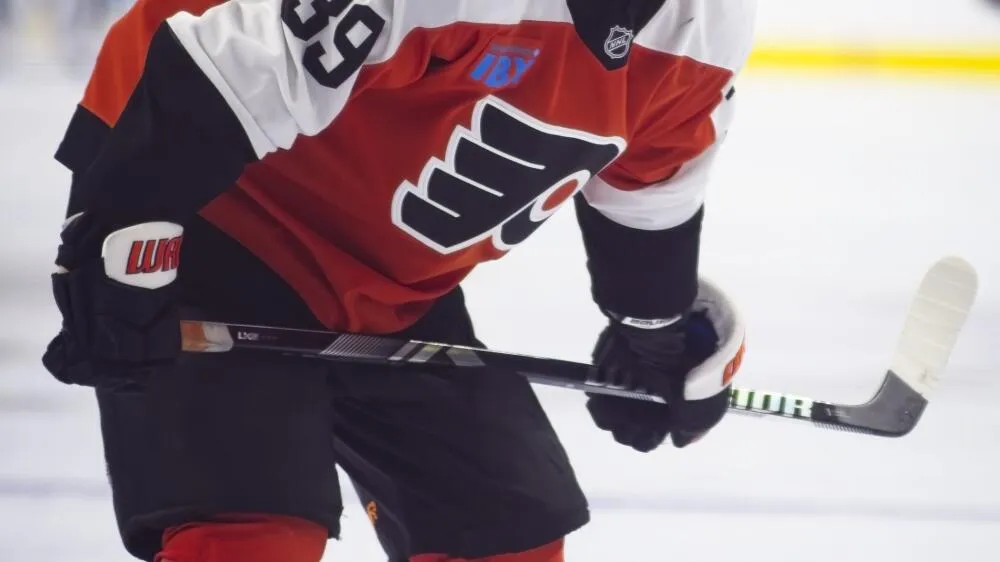
The Rick Tocchet hire and why Daniel Briere sabotaging Matvei Michkov development with the Flyers concerns are valid
When the Flyers officially announced Rick Tocchet as their 25th head coach on May 14, 2025, the franchise positioned it as a homecoming for the former Flyers forward and Hall of Fame member. General manager Daniel Briere and President of Hockey Operations Keith Jones praised Tocchet’s communication skills and his 2023-24 Jack Adams Award win. They emphasized his ability to develop young players while earning the respect of veteran All-Stars. On paper, it seemed like a reasonable hire for a rebuilding franchise.
However, the reality has been starkly different. Tocchet’s track record reveals a coach who has never made a Conference Final at any level as a bench boss and has as many bottom-of-the-division finishes as playoff appearances—two of each. His tenure with the Vancouver Canucks, which ended with fans celebrating his departure, should have served as a warning sign. Tocchet’s coaching style emphasizes a conservative, low-event brand of hockey that prioritizes defensive structure over offensive creativity.
For a player like Michkov, whose game thrives on dynamic playmaking and offensive instincts, this system creates an inherent conflict. The young Russian has been benched more than any other Flyers player this season, despite clearly being the team’s most talented forward. In one particularly egregious example, he was placed on a line with Rodrigo Ābols and Christian Dvorak—hardly the caliber of linemates that help a budding superstar develop. This represents the kind of decision-making that fuels accusations that Daniel Briere sabotaging Matvei Michkov development with the Flyers is more than just fan hyperbole.
The coaching philosophy Tocchet brings emphasizes a box-plus-one defensive zone coverage and wants players to move the puck “north” with pace. While these are sound fundamentals, they come at the expense of allowing skilled players the creative freedom to make plays. Tocchet’s teams historically don’t shoot the puck frequently, and the style can be described as boring at best. For a prospect who was second in the NHL rookie of the month voting for October with nine points in 11 games, being constrained by such a system seems counterproductive.
What makes this situation particularly frustrating for Flyers fans is that they’ve seen this movie before. Under Tortorella, Michkov experienced benchings, anemic usage, and poor deployment that stagnated his progress throughout his rookie season. When Shaw took over as interim coach and unleashed Michkov, the results spoke for themselves. The teenager dominated, showing the kind of superstar hockey that made him a consensus top-five talent in his draft class despite falling to seventh overall in 2023.
The historical context of Daniel Briere sabotaging Matvei Michkov development with the Flyers through questionable decisions
To understand whether concerns about Daniel Briere sabotaging Matvei Michkov development with the Flyers have merit, it’s important to examine Briere’s broader track record as general manager. While still relatively young in his front-office career, his decision-making has drawn uncomfortable parallels to his predecessor, Chuck Fletcher—arguably the most unpopular figure in franchise history.
Fletcher’s tenure was marked by an unclear direction, bad signings, questionable draft picks, and stunted development. Many of these same issues are repeating under Briere’s watch. After missing the playoffs, Fletcher kept the team’s aging veterans and even signed Sean Couturier to a massive eight-year deal when a full rebuild was clearly necessary. The roster remained old, the prospect pool stayed mediocre, and the cap stayed tight—a recipe for prolonged mediocrity.
Briere has made similar mistakes with long-term commitments that don’t align with the team’s competitive timeline. The Travis Konecny contract stands out as particularly problematic. While the 28-year-old has strung together points in his last four games, over a 43-game stretch, he has only two more points than Brendan Gallagher (26 versus 24). Even if Konecny returns to true first-line form, he’s now under contract until he’s 36 years old. His prime years will almost certainly be spent on non-contending rosters, as most forwards regress heavily by their mid-30s.
This type of decision reveals an unclear direction for the franchise. If the Flyers are truly rebuilding around young talents like Michkov, why commit significant cap space and term to a player who will be in decline when the team is ready to contend? It’s the same muddled thinking that plagued Fletcher’s tenure and ultimately led to his firing following major fan backlash.
The draft record under Briere has also been mixed at best. While Michkov and Porter Martone were slam-dunk picks, other selections have been questionable. Jack Nesbitt doesn’t look like a 12th-overall pick—more like a second-rounder. Oliver Bonk was selected 22nd in 2023 ahead of arguably top-10 talent Gabe Perreault, a decision that looks increasingly suspect as time passes. These aren’t necessarily busts, but they represent the kind of safe, conservative choices that build mediocre rosters rather than championship contenders.
Perhaps most damning is the Cutter Gauthier situation. The former fifth-overall pick demanded a trade and is now tied with Michkov for second place in five-on-five points over his team’s last 39 games while wearing an Anaheim Ducks uniform. Losing a prospect of that caliber for significantly less value than he should command represents a failure of asset management and organizational culture. When top prospects actively want out of your organization, it signals deeper problems.
Why the Michkov healthy scratches amplify concerns about Daniel Briere sabotaging Matvei Michkov development with the Flyers
The most visible manifestation of management’s questionable decision-making came during Michkov’s rookie season when Tortorella made him a healthy scratch for the first time on November 7, 2024, during a game against the Tampa Bay Lightning. Just six days after being named NHL rookie of the month for October, the 19-year-old watched from the press box as his teammates secured a 2-1 victory.
Tortorella defended the decision with his typical deflective approach. “With young guys, they can watch games too as far as development,” he said. “It’s trying to help him.” But the numbers told a different story. Michkov was second on the Flyers with 10 points in 13 games at the time. Yes, he was a minus-8, but that’s a team statistic that reflects the entire unit’s play, not just one player’s defensive shortcomings.
The scratches didn’t stop there. Michkov was benched multiple times throughout the season, including a first-period benching against the Devils in March where Tortorella refused to explain his reasoning. “I’m not gonna give you that information,” the coach said tersely. This pattern of punishment—regardless of whether Michkov played well or poorly—created an environment where the young star couldn’t find consistency or confidence.
What made these decisions particularly galling was that they came after stellar performances. Michkov had won rookie of the month honors with nine points in 11 games in October, showcasing exactly the kind of offensive production the rebuilding Flyers desperately needed. Rather than reward that success or build upon it, Tortorella chose to sit him. The message sent was clear: even excellence would be met with benching if it didn’t fit the coach’s vision.
Before the season, general manager Danny Briere had actually predicted this conflict. “Just like he has with almost every single player,” Briere said of Tortorella potentially clashing with Michkov. “At the end of the day, Torts is the coach and he’s going to manage him. He’s going to teach him to be a pro. Torts’ goal is to make Matvei the best player he can be.” Briere also warned it could be a “tough season” for Michkov despite his offensive potential, adding that his expectations were “actually pretty low.”
This admission is telling. Briere knew exactly what he was getting with Tortorella—a coach infamous for benching top offensive players as a message-sending tactic throughout his 23-year NHL coaching career. Yet he allowed that environment to persist for an entire season before making a change. And when he finally did make that change, he hired someone with a remarkably similar coaching philosophy in Tocchet. The fact that similar patterns of healthy scratches and limited ice time have continued under the new regime suggests this is a feature of Briere’s vision, not a bug.
The statistical evidence showing Daniel Briere sabotaging Matvei Michkov development with the Flyers contradicts team success
Perhaps the most compelling argument against the current management approach is the stark disconnect between Michkov’s individual production and his treatment. Over the team’s last 39 games, Michkov has accumulated 29 five-on-five points, second in the entire NHL behind only David Pastrňák during that span. This isn’t just good for a 20-year-old prospect—it’s elite production by any standard.
Despite this exceptional performance, the Flyers sit dead last in the Eastern Conference with a record hovering around .500. They’ve won roughly half their games despite Vezina Trophy-caliber goaltending from Dan Vladař, who has repeatedly kept them in games they had no business winning. When your goaltender posts elite numbers and your best forward produces at a near-superstar level, yet the team still struggles, it points to systemic problems with coaching and roster construction.
The coaching staff’s response to this has been to further limit Michkov’s opportunities rather than feature him more prominently. His ice time has dipped below 14 minutes in multiple games, and his recent linemates have ranged from questionable to outright baffling. Placing your leading scorer alongside bottom-six forwards makes no sense from a developmental or competitive standpoint. It handicaps his ability to produce, limits his growth, and wastes the team’s most valuable offensive asset.
The approach stands in stark contrast to how other rebuilding teams have handled their elite young prospects. When Connor Bedard struggled during his rookie season with Chicago, the Blackhawks didn’t healthy scratch him repeatedly or bury him with poor linemates. They gave him opportunities, adjusted the system to highlight his strengths, and accepted that growing pains are part of the development process. The same goes for how Anaheim has handled Gauthier or how San Jose featured Will Smith and Macklin Celebrini.
There’s also the issue of what message this sends to other prospects in the organization. If your best player—someone producing at an elite level—gets benched and demoted regularly, what incentive do other young players have to push for offensive creativity? The culture being created is one where playing it safe and avoiding mistakes matters more than making game-breaking plays. For a team that needs dynamic offensive talent to compete in the modern NHL, this is a death sentence.
The contradictions extend beyond just ice time and linemates. Management’s public statements about development don’t align with their actions. They talk about patience and long-term thinking, yet they signed Konecny to a deal that runs through his decline years. They emphasize skill development, yet they hire coaches who restrict creative players. They claim to be rebuilding, yet they make moves designed to chase short-term mediocrity rather than commit to a true youth movement.
What the future holds and whether Daniel Briere sabotaging Matvei Michkov development with the Flyers will have lasting consequences
The most troubling aspect of this entire situation is the potential long-term damage being done to both Michkov’s career trajectory and the franchise’s competitive window. Elite prospects have relatively short runways to develop into superstars, and the Flyers are wasting precious time with an approach that seems designed to suppress rather than enhance Michkov’s talents.
History is littered with examples of highly-touted prospects whose development was derailed by poor coaching and management decisions. For every success story of a player who thrived despite a difficult environment, there are cautionary tales of talents who never reached their potential because their teams mishandled them. The Flyers risked this fate with Gauthier and lost him. They cannot afford to make the same mistake with Michkov.
The franchise also faces a credibility problem with future prospects and free agents. When word spreads that even your best players get benched regularly and that management prioritizes “old-school” coaching philosophies over modern player development, it becomes harder to attract talent. The Gauthier trade demand wasn’t just about one player—it was a symptom of larger cultural issues within the organization. If Michkov’s camp becomes frustrated enough to explore options (though his contract situation makes that unlikely in the near term), the optics would be catastrophic.
There’s also the question of Briere’s job security. While the Flyers organization and fan base currently believe in their young general manager, patience isn’t infinite. If the Michkov-Tocchet pairing continues to produce disappointing results and the team remains mired in the basement of the standings, someone will inevitably pay the price. Firing Tocchet after just one season would be an admission of failure in the hiring process and would likely cost Briere significant political capital with ownership. But allowing the situation to continue could cost the franchise its most valuable asset.
The path forward seems clear, even if management hasn’t acknowledged it yet. The Flyers need to fully commit to building around Michkov’s talents rather than trying to force him into a system that doesn’t suit his skills. That means either adjusting Tocchet’s coaching approach to give the young star more freedom and better linemates, or making another coaching change—as painful as that admission would be after just one season. It also means being more strategic about roster construction and contract allocation, prioritizing players who fit the actual competitive timeline rather than handing out long-term deals to veterans who will decline before the team contends.
The stakes couldn’t be higher. Michkov represents the best prospect the Flyers have drafted in decades—perhaps ever. His combination of offensive creativity, hockey IQ, and skill level is franchise-altering if properly developed. But if the current approach continues, with repeated benchings, restrictive systems, and poor supporting casts, the Flyers risk squandering that generational talent. Whether intentional or not, the question of Daniel Briere sabotaging Matvei Michkov development with the Flyers has become a defining issue for this management group. How they respond in the coming months will determine not just Michkov’s future, but the trajectory of the entire franchise for the next decade. The decisions made now will echo far into the future, for better or worse.

Par Mike Jonderson
Mike Jonderson is a passionate hockey analyst and expert in advanced NHL statistics. A former college player and mathematics graduate, he combines his understanding of the game with technical expertise to develop innovative predictive models and contribute to the evolution of modern hockey analytics.