











The Detroit Red Wings are approaching a critical juncture in their rebuild under general manager Steve Yzerman. With a promising start to the 2025-26 season and an eight-year playoff drought weighing heavily on the organization, the pressure to make meaningful moves has never been greater. As the team sits in a competitive position within the Atlantic Division, the front office faces crucial decisions about which players to target on the trade market and which assets they might need to sacrifice to push toward postseason contention. The combination of young talent emerging from within and veteran pieces potentially available elsewhere creates an intriguing landscape for Detroit’s trade strategy.
The Red Wings’ early success this season, highlighted by their five-game winning streak that has reshaped expectations, has positioned them as potential buyers rather than sellers at the trade deadline. However, Yzerman’s methodical approach suggests any moves will be carefully calculated to balance immediate needs with long-term sustainability. Understanding who the Red Wings might pursue—and what they’re willing to give up—provides insight into the franchise’s vision for finally breaking through to playoff hockey.
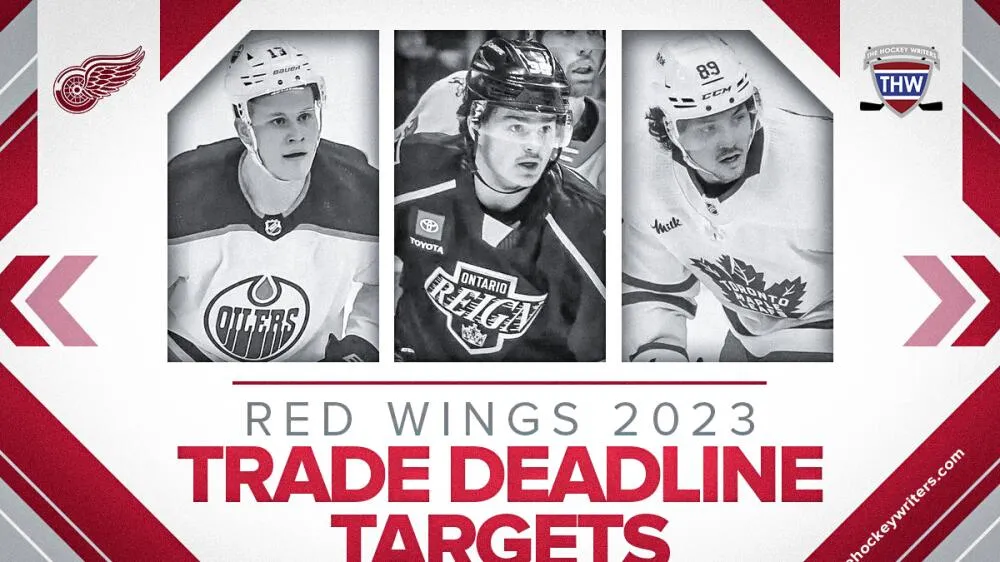
Top forward targets among Detroit Red Wings 2025-26 trade targets
The Red Wings’ forward corps has shown flashes of brilliance this season, particularly with Dylan Larkin’s commanding performance leading the team in scoring. However, depth scoring remains a concern when considering a sustained playoff push. The front office has reportedly been evaluating several forwards who could provide the offensive boost needed without mortgaging the future.
Yegor Chinakhov of the Columbus Blue Jackets represents an intriguing option among potential Detroit Red Wings 2025-26 trade targets. The 24-year-old winger requested a trade from Columbus back in July, and multiple reports have linked the Red Wings to the former first-round pick. Chinakhov has shown tantalizing talent with 16 goals and 29 points in 53 games during the 2023-24 season, though injuries have limited his overall development. His ability to drive offense from the wing could complement Lucas Raymond and provide the secondary scoring Detroit desperately needs.
A more ambitious target would be Alexis Lafrenière from the struggling New York Rangers. The first overall pick in the 2020 draft—a selection that famously could have belonged to Detroit before the lottery—has yet to reach his ceiling with New York. With the Rangers stumbling to a 4-5-2 start and facing organizational pressure, a shake-up seems inevitable. Lafrenière’s 93 goals and 197 points in 391 games don’t reflect first-overall production, but a change of scenery could unlock the potential that made him the consensus top prospect five years ago.
The Rangers’ developmental struggles with young forwards are well-documented, and the Red Wings believe their system could provide the environment Lafrenière needs to flourish. Acquiring him would require significant assets, likely including a combination of picks and prospects, but the potential upside makes him one of the most compelling names on the trade market. For Detroit, landing a player of Lafrenière’s pedigree would signal serious intent about competing now while still maintaining a young core.
Edmonton Oilers forward Mattias Janmark has also surfaced in trade discussions. While less flashy than Lafrenière or Chinakhov, Janmark brings playoff experience and versatility that could prove valuable in a postseason run. His ability to play up and down the lineup and contribute defensively would add another dimension to Detroit’s forward group. The Oilers’ salary cap constraints could make a deal feasible without surrendering premium assets.
The reality for the Red Wings is that any significant forward acquisition will likely require moving pieces from their current roster. Jonatan Berggren, despite producing four points in six games early this season, finds himself firmly on the trade block. The Swedish forward has bounced in and out of the lineup since 2022 and appears to have plateaued in Detroit. A swap of Berggren for a player in a similar situation—like Chinakhov—could benefit both organizations by providing fresh starts for talented players who need new environments.
Defensive reinforcements in Detroit Red Wings 2025-26 trade targets
While the emergence of Axel Sandin-Pellikka has energized Detroit’s blue line, questions remain about the depth and balance of the defensive corps. The Red Wings boast promising young defenders in Simon Edvinsson and Albert Johansson, but adding another impact piece could solidify their playoff credentials. General manager Yzerman has shown willingness to be patient, but the right opportunity could prompt action.
Lian Bichsel of the Dallas Stars represents a fascinating possibility among defensive Detroit Red Wings 2025-26 trade targets. The 21-year-old Swiss defenseman stands 6-foot-7 and brings the kind of intimidating physical presence Detroit currently lacks. With the Stars recently locking Thomas Harley into an eight-year extension, their left side appears set with Miro Heiskanen, Esa Lindell, and Harley occupying the top spots. Bichsel has shown promise with his physical play—averaging four hits per game last season—but his ice time remains limited in Dallas.
The appeal of Bichsel lies in his unique combination of size and developing skill. He projects as a shutdown defenseman who can move the puck adequately while dominating physically in his own zone. Paired with Moritz Seider or alongside Sandin-Pellikka, Bichsel could form part of a formidable defensive foundation for years to come. Dallas would demand quality in return, but the Stars’ depth on the left side makes Bichsel theoretically available if the price is right.
Another name that has circulated in trade speculation is Rasmus Andersson from the Calgary Flames. The veteran defenseman brings offensive ability from the back end and playoff experience that could prove invaluable. Calgary’s direction remains uncertain, and if they decide to sell, Andersson would be among the most coveted defensemen available. His ability to quarterback a power play would add another dimension to Detroit’s special teams, which currently rank middle-of-the-pack.
The challenge for Detroit in pursuing top-pairing defensemen is the cost. Teams rarely part with quality defenders, and when they do, the asking price typically includes multiple high-value assets. The Red Wings’ prospect pool has depth, but Yzerman has been protective of his best young players. Any deal for an impact defenseman would require careful calculation about which prospects are expendable and which remain core to the long-term vision.
Mario Ferraro of the San Jose Sharks presents a more affordable option. The 27-year-old is in the final year of his contract and could be available as the Sharks continue their rebuild. While not a top-pairing defender, Ferraro brings reliability and playoff hunger that could make him a valuable depth addition. His cap-friendly status would allow Detroit to add without compromising financial flexibility for future moves.
Players Detroit must move among Detroit Red Wings 2025-26 trade targets
Creating roster space and financial flexibility will be equally important to the Red Wings’ trade deadline strategy. Several players have emerged as likely departures, either due to roster redundancy or underperformance. Yzerman has already shown willingness to make tough decisions, and the list of potential outgoing pieces continues to grow.
Erik Gustafsson tops the list of defensemen Detroit is actively shopping. The veteran defender started the season in the AHL with the Grand Rapids Griffins after clearing waivers, a clear indication of his status within the organization. Despite his offensive abilities—particularly on the power play—Gustafsson’s defensive limitations and $2 million cap hit make him expendable. Teams seeking power-play help might see value in the 500-game NHL veteran, though Detroit’s return will likely be modest.
Michael Rasmussen’s situation has become increasingly precarious. The 26-year-old forward, drafted ninth overall in 2017, appeared to have found his role as a physical bottom-six forward in recent seasons. However, his play this year has regressed significantly, culminating in his first healthy scratch as an NHL regular on October 25 against the St. Louis Blues. With prospects like Nate Danielson pushing for ice time, Rasmussen’s $3.2 million cap hit through 2027-28 has become problematic.
Rasmussen’s size and physical tools remain attractive to NHL general managers, suggesting a market exists despite his struggles. A fresh start could benefit both player and team, particularly if Detroit can recoup draft capital or acquire a player better suited to their current needs. The challenge will be finding a partner willing to take on his contract without Detroit retaining significant salary.
Jonatan Berggren’s tenure in Detroit appears to be ending. Despite flashes of offensive skill, the Swedish forward has never secured a consistent role in the lineup. His situation mirrors that of Chinakhov in Columbus—a talented player who has hit a ceiling with his current organization. Trading Berggren makes sense for both sides, with Detroit freeing up a roster spot and potentially acquiring a similar player who might thrive with new surroundings.
Justin Holl and Travis Hamonic represent additional defensemen who could be moved. Both veterans provide organizational depth but are expendable given Detroit’s defensive depth chart. Finding trade partners might prove challenging given their limited roles, but teams seeking inexpensive depth pieces ahead of the playoffs could express interest. Even minor trades that clear roster spots and return late-round picks would be considered victories for Detroit’s front office.
The reality of the trade market means Detroit won’t receive significant returns for these players. However, accumulating draft picks and creating roster flexibility serves important purposes. The youth movement that has taken hold requires space for prospects to earn opportunities, and moving veterans who don’t fit the long-term plan makes strategic sense.
Salary cap considerations for Detroit Red Wings 2025-26 trade targets
Financial management will play a crucial role in determining which moves the Red Wings can realistically pursue. While Detroit doesn’t face the same cap constraints as contenders like Edmonton or Toronto, every dollar matters when constructing a competitive roster. Understanding the financial implications of potential acquisitions and departures is essential to evaluating Detroit’s trade options.
The Red Wings currently have moderate cap flexibility, but adding a significant player at the deadline will require creative maneuvering. Moving players like Gustafsson ($2 million) and potentially Rasmussen ($3.2 million) would create approximately $5.2 million in cap space, enough to acquire a quality rental or absorb a portion of a larger contract. However, teams typically retain salary in deadline deals, meaning Detroit’s effective buying power could be greater.
Another consideration is the distinction between rental players and players with term remaining. Rental acquisitions—players on expiring contracts—typically cost less in terms of assets but provide no long-term value. Players with multiple years remaining command higher prices but could form part of Detroit’s core moving forward. Yzerman’s preference for sustainable building suggests he’d favor players with term, even if the acquisition cost is higher.
The buyout market and retained salary trades represent additional avenues for creativity. If a team like Chicago or Arizona is willing to retain 50% of a player’s salary in exchange for a mid-round pick, Detroit could access higher-quality players than their cap space would normally allow. These three-way deals have become increasingly common as non-contending teams monetize their cap space by facilitating transactions between contenders.
Contract structure also matters. Players with signing bonuses already paid become more attractive as trade targets since acquiring teams only pay the remaining salary. This becomes particularly relevant for deadline deals when only a portion of the season remains. A player with a $6 million cap hit might only cost $1.5 million in actual salary if acquired with 25% of the season remaining, making expensive players more accessible to teams like Detroit.
Timeline and approach for Detroit Red Wings 2025-26 trade targets
Steve Yzerman’s methodical approach suggests the Red Wings won’t rush into blockbuster moves unless compelling opportunities arise. The general manager has built a reputation for patience and calculated risk-taking, preferring to let situations develop rather than forcing action. Understanding the likely timeline for Detroit’s trade activity provides context for what moves might materialize.
Small moves will almost certainly come first. Trading depth defensemen like Gustafsson or Hamonic for late-round picks represents the type of low-risk transaction Detroit could execute before the new year. These moves create roster flexibility without significantly impacting the team’s competitive position. They also signal to the locker room that management is actively working to improve the team, even if the immediate impact is minimal.
The Red Wings’ performance over the next two months will heavily influence their deadline approach. If they maintain their current pace and remain firmly in the playoff picture, Yzerman will likely become more aggressive. Conversely, if injuries or regression push them out of contention, the focus might shift entirely to asset accumulation rather than acquisition. The team’s trajectory will dictate strategy.
Major acquisitions—if they happen—will likely wait until closer to the March trade deadline. This timing allows Detroit to maximize their evaluation period while giving selling teams time to fall out of contention. The trade market historically heats up in the final weeks before the deadline as buyers and sellers finalize their positions. Patience could allow Yzerman to identify the best available options rather than settling for suboptimal fits.
However, Yzerman has shown willingness to act decisively when opportunities arise. If a player like Lafrenière becomes available earlier than expected, or if a team needs to move a contract quickly, Detroit could strike before the traditional deadline rush. The general manager’s extensive network and reputation for fair dealing position him well to capitalize on time-sensitive opportunities.
The Red Wings’ trade strategy reflects a franchise at a crossroads. Years of patient rebuilding have yielded promising young talent, but the pressure to end the playoff drought grows with each passing season. Identifying the right targets while maintaining financial flexibility and protecting core assets represents a delicate balancing act. Success in this area could determine whether Detroit’s playoff return happens this season or requires additional development time.
As the season progresses, the list of potential Detroit Red Wings 2025-26 trade targets will evolve based on performance, injuries, and market availability. Teams that start strong often fade, creating unexpected selling opportunities. Similarly, players who seem unavailable in October can become accessible by March if their teams disappoint. The fluid nature of the trade market demands constant evaluation and readiness to act when conditions align. For the Red Wings and their fans, the coming months promise intrigue as Yzerman navigates the complex landscape of NHL trade negotiations.

Par Mike Jonderson
Mike Jonderson is a passionate hockey analyst and expert in advanced NHL statistics. A former college player and mathematics graduate, he combines his understanding of the game with technical expertise to develop innovative predictive models and contribute to the evolution of modern hockey analytics.