





The Detroit Red Wings have long been a franchise built on patience and player development, and nowhere is that philosophy more evident than in their goaltending pipeline. As the 2025-26 season unfolds, the organization finds itself in an enviable position with a deep stable of netminding prospects at various stages of development. From NCAA standouts to AHL rising stars, the Red Wings’ commitment to accumulating elite goaltending talent is beginning to pay dividends that could shape the franchise for years to come.
While veterans John Gibson and Cam Talbot man the crease at the NHL level, the real excitement brewing within the organization centers around the young goalies who represent the future between the pipes. This depth has become somewhat of an inside joke among Red Wings faithful, but the early returns from the 2025-26 season suggest general manager Steve Yzerman’s strategy may prove prescient.
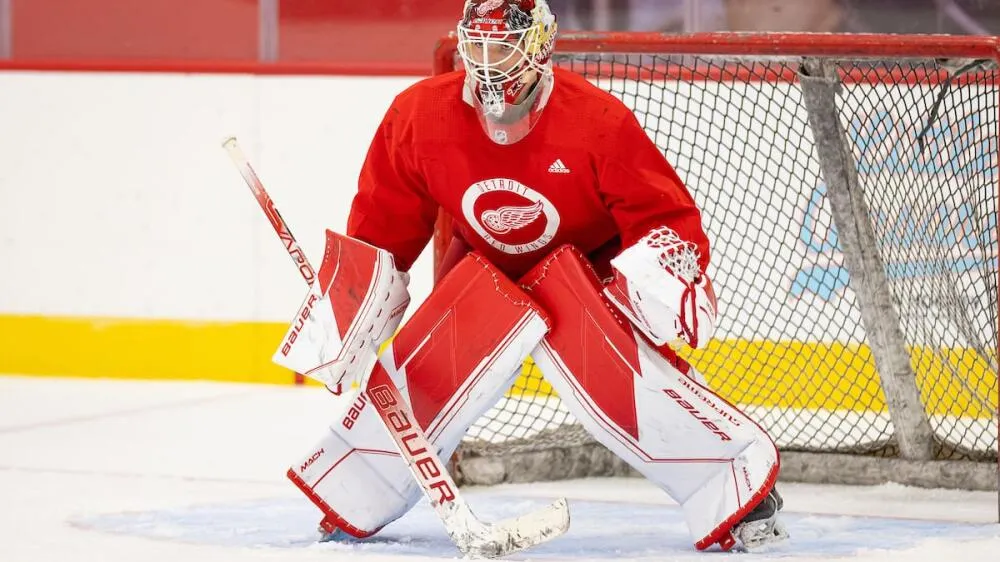
Detroit Red Wings prospect report 2025 goaltending prospects: Trey Augustine leads the charge
When discussing the Red Wings’ goaltending future, any conversation must begin with Trey Augustine. The 20-year-old netminder, selected 41st overall in the 2023 NHL Draft, has established himself as one of the premier goaltending prospects in all of hockey. Currently in his junior season at Michigan State University, Augustine continues to build on an already impressive collegiate resume that includes First Team All-American honors and a Big 10 Goalie of the Year award from his sophomore campaign.
Augustine’s credentials extend far beyond college hockey. He made history at the 2025 IIHF World Junior Championship by helping the United States capture a second consecutive gold medal, winning four of five starts and becoming Team USA’s all-time leader in World Junior victories with 12. His ability to perform on the biggest stages has become his calling card, earning him a reputation as a proven winner who doesn’t crack under pressure.
The 6-foot-1, 183-pound goaltender posted remarkable numbers in 2024-25, compiling a 19-7-4 record with a 2.08 goals-against average and a .924 save percentage across 30 games. He led Michigan State to consecutive Big 10 regular-season and tournament titles, though a national championship remained elusive. That unfinished business is what brought Augustine back to East Lansing for his junior year rather than signing with Detroit immediately.
“Trey wants to go back; they have a great program,” said Red Wings assistant director of player development Dan Cleary. “Maybe he’s got some unfinished business there with that club. We’ll continue to watch and help him, and look forward to Trey becoming a pro.” Augustine’s development path mirrors that of Spencer Knight, widely considered the best goaltending prospect to emerge from USA Hockey’s National Team Development Program before him. His projected NHL arrival is set for the 2026-27 season, giving him one more year to refine his game at the collegiate level before making the professional jump.
Early in the 2025-26 season, Augustine has picked up right where he left off. He made 18 saves to help Michigan State defeat No. 1-ranked Boston University 4-2, demonstrating once again his ability to elevate his game against elite competition. With the top-ranked Spartans pursuing a national championship, Augustine has positioned himself as the foundation of that potential title run.
Detroit Red Wings prospect report 2025 goaltending prospects: Sebastian Cossa’s pivotal season
While Augustine develops at Michigan State, Sebastian Cossa faces perhaps the most critical season of his young career in Grand Rapids. The 6-foot-6 netminder was selected 15th overall in the 2021 NHL Draft, making him the organization’s highest-drafted goaltender in recent memory. After several years of development, the 2025-26 campaign represents a make-or-break opportunity for Cossa to prove he can be the franchise goaltender the Red Wings envisioned when they selected him.
The Grand Rapids Griffins have enjoyed a franchise-best 8-0-0 start to the season, and Cossa has been instrumental in that success. Splitting duties with fellow prospect Michal Postava, Cossa has started four games and maintained a save percentage above .930. His most notable performance came in the form of a shutout, showcasing the kind of dominant performance the Red Wings have been waiting to see consistently.
According to The Hockey News, NHL insiders still consider Cossa the top goaltending prospect in Detroit’s system, though that designation comes with increased pressure. The presence of Postava pushing for starts and Augustine waiting in the wings has created a competitive environment that could either elevate Cossa’s game or expose his limitations.
Cossa’s size gives him a natural advantage in coverage, but questions remain about his lateral movement and ability to track pucks through traffic. The AHL provides the perfect testing ground for him to address these concerns while facing professional shooters on a nightly basis. His development trajectory over the next 12-18 months will likely determine whether he becomes Detroit’s goaltender of the future or a valuable trade chip.
The 22-year-old must demonstrate consistency and the ability to handle a starter’s workload if he hopes to earn a call-up to the NHL. With Gibson and Talbot signed through the current season, Cossa has time to refine his game, but the clock is ticking. As assistant director of player development Dan Cleary noted, this season is about proving he can deliver when the stakes are highest, much like he did in Grand Rapids’ playoff loss to Texas when his performance stood out despite the double-overtime defeat.
Detroit Red Wings prospect report 2025 goaltending prospects: Michal Postava emerges as dark horse
One of the most intriguing storylines in the Red Wings’ goaltending pipeline is the emergence of Michal Postava. The 23-year-old Czech netminder signed a two-year entry-level contract with Detroit in June 2025, and he’s wasted no time making an impression in his first taste of North American hockey. Standing 6-foot-2 and weighing 205 pounds, Postava brings a combination of size and athleticism that has immediately translated to the AHL level.
Like Cossa, Postava has started four games for the Griffins during their perfect 8-0-0 start, and he’s matched his higher-profile counterpart with a save percentage above .930. What stands out about Postava’s game is his ability to track the puck and his versatile movement patterns. He’s quick and sharp when challenging shooters, or smooth and athletic when making sprawling saves across the crease. He’s quickly becoming a fan favorite due to his entertaining style and competitive fire.
Postava’s decision to sign with Detroit was influenced by the franchise’s rich history with Czech goaltenders. Detroit Hockey Now reported that legends like Dominik Hasek and Petr Mrazek played a role in his choice to join the organization. The prospect of following in the footsteps of Hall of Famer Hasek provides extra motivation for Postava to succeed.
His strong start has created an unexpected but welcome problem for the Red Wings: legitimate competition for the starting job in Grand Rapids. Rather than Cossa enjoying a clear path to NHL readiness, he must now earn his minutes against a hungry competitor who’s proven capable of matching him save for save. This internal competition should benefit both goalies, pushing each to elevate their game.
What makes Postava particularly intriguing is that he came to North America without the same pedigree or expectations as Cossa or Augustine. He’s a free agent signing rather than a draft pick, giving him a chip-on-his-shoulder mentality. If he continues to perform at this level, the Red Wings may have discovered a diamond in the rough who could challenge for NHL minutes sooner than anyone anticipated. The organization’s commitment to goaltending depth suddenly looks even wiser with Postava’s unexpected emergence.
Detroit Red Wings prospect report 2025 goaltending prospects: Depth beyond the big three
The goaltending riches don’t stop with Augustine, Cossa, and Postava. Carter Gylander, a seventh-round selection from the 2019 NHL Draft, is off to a strong start in the ECHL with the Toledo Walleye. The 24-year-old has stopped 71 of 77 shots across three starts, posting a solid save percentage and two victories. While Gylander may never develop into an NHL starter, his presence provides organizational depth and insurance if injuries strike at the AHL level.
Gylander appeared in three games with Grand Rapids last season, demonstrating he can handle the jump to the higher level when called upon. His steady development represents the kind of depth piece every successful organization needs. If either Cossa or Postava earns a call-up to Detroit, or if injuries create opportunities, Gylander stands ready to step in and maintain the Griffins’ competitiveness.
Beyond the North American-based prospects, the Red Wings have invested in international talent as well. The organization has shown a willingness to draft and develop goalies from various leagues and countries, creating a truly global pipeline. This strategy ensures that even if one or two prospects don’t pan out, the organization maintains multiple pathways to success in net.
The Red Wings have also been linked to trade discussions involving their goaltending prospects, with the Edmonton Oilers reportedly reaching out about both Cossa and Augustine. However, Detroit has shown no interest in moving either piece, recognizing the value of controlled assets at the sport’s most important position. This organizational conviction in their goaltending prospects speaks to the confidence they have in their development staff and scouting evaluations.
Looking at the broader organizational structure, the Red Wings benefit from strong goaltending coaching at every level. From the NHL staff working with Gibson and Talbot to the development coaches in Grand Rapids and Toledo, there’s a consistent teaching philosophy that allows prospects to develop good habits that will translate to the NHL. The parallels with Detroit’s overall youth movement are striking, as the organization commits to building from within across all positions.
The timeline for Detroit Red Wings prospect report 2025 goaltending prospects
Understanding when each goaltending prospect might reach the NHL is crucial for evaluating Detroit’s long-term planning. Augustine’s projected arrival of 2026-27 aligns with the potential departure of one or both current NHL goalies. By the time Augustine signs his entry-level contract, likely in spring 2026, he could spend a brief stint in Grand Rapids before competing for NHL minutes in training camp.
Cossa’s window is more immediate. If he continues his strong play in Grand Rapids and demonstrates the consistency Detroit seeks, he could earn spot starts at the NHL level as early as this season, though a full-time role likely awaits in 2026-27 at the earliest. The competition with Postava serves as a proving ground, and Cossa must separate himself to force management’s hand.
Postava’s timeline is less defined. As an older prospect with less draft pedigree, he’ll need to significantly outperform expectations to earn NHL consideration. However, his strong start suggests he could develop into a quality backup option or NHL depth piece. If nothing else, he’s established himself as a valuable AHL asset who can mentor younger goalies while pushing for his own opportunities.
The staggered timelines create roster flexibility for Detroit. Rather than multiple prospects reaching readiness simultaneously and forcing difficult decisions, the Red Wings can integrate their young goalies gradually. This measured approach reduces pressure on individual prospects while ensuring organizational continuity in net.
Gibson and Talbot provide the veteran presence needed while the prospects marinate. Neither is signed beyond this season, giving Yzerman options as he evaluates which young goalie or goalies have earned the opportunity to compete for NHL minutes. The ability to make patient, informed decisions represents a luxury many organizations don’t enjoy at the position.
What Detroit Red Wings prospect report 2025 goaltending prospects means for the franchise
The Red Wings’ goaltending depth represents one of the organization’s greatest strengths as they work to return to contender status. While much attention focuses on the team’s forward and defensive prospects, the netminding pipeline could prove even more valuable. Elite goaltending remains the NHL’s great equalizer, capable of covering roster weaknesses and stealing playoff series.
Detroit’s commitment to stockpiling goaltending talent mirrors successful models from teams like the Tampa Bay Lightning and Boston Bruins, organizations that have maintained excellence in net through careful drafting and development. By taking multiple swings at the position, the Red Wings increase their odds of hitting on at least one franchise goaltender while creating trade chips if multiple prospects exceed expectations.
The early success of the Grand Rapids Griffins speaks to the quality of goaltending the organization is developing. An 8-0-0 start with two rookie goalies sharing the crease demonstrates both the talent of the individuals and the effectiveness of the coaching staff. These prospects are learning to win while facing professional competition, an invaluable experience that will serve them well when they eventually reach the NHL.
As the season progresses, the development of Augustine, Cossa, Postava, and others will provide crucial data points for Yzerman and his staff. Decisions about contract extensions, NHL roster construction, and potential trades all hinge on how these prospects perform. The organization has the depth to be patient, allowing each goalie to develop at his own pace without forcing anyone into a role before they’re ready.
The goaltending prospect pool also provides insurance against the unpredictability that defines the position. Goalies are notoriously difficult to project, with late bloomers and unexpected breakouts common. By maintaining depth, Detroit protects itself against busts while positioning itself to capitalize on positive surprises. Whether through internal development or trade value, these prospects represent significant organizational assets that will shape the franchise’s trajectory for the next half-decade.

Par Mike Jonderson
Mike Jonderson is a passionate hockey analyst and expert in advanced NHL statistics. A former college player and mathematics graduate, he combines his understanding of the game with technical expertise to develop innovative predictive models and contribute to the evolution of modern hockey analytics.