





Detroit Red Wings player grades first quarter 2025-26: Complete analysis at the 20-game mark
The Detroit Red Wings have reached the quarter pole of the 2025-26 NHL season, and the view from here looks promising. With a 12-8-1 record and 25 points, they find themselves atop the Atlantic Division and firmly in the playoff hunt—a position no one would have guaranteed after years of rebuilding. The first 20 games have revealed a team with elite talent at the top, surprising depth contributions, and some concerning gaps that need addressing before the playoff push intensifies.
What makes these early returns so encouraging is the blend of established stars and emerging youth who have formed a cohesive unit. Dylan Larkin continues to captain with vigor, while Lucas Raymond and Alex DeBrincat have created one of the league’s most dangerous lines. On the backend, Moritz Seider and Simon Edvinsson are developing into a legitimate top pairing that can control games. However, success in today’s NHL requires more than just star power—it demands consistent contributions from all four lines and reliable goaltending. As we’ll explore in these Detroit Red Wings player grades first quarter 2025-26, some areas still need shoring up.
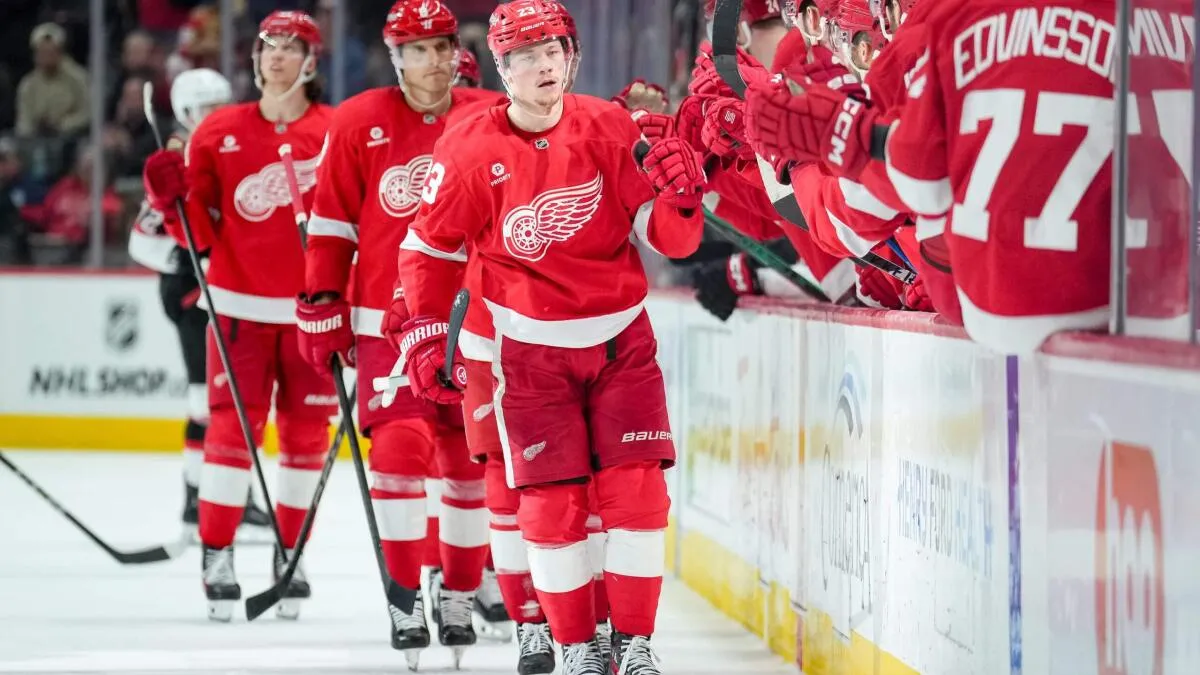
Elite performers who drive the Detroit Red Wings 2025-26 success
The Red Wings’ strong start wouldn’t be possible without several players operating at an exceptional level. These individuals haven’t just met expectations—they’ve shattered them and set the standard for the entire organization.
Dylan Larkin: The heart and soul (A+)
Dylan Larkin continues to be the engine that drives everything positive for Detroit. With 12 goals and 12 assists through 20 games, he’s on pace for career-highs across all offensive categories while averaging over 20 minutes of ice time per night. But the numbers only tell part of the story. His 200-foot game has been relentless, and his leadership has created a culture of accountability that permeates the locker room.
What makes Larkin’s performance special is his versatility. He’s been Detroit’s most consistent faceoff performer, a constant threat on both special teams units, and the emotional leader who never takes a shift off. “Larkin’s motor never seems to stop running,” and his influence extends far beyond the scoresheet, creating a competitive environment where younger players understand what’s required to win in the NHL. At this pace, he could easily challenge the 40-goal mark—a milestone that would cement his status as one of the league’s premier two-way centers.
Alex DeBrincat: The finisher finds his groove (A+)
After a frustrating start where he was “snake-bitten” around the net, Alex DeBrincat has exploded since joining Larkin and Raymond on the top line. His nine goals and 14 assists showcase his evolution from pure sniper to complete offensive threat. The chemistry he’s developed with his linemates has created one of the most dangerous trios in the entire league, and there’s genuine excitement that he could become the first Red Wing to hit 40 goals since Marian Hossa in 2008-09.
Even when the pucks weren’t finding the back of the net early, DeBrincat was making a difference. His defensive game has improved dramatically, and he’s become a trustworthy player in all situations. This transformation into a true two-way threat makes his offensive breakthrough even more valuable to a team that needs its stars to drive play at both ends.
Lucas Raymond: Superstar in the making (A+)
Lucas Raymond appears poised to take the leap from promising young player to legitimate NHL superstar. With six goals and 16 assists, he leads the team in playmaking and has been particularly electric during a recent four-game stretch where he posted multiple points. His added speed and confidence with the puck have made him a constant headache for opposing defenses.
Raymond’s development has been crucial during Detroit’s impressive five-game winning streak that opened the season. When he hit a mid-season drought, many wondered if the pressure might get to him. Instead, he responded with his best hockey, proving he can elevate his game when the spotlight shines brightest. His ability to make plays with or without the puck has drawn comparisons to some of the league’s elite wingers, and at just 22 years old, his ceiling remains terrifyingly high.
Moritz Seider: The defensive anchor (A)
Seider continues to be the model of consistency from the backend, logging a team-high 25:03 per game while playing a physically dominant yet disciplined style. His two goals and 10 assists demonstrate offensive growth, but his real value lies in his ability to control the pace of play and shut down opposing top lines. What’s most impressive is his restraint—despite playing such a physical brand of hockey, he’s managed only 14 penalty minutes.
His partnership with Edvinsson has given Detroit a legitimate top pairing that can match up against anyone in the league. If his offensive game continues to develop at its current pace, Seider could be looking at his first Norris Trophy nomination, which would represent a massive milestone for the organization.
Cam Talbot and Emmitt Finnie: The surprises (A)
While John Gibson was acquired to form a goaltending tandem, Cam Talbot has seized the starter’s role with an 8-2-0 record, 2.64 GAA, and .897 save percentage. More importantly, he’s stolen several games that Detroit had no business winning, providing the stability in net that championship contenders require. His performance has been a “shot in the arm” for a team that desperately needed reliable goaltending.
Meanwhile, Emmitt Finnie has been the revelation of training camp. The 2023 seventh-round pick forced his way onto the roster with nonstop energy and physical play that instantly made him a fan favorite. His five goals and four assists are solid, but his real value is his ability to play anywhere in the lineup while bringing an infectious work ethic every single shift.
Solid contributors driving Detroit Red Wings 2025-26 depth
While stars grab headlines, championships are won on the backs of reliable depth players. These Red Wings have provided the consistency and versatility that separate playoff teams from pretenders.
Patrick Kane and Mason Appleton: Veteran presence (B+)
Limited to just 11 games due to injury, Patrick Kane’s impact has been immediate when healthy. His three goals and six assists give the Red Wings a secondary playmaking threat who can create offense out of nothing, particularly on the power play. At 36 years old and following multiple surgeries, simply playing at this level is remarkable. Kane himself noted after a recent practice, “I’m just focused on staying healthy and helping this team get back to the playoffs. The young talent here is special, and I want to be part of something great.”
Mason Appleton has been another shrewd acquisition by Steve Yzerman, providing eight points in 20 games while demonstrating remarkable versatility. When injuries struck, he seamlessly filled top-six roles, and his physical edge and defensive responsibility have made him a coach’s favorite. His only limitation has been offensive production when slotted in the bottom six, but his ability to play up the lineup provides valuable insurance.
The young defensemen: Edvinsson and Sandin-Pellikka (A-)
Simon Edvinsson has embraced top-pairing responsibilities alongside Seider, and the results have been impressive. His three goals and three assists don’t fully capture his ability to match up against opposing top lines and control play in all three zones. Occasional lapses in defensive zone judgment are expected from a 21-year-old defenseman, but his overall progression suggests he’ll soon be one of the league’s best two-way blueliners.
Axel Sandin-Pellikka has been exactly what the organization hoped for when they drafted him. His poise with the puck, elite skating, and offensive instincts have earned him six points and a spot on the top power-play unit. While his size presents challenges against bigger forwards, his hockey IQ and positioning help compensate. His development has been so encouraging that he’s already drawing comparisons to some of the league’s premier offensive defensemen.
Ben Chiarot: The steady veteran (B+)
After a rocky start to his Red Wings tenure, Ben Chiarot has settled into a reliable defensive role, perfect for mentoring Sandin-Pellikka. His physical play and veteran savvy have been crucial on the second pair, and while he won’t light up the scoresheet, his defensive stability allows his partner to take offensive chances.
Who needs to step up: Detroit Red Wings 2025-26 first quarter concerns
Every team has areas of concern, and the Red Wings are no exception. Several players must elevate their games for Detroit to maintain its playoff positioning.
John Gibson: The struggling newcomer (C+)
Acquired to form an elite goaltending duo with Talbot, Gibson’s 4-5-1 record, 3.32 GAA, and .875 save percentage have fallen well short of expectations. While the team defense hasn’t been perfect in front of him, he needs to make more timely saves, especially during crucial moments. His inconsistency has been concerning enough that coach Derek Lalonde recently mentioned, “We know what John is capable of. He’s working through some technical issues, and we’re confident he’ll find his game.”
Andrew Copp and JT Compher: Contract questions (C)
Both players have remained defensive stalwarts on the penalty kill, but their offensive contributions haven’t matched their significant contracts. Copp’s eight points and Compher’s six points in 20 games are simply insufficient for players earning top-six money. With Detroit relying heavily on its top two lines, these veterans must provide secondary scoring to ease the burden on the stars.
The problem isn’t effort—both players compete hard every night—but the results haven’t been there. If they can’t find their offensive touch, questions about their long-term fit in Detroit’s plans will only grow louder.
Marco Kasper: The sophomore slump (C)
After a promising rookie campaign, hopes were high that Kasper would take a significant step forward offensively. Instead, his three goals and zero assists in 20 games represent a concerning regression. Playing with rookie Nate Danielson has helped his two-way game, but the Red Wings desperately need production from their third line.
What’s encouraging is that Kasper hasn’t let his offensive struggles impact the rest of his game. He’s remained a pest on the ice and continues to play with an edge. However, for a team with playoff aspirations, they need more than intangibles from a player with his skill set.
The bottom six: Van Reimsdyk, Berggren, and Rasmussen (C- to D)
James van Reimsdyk was brought in to provide veteran grit and occasional offense, but his one goal and one assist in 15 games have been disappointing. His physical presence has been felt, but Detroit needs more tangible production from its bottom six.
Jonatan Berggren and Michael Rasmussen have been even more concerning, earning D grades for their inability to seize opportunities. Berggren’s six points in 12 games and Rasmussen’s five points in 18 games show flashes, but neither has been able to establish consistent production. At this stage in their careers, they may need a change of scenery to unlock their potential.
Looking forward: What these Detroit Red Wings 2025-26 grades mean
The Danielson factor: Too early to tell
Rookie Nate Danielson’s five-game audition has been promising, with one goal and one assist while showing strong two-way instincts. His offensive confidence seems to grow with each shift, and if he can continue developing, he could provide exactly the secondary scoring Detroit needs. His emergence might also push Kasper to elevate his game, creating healthy internal competition.
The big picture and playoff implications
The Red Wings find themselves in an enviable position through 20 games, but the NHL standings remain incredibly tight. Only a few points separate guaranteed playoff teams from those on the outside looking in. Detroit’s strong start, including that impressive five-game winning streak, has created a buffer, but maintaining this level requires improvement from several areas.
The biggest challenges moving forward are clear: the bottom six must start contributing offensively, and Gibson needs to find his consistency. If these pieces fall into place, Detroit could end their playoff drought and bring postseason hockey back to Hockeytown for the first time in years. The foundation is there for sustained success, with homegrown talent like Raymond, Seider, and Edvinsson leading the way while veterans like Larkin and Kane provide stability.
Steve Yzerman’s patient rebuild appears to be entering its next phase, and the early returns suggest the wait may finally be over. However, the next 62 games will determine whether this strong start was a mirage or a sign that the Red Wings are legitimate contenders. For more detailed breakdowns of individual player performances, check out our comprehensive 20-game analysis and in-depth grading system.
Frequently Asked Questions

Par Mike Jonderson
Mike Jonderson is a passionate hockey analyst and expert in advanced NHL statistics. A former college player and mathematics graduate, he combines his understanding of the game with technical expertise to develop innovative predictive models and contribute to the evolution of modern hockey analytics.