











Now I have enough information to write a comprehensive blog post about Dylan Larkin’s leadership and its impact on the Detroit Red Wings’ early-season success in 2025-26.
The Detroit Red Wings entered the 2025-26 season with cautious optimism, a roster in transition, and a new coach in Todd McLellan tasked with transforming potential into playoff contention. Through the first seven games, that transformation has begun to take shape, and at the center of it all stands captain Dylan Larkin. His explosive start—12 points in seven games with a plus-9 rating—has not only positioned him among the league’s elite offensive producers but has also set the tone for a team hungry to reclaim its place among hockey’s upper echelon.
After a 2024-25 campaign that saw Larkin post 70 points but struggle with a minus-16 rating, questions lingered about whether he could elevate his game to match the expectations of wearing the “C” in Hockeytown. Those questions have been emphatically answered. Larkin isn’t just producing points; he’s leading by example, demonstrating the two-way reliability and clutch performance that championship teams demand from their captains.
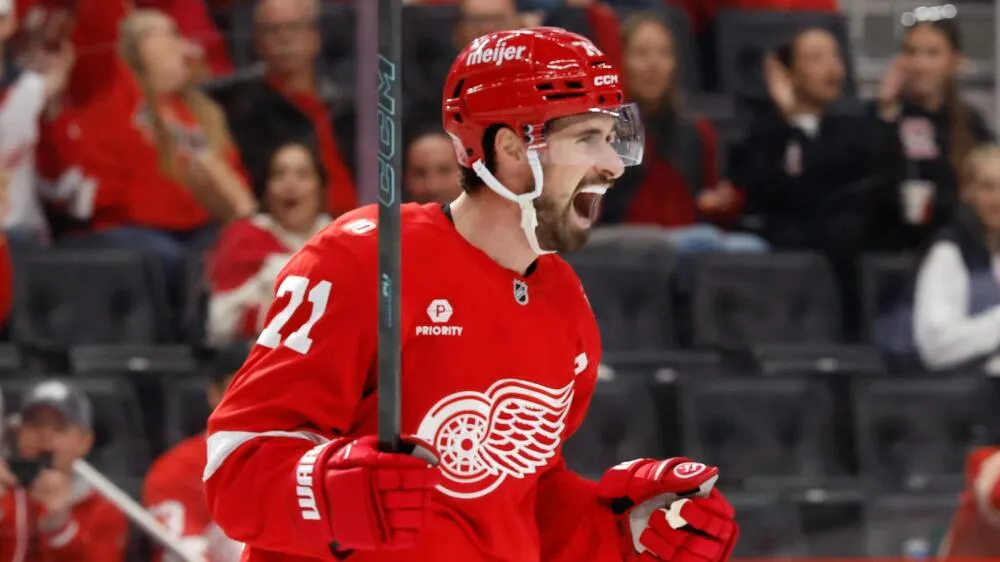
How Dylan Larkin’s leadership is driving Detroit Red Wings early-season success in 2025-26 through offensive dominance
Dylan Larkin has transformed into an offensive juggernaut through the opening weeks of the season, recording five goals and seven assists for 12 points. His production ranks third in the entire NHL, trailing only Vegas Golden Knights forwards Jack Eichel and Mark Stone, who have benefited from significantly more favorable circumstances. What makes Larkin’s output even more remarkable is the context in which he’s achieving it.
On October 17, Larkin demonstrated his ability to deliver in tight contests when he scored and added an assist in Detroit’s 2-1 overtime victory against the Tampa Bay Lightning. Just two nights later, he erupted for a four-point performance—two goals and two assists—in a 4-2 triumph over the Edmonton Oilers. These weren’t empty-calorie points accumulated in blowouts; they were game-defining contributions that directly resulted in victories.
The captain has factored into more than half of Detroit’s 20 goals scored through six games, a staggering 55% offensive responsibility that underscores his centrality to the team’s attack. His shooting volume has increased, his shot selection has improved, and his willingness to drive the net for high-danger opportunities has created consistent scoring chances. This isn’t the passive Larkin of previous seasons waiting for plays to develop—this is an assertive, confident leader who understands that his team’s success flows directly through him.
Perhaps most impressive is Larkin’s even-strength production, where he’s matched Eichel’s eight points despite playing one fewer game. While Eichel has padded his stats with eight power-play points on a loaded Vegas man-advantage unit, Larkin has generated offense the hard way: at even strength, against top competition, often starting shifts in his own defensive zone. According to The Hockey Writers, Larkin’s early-season surge represents not just a statistical anomaly but a fundamental shift in his approach to the game.
His 59.6% faceoff winning percentage provides the foundation for Detroit’s offensive possessions, allowing the Red Wings to break out of defensive zone starts and transition quickly into attack mode. For a team that relies on speed and skill rather than grinding physicality, controlling paceoffs becomes essential, and Larkin has answered that call emphatically.
Dylan Larkin leadership driving Detroit Red Wings early-season success 2025-26 through defensive maturity
While offensive numbers grab headlines, Larkin’s evolution as a complete two-way player has been equally crucial to Detroit’s strong start. His plus-9 rating through seven games ties him for second-best in the NHL, a dramatic reversal from last season’s struggles. Though plus/minus remains an imperfect statistic, the dramatic swing from minus-16 to plus-9 reflects genuine improvement in defensive responsibility and positioning.
Larkin faces the third-highest quality of competition among NHL centers, according to Dobber Frozen Tools data, with a competition index of plus-1.36. This means McLellan consistently deploys him against opposing teams’ top lines, trusting his captain to neutralize elite talent while still generating offense. Compare this to Eichel’s minus-0.58 competition rating, and the degree of difficulty becomes apparent. Larkin isn’t feasting on weaker opposition—he’s dominating against the best players in the world.
His defensive zone starts account for 62% of his shifts, among the highest rates for any first-line center in the league. Starting in your own end against top competition creates an uphill battle every shift, yet Larkin has consistently won those battles, using his faceoff prowess and hockey IQ to transition the puck quickly and efficiently. This defensive burden doesn’t just reflect McLellan’s trust; it demonstrates Larkin’s maturity as a player who understands that leadership means doing the difficult, unglamorous work that winning requires.
Todd McLellan has rewarded this reliability with increased ice time, deploying Larkin for 18-23 minutes per night with heavy usage in late-game situations when results hang in the balance. That Larkin has responded with points and positive defensive results speaks to his mental preparedness and physical conditioning. He’s not just surviving these minutes—he’s thriving in them, providing the steady presence that allows younger players to develop without bearing the full weight of expectations.
The captain’s improved positioning and gap control have also limited opposition scoring chances. While advanced metrics like expected goals against haven’t been fully compiled for such a small sample size, the eye test confirms what the plus/minus suggests: Larkin is making better decisions with and without the puck, collapsing to support his defensemen when necessary and reading plays more effectively to break up opposition attacks before they become dangerous.
How Dylan Larkin’s leadership philosophy is shaping Detroit Red Wings’ 2025-26 early-season success
Beyond statistics and deployment lies the intangible impact of Larkin’s leadership—the tone-setting behaviors, accountability standards, and competitive fire that define winning cultures. As captain, Larkin carries the weight of a franchise desperate to return to playoff contention after missing the postseason for eight consecutive years before last season’s campaign. That pressure could crush a lesser player, but Larkin has embraced it, using it as fuel rather than burden.
His work ethic has become legendary within the organization. Teammates regularly cite Larkin’s practice intensity and preparation as benchmarks for professional standards. Young players like Marco Kasper, Emmitt Finnie, and Axel Sandin-Pellikka have watched their captain arrive early, stay late, and treat every rep with playoff-level intensity. That example matters more than any speech or locker room exhortation ever could.
When McLellan called out the team after their season-opening loss, Larkin didn’t deflect or make excuses. He took ownership, both verbally and through his subsequent performance. The Red Wings responded with victories in five of their next six games, demonstrating the galvanizing effect of a captain who leads through action. According to Inside The Rink, Larkin’s commitment to both ends of the ice has been “hockey’s most impressive” story through the season’s opening weeks.
Larkin’s leadership extends to line chemistry and roster integration. Detroit’s forward group features a mix of established veterans like Patrick Kane, emerging stars like Lucas Raymond and Alex DeBrincat, and promising rookies fighting for roster spots. Balancing these competing interests while maintaining cohesion requires a captain who can communicate with players at different career stages. Larkin has proven adept at this challenge, mentoring younger players while maintaining productive relationships with veterans who remember Detroit’s glory years.
His willingness to play with different linemates when McLellan experiments with combinations demonstrates flexibility that championship captains must possess. Rather than demanding specific linemates or deployment patterns, Larkin has made whoever plays beside him better. Whether centering Raymond and DeBrincat on the top line or grinding through shifts with fourth-line energy players, Larkin’s effectiveness doesn’t waver. This adaptability allows McLellan the flexibility to optimize matchups and develop chemistry throughout the lineup without sacrificing production.
Dylan Larkin leadership driving Detroit Red Wings early-season success 2025-26 through clutch moments
The margin between winning and losing in today’s NHL often comes down to execution in critical moments—overtime chances, late-game defensive stands, power-play conversions when trailing. Great captains distinguish themselves by delivering when stakes are highest, and Larkin has consistently answered those calls through Detroit’s opening stretch.
His overtime-period assist that set up the game-winner against Tampa Bay exemplified this clutch gene. With the game tied and momentum shifting, Larkin won a crucial faceoff, controlled the puck under pressure, and delivered a perfect feed that resulted in the winning goal. These are the plays that build team confidence and establish leadership credentials.
The four-point explosion against Edmonton came against a team widely considered a Stanley Cup contender, featuring Connor McDavid and Leon Draisaitl—two of hockey’s most dominant offensive forces. Rather than being overwhelmed by the challenge, Larkin elevated his game, matching and exceeding the opposition’s star power. He didn’t just survive against elite competition; he dominated it, demonstrating the level of play required for Detroit to compete with the Western Conference’s elite.
Larkin’s third-period production has been particularly notable. Multiple game-winning or insurance goals have come late in contests when opposing teams have pressed for equalizers. His ability to read defensive pressure, find soft ice, and convert scoring chances in these high-leverage situations reflects both skill and composure. Young players on Detroit’s roster watching Larkin perform under pressure learn what championship hockey requires.
His faceoff dominance in the final minutes of close games has also proven crucial. Winning defensive-zone draws to kill final seconds, controlling neutral-zone faceoffs to generate odd-man rushes, and using offensive-zone wins to maintain pressure have all factored into Detroit’s early success. These micro-battles often determine outcomes, and Larkin has consistently won them.
The broader impact of Dylan Larkin’s leadership on Detroit Red Wings’ 2025-26 trajectory
Detroit’s 5-2-0 start through seven games represents their best opening since 2017-18, positioning them among the Eastern Conference’s early pace-setters. While it’s premature to project playoff positioning or long-term success from such a small sample, the foundation being established bodes well for sustained competitiveness. Larkin’s leadership has been instrumental in establishing that foundation.
The team’s defensive structure has noticeably improved under McLellan’s system implementation. Having a captain who buys into defensive responsibility and models proper positioning makes systemic adoption easier for everyone else. When the captain backchecks hard and collapses to support defensemen, teammates follow suit. This collective commitment has limited high-danger chances against and allowed Detroit’s goaltending to find consistency.
Special teams improvement has also correlated with Larkin’s strong start. While Detroit’s power play hasn’t matched Vegas’ lethal efficiency, it has generated dangerous looks and converted at a respectable rate. Larkin’s presence as a net-front option, his ability to win draws, and his shooting threat from the slot have all contributed to better power-play structure. On the penalty kill, his responsible stick work and anticipation have helped Detroit maintain solid kill rates against elite power plays.
The integration of rookie talent has accelerated due to Larkin’s mentorship. Players like Finnie and Sandin-Pellikka have avoided the overwhelming growing pains that often derail young careers because they have a captain who communicates expectations and provides on-ice support. Larkin’s willingness to shelter rookies by taking on tougher matchups has allowed McLellan to deploy young talent in situations where they can succeed and build confidence.
Perhaps most importantly, Larkin has restored belief within the organization that playoff contention isn’t just aspirational but achievable. Detroit missed the playoffs for eight straight seasons before breaking through last year, creating organizational frustration and fan disappointment. Larkin’s play through seven games has reignited hope that the rebuild has reached fruition and that sustainable success is within reach. That belief matters—it affects player recruitment, fan engagement, organizational investment, and the collective psychology that separates winners from also-rans.
The early returns on Dylan Larkin’s 2025-26 season suggest something special might be brewing in Detroit. His offensive explosion, defensive maturity, leadership presence, and clutch performance have combined to elevate both his individual profile and his team’s collective results. Whether this pace proves sustainable over an 82-game grind remains to be seen, but the foundation has been established for something meaningful.
For a franchise desperate to reclaim its championship pedigree, having a captain who performs like an elite player in critical moments provides the cornerstone around which everything else can be built. Larkin has answered every question, silenced every doubt, and demonstrated that his leadership isn’t symbolic—it’s transformational. As the Red Wings navigate a challenging Atlantic Division schedule and pursue playoff positioning, they’ll need their captain to maintain this standard. Through seven games, he’s shown every indication that he’s ready for that challenge. The Red Wings’ early-season success isn’t happening despite their captain—it’s happening because of him.

Par Mike Jonderson
Mike Jonderson is a passionate hockey analyst and expert in advanced NHL statistics. A former college player and mathematics graduate, he combines his understanding of the game with technical expertise to develop innovative predictive models and contribute to the evolution of modern hockey analytics.