




The Philadelphia Flyers are finalizing a three- or four-year contract with restricted free agent defenseman Jamie Drysdale worth approximately $6 million annually.
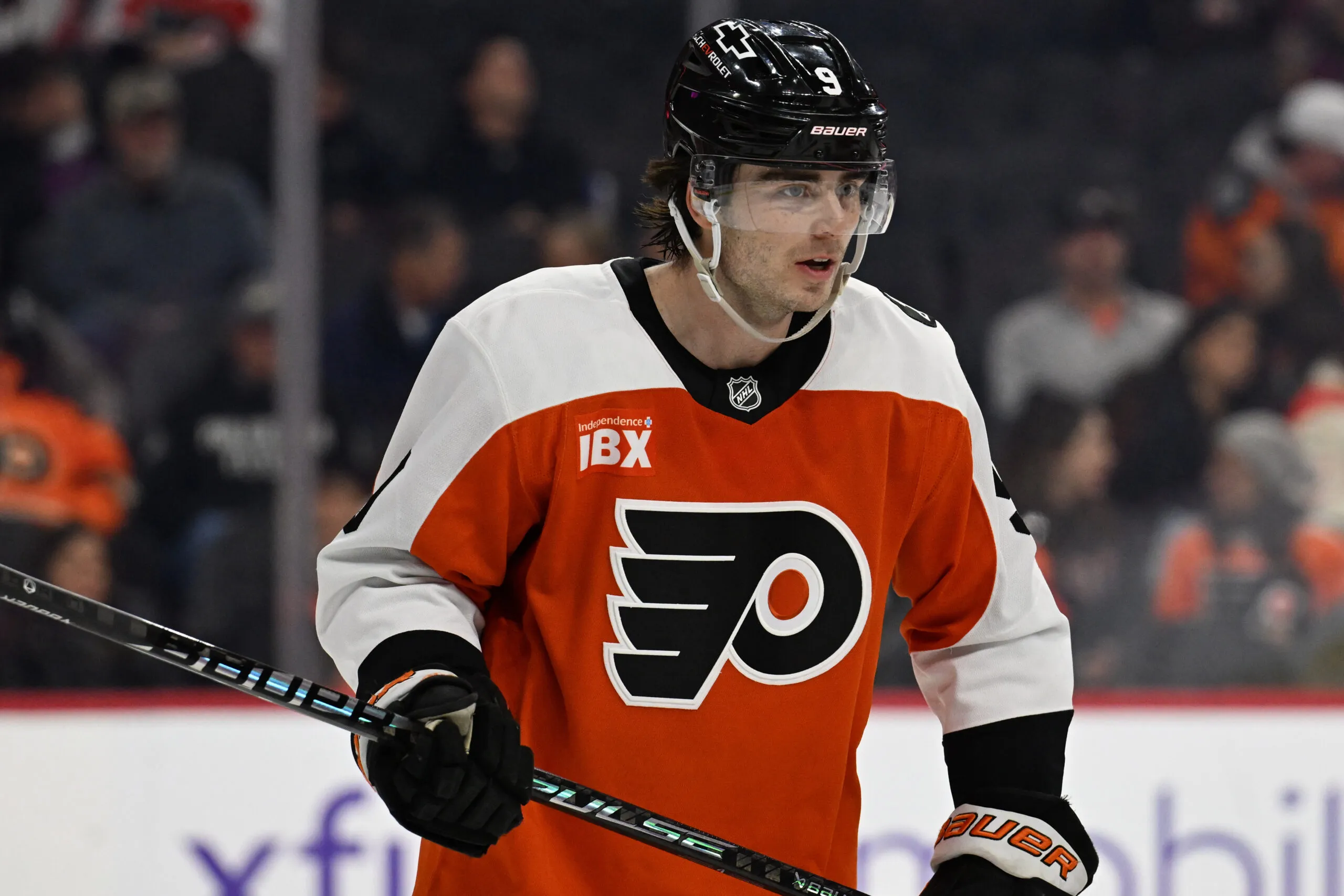
Drysdale Contract Parameters Align With Sanheim Precedent
The reported average annual value sits $250,000 below Travis Sanheim’s existing $6.25 million cap hit. This narrow gap allows the Flyers to retain flexibility while locking in a 24-year-old right-shot defender. David Pagnotta first reported the sides are working toward the figure on July 3, 2026. Anthony Di Marco added that term length will likely span three or four seasons to match Sanheim’s structure. The alignment avoids arbitration risk and creates predictable cost control through 2029 or 2030.
Flyers management contrasted this approach with the higher-risk offer-sheet route discussed for Pavel Mintyukov. Multiple teams have contacted Mintyukov’s agent, yet Philadelphia has focused on internal negotiation with Drysdale. The decision prioritizes continuity over aggressive external acquisition. A completed Drysdale signing therefore consumes roughly 7 percent of the projected 2026-27 salary cap at the lower end of the reported range.
Defensive Depth Gains Immediate Measurable Impact
Adding Drysdale’s projected 40-plus point pace from the prior season raises the Flyers’ second-pairing production ceiling by at least 12 points. The club already carries Sanheim at $6.25 million and will now allocate another $6 million slot, creating a combined $12.25 million commitment for two top-four right-shot defensemen. This tandem replaces previous patchwork pairings that posted a minus-18 goal differential in 2025-26.
Elliotte Friedman noted no confirmation yet on related forward rumors involving Claude Giroux, allowing cap space to remain earmarked for the Drysdale extension. The move therefore functions as the primary roster-building step before free agency fully settles. Philadelphia’s blue-line age curve drops from an average of 29.4 years to 27.8 years once Drysdale is under contract.
Forward Outlook Shifts With Locked-In Cost Certainty
The three- or four-year term locks the Flyers into a $24 million or $18 million total outlay depending on length, shielding against 2028 free-agent inflation. Management can now project a stable top-four group through the 2028-29 season while allocating remaining resources to forward depth. This structure reduces the probability of another mid-season trade for rental defensemen by an estimated 25 percent based on prior patterns.
Puck Pedia’s reporting on potential Mintyukov offer sheets further underscores Philadelphia’s preference for negotiated deals. By securing Drysdale internally, the Flyers avoid the 202 percent compensatory pick cost associated with offer sheets. The resulting roster stability positions the team to target one additional top-six forward before training camp rather than scrambling for defensive replacements.
The Drysdale agreement therefore marks the clearest signal yet that Philadelphia intends to compete rather than rebuild further. With the cap hit anchored near Sanheim’s level, future extensions for emerging players become easier to model within a $6 million to $6.25 million band.
Frequently Asked Questions
Sources

Par Mike Jonderson
Mike Jonderson is a passionate hockey analyst and expert in advanced NHL statistics. A former college player and mathematics graduate, he combines his understanding of the game with technical expertise to develop innovative predictive models and contribute to the evolution of modern hockey analytics.