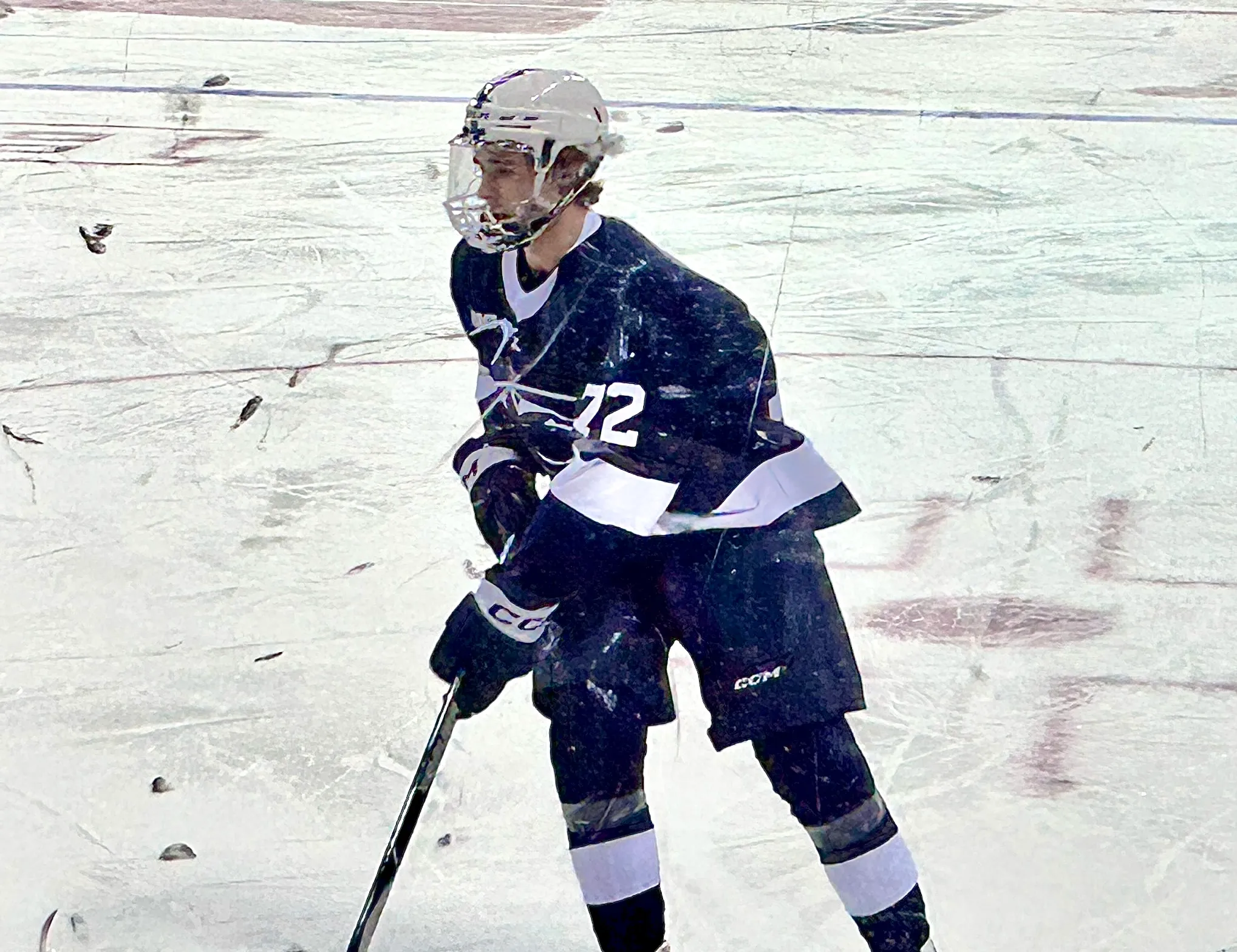
Gavin McKenna scored 15 goals and 51 points in 35 NCAA games at Penn State before the Toronto Maple Leafs selected him first overall in the 2026 draft.
Early adjustments reveal self-driven growth
McKenna posted 11 goals and 32 points in his first 26 WHL games as a 16-year-old in 2023-24 before improving to 1.86 points per game after Christmas. Tigers coach Willie Desjardins confirmed McKenna initiated extra video study and post-practice skating sessions when totals fell short of his standards.
The same trajectory repeated at Penn State. After four goals and 16 points in 15 games through the first half, McKenna delivered 11 goals and 35 points in the final 20 contests. Coach Guy Gadowsky noted McKenna maintained composure despite rotating through ten different linemates and still led the team in takeaways.
McKenna’s 14 points at the 2026 World Juniors placed him second in tournament scoring even as Canada finished third. Upon return he recorded points in 44 of his next 46 WHL games, finishing with 34 goals and 113 points in that stretch.
Draft-year noise contrasted with consistent output
McKenna entered the season as the consensus top prospect yet faced criticism after a measured NCAA start. He responded by deleting most social-media accounts and focusing on on-ice habits rather than external commentary.
Legal charges stemming from a campus altercation were reduced when the felony count was withdrawn, leaving misdemeanor simple assault and summary offenses. Gadowsky stated McKenna’s demeanor with teammates remained unchanged before and after the incident.
The Maple Leafs therefore acquire a player who has already navigated three distinct developmental jumps—WHL as an underage player, World Juniors under pressure, and NCAA against older competition—while posting rising second-half production each time.
Toronto fit centers on vision and work ethic
Gadowsky described McKenna’s backhand as effectively a second forehand capable of repeated saucer passes. TSN scouting director Craig Button observed that many of McKenna’s passes landed in positions where teammates failed to convert, suggesting his totals could rise with higher-skill linemates.
Maple Leafs management gains a forward whose 1.46 second-half points-per-game rate at Penn State occurred without consistent line chemistry. That same poise, combined with documented willingness to remain on the ice after practice, aligns with the organization’s need for a player who elevates possession through vision rather than physical dominance.
McKenna’s Yukon upbringing and Tr’ondek Hwech’in heritage further anchor his perspective, providing the mental separation required when rookie-season minutes fluctuate as they did for Joe Thornton and Steven Stamkos in their first NHL campaigns.
The Maple Leafs therefore receive a prospect whose historical response to criticism has been measurable statistical improvement rather than prolonged dips in performance.
Frequently Asked Questions
Sources

Par Mike Jonderson
Mike Jonderson is a passionate hockey analyst and expert in advanced NHL statistics. A former college player and mathematics graduate, he combines his understanding of the game with technical expertise to develop innovative predictive models and contribute to the evolution of modern hockey analytics.