












In hockey, the traditional hat trick—scoring three goals in a single game—has long been celebrated as one of the sport’s most impressive individual achievements. But there’s another type of hat trick that captures the essence of old-school hockey in a way that goes beyond pure offensive prowess. This unique accomplishment combines skill, playmaking ability, and a willingness to drop the gloves, creating one of the most colorful statistics in professional sports. It’s a feat that embodies the complete hockey player, one who can contribute offensively while also standing up for teammates when necessary.
Understanding what is a gordie howe hat trick
The Gordie Howe hat trick consists of three distinct achievements that a player must accomplish within a single game: scoring a goal, recording an assist, and getting into a fight. This trifecta represents the ultimate display of versatility on the ice, combining offensive production with physical toughness. Unlike a traditional hat trick that requires three goals, the Gordie Howe version demands different types of contributions to the team’s success.
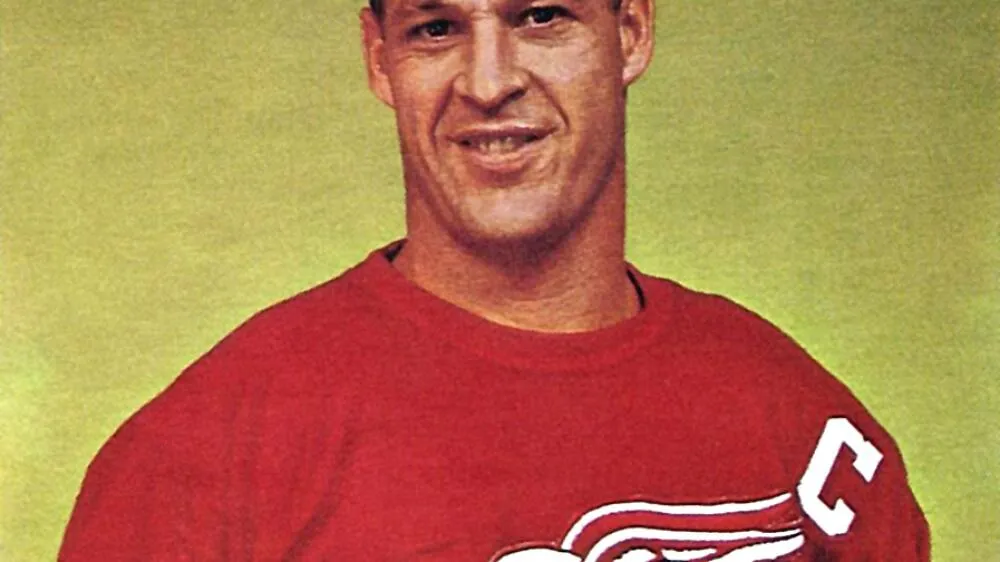
The achievement earned its name from Gordie Howe, widely known as “Mr. Hockey,” who played 26 seasons in the NHL primarily with the Detroit Red Wings. Howe was renowned for his complete game—he could score with the best of them, set up his teammates with precision passes, and wasn’t afraid to use his fists when challenged. Standing 6 feet tall and weighing over 200 pounds, Howe combined finesse with physicality in a way that defined an entire generation of hockey players.
What makes the nomenclature particularly interesting is that Howe himself only recorded this type of hat trick twice during his illustrious career spanning nearly 1,800 regular season games. His first came on October 11, 1953, when the Red Wings hosted the Toronto Maple Leafs at Olympia Stadium. In that 4-0 victory, Howe assisted on a goal by Red Kelly, scored one of his own, and fought defenseman Fern Flaman—completing the trifecta that would eventually bear his name.
Howe’s second and final such achievement occurred just over five months later, on March 21, 1954, once again against the Maple Leafs. This time, the Red Wings demolished Toronto 6-1, with Howe recording a goal, an assist, and a fight with Ted Kennedy. Despite only accomplishing the feat twice, Howe’s name became synonymous with this unique combination because of his reputation as the prototypical power forward—a player who could dominate in every aspect of the game.
The history behind what is a gordie howe hat trick
The first recorded instance of what would become known as a Gordie Howe hat trick actually predates Howe’s birth by several decades. According to hockey historians, Hall of Famer Harry Cameron accomplished the feat on December 22, 1920, while playing for the Toronto St. Pats. Cameron’s achievement came long before anyone thought to give it a special name, during an era when hockey was even more physical and fighting was a routine part of the game.
The statistic didn’t receive its official designation until years after Howe had established himself as one of the game’s premier players. The name stuck not because Howe performed it frequently, but because he embodied the ideal of the complete hockey player. His offensive statistics speak for themselves—801 goals and 1,049 assists in 1,767 regular season games—but it was his physical presence that truly set him apart. Howe accumulated 1,685 penalty minutes over his career, averaging nearly a minute per game in the box.
Hockey legend Glenn Hall once provided insight into why Howe rarely needed to fight despite his reputation as a tough player. “Gordie Howe hat trick? Ha,” Hall told Dave Stubbs of NHL.com. “Gordie just kicked the [crap] outta the tough guys and then he didn’t have to fight.” This quote illustrates that Howe’s physical dominance often served as a deterrent—opponents knew better than to challenge him, which paradoxically made it difficult for him to complete the hat trick named in his honor.
The achievement gained popularity as hockey culture began celebrating the gritty, physical aspects of the game alongside offensive prowess. During the 1970s and 1980s, when fighting was at its peak in the NHL, the Gordie Howe hat trick became a badge of honor for power forwards and two-way players. It represented a player’s willingness to do whatever it took to help the team win, whether that meant scoring goals, creating opportunities for linemates, or defending teammates with their fists.
Who holds the record for what is a gordie howe hat trick
Rick Tocchet stands alone atop the all-time leaderboard with an astounding 18 Gordie Howe hat tricks over his NHL career. Playing from 1984 to 2002, Tocchet epitomized the power forward position, combining a scoring touch with an aggressive, physical style. He recorded three such achievements during the 1986-87 season alone, including two in the month of January. Tocchet’s 952 career points and 2,972 penalty minutes perfectly illustrate the type of player capable of racking up these unique statistics.
Behind Tocchet, the all-time list reads like a who’s who of hockey’s toughest offensive players. Brendan Shanahan, who later became the NHL’s Senior Vice President of Player Safety, recorded 17 Gordie Howe hat tricks during his Hall of Fame career. Brian Sutter also notched 17, while Wilf Paiement collected 16. Cam Neely, one of the most feared power forwards of his generation, had 12 to his name before injuries cut short his brilliant career.
The Hockey Writers provides comprehensive statistics showing that Jarome Iginla recorded 11 Gordie Howe hat tricks, demonstrating his ability to dominate games in multiple ways throughout his career. Keith Tkachuk, Gerard Gallant, and Al Secord each collected 10, while Paul Coffey—primarily known as an offensive defenseman—surprisingly sits in the top 10 with nine. Even Bobby Orr, the legendary Bruins defenseman, recorded eight during his career, showcasing that this achievement wasn’t limited to forwards.
Among active players, Jamie Benn leads the way with five career Gordie Howe hat tricks. The Dallas Stars captain has built his reputation as a complete player who can score, pass, and physically dominate opponents when necessary. Evander Kane sits behind him with four, while Milan Lucic, Marcus Foligno, and Corey Perry each have three. Kane, given his age and playing style, appears most likely to climb higher on the all-time list before his career concludes.
Rare variations of what is a gordie howe hat trick
Some of the most remarkable moments in NHL history have involved multiple players achieving Gordie Howe hat tricks in the same game. The rarest variation is the “double Gordie,” which occurs when two players who fight each other both record a goal and an assist in the same contest. This has happened only twice in NHL history, making it even rarer than the individual achievement itself.
The first double Gordie occurred on March 9, 2010, when the Columbus Blue Jackets visited the Anaheim Ducks. Fedor Tyutin and Ryan Getzlaf fought at the second-period buzzer, after Tyutin had already recorded a goal and an assist. Getzlaf then scored and added an assist in the third period, completing both players’ hat tricks in Columbus’s 5-2 victory. The symmetry of the achievement—with both combatants accomplishing the feat—added an extra layer of intrigue to an already remarkable occurrence.
The second double Gordie happened on January 10, 2012, when Adam Henrique of the New Jersey Devils and Jarome Iginla of the Calgary Flames squared off. Both players had recorded goals and assists before their altercation, and both completed their respective hat tricks in the same game. For Iginla, it was the tenth of his career, adding to his already impressive total and solidifying his place among the all-time leaders in this unique category.
Teammates have also recorded Gordie Howe hat tricks in the same game on several occasions. On April 5, 2012, both Joe Thornton and Ryane Clowe of the San Jose Sharks accomplished the feat in a game against the Los Angeles Kings. More recently, on March 30, 2017, Philadelphia Flyers teammates Dale Weise and Wayne Simmonds both recorded the trifecta in a game against the New York Islanders. Perhaps the most remarkable team performance came on November 14, 1992, when three Buffalo Sabres players—Tom Fitzgerald, Wayne Presley, and Benoit Hogue—all completed Gordie Howe hat tricks in the same game against the New York Islanders, a feat that has never been duplicated.
Modern hockey and what is a gordie howe hat trick today
The frequency of Gordie Howe hat tricks has declined significantly in recent years as the NHL has evolved away from the fighting culture that once defined the sport. Rule changes, increased emphasis on player safety, and the rise of analytics-driven hockey have all contributed to fewer fights and, consequently, fewer opportunities for players to achieve this particular milestone. The modern game prioritizes speed, skill, and puck possession over physical confrontation.
Today’s power forwards still occasionally record Gordie Howe hat tricks, but they’re celebrated more as throwback moments than as regular occurrences. When a player does accomplish the feat in the current era, it tends to generate significant attention on social media and in hockey circles, precisely because it has become so unusual. The achievement serves as a reminder of hockey’s rougher past while also highlighting players who still embrace the physical aspects of the game.
The changing nature of hockey hasn’t diminished the legend surrounding this unique accomplishment, however. If anything, its rarity has enhanced its mystique. Players who record Gordie Howe hat tricks in today’s NHL demonstrate a willingness to play the game the way it was played in previous generations. They show that combining offensive skill with physical toughness still has value, even in an era when analytics suggest that fighting provides little strategic advantage.
Looking ahead, the Gordie Howe hat trick will likely become even more rare as younger players enter the league having grown up in systems that discourage fighting. However, the achievement will continue to hold a special place in hockey lore, representing an era when players were expected to contribute in every facet of the game—scoring, setting up teammates, and protecting each other with their fists when necessary.
The Gordie Howe hat trick remains one of hockey’s most distinctive and celebrated achievements, representing the complete player in ways that pure offensive statistics cannot capture. While modern hockey has moved away from the fighting culture that made this accomplishment more common, its legacy endures as a symbol of toughness, versatility, and old-school hockey values. From Rick Tocchet’s record 18 career achievements to the rare double and triple Gordies that have occurred throughout NHL history, this unique statistic continues to fascinate fans and honor the memory of Mr. Hockey himself. Whether it’s a veteran power forward or an unexpected contributor who records the next one, each Gordie Howe hat trick serves as a reminder of the sport’s physical heritage and the players who weren’t afraid to do whatever it took to help their team win.

Par Mike Jonderson
Mike Jonderson is a passionate hockey analyst and expert in advanced NHL statistics. A former college player and mathematics graduate, he combines his understanding of the game with technical expertise to develop innovative predictive models and contribute to the evolution of modern hockey analytics.