






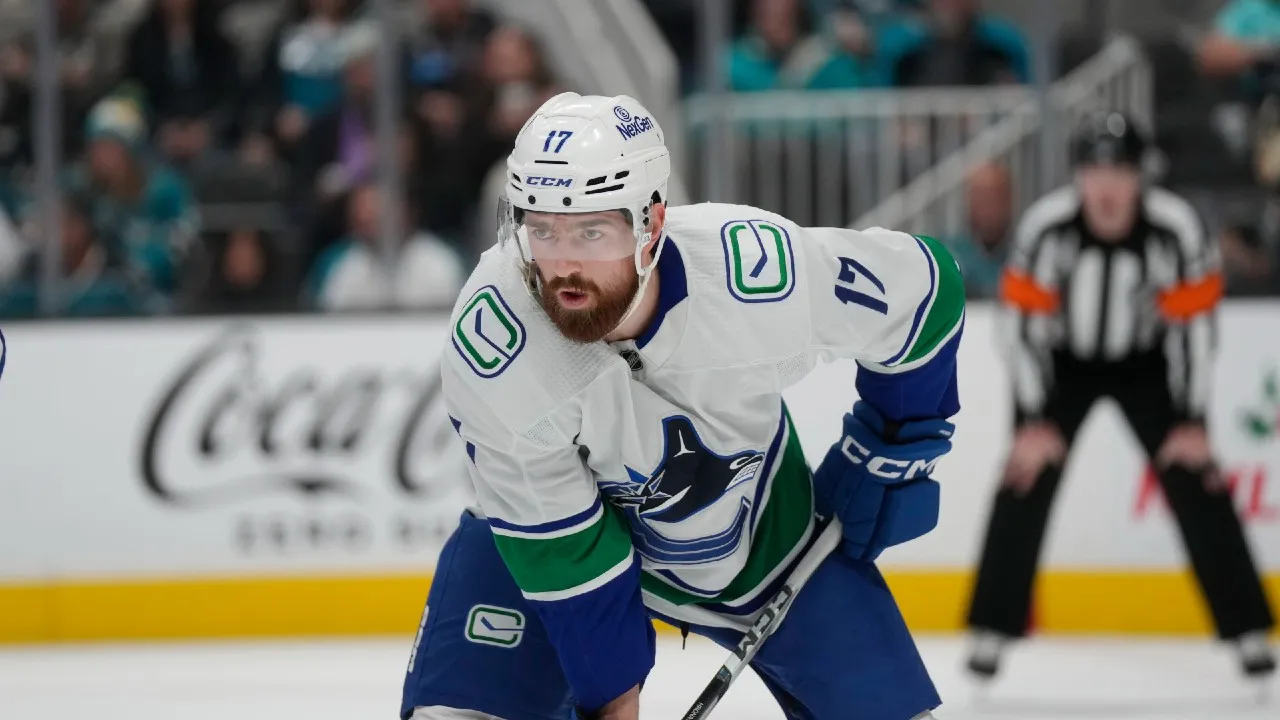
Filip Hronek remains the Canucks’ premier right-shot defenseman on an eight-year, $58-million contract that runs through the 2031-32 season.
Two-Year Window Preserves Asset Value
Hronek’s $7.25-million cap hit places him among the more affordable top-pair options at his position. The same contract structure that locks him to Vancouver also shields the team from any immediate pressure to move him. Jeff Paterson noted on Sekeres and Price that right-shot defensemen who log heavy minutes in all situations simply do not depreciate quickly.
Justin Faulk fetched a first-round pick and a prospect at the 2025 deadline. Colton Parayko drew serious interest from Buffalo in the same window. Both players posted comparable age and production profiles to Hronek’s current 28-year-old season. The Canucks therefore face no urgency to cash in before the 2027 trade deadline.
Hronek’s full no-move clause further stabilizes his market. Any acquiring team must first secure his approval, which narrows the list of suitors but simultaneously ensures that only serious offers surface. This dynamic prevents the asset from being shopped at a discount.
The organization can therefore deploy Hronek for 22-plus minutes per game without risking future returns. His presence also supplies the exact mentorship minutes required while Zeev Buium and Tom Willander transition from junior or college hockey.
Mentorship Role Accelerates Prospect Timeline
Buium and Willander together represent the next internal solution at right defense. Hronek’s 82-game workload in 2025-26 supplied the model those prospects now study on a nightly basis. The Canucks plan to increase their ice time incrementally while Hronek anchors the top pair.
Each additional season Hronek plays reduces the learning curve for the younger pair by an estimated 15-20 games of high-leverage experience. That compression matters because both prospects reach restricted-free-agent eligibility in 2028. The club wants them NHL-ready before that date.
Hronek’s willingness to remain in Vancouver for the long haul removes one variable from the equation. Paterson observed that Hronek has consistently stated he is “in this thing for the long haul,” allowing the front office to treat him as both player and teacher rather than a rental asset.
The arrangement creates a clean handoff window. Once Buium and Willander demonstrate they can handle 20-minute nights, Hronek’s protection status can be revisited without forcing an earlier decision.
Market Comparables Support Delayed Transaction
League-wide demand for right-shot, two-way defensemen has remained constant since the 2024 offseason. Hronek’s production and age align with the cohort that fetched first-round picks at the deadline. No structural change in the salary cap or positional scarcity appears likely before 2028.
Delaying a trade until the prospects are established also maximizes the return. A 30-year-old Hronek with two years remaining on his deal will still command the same first-round pick plus prospect package that Faulk received. The Canucks therefore convert mentorship value into draft capital rather than losing both.
The only variable that could alter timing is Hronek himself. Should he request a move after the 2027-28 season to chase a Cup, the organization retains leverage because his skill set has not aged out of the premium tier.
Frequently Asked Questions
Sources

Par Mike Jonderson
Mike Jonderson is a passionate hockey analyst and expert in advanced NHL statistics. A former college player and mathematics graduate, he combines his understanding of the game with technical expertise to develop innovative predictive models and contribute to the evolution of modern hockey analytics.