














In one of the most dramatic finishes in NHL history, the Carolina Hurricanes erased a two-goal deficit in the waning moments to defeat the Utah Mammoth 5-4 on January 29, 2026, at Lenovo Center in Raleigh, North Carolina.[1][2] Trailing 4-2 with under two minutes remaining, Carolina unleashed a frenzy of goals, starting with Andrei Svechnikov’s power-play tally at 18:01 of the third period, followed by Shayne Gostisbehere’s marker 30 seconds later, and capped by captain Jordan Staal’s redirection with 29.4 seconds left.[1] This rally marked only the third time in league history a team has overcome a two-goal deficit in the final two minutes to win in regulation.
The electric atmosphere at Lenovo Center fueled the turnaround, as Hurricanes players credited the raucous crowd for shifting momentum. “The fans pushed us to another level,” Staal said postgame.[1] For the Mammoth, it was a gut-wrenching collapse after dominating much of the contest, leaving coach André Tourigny to lament lost pace in crucial moments.[3]
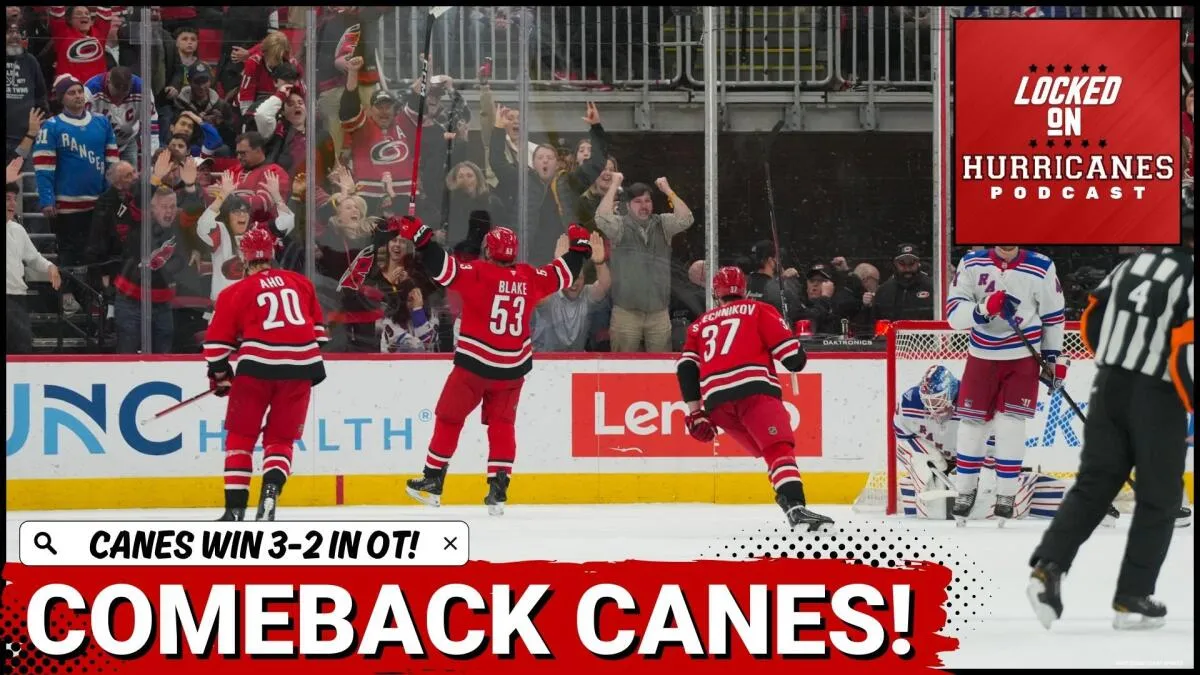
The final-minute frenzy
Carolina entered the third period locked in a back-and-forth battle, but Utah struck first at 7:11 when Michael Carcone converted a feed from Kailer Yamamoto and Jack McBain to push the lead to 4-2.[2] With goalie Brandon Bussi pulled for an extra attacker and facing a power play, Svechnikov ignited the comeback at 18:01, roofing a shot past Utah’s netminder to cut the gap to one.[1]
Just 30 seconds later, Gostisbehere, fresh off an injury absence, tied the game at 4-4 with his second goal of the night, assisted by Jackson Blake and Jaccob Slavin.[2] The building erupted as the Hurricanes sensed victory. Staal then sealed it, deflecting a Jordan Martinook shot past the Mammoth defense with 29.4 seconds on the clock. Coach Rod Brind’Amour summed it up: “I don’t know you draw them up, but we found a way.”[1]
This sequence unfolded during a chaotic double-minor penalty situation for Utah, where they killed the initial two minutes but faltered on awareness at the back door. The rapid-fire goals showcased Carolina’s relentless forecheck and puck pursuit.
The rally’s speed was unprecedented, with three goals spanning just 1:29. Fans and players alike pointed to the building’s energy as a catalyst, turning a potential loss into instant lore.
Standout performers light the fuse
Shayne Gostisbehere was the hero of the night, netting both of his goals in the comeback and adding an assist on Svechnikov’s opener. Returning from a five-game absence, his timely strikes proved decisive.[1]
Andrei Svechnikov bookended the rally with power-play goals, his 20th of the season coming at a pivotal juncture. “That’s how we should play all the time,” he noted, crediting bounces and sticking to the plan.[1]
Jordan Staal’s game-winner was vintage captain clutch, his 12th goal snapping a personal drought. Meanwhile, rookie sensation Brandon Bussi etched his name in the record books, becoming the first NHL goalie to reach 20 wins in his initial 24 appearances (20-3-1 record).[4][1]
For Utah, Kailer Yamamoto shone with two goals and an assist, fueling a potent line with McBain and Carcone that tallied seven points combined. JJ Peterka’s late second-period strike also kept the Mammoth ahead temporarily.
Utah Mammoth’s road warriors falter late
The Mammoth controlled stretches, building a 3-1 lead in the second period behind Yamamoto’s brace: his first at 4:10 assisted by McBain, and the second at 8:24 with helpers from Nick DeSimone and Carcone.[2] Peterka extended it to 3-1 at 17:55 before Gostisbehere replied on the power play.
Carcone’s third-period tally made it 4-2, capping a strong four-game road trip that ended 2-2-0. McBain notched his 100th NHL point on Yamamoto’s opener, while the trio’s chemistry was evident.[3]
Tourigny highlighted passivity after the penalty kill: “We became really passive… 6-on-5 and even 5-on-5 after.” Captain Clayton Keller urged learning from it: “Play all the way until the end.”[3] Yamamoto remained optimistic, calling it a fluke.
Utah’s resilience was clear, but the collapse underscored the fine line in tight games.
A rare feat in NHL annals
This comeback joins elite company as only the third instance of a regulation win after trailing by two in the final two minutes. The Dallas Stars achieved it against the Boston Bruins on October 14, 1995, while the Montreal Maroons did so versus the New York Rangers on March 15, 1932—both scoring three in that span.[5][1]
For context, broader three-goal third-period comebacks are scarce in playoffs, but this regular-season stunner stands alone in recency.[6] Staal captured the magic: “It’s making memories… You’re chasing those nights.”[1]
The feat elevates Carolina’s lore, blending skill, fortune, and home-ice fire.
Scoring summary
Here’s the full breakdown:
First period
- CAR: Andrei Svechnikov (19) 3:04 (unassisted) – 1-0 Hurricanes
Second period
- UTA: Kailer Yamamoto (6) 4:10 (Jack McBain) – 1-1
- UTA: Kailer Yamamoto (7) 8:24 (Nick DeSimone, Michael Carcone) – 2-1
- CAR: Shayne Gostisbehere (7) 17:36 PP (Andrei Svechnikov, Seth Jarvis) – 2-2
- UTA: JJ Peterka (19) 17:55 (Barrett Hayton) – 3-2
Third period
- UTA: Michael Carcone (11) 7:11 (Jack McBain, Kailer Yamamoto) – 4-2
- CAR: Andrei Svechnikov (20) 18:01 PP (Shayne Gostisbehere, Nikolaj Ehlers) – 4-3
- CAR: Shayne Gostisbehere (8) 18:31 (Jackson Blake, Jaccob Slavin) – 4-4
- CAR: Jordan Staal (12) 19:30 (unassisted) – 5-4[2]
The Hurricanes extended their points streak to six games with the victory, bolstering their playoff positioning. For Utah, the loss stings ahead of a homestand versus Dallas, Vancouver, and Detroit before the Olympic break.[3]
As detailed in the full ESPN recap and Utah’s game story, this thriller exemplifies hockey’s unpredictability.[1][3] Carolina chases more such memories, while Utah vows resilience—watch for ripple effects down the stretch.
Frequently Asked Questions

Par Mike Jonderson
Mike Jonderson is a passionate hockey analyst and expert in advanced NHL statistics. A former college player and mathematics graduate, he combines his understanding of the game with technical expertise to develop innovative predictive models and contribute to the evolution of modern hockey analytics.