











The Carolina Hurricanes have built a reputation as one of the NHL’s most consistently competitive teams, but early in the 2025-26 season, they’re facing an unexpected challenge that has nothing to do with their on-ice performance. Despite an impressive 6-1-0 record through their first seven games, the team has been ravaged by injuries, forcing management to repeatedly dip into their AHL affiliate’s roster. The Chicago Wolves have become a critical lifeline, providing emergency reinforcements as the Hurricanes navigate through what head coach Rod Brind’Amour described as a “tough night for the injuries.”
What started as isolated concerns has snowballed into a full-blown crisis, with six regular lineup players sidelined simultaneously. This unprecedented wave of injuries has given opportunities to several Wolves players to prove their NHL readiness, while also testing the organizational depth that general manager Eric Tulsky and his staff have carefully cultivated. The situation highlights both the fragility of even the most talented rosters and the importance of having capable depth pieces ready to step up when called upon.
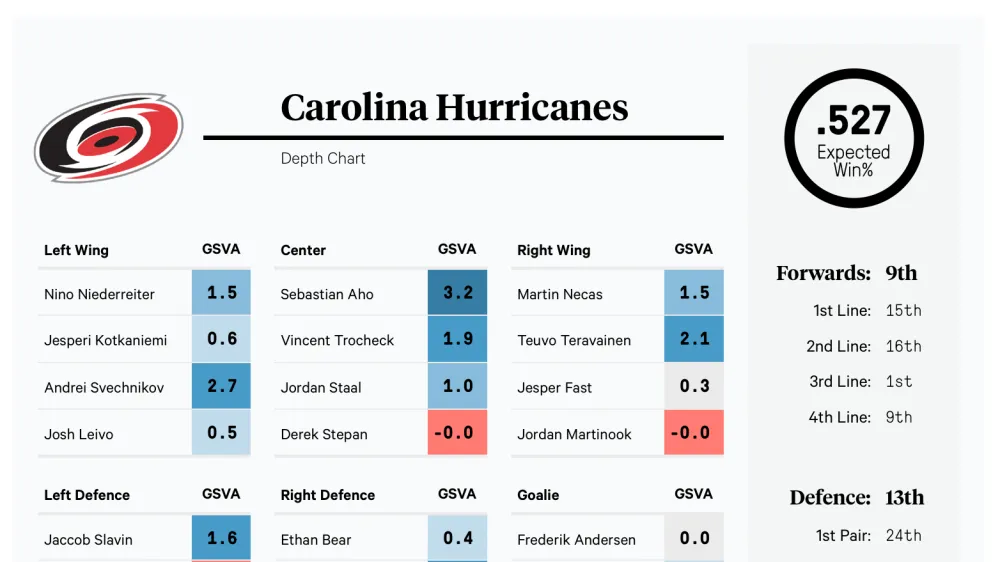
Recent Hurricanes injury call-ups from the Chicago Wolves and their immediate impact
The Hurricanes’ injury troubles began before the season even started, with goaltender Pyotr Kochetkov suffering a lower-body injury during practice on October 6. This prompted the organization to claim Brandon Bussi off waivers from the Florida Panthers, who made an impressive NHL debut with a victory against San Jose. Bussi added another win against Los Angeles, proving to be a valuable insurance policy while Kochetkov works his way back to health.
The defensive injuries created the first wave of emergency call-ups from Chicago. When star defenseman Jaccob Slavin was unable to join the team on their lengthy West Coast road trip due to a lower-body injury, and Shayne Gostisbehere went down against the Kings, the Hurricanes needed immediate help. Charles Alexis Legault, a fifth-round draft pick from 2023, received the call and made his NHL debut against the Vegas Golden Knights. The young defenseman has shown composure beyond his years, handling significant minutes in challenging situations.
The situation became even more dire during Carolina’s game against Colorado on October 23. K’Andre Miller was a late scratch before puck drop, unable to play despite going through warmups. This forced the Hurricanes to make an emergency recall of Joel Nystrom from the Wolves. The 23-year-old Swedish defenseman arrived at Ball Arena just 15 minutes before game time and immediately jumped into action, logging 16:02 of ice time over 27 shifts in his NHL debut. Nystrom was deployed in all situations, including power play and penalty kill duties, as the Avalanche put relentless pressure on Carolina’s depleted blue line.
“He came in 15 minutes before puck drop and played well,” forward Seth Jarvis said after the eventual 5-4 shootout victory. The performance exemplified the “next man up” mentality that has defined the Hurricanes’ organization, though Brind’Amour acknowledged the difficulty of the situation: “We really leaned on our depth. Against a team like that, it puts you on your heels.”
Forward depth tested as Hurricanes injury call-ups from the Chicago Wolves continue
The injury crisis extended beyond the blue line during that same Colorado game. William Carrier, who had already missed significant time last season with an injury, managed just three shifts before leaving the contest. On his third shift, he appeared to get tangled up with an Avalanche player off a faceoff and departed showing visible frustration. Eric Robinson, who had scored Carolina’s first goal of the night, also left the game in the second period with an upper-body injury after playing just 13 shifts.
Following the game, Brind’Amour delivered sobering news about the severity of these injuries. “They’re going to be out, both of those guys, for it looks like an extended period,” he told reporters at Ball Arena. When asked about Miller’s status, the coach was equally pessimistic: “I don’t know what’s going on there; that could be a while.”
The loss of Carrier and Robinson created an immediate need for forward reinforcements from Chicago. The most intriguing option is top prospect Bradly Nadeau, who has shown electrifying offensive skills during his time with the Wolves. The 20-year-old made headlines with a lacrosse-style goal against Rockford on October 19, demonstrating the creativity and skill that made him a first-round pick. In just three games with Chicago, Nadeau has compiled two goals and four points, suggesting he’s ready for a bigger challenge.
Nadeau’s potential call-up carries additional significance because of Carolina’s struggling power play, which went 0-for-5 against Colorado. His quick release and offensive instincts could provide a spark to special teams that desperately need production. According to The Hockey Writers, placing Nadeau in the top six would be beneficial long-term for the young winger, who has proven during training camp and preseason that he belongs at the NHL level.
Other forward options include Justin Robidas, who brings versatility as someone capable of playing both center and wing. In three games with the Wolves, Robidas has three assists and is plus-3, demonstrating the two-way reliability that fits Carolina’s system. Givani Smith, who impressed during training camp and signed a one-year contract after a professional tryout, has been working through immigration paperwork issues but remains a viable option once cleared. Smith would bring physicality and a defensive presence to the bottom six.
Long-term versus short-term solutions among Hurricanes injury call-ups from the Chicago Wolves
The Hurricanes face a strategic decision in determining whether to call up players for short-term fixes or to bring up prospects who could benefit from extended NHL experience. This distinction matters not only for roster management but also for the development trajectories of young players who might be better served playing big minutes in the AHL rather than sitting in an NHL press box.
For defensemen, Domenick Fensore represents an intriguing long-term option. The young blue-liner had an excellent rookie showcase and preseason, showcasing the poise and decision-making that NHL coaches covet. Through three games with the Wolves, Fensore has one goal and five points, demonstrating offensive instincts from the back end. If Slavin and Gostisbehere aren’t ready to return immediately, Fensore could slot in as a seventh defenseman, providing Tim Gleason with another option and allowing the coaching staff to manage minutes more effectively.
The current defensive corps features three players who have been available for every game: Jalen Chatfield, Alexander Nikishin, and Sean Walker. These three have shouldered enormous responsibility, with Walker averaging an astonishing 26:02 in ice time per game since Gostisbehere went down—fifth-most among all NHL skaters during that span. For context, Walker averaged just 16:50 in ice time per game last season, meaning he’s playing nearly 10 additional minutes nightly. This level of workload isn’t sustainable over an 82-game season, making additional defensive depth crucial.
Mike Reilly, signed as a free agent in July, has proven to be a prescient addition. The 32-year-old veteran has appeared in five games on the road trip, averaging 18:44 in ice time while picking up three assists. His NHL experience with six different organizations has provided stability during this tumultuous period, though even Reilly’s presence can’t fully offset the loss of multiple regulars.
Among forwards, the distinction between short-term and long-term solutions becomes even more pronounced. Givani Smith and Josiah Slavin represent short-term options—players who can fill roles adequately without necessarily requiring extended auditions. Slavin, Jaccob’s brother, brings defensive reliability and system familiarity, having played both center and wing for the Wolves. Smith’s physicality and energy could provide a temporary spark without disrupting long-term development plans.
Conversely, Nadeau and Robidas represent players who could genuinely benefit from NHL exposure. Nadeau’s offensive creativity could translate immediately to production, particularly if deployed in the top six alongside skilled playmakers. Robidas’s versatility and hockey IQ make him someone who could earn a longer look with strong performances. According to the official Hurricanes injury report, the team faces critical decisions about which direction to pursue as they navigate this challenging period.
Managing the roster crisis while maintaining success
The Hurricanes’ 6-1-0 start despite these mounting injuries speaks to both the quality of their healthy players and the effectiveness of their system. Frederik Andersen’s 44-save performance against Colorado exemplified the level of individual excellence required to overcome such adversity. Seth Jarvis’ shorthanded goal and shootout winner provided clutch scoring when depth pieces couldn’t be expected to carry offensive loads.
However, the schedule doesn’t pause for healing. Carolina faces another massive test against the Dallas Stars, followed by a home rematch against Vegas. These games will push the organization’s depth to its absolute limits, particularly on the blue line where options are most limited. The Hurricanes may need to recall additional players beyond those already promoted, potentially including Gavin Bayreuther or Domenick Fensore if defensive injuries persist.
The injury situation has also created unexpected NHL debuts for Bussi, Legault, and Nystrom—players who likely expected to begin the season in Chicago. While these opportunities can accelerate development, they also come with risks. Young players thrust into high-pressure situations against elite competition can struggle with confidence if overwhelmed. The Hurricanes’ coaching staff must balance competitive needs with developmental considerations, ensuring that call-ups receive appropriate support and realistic expectations.
What remains remarkable is how the organization has managed these challenges without significant on-ice results suffering. The Hurricanes’ systematic approach—emphasizing puck possession, defensive structure, and special teams execution—provides a framework that allows replacement players to succeed without requiring them to be stars. This “plug-and-play” capability reflects years of organizational development work, ensuring that Wolves players learn and practice the same systems as NHL regulars.
The injury crisis has also highlighted the value of Carolina’s analytics-driven approach to roster construction. Rather than stockpiling veterans on expensive AHL contracts, the organization has invested in developing young players who fit specific system requirements. This strategy pays dividends in moments like these, when emergency call-ups must perform in significant roles rather than simply filling roster spots.
As the Hurricanes continue their road trip before finally returning home, the Chicago Wolves’ importance to the organization cannot be overstated. Every practice in Rosemont, every developmental drill, every system meeting prepares players for exactly these moments—when injury forces opportunity and preparation meets chance. The coming weeks will reveal whether this depth can sustain success or if the mounting casualties eventually overwhelm even the most resilient roster. For now, Carolina’s impressive record stands as testament to organizational depth, coaching adaptability, and the perseverance of players seizing unexpected opportunities.
The relationship between the Hurricanes and Wolves demonstrates modern NHL roster management at its finest. Rather than viewing the AHL affiliate as a separate entity, Carolina has created a seamless pipeline where players can move between levels without dramatic system adjustments. This continuity has been critical during the current injury crisis, as detailed by Yahoo Sports’ coverage of the mounting injuries. When Nystrom arrived minutes before puck drop against Colorado, he didn’t need extensive instruction—he already knew the systems, understood the expectations, and possessed the confidence to execute. That level of organizational cohesion doesn’t happen accidentally; it’s the product of deliberate planning and consistent development philosophies that extend throughout the organization.
Looking ahead, the Hurricanes face difficult decisions about when to push injured players back into action versus continuing to rely on call-ups. Rushing players back prematurely risks aggravating injuries and creating longer-term absences, but playing short-handed for extended periods could eventually catch up with even the deepest rosters. Monday’s practice in Raleigh will provide crucial information about the status of Gostisbehere, Kochetkov, and Slavin—three players whose returns would significantly ease the roster strain. Until then, the Chicago Wolves remain on standby, ready to provide the next wave of reinforcements in what has become one of the early season’s most compelling organizational challenges.

Par Mike Jonderson
Mike Jonderson is a passionate hockey analyst and expert in advanced NHL statistics. A former college player and mathematics graduate, he combines his understanding of the game with technical expertise to develop innovative predictive models and contribute to the evolution of modern hockey analytics.