







The New Jersey Devils received devastating news that will test their championship aspirations as star center Jack Hughes underwent successful finger surgery following a freak accident at a team dinner. The injury occurred during what should have been a routine team bonding event in Chicago, transforming a casual Thursday evening into a nightmare scenario for both the player and the organization. With Hughes leading the Devils in scoring and playing at an elite level this season, his absence creates a significant void that will challenge the team’s depth and resilience.
The Devils announced that Hughes will miss approximately eight weeks following the surgical procedure performed by Dr. Robert Hotchkiss at the Hospital for Special Surgery in New York City. The team has scheduled a re-evaluation at the six-week mark, with fans and analysts anticipating his return around mid-January 2025. This timeline places his potential comeback during a critical stretch of the season when playoff positioning becomes increasingly important.
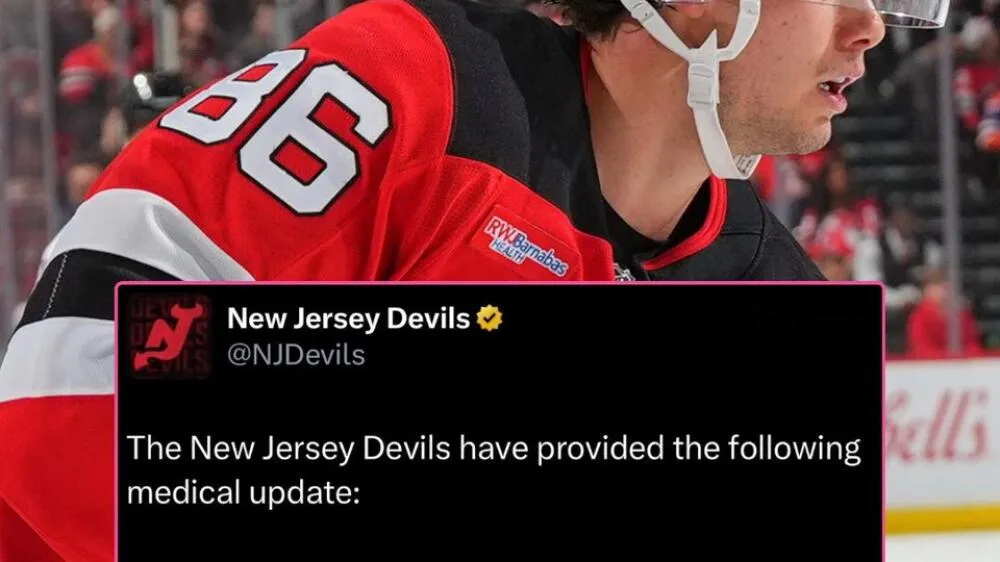
Understanding the Devils Jack Hughes finger surgery return date timeline
The eight-week recovery period announced by the Devils represents the expected timeline for Hughes to return to game action following his finger surgery. According to the team’s official statement, the procedure was deemed successful, which provides some optimism regarding his long-term prognosis. The surgery addressed damage sustained when Hughes cut his finger during the team dinner, an incident that multiple outlets have described as a “fluke accident.”
Medical experts suggest that finger surgeries for hockey players typically involve repairing tendons, ligaments, or addressing deep lacerations that could affect grip strength and dexterity. For a player like Hughes, whose game relies heavily on stickhandling prowess and shooting accuracy, ensuring complete healing is paramount. The six-week re-evaluation checkpoint will be crucial in determining whether the recovery is progressing as expected or if adjustments to the timeline are necessary.
The Devils have been cautious not to specify which finger was injured or the exact nature of the damage, likely to avoid providing opponents with tactical information once Hughes returns. However, the eight-week timeline suggests this was more than a superficial cut, indicating significant tissue damage that required surgical intervention. This conservative approach to recovery demonstrates the organization’s commitment to long-term health over short-term gains.
Based on the November 15, 2025 surgery date, the earliest realistic return date falls around January 10, 2025, assuming no complications during the healing process. This means Hughes will miss approximately 20-25 games, depending on the Devils’ schedule during that stretch. The team’s medical staff will monitor his progress closely, gradually reintroducing hockey activities as the healing permits.
Impact of Jack Hughes’ absence on Devils’ season
Losing Hughes represents a massive blow to a Devils team that had been performing exceptionally well with a 12-4-1 record before his injury. The 23-year-old center was on pace for 96 points this season, which would have been the second-highest total of his career. His 20 points in just 17 games placed him as the team’s leading scorer and demonstrated he was finally healthy after consecutive seasons cut short by shoulder injuries.
The timing of this injury is particularly frustrating because Hughes appeared to be entering his prime and playing at a level that suggested he was ready to carry the Devils deep into the playoffs. His combination of speed, vision, and offensive creativity makes him nearly impossible to replace with a single player. The Devils’ power play, which had been clicking efficiently with Hughes as the primary distributor, will need significant adjustments to maintain its effectiveness.
New Jersey currently leads the Metropolitan Division, but maintaining that position without their best forward will require contributions from throughout the lineup. The team already has been dealing with injuries to Connor Brown, Dougie Hamilton, Brett Pesce, Johnathan Kovacevic, and Evgenii Dadonov. Adding Hughes to this list tests the organization’s depth in unprecedented ways and could force general manager Tom Fitzgerald to explore trade options before the deadline.
The unusual circumstances surrounding the injury at the team dinner have raised questions about player safety protocols during off-ice team activities. While no one could have predicted this freak accident, it serves as a reminder of how quickly fortunes can change in professional sports. The Devils must now prove they can weather this storm and remain competitive in one of the NHL’s toughest divisions.
How the Devils can compensate during the Jack Hughes finger surgery recovery
With Nico Hischier capable of sliding into the top-line center role, the Devils possess some internal options to mitigate Hughes’ absence. Hischier, himself an elite two-way center, brings leadership and consistent play that will be crucial during this stretch. However, the team’s center depth takes a notable hit after Hischier, with Dawson Mercer, Cody Glass, and Luke Glendening being asked to shoulder larger responsibilities than originally anticipated.
Mercer has shown promise this season and will likely see increased power-play time and offensive zone starts. The 23-year-old forward possesses offensive upside, though he’s never been asked to produce at the rate Hughes does. Glass and Glendening provide solid defensive play but aren’t natural offensive replacements for a player of Hughes’ calibre. This reality may force head coach to get creative with line combinations and deployment strategies.
The Devils’ forward group will need secondary scoring from players like Jesper Bratt, who becomes even more critical as an offensive catalyst. Bratt’s chemistry with whoever centers his line will be tested, and his ability to create scoring chances independently will be invaluable. Timo Meier and Erik Haula also must elevate their games to help fill the offensive void left by Hughes’ absence.
Young prospects within the organization may receive opportunities they wouldn’t have otherwise gotten this early in the season. This could accelerate development for players on the cusp of NHL readiness, potentially providing long-term benefits even as the team navigates short-term challenges. The Devils’ prospect pool has improved significantly in recent years, and this situation tests whether that depth translates to meaningful NHL contributions.
Potential trade targets to help bridge the Devils Jack Hughes finger surgery return date gap
General manager Tom Fitzgerald faces a critical decision about whether to pursue external reinforcements during Hughes’ absence. The team was already considered a potential buyer at the trade deadline given their strong start and championship aspirations. Now, acquiring a quality center becomes less of a luxury and more of a necessity to maintain their divisional lead.
Nazem Kadri of the Calgary Flames represents an intriguing option if the Flames continue their poor performance and decide to sell assets. Kadri, who scored 67 points last season, brings proven playoff experience and offensive creativity that could help replace Hughes’ power-play production. The $7 million annual cap hit presents challenges, likely requiring Calgary to retain salary, but Kadri’s skill set aligns well with what the Devils need during this period.
Ryan O’Reilly of the Nashville Predators offers another viable option at a more manageable $4.25 million cap hit. The veteran center has been one of Nashville’s few bright spots this season with six goals and seven assists in 19 games. O’Reilly’s two-way excellence and faceoff prowess would provide stability down the middle while allowing the Devils to roll three strong center lines. His experience winning the Stanley Cup and Conn Smythe Trophy adds invaluable playoff pedigree.
A more ambitious move could involve calling the Vancouver Canucks about Elias Pettersson, whose value remains lower following a disappointing 45-point campaign last season. While this would require significant assets and likely salary retention from Vancouver, acquiring a talent like Pettersson could position the Devils with elite center depth once Hughes returns. According to The Hockey Writers, if Fitzgerald can execute a significant move now, New Jersey could boast the best center depth in the NHL come playoff time.
Historical context of Jack Hughes’ injury troubles
This latest setback continues a frustrating pattern of injuries that have prevented Hughes from playing a full 82-game season throughout his NHL career. Since the start of the 2021-22 season, he’s played more than 62 games just once, with consecutive years cut short by shoulder injuries. The 2023-24 season ended prematurely when he required shoulder surgery in April, robbing him of the opportunity to build momentum heading into the playoffs.
These recurring injuries have prevented Hughes from truly establishing himself among the NHL’s elite point producers, despite flashing that potential whenever healthy. His talent has never been in question—scouts have long compared his skating ability and hockey sense to some of the game’s best playmakers. However, durability concerns have crept into conversations about his long-term trajectory and value to the organization.
The non-hockey nature of this particular injury makes it especially frustrating for both Hughes and the Devils. Unlike shoulder issues that could be attributed to the physical demands of his playing style, a dinner table accident represents pure bad luck. This randomness serves as a stark reminder that professional athletes face risks both on and off the ice, and organizations can only control so much when it comes to player health.
Hughes’ struggles to stay healthy stand in contrast to other elite young centers like Connor McDavid and Nathan MacKinnon, who have largely avoided extended absences during their careers. For Hughes to reach that upper echelon of NHL stardom, he’ll need several consecutive healthy seasons to showcase his abilities and build the statistical resume his talent deserves.
What the return means for Devils’ playoff push
When Hughes does return in mid-January, the Devils will hope to receive an immediate boost to their offensive capabilities. The timing could prove fortuitous if the team manages to maintain their strong positioning during his absence. Adding a healthy Hughes to an already competitive roster in the second half of the season could provide the spark needed for a deep playoff run.
The six-week re-evaluation becomes a critical milestone for both Hughes and the organization. If the healing progresses ahead of schedule, there’s potential for an earlier return, though the Devils will likely err on the side of caution given his injury history. Rushing him back for regular season games makes little sense if it jeopardizes his availability for the playoffs or risks long-term complications.
The Devils’ performance during Hughes’ absence will determine their desperation level at the trade deadline. If they struggle to maintain their divisional lead, Fitzgerald may feel compelled to make aggressive moves to keep the team in contention. Conversely, if the team proves resilient and holds steady, they could emerge as even more formidable once Hughes returns to complement their depth additions.
Hockey fans and fantasy hockey managers alike will be watching the six-week mark closely for any updates on Hughes’ progress. The organization has every incentive to provide accurate timelines and avoid premature optimism that could disappoint supporters. Transparency about his recovery process will be essential in managing expectations as the calendar moves toward his anticipated January return.
The Devils’ championship window remains wide open with their young core of Hughes, Hischier, Bratt, and others entering their prime years. This injury represents a temporary setback rather than a long-term derailment, assuming the recovery proceeds without complications. How the team responds during this adversity will reveal much about their character and depth as they pursue their first Stanley Cup since 2003. When Hughes returns to the ice, Devils fans will hope he can pick up where he left off and lead the team through a successful playoff campaign.
Frequently Asked Questions

Par Mike Jonderson
Mike Jonderson is a passionate hockey analyst and expert in advanced NHL statistics. A former college player and mathematics graduate, he combines his understanding of the game with technical expertise to develop innovative predictive models and contribute to the evolution of modern hockey analytics.