





Jason Robertson enters the 2026 offseason as the Dallas Stars’ most pressing contract matter. The 26-year-old left winger, coming off a four-year deal with a $7.75 million AAV, is a restricted free agent with arbitration rights on July 1.[1][2] He led the Stars in playoff goals this season and remains their most consistent scorer, making his extension vital for contending in the West.
With GM Jim Nill prioritizing Robertson’s re-signing, the Stars face a tight cap situation. Projected at around $11 million in space, Dallas must balance this big raise—potentially $12 million AAV, akin to Mikko Rantanen’s deal—while filling roster gaps.[3][2]
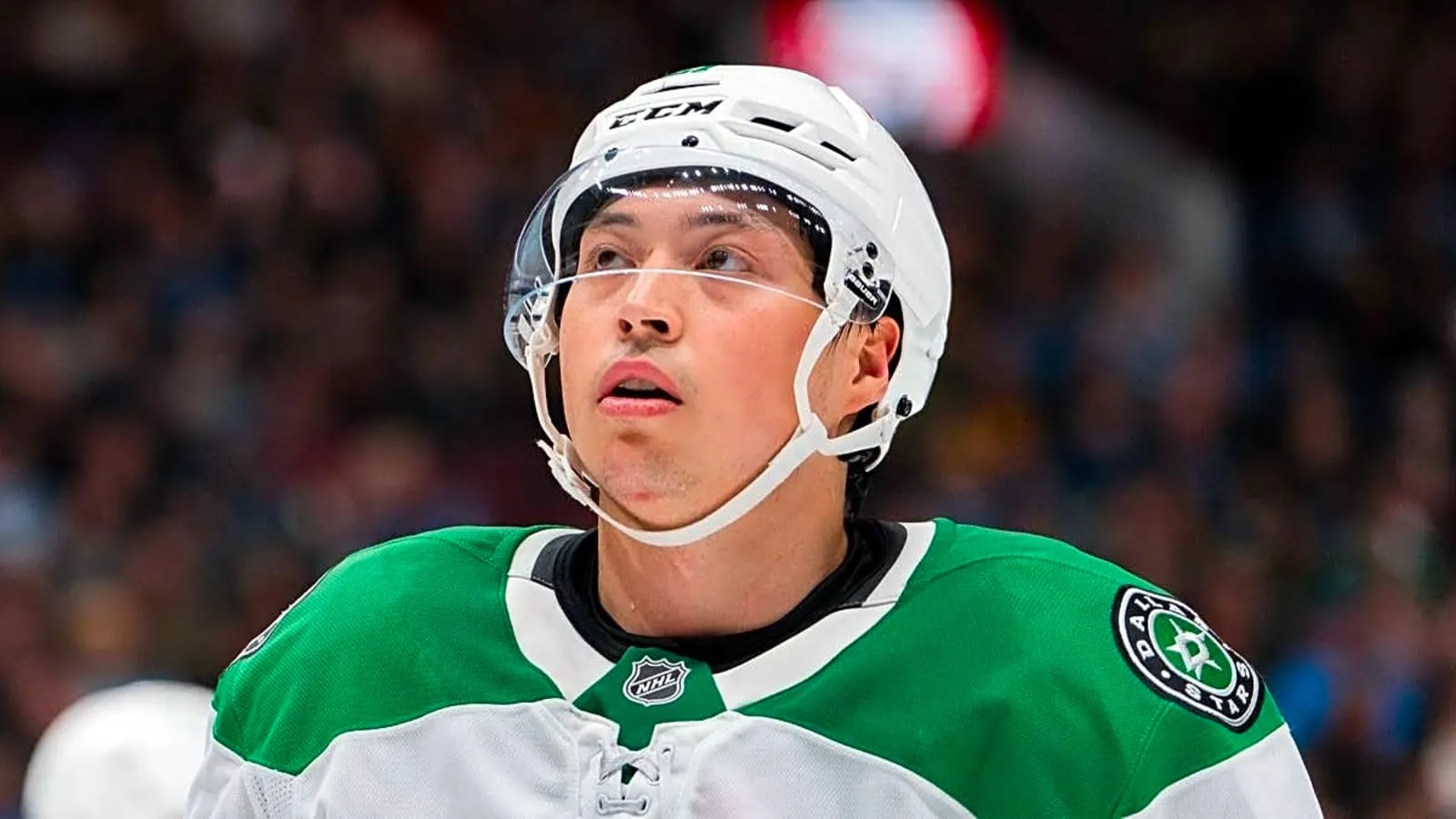
Robertson’s value to the Stars
Robertson has evolved into a cornerstone since his entry-level deal. Last season, he posted strong regular-season numbers and contributed eight playoff points, second on the team.[4] His shooting prowess and playmaking fit perfectly alongside linemates like Roope Hintz and Wyatt Johnston.
At 26, he’s entering his prime. Comparable contracts like Kirill Kaprizov’s extension set a high bar, and Robertson could command eight years in the $10-12 million range.[5] The Stars see him as a long-term piece for Stanley Cup runs.
Nill has publicly affirmed Robertson’s importance. In recent comments, he emphasized retaining core talent amid cap pressures.[6]
For deeper analysis on his rising stock, check this nhlinsight.com piece on Jason Robertson’s next contract with the Dallas Stars.
Dallas risks losing leverage if arbitration drags on. Robertson’s camp knows his market value, especially after a contract year filled with production.
Cap crunch details
The Stars project $11.1 million in cap space for 2026-27 with 19 players signed.[7] That’s tight for Robertson’s expected raise plus depth signings.
Upgrades like Jake Oettinger and Wyatt Johnston already eat into the budget. Johnston’s $8.4 million and Oettinger’s $8.25 million highlight the top-heavy structure.[8]
Nill must navigate this without gutting the roster. Short-term deals for UFAs could help, but Robertson takes precedence.
Projections from PuckPedia underscore the math: Robertson’s new AAV alone exceeds current space.[9]
Trade candidates to create room
Trades loom as the solution. Lia Assimakopoulos of The Dallas Morning News outlined four expendable pieces in her recent article.[2]
Key options include:
- Radek Faksa: $2 million AAV through 2027-28. Depth center and penalty killer, but injury history and surplus at position make him movable.
- Sam Steel: $2.1 million cap hit for one more year. Solid 33 points in 73 games, but redundant in bottom-six.
- Ilya Lyubushkin: $3.25 million through next season. Reliable defender, but limited ice time and cheaper alternatives exist.
- Tyler Myers: $1.5 million cap hit (half retained). Veteran right-shot, but playoff struggles could prompt a deal despite no-trade list.
Not all will move, but one or two could free $4-6 million.
These players provide grit without stardom. Trading them preserves the core while funding Robertson.
Fans debate feasibility on forums, with some fearing a sign-and-trade scenario.[10]
Nill’s strategy and outlook
Jim Nill’s track record inspires confidence. He’s masterminded past cap maneuvers, like deadline deals bolstering the blue line.
Recent reports confirm talks with Robertson’s camp are underway, as noted in this nhlinsight.com update on Dallas engaging his representatives.
An eight-year pact seems ideal, locking him through his 30s. Shorter bridge deals risk future hikes.
Nill indicated no rush to panic-sell. “Re-signing Jason is priority one,” he stated post-playoffs.[6]
The Western Conference demands aggression. Retaining Robertson positions Dallas to chase the Cup.
As negotiations heat up, the Stars’ offseason hinges on creative management. A deal around $11-12 million AAV feels likely, paving the way for tweaks elsewhere. Success here keeps Dallas elite; failure could reshape the roster dramatically. Watch for trade buzz in June.[3]
Frequently Asked Questions

Par Mike Jonderson
Mike Jonderson is a passionate hockey analyst and expert in advanced NHL statistics. A former college player and mathematics graduate, he combines his understanding of the game with technical expertise to develop innovative predictive models and contribute to the evolution of modern hockey analytics.