






The Winnipeg Jets arrived at Rogers Arena in Vancouver carrying the weight of a three-game losing streak that threatened to derail their promising start to the season. What they needed was a statement performance, and Josh Morrissey delivered exactly that, orchestrating a complete team effort that resulted in a decisive 5-3 victory over the Canucks on Tuesday night. The veteran defenseman’s three-point performance was more than just offensive production—it was a masterclass in leadership during adversity, reminding the hockey world why he remains one of the most underrated two-way defensemen in the NHL.
The victory wasn’t just about ending a skid; it represented a philosophical reset for a Jets team that had temporarily lost its identity. Following a team meeting earlier in the day where players discussed their core principles, Winnipeg rediscovered the intensity and structure that had defined their early-season success. With Morrissey leading from the blue line and Connor Hellebuyck providing his typically stellar goaltending with 30 saves, the Jets demonstrated the resilience that championship-caliber teams must possess.
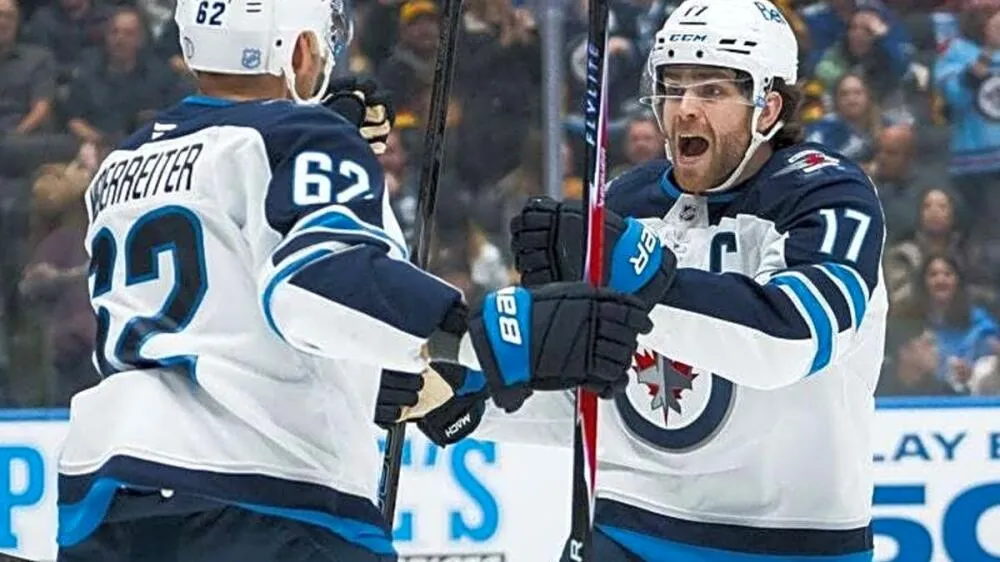
Josh Morrissey’s dominance anchors Winnipeg Jets reset against Vancouver Canucks
Josh Morrissey’s performance transcended the basic stat line of one goal and two assists. His fingerprints were all over the Jets’ most critical moments, beginning with the opening goal at 4:57 of the first period. Morrissey demonstrated exceptional hockey IQ by recognizing space above the left faceoff dot, then executing a perfectly weighted backdoor pass that caromed off Jonathan Toews’ skate and past Thatcher Demko.
The play showcased Morrissey’s ability to process the game at elite speed. Rather than forcing a shot from distance, he identified the defensive breakdown and exploited it with surgical precision. This type of decision-making separates good defensemen from great ones, and Morrissey has been making these reads consistently throughout his career.
His power-play goal at 14:38 of the opening frame proved even more consequential. With the Jets trailing 2-1 and desperately needing momentum, Morrissey unleashed a bomb from the point that deflected off Kiefer Sherwood’s stick—ironically, the Canucks forward who had just missed a clearing attempt. The puck fluttered over Demko’s glove to tie the game, and the energy shift was palpable.
“Everybody wanted to step up when you lose a few games in a row,” Morrissey explained after the game. “We had a great meeting this morning, actually as a group, and just kind of talked about what our identity is. I felt like everybody raised their intensity level, and as a leader on the team you want to be part of leading that charge.”
That power-play breakthrough ended a frustrating 0-for-14 drought that had spanned four games. The Jets’ special teams units had been pressing, trying too hard to manufacture perfect plays rather than taking what the opposition provided. Morrissey’s willingness to shoot from distance, trusting that traffic in front would create chaos, represented a tactical adjustment that paid immediate dividends.
His influence extended beyond the scoresheet throughout the evening. Morrissey logged heavy minutes against Vancouver’s top lines, particularly the Hughes-Pettersson combination that generated three assists for the Canucks captain. While Quinn Hughes showcased his own elite playmaking ability, Morrissey matched him stride for stride in a compelling battle between two of the league’s premier offensive defensemen. The performance also marked a historic milestone, as Morrissey’s assists pushed him to 306 for his career, surpassing Bryan Little for fourth-most in Jets/Thrashers franchise history.
The power play renaissance fuels Josh Morrissey leads Winnipeg Jets reset against Vancouver Canucks
Special teams often determine the outcome of tightly contested NHL games, and Tuesday’s matchup illustrated this axiom perfectly. The Jets entered the contest having failed to convert on their previous 14 power-play opportunities, a drought that had coincided directly with their three-game losing streak. Against a Vancouver penalty kill ranked 31st in the league at just 67.9 percent efficiency, Winnipeg needed to capitalize.
The first unit featuring Morrissey at the point proved devastating. His booming slap shot creates the foundation for everything the Jets try to accomplish with the man advantage. Opposing penalty killers must respect his shooting threat, which opens seams for Mark Scheifele, Gabriel Vilardi, and Kyle Connor to exploit. When teams commit too aggressively to blocking passing lanes, Morrissey simply unleashes his cannon and trusts the forwards to create second opportunities.
Gabriel Vilardi’s power-play marker just 48 seconds into the third period exemplified the confidence that had returned to Winnipeg’s special teams. Receiving the puck in the slot with his back to the net, Vilardi executed an audacious spinning backhand that somehow found its way past Kevin Lankinen’s blocker. The degree of difficulty was extraordinary, but the willingness to attempt such a play reflected a unit that had rediscovered its swagger.
“Pretty unreal,” Morrissey said of Vilardi’s goal. “He’s so crafty in the slot and around the net.” The chemistry between Morrissey’s setup work and Vilardi’s finishing ability has developed into one of the Jets’ most dangerous weapons. Understanding when to defer to skilled forwards versus when to shoot himself represents an ongoing calculation that Morrissey navigates with remarkable consistency.
The 2-for-4 power-play performance provided crucial insurance goals that allowed the Jets to maintain control even as Vancouver pushed back. Against a Canucks penalty kill that has now surrendered 10 goals on 21 chances over seven games, Winnipeg’s ability to exploit those vulnerabilities made the difference between two points and none.
Jets leadership duo Scheifele Morrissey continues to drive the team’s success as they navigate the challenges of maintaining excellence throughout a demanding season, and the power play’s resurgence provides another dimension to their offensive arsenal.
Team meeting sparks intensity in Josh Morrissey leads Winnipeg Jets reset against Vancouver Canucks
The morning team meeting that preceded Tuesday’s game proved more significant than any tactical adjustment. Three consecutive losses had forced the Jets to confront uncomfortable questions about their identity and commitment level. Rather than allowing coaching staff to deliver a top-down message, the players held themselves accountable in a frank discussion about their standards.
Morrissey emerged as one of the vocal leaders in that meeting, challenging teammates to rediscover the intensity that had fueled their 10-3-0 start to the season. The Jets had begun their six-game road trip with a 6-2 loss in Tampa Bay, followed by defeats in Florida and Carolina. Each game featured moments of solid play, but the consistency and 60-minute effort that had defined their identity had evaporated.
“We talked about what our identity is,” Morrissey noted, and the subsequent performance demonstrated that the message resonated. From the opening faceoff, Winnipeg played with a purpose that had been missing during the losing streak. Forecheck pressure disrupted Vancouver’s breakout attempts, defensive zone coverage remained tight, and every 50-50 puck battle was contested with intensity.
Adam Lowry, the Jets’ fourth-line center and alternate captain, reinforced the team’s renewed commitment following the victory. “We did a real good job of protecting the middle and when we needed him, Hellebuyck made some huge stops for us,” Lowry observed. The comment highlighted how Winnipeg’s defensive structure had tightened, limiting Vancouver’s high-danger opportunities despite the Canucks’ 33-shot output.
The rapid-fire sequence that saw the Jets score twice in 15 seconds during the first period epitomized the momentum and confidence that accountability can generate. After Morrissey’s power-play goal tied the game at 2-2, Lowry threw a sharp-angle shot on net that deflected off Demko’s pad directly to Nino Niederreiter for an easy tap-in. The goal wasn’t the result of elaborate scheming but rather simple puck pursuit and net presence—fundamental hockey executed with conviction.
Connor Hellebuyck’s 30-save performance provided the foundation for the victory, continuing his remarkable consistency that has defined his Vezina Trophy-caliber career. Even when Vancouver generated quality chances, particularly during their power-play opportunities, Hellebuyck remained composed and controlled. His ability to erase mistakes allows the Jets’ offensive weapons to take calculated risks, knowing their goaltender will bail them out when necessary.
Vancouver’s injury troubles compound in defeat to Jets
The Canucks’ frustrating season took another difficult turn as injuries once again disrupted their lineup and game plan. Thatcher Demko, making just his second start after missing time with a previous lower-body issue, lasted only one period before departing with what the team later confirmed was a separate lower-body injury. The goaltender faced just eight shots and allowed three goals, though at least two of those were the result of defensive breakdowns rather than poor goaltending.
Losing Demko represents a significant blow for a Vancouver team that has struggled to find consistency all season. The former Vezina Trophy finalist has battled injuries throughout his career, and his inability to stay healthy severely limits the Canucks’ ceiling. Kevin Lankinen, who entered in relief, has performed admirably in extended action, but asking a backup goaltender to carry the load over multiple weeks creates additional pressure throughout the lineup.
“You got to be ready at all times, and it’s part of my preparation to be ready every single night,” Lankinen said after the game. “You want to be the guy. You want to carry the load, help the team win, and I’ve been feeling really good, and hopefully we’re going to get some more results here soon.” His professionalism was evident in his 20-save performance across the final two periods, keeping Vancouver within striking distance despite the deficit.
The injury concerns extended beyond the crease, as Quinn Hughes briefly left the game midway through the second period after getting his stick tangled up with Mark Scheifele’s body. The Canucks captain headed to the locker room favoring his left arm, and anxiety rippled through Rogers Arena as fans contemplated losing their best player. Fortunately, Hughes returned before the end of the period, though he required additional taping before rejoining the action.
“I don’t know, weird play, just one of those weird ones,” Hughes explained, demonstrating his characteristic reluctance to make excuses. Despite the discomfort, he logged significant ice time and finished with three assists, including the primary helper on both of Vancouver’s first-period goals. His ability to create offense from the back end mirrors Morrissey’s impact for Winnipeg, and the duel between the two elite defensemen provided compelling theater.
The Winnipeg Jets 5-3 victory over Canucks showcased how depth and health can determine the outcome of closely matched contests. While Winnipeg rolled four lines with confidence and received contributions throughout the lineup, Vancouver was forced to adjust on the fly to Demko’s departure and Hughes’ temporary absence.
Vancouver coach Adam Foote attempted to find positives despite the defeat, noting that his team had out-chanced Winnipeg at 5-on-5 and generated quality looks. “We had a good game,” Foote insisted. “I hate to talk about numbers, but we out-chanced them again 5-on-5 and we had a missed clear on a PK and it hits our stick and goes in.” His comments reflected the frustration of a team that isn’t getting the bounces or secondary scoring necessary to overcome their defensive and special-teams deficiencies.
Looking ahead after Josh Morrissey leads Winnipeg Jets reset against Vancouver Canucks
The victory in Vancouver provides the Jets with momentum as they continue their six-game road trip with a Thursday matchup in Seattle against the Kraken. More importantly, it confirms that the team’s struggles over the previous week were correctable—a product of execution lapses rather than fundamental flaws. When Winnipeg plays with structure, leverages Hellebuyck’s elite goaltending, and receives offensive contributions from throughout the lineup, they possess the capability to compete with anyone in the Western Conference.
For Morrissey and the Jets, the challenge now becomes sustaining this level of intensity and focus through the remainder of the road trip and into the season’s middle months. The defenseman’s leadership, both vocally in team meetings and through his on-ice performance, sets the standard for a roster that harbors legitimate playoff aspirations. His 306 career assists represent consistent production, but his value transcends statistics—he anchors the team’s most important minutes and thrives in the pressure situations that define successful campaigns.
The power play’s resurgence also provides reason for optimism. Special teams often determine playoff success, and a Jets unit that operates efficiently with the man advantage becomes exponentially more dangerous. With Morrissey quarterbacking from the point and talented forwards like Scheifele, Vilardi, and Connor finishing plays, Winnipeg possesses the firepower to punish opponents’ mistakes.
As for Vancouver, the road ahead looks considerably more difficult with questions surrounding Demko’s availability and a penalty kill that ranks among the league’s worst. The Canucks face a three-game road trip beginning Friday in Carolina, and their season could take drastically different trajectories depending on how quickly they address their defensive deficiencies and special-teams struggles. Quinn Hughes’ brilliance can only compensate for so much, and TSN’s game recap highlighted how injuries continue to hamper their consistency when it matters most.
The contrast between the two teams’ situations couldn’t be starker. Winnipeg weathered a three-game storm by recommitting to their identity and received a galvanizing performance from one of their most important players. Vancouver continues searching for answers as injuries mount and fundamental issues persist. Tuesday’s game demonstrated how quickly fortunes can shift when leadership rises to meet the moment, and Josh Morrissey’s comprehensive excellence provided the blueprint for how elite defensemen can carry their teams through adversity.
Frequently Asked Questions

Par Mike Jonderson
Mike Jonderson is a passionate hockey analyst and expert in advanced NHL statistics. A former college player and mathematics graduate, he combines his understanding of the game with technical expertise to develop innovative predictive models and contribute to the evolution of modern hockey analytics.