












The Buffalo Sabres received an early holiday gift as Josh Norris made his long-awaited return to the lineup, immediately validating the organization’s patience during his rehabilitation. The dynamic forward didn’t just fill a roster spot—he transformed the team’s offensive identity in a single evening. Norris contributed three points including two dazzling goals and a primary assist, leading the Sabres to a convincing 5-1 victory over the Winnipeg Jets at KeyBank Center on Tuesday night.
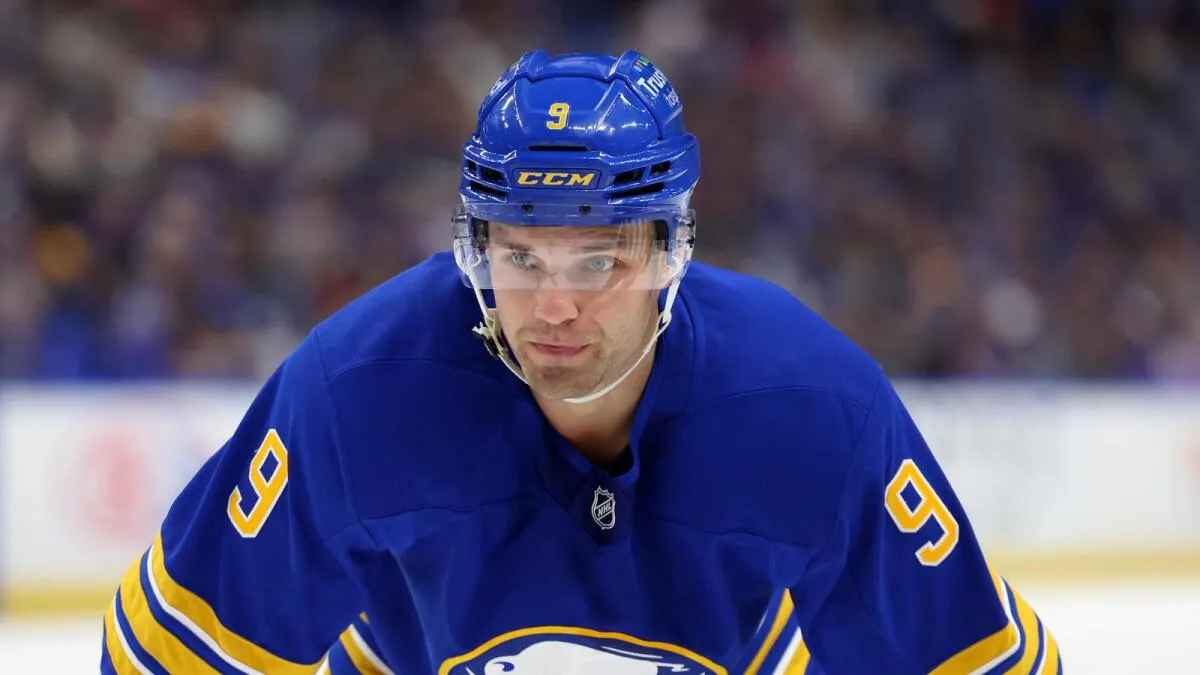
The significance of Norris’ comeback performance
Norris didn’t waste any time announcing his return. Just 4:23 into the opening period, he collected a cross-ice feed from Tage Thompson and wired a wrist shot past Jets goaltender Connor Hellebuyck, who had entered the game with a 2.14 goals-against average. The goal didn’t just put Buffalo ahead early—it injected energy into a building that had grown accustomed to offensive struggles.
His second tally came early in the third period on the power play, when Norris positioned himself perfectly at the top of the crease to redirect a Rasmus Dahlin point shot. The puck deflected off his stick and under Hellebuyck’s arm before the netminder could react, extending the Sabres’ lead to 4-1 and essentially sealing the victory. Between those markers, Norris set up Alex Tuch for a breakaway goal late in the second period, showcasing the vision and playmaking ability that makes him so valuable to Buffalo’s system.
What made the performance particularly impressive was Norris’ ability to shake off any rust despite missing nearly two months of game action. His skating looked crisp, his decision-making remained sharp, and he played nearly 18 minutes across all situations including both power play units and penalty kill duties. Head coach Don Granato praised his star forward’s preparation during the postgame press conference, noting that Norris had been “a student of the game” during his rehabilitation period.
How Norris changes Buffalo’s forward structure
The Sabres’ offensive struggles during Norris’ absence were well-documented. The team had gone 10-11-2 without him, watching their playoff positioning slip in an increasingly competitive Atlantic Division. Their power play had converted at just 17.3 percent, a dramatic drop from the 24.1 percent efficiency they posted with Norris in the lineup earlier this season.
His return immediately reshuffles Granato’s line combinations in the most positive way possible. Norris centers the top line between Thompson and Tuch, creating a trio that combines size, skill, and defensive responsibility. This configuration allows Dylan Cozens to slide back to his natural center position on the second line, giving Buffalo a formidable one-two punch down the middle that rivals any team in the conference.
The ripple effects extend throughout the roster. Zemgus Girgensons and Peyton Krebs can settle into more appropriate third and fourth-line roles, where their energy and defensive acumen are better utilized. The team’s forward depth chart suddenly looks balanced rather than top-heavy, with scoring threats available across three lines instead of relying on sporadic production from the bottom-six forwards.
The chemistry factor with Thompson and Tuch
What makes Norris particularly valuable is his established chemistry with linemates Tage Thompson and Alex Tuch. The trio spent most of training camp together and played the first eight games of the season as a unit before Norris’ injury. Their familiarity was evident Tuesday night, as all three players finished with multiple points and combined for seven shots on goal.
Thompson has been candid about how much he missed playing with Norris during the postgame interviews. “When he’s out there, everything just opens up,” Thompson explained. “He draws so much attention because defenses have to respect his shot and his vision. That creates space for me and Tuchy to operate.” The statistics support Thompson’s assessment—he had managed just three goals in the 23 games without Norris but recorded two assists in the comeback victory.
Defensive improvements with Norris back in fold
While Norris’ offensive contributions grab headlines, his impact on Buffalo’s defensive structure shouldn’t be overlooked. The Sabres allowed just one goal Tuesday night, their best defensive performance in weeks, and Norris played a significant role in that improvement. His ability to maintain possession in the offensive zone reduces the amount of time Buffalo spends defending, a simple but critical factor in modern hockey analytics.
Norris won 58 percent of his faceoffs against Winnipeg, including several key defensive zone draws late in the second period when the Jets were pressing. His positioning without the puck is equally impressive, as he consistently supports his defensemen on breakouts while still being available as a transition option. This two-way responsibility is what separates good teams from great ones in today’s NHL, where every line is expected to contribute defensively.
The penalty kill unit also benefits from his presence. Buffalo killed off four of five Winnipeg power plays, with Norris logging significant short-handed minutes alongside Girgensons. His active stick in passing lanes and ability to force turnovers at the blue line prevented the Jets from establishing any consistent zone time during their man-advantage opportunities.
The analytics behind the victory
Advanced metrics tell the story of Norris’ dominance even more clearly than traditional statistics. He posted a 68 percent expected goals share at five-on-five, meaning Buffalo generated nearly 70 percent of the quality scoring chances when he was on the ice. His line controlled shot attempts at a 64 percent rate and out-chanced Winnipeg 12-4 in high-danger opportunities.
Perhaps most tellingly, Norris’ individual points percentage—the share of goals scored when he’s on the ice that he either scores or assists on—was 100 percent Tuesday night. That’s an unsustainable rate over a full season, obviously, but it demonstrates how directly involved he was in every positive outcome Buffalo achieved. When your top forward is that engaged, good things happen.
What this means for Buffalo’s playoff push
The victory moved Buffalo within four points of the final wild-card spot in the Eastern Conference, suddenly making a postseason appearance feel achievable rather than aspirational. With Norris back in the fold, the Sabres have 48 games remaining to close that gap, and their upcoming schedule features several teams directly ahead of them in the standings.
The timing couldn’t be better for their playoff aspirations. Buffalo faces Detroit, Montreal, and Ottawa—all teams they’re chasing—in eight of their next twelve games. Those head-to-head matchups represent four-point swings in the standings, and having a healthy Norris gives them their best chance to maximize those opportunities. The organization’s decision to take a conservative approach with his rehabilitation, even as the team struggled, appears vindicated now that they have their most impactful player back at full strength.
General manager Kevyn Adams addressed the media after Tuesday’s game and emphasized the long-term view the organization maintained throughout Norris’ recovery. “We never saw this as a lost season,” Adams stated. “Josh is a foundational piece of what we’re building here, and rushing him back would have compromised everything we’ve worked toward. This performance is exactly why we approached his health with such care.”
Upcoming challenges and roster considerations
While Norris’ return solves many problems, Buffalo still faces questions about their depth and durability. The team continues to play without defenseman Mattias Samuelsson, who has missed 15 games with a lower-body injury, and winger Jordan Greenway remains day-to-day with an undisclosed issue. Finding ways to manage minutes and avoid further injury will be crucial as the schedule intensifies.
The trade deadline looms approximately two months away, and Adams must now evaluate whether this roster—with Norris healthy—can legitimately compete for a playoff spot. If Tuesday’s performance becomes the norm rather than an outlier, the Sabres might become buyers rather than sellers, potentially adding a depth defenseman or bottom-six forward to support their core group. Conversely, if the team reverts to pre-Norris form, management might still consider moving pending free agents to recoup assets.
However, the early returns are overwhelmingly positive. Buffalo’s underlying numbers with Norris in the lineup suggest they’re a legitimate playoff contender, not just a team riding a hot streak. Their expected goals percentage jumps from 48.3 percent without him to 54.7 percent with him—a massive swing that transforms them from a below-average team to one of the better possession clubs in the league.
Norris’ personal journey back to the ice
The shoulder injury that sidelined Norris occurred during a seemingly innocent play against the Florida Panthers on October 28. Chasing a loose puck along the boards, Norris absorbed a clean hit but landed awkwardly, immediately clutching his shoulder. The diagnosis was a separated shoulder requiring 6-8 weeks of recovery, and the team placed him on injured reserve the following day.
Rehabilitation progressed ahead of schedule, thanks in part to Norris’ dedicated approach. He spent countless hours with Buffalo’s training staff, focusing not just on healing but on maintaining his conditioning and hockey sense. Teammates noted he was constantly engaged during video sessions, offering insights and staying mentally sharp even when he couldn’t participate physically. That preparation clearly paid dividends in his seamless transition back to game speed.
Tuesday’s performance also held personal significance for Norris beyond just returning to action. The two goals gave him 11 on the season despite missing 23 games, keeping him on pace for his first 30-goal campaign if he remains healthy. The assist was his 15th point in just 18 games played, demonstrating the point-per-game pace he established early in the season before the injury derailed his momentum.
Teammate reactions and locker room impact
Veteran defenseman Rasmus Dahlin captured the locker room sentiment perfectly during his postgame interview: “When you see a guy work that hard to get back, and then he comes in and dominates like that? It fires everyone up. We’re a different team with him, and we all know it.” That emotional boost might be just as valuable as the on-ice production, particularly for a young team still learning how to win consistently.
Goaltender Ukko-Pekka Luukkonen, who made 31 saves in the victory, joked about Norris making his job easier. “I told him after the game he should get a shutout assist,” Luukkonen laughed. “When the puck is in their end because of what he’s doing, I’m not facing shots. That’s how it works.” The comment highlights an important truth: offensive zone possession is the best defense in hockey, and Norris excels at maintaining that possession.
Looking ahead, Norris will need to prove he can maintain this production while managing the physical demands of an NHL season. The shoulder will be a target for opponents testing his durability, and Granato must balance the desire to ride his hot hand with the need to protect his long-term health. Tuesday’s 17:52 of ice time seemed about right—significant enough to impact the game, but not so excessive that it places unnecessary stress on recently healed tissue.
What it means for the championship
One victory in November doesn’t transform a team into a Stanley Cup contender, but Josh Norris’ triumphant return provides something arguably more valuable: clarity. Buffalo now knows they have a core piece capable of elevating everyone around him, a legitimate first-line center who can drive results at both ends of the ice. That knowledge will inform every decision the organization makes over the next three months, from lineup construction to potential trade acquisitions.
The Sabres’ championship window may not be fully open yet, but Norris’ performance suggests it’s starting to crack. His combination of skill, hockey intelligence, and two-way responsibility represents exactly the type of player championship teams build around. For a franchise that’s missed the playoffs for thirteen consecutive seasons—the longest active drought in North American professional sports—the promise of a brighter future might finally have some tangible evidence to support it.
If Buffalo can stay healthy and continue getting Norris-level performances from their core group, the Eastern Conference playoff race just got considerably more interesting. The team that took the ice Tuesday night looked like a group that belonged in the postseason conversation, and that’s a feeling Sabres fans haven’t experienced nearly often enough in recent years.
For more analysis on the Sabres’ playoff positioning and roster decisions, check out our breakdown of the team’s upcoming salary cap situation and potential trade targets as the deadline approaches.
Frequently Asked Questions

Par Mike Jonderson
Mike Jonderson is a passionate hockey analyst and expert in advanced NHL statistics. A former college player and mathematics graduate, he combines his understanding of the game with technical expertise to develop innovative predictive models and contribute to the evolution of modern hockey analytics.