







The Toronto Maple Leafs find themselves in unfamiliar territory as November draws to a close, sitting at the bottom of the Eastern Conference with a 9-10-3 record. After losing Mitchell Marner to Vegas in the offseason, the team has struggled to generate consistent offense and looks more like a fringe playoff contender than the Stanley Cup threat they hoped to be. Meanwhile, the Nashville Predators appear headed in the opposite direction, with speculation mounting that they’re ready to embrace a retooling phase rather than chase a lost season.
This divergence in trajectory creates a perfect storm for potential trade discussions. The Predators have three high-profile forwards appearing on major trade bait boards, representing over $77 million in contracts that could reshape Toronto’s roster. General manager Brad Treliving faces mounting pressure to make moves that can salvage the season while navigating a tight salary cap environment.
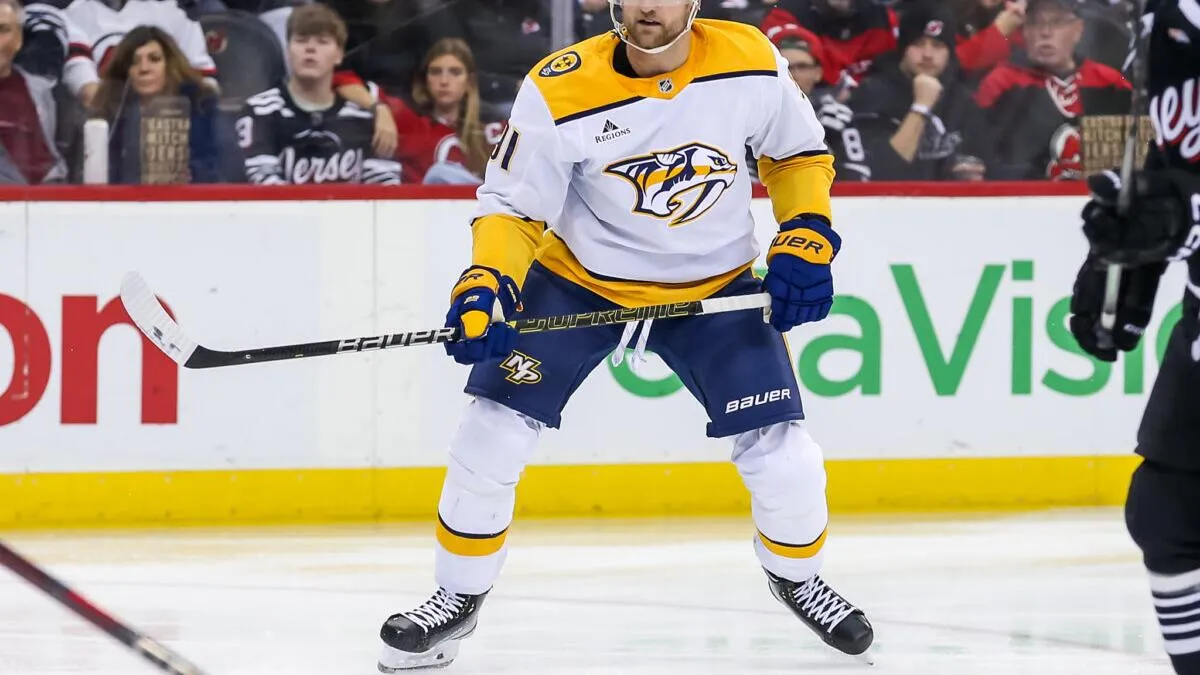
Why the Nashville Predators could be ideal trade partners for the Toronto Maple Leafs
The Predators’ situation has become increasingly clear through November. With multiple core players underperforming and the team sliding toward another bottom-tier finish, management has signaled openness to moving significant contracts. This willingness represents a departure from their typical conservative approach and creates opportunities for savvy buyers.
Toronto’s front office has been actively exploring trade scenarios for weeks. According to analysis of Toronto Maple Leafs trade deadline strategy, the organization recognizes the urgent need to address multiple roster holes. The Predators present a unique opportunity to acquire proven NHL talent without competing against a crowded market of buyers.
Three specific Nashville players align with Toronto’s most pressing needs: a scoring winger to fill Marner’s void, defensive depth to support their blueline, and veteran leadership for a bottom-six forward group that has lacked identity. The contracts attached to these players vary dramatically, offering options for different salary cap scenarios.
Top three Toronto Maple Leafs Nashville Predators trade targets
Steven Stamkos: The hometown hero gamble
The most polarizing name connecting these two franchises is Steven Stamkos. The Markham, Ontario native has struggled mightily in Nashville, posting just four goals and one assist through 21 games while carrying an $8 million cap hit through 2028. His no-movement clause complicates matters, but the Predators’ willingness to retain salary could change the equation.
Chris Johnston of The Athletic recently ranked Stamkos as the second-best trade target in hockey, noting the “imperfect marriage between player and team.” The Predators lack the playmaking center needed to unlock Stamkos’ still-dangerous shot, while Toronto could theoretically deploy him alongside Auston Matthews or John Tavares.
The financial gymnastics required would be significant. Toronto would likely need to move multiple contracts—potentially Max Domi, Nicholas Robertson, and Calle Jarnkrok—to create space. However, acquiring a player with 1195 career points and two Stanley Cup rings carries undeniable appeal for a franchise desperate for playoff success. The question becomes whether Toronto can get Stamkos at 50% retention without sacrificing a first-round pick.
Jonathan Marchessault: Proven playoff performer
Jonathan Marchessault’s name has circulated in trade speculation since shortly after he signed his five-year, $27.5 million deal with Nashville. The 2023 Conn Smythe Trophy winner has maintained decent production despite the team’s struggles, scoring four goals and two assists in 18 games this season.
What makes Marchessault particularly attractive is his proven track record in pressure situations. With 102 career playoff games and a championship pedigree from his Vegas Golden Knights days, he brings the type of postseason experience Toronto’s middle-six desperately needs. His $5.5 million cap hit through 2028-29 becomes more palatable as the salary cap rises.
At 33 years old, Marchessault still possesses the speed and skill to contribute. Johnston notes that “put him with a real play-driving center, and he’s a good bet to rebound.” Toronto’s depth chart could offer him opportunities with Tavares or even on the wing with Matthews in certain situations. Unlike Stamkos, Marchessault lacks no-trade protection, giving Toronto clearer negotiating lanes.
Nick Blankenburg: Cost-effective defensive depth
While the forwards grab headlines, the most realistic target might be 27-year-old defenseman Nick Blankenburg. The right-shot blueliner carries a mere $775,000 cap hit and has shown capable NHL production with one goal and five assists in 11 games this season.
Blankenburg plays with intensity that belies his 5-foot-9 frame, offering the type of mobile, puck-moving presence Toronto’s third pairing lacks. Through 126 career games, he’s posted 11 goals and 29 assists—solid production for a depth defender who could be sheltered behind Morgan Rielly and Jake McCabe.
The acquisition cost would be minimal, likely a mid-round pick or B-level prospect. This low-risk, high-reward profile fits perfectly with Toronto’s need to conserve assets for larger moves. He has one year remaining on his deal, allowing Toronto to evaluate his fit before committing long-term.
Analyzing the cap implications for Toronto Maple Leafs Nashville Predators trade targets
Toronto’s cap situation remains the primary obstacle to any major acquisition. The team has effectively zero cap space and would need significant salary retention from Nashville to make either Stamkos or Marchessault feasible. Predators management has reportedly considered this scenario, understanding that moving bad contracts might require eating 40-50% of the salary.
For Stamkos at 50% retention, Toronto would still need to clear $4 million in cap space. This makes the multi-player trade scenario almost mandatory. Moving Domi’s $3 million and Jarnkrok’s $2.1 million would create sufficient room, though it would deplete forward depth.
Marchessault presents a slightly easier path. At 40% retention ($3.3 million cap hit), Toronto could potentially make room by trading a single mid-tier contract and a depth piece. The organization has shown willingness to move Robertson in previous discussions, and his youth might appeal to a Nashville team looking to get younger.
The Blankenburg scenario requires virtually no cap manipulation, making it the cleanest transaction. Toronto could absorb his $775,000 hit without moving money out, preserving flexibility for additional moves.
What would it take to complete these Toronto Maple Leafs Nashville Predators trade deals?
Predators general manager Barry Trotz faces a delicate balancing act. He must extract maximum value for his assets while acknowledging the diminished trade value of underperforming players on expensive contracts. For Stamkos, even with salary retention, Trotz likely seeks a first-round pick or equivalent prospect value. The Marner trade return from Vegas has reset the market for star players, and Trotz won’t want to appear desperate.
Marchessault probably commands a second-round pick plus a B-level prospect at his full cap hit. With retention, the price rises to potentially a first-round pick, though his age (33) and contract length work against Nashville. Toronto has been protective of its first-round selections but might part with a conditional pick if Nashville retains significant salary.
Blankenburg likely moves for a fourth-round pick or comparable prospect. His low cap hit and short contract term make him an easy asset to price, and Nashville has no leverage to demand more from a depth defender.
The no-movement clauses add complexity. Stamkos would need to approve any destination, and while his personal connection to Toronto makes it plausible, he might prefer destinations with clearer Cup chances. Toronto’s current standing could be a deterrent.
The risks and rewards of pursuing Nashville Predators trade targets
Every trade scenario carries inherent risk, but these Predators targets present unique challenges. Stamkos represents the biggest gamble—committing to a declining player with three years remaining on a massive contract could hamstring Toronto’s future flexibility. However, the potential reward of a motivated hometown legend finding his form alongside elite talent cannot be dismissed.
Marchessault offers more certainty but less upside. His playoff track record provides confidence he can contribute in meaningful games, yet his production has dipped from his Vegas peak. At $5.5 million, he’s paid like a top-six forward but might settle as a high-end third-liner in Toronto’s deep lineup.
Blankenburg carries minimal risk but also limited impact. He solves a depth problem rather than a core issue, and Toronto has bigger holes to fill. However, successful teams build from the bottom of the roster upward, and cheap, effective depth defensemen are valuable commodities.
The alternative approach might involve looking west rather than south. Analysis of Toronto Maple Leafs Canucks trade targets reveals different options that could address similar needs without the contract baggage. However, Nashville’s potential willingness to retain salary makes them uniquely attractive partners.
Conclusion
The Toronto Maple Leafs Nashville Predators trade targets discussion remains speculative but increasingly plausible as both teams assess their situations. With the trade deadline still months away, Toronto has time to evaluate whether its current roster can coalesce or if external help becomes necessary.
Stamkos and Marchessault represent high-variance plays—either franchise-altering additions or costly mistakes that set the organization back years. Blankenburg offers a safer, more incremental improvement that fits Toronto’s cap reality. The path Treliving chooses will reveal much about management’s confidence in the current core and their willingness to embrace risk.
For Nashville, these trades would mark the beginning of a necessary rebuild. How aggressively they pursue Toronto’s assets, and how much salary they’re willing to retain, will determine whether this partnership materializes. The hockey world will be watching closely as these two franchises navigate the complex trade landscape ahead.
Frequently Asked Questions

Par Mike Jonderson
Mike Jonderson is a passionate hockey analyst and expert in advanced NHL statistics. A former college player and mathematics graduate, he combines his understanding of the game with technical expertise to develop innovative predictive models and contribute to the evolution of modern hockey analytics.