The Toronto Maple Leafs’ stunning win in the 2026 NHL draft lottery has handed new general manager John Chayka a golden opportunity.[1] Jumping from the fifth-worst record to the top selection, the Leafs can fast-track their return to contention. The blueprint is straightforward: select Gavin McKenna at No. 1, target key free agents, and make a coaching change.
McKenna stands out as the consensus safe choice in a draft lacking a clear superstar. Scouts praise his polish and readiness, positioning him perfectly alongside Auston Matthews. With Chayka at the helm, avoiding past pitfalls will be crucial to turning this pick into playoff success.[2]
John Chayka’s fresh start with the top pick
John Chayka’s appointment as GM on May 4 marked a new chapter for the Maple Leafs, pairing him with senior advisor Mats Sundin.[3] The former Coyotes executive inherits a team eager to rebound after missing the playoffs for the first time in a decade. Their lottery victory, defying 8.5 percent odds, amplified the excitement in Toronto.
Chayka reacted to the win with measured optimism. “You need some luck and we got it tonight,” he said. “When you get a first overall pick, it’s a monumental type of opportunity.”[1] He highlighted the draft’s depth, signaling careful evaluation ahead.
The Leafs’ 32-36-14 finish underscored defensive and depth issues. Chayka’s analytics-driven approach from Arizona could address these gaps. Yet, his first major decision looms large.
Fans recall simulations like this draft lottery projection that foresaw Toronto landing McKenna. Reality now matches the hype.
Sundin echoed the sentiment: “I’m extremely happy for the Toronto Maple Leafs fanbase. It’s great to get the first pick.”[1] This leadership duo sets the stage for bold moves.
Gavin McKenna: Elite skill meets NHL readiness
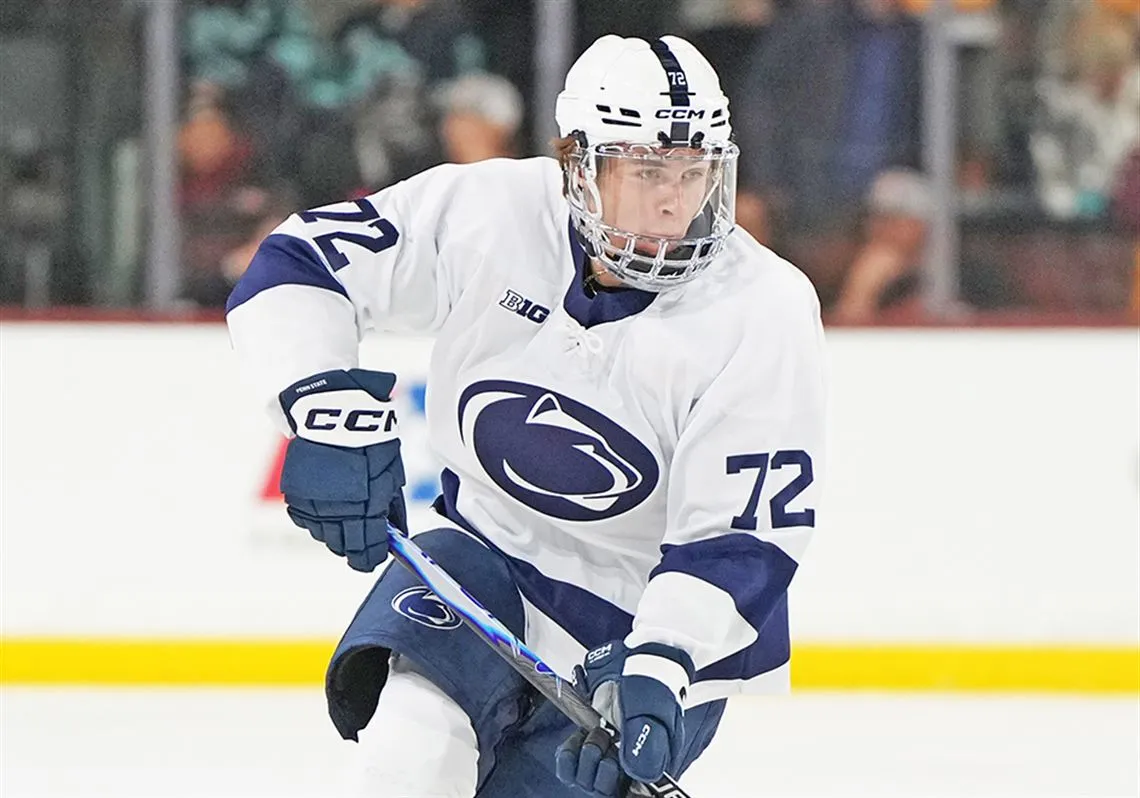
Gavin McKenna, the 18-year-old from Whitehorse, Yukon, tops most rankings as the draft’s top North American skater.[4] His transition from WHL dominance—129 points in 56 games with Medicine Hat—to Penn State freshman stardom (51 points in 35 games) showcases maturity.
Scouts compare him to Patrick Kane for his creativity and puck skills, or a left-shot Mitch Marner: dynamic, younger, and cost-controlled.[2] At 5-foot-11 and 170 pounds, he tied for fifth in Nittany Lions scoring, including a 33-point surge post-World Juniors.
Canada’s bronze at the 2026 World Juniors featured McKenna tying for second in scoring with 14 points. Recent reports confirm no lingering concerns after a dropped charge cleared his path.[5]
Plugging McKenna with Matthews could unlock the star’s 69-goal potential. His December birthday makes him one of the oldest, most pro-ready prospects.
Odds heavily favor him going first to Toronto, at 88 percent per betting markets.[6] Chayka called his package “special.”
Learning from Chayka’s draft history
Chayka’s Arizona tenure offers cautionary tales. His 2016 pick of Clayton Keller shone, but misses followed. In 2019, Viktor Soderstrom (11th) edged Matt Boldy (12th) and Cole Caufield (15th).
The 2018 fifth overall on Barrett Hayton overlooked Quinn Hughes (7th), Evan Bouchard (10th), and Noah Dobson (12th)—defensemen NHL Central Scouting ranked higher. Hayton filled a center need but delayed blue-line help.
This pattern tempts repeating errors. Toronto lacks a true No. 1 defenseman since Borje Salming. Playoff successes of Colorado, Minnesota, Montreal, and Buffalo highlight top D’s value.
Yet, 2026 offers top defenders like Chase Reid, Keaton Verhoff, and Carson Carels. Centers Caleb Malhotra and Tynan Lawrence intrigue amid John Tavares’ age and Matthews’ future.
Chayka must prioritize impact over position.
Resisting the urge to trade down or overreach
Trading down for volume risks missing McKenna’s upside. This draft confuses scouts—five might yield five different top fives—but McKenna remains the safe anchor.
Defensemen prospects tempt, given Toronto’s needs. Verhoff and Carels boast star potential, but they’re younger and less polished than McKenna.
Centers appeal for depth, especially post-Tavares. Yet, no one matches McKenna’s immediate top-line projection.
As in NHL.com’s mock draft, Toronto takes McKenna for his drive and IQ.[2]
Stay simple: draft the best, NHL-ready talent.
Free agency and coaching: The full rebuild path
Post-draft, target UFAs. Top-4 defenseman Darren Raddysh headlines lists, fresh off Tampa Bay duty.[7] Alex Tuch offers top-six forward punch from Buffalo.[8]
Trade a goalie for depth. Fire Craig Berube, whose future hangs after an 84-62-18 record and second-round exit last year.[9]
Bruce Cassidy emerges as a prime candidate, with his Vegas success and current availability amid LA interest.[10] His structure fits.
- Sign Raddysh for blue-line stability.
- Add Tuch for scoring depth.
- Install Cassidy behind the bench.
- Trade goalie for picks/prospects.
This offseason checklist accelerates contention.
The Leafs cannot afford draft missteps. Selecting McKenna locks in offense, paving free agency fixes. By next playoffs, Toronto could contend again—provided Chayka keeps it simple. The path back starts now.
Frequently Asked Questions

Par Mike Jonderson
Mike Jonderson is a passionate hockey analyst and expert in advanced NHL statistics. A former college player and mathematics graduate, he combines his understanding of the game with technical expertise to develop innovative predictive models and contribute to the evolution of modern hockey analytics.