

The Miami RedHawks and St. Cloud State Huskies collide this weekend in a pivotal National Collegiate Hockey Conference showdown at Oxford’s Goggin Ice Center. With both programs sitting near the bottom of the NCHC standings—Miami at ninth with three points and the Huskies eighth with four—Friday and Saturday’s tilts represent a crucial opportunity for either team to gain traction in college hockey’s toughest league.
The series carries added weight following Miami’s difficult sweep at Western Michigan, where the RedHawks surrendered 91 shots across two games and struggled with discipline. Head coach Anthony Noreen’s young squad, featuring 21 new players including 12 freshmen, now faces a well-rested St. Cloud State team coming off a bye week. The Huskies enter Ohio with a 6-6-0 overall record but have already proven dangerous, splitting with third-ranked Western Michigan earlier this month.
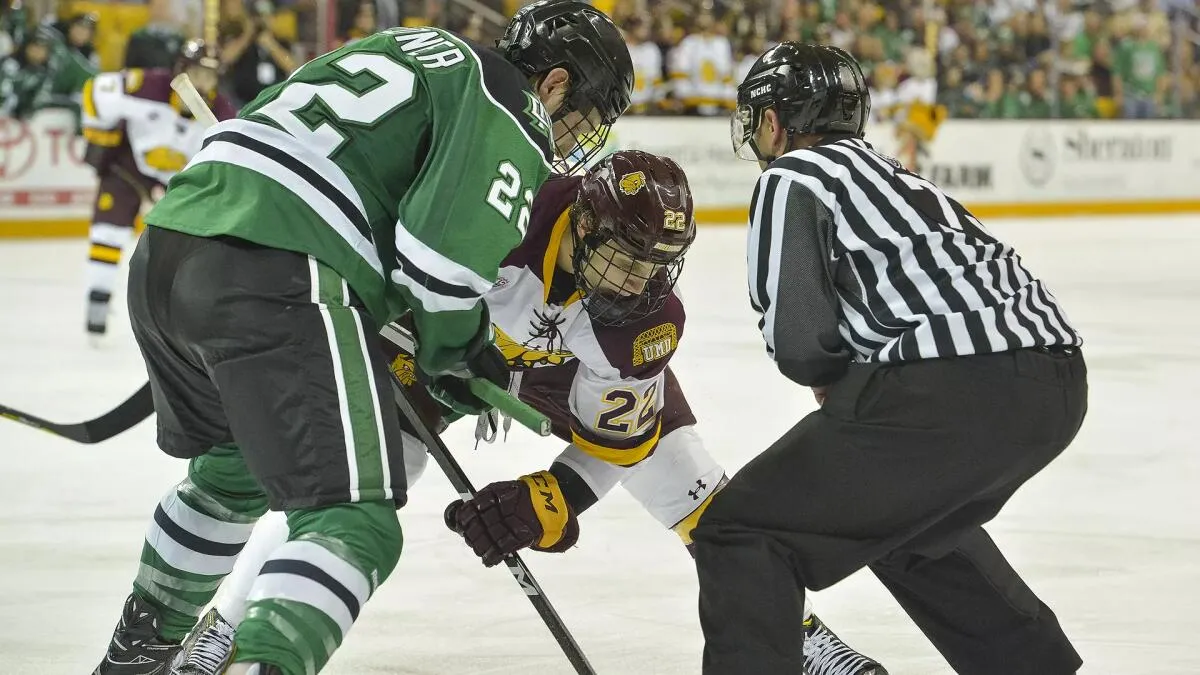
Miami RedHawks vs St. Cloud State Huskies series preview: Current form and statistical trends
Miami arrives at this crossroads after a humbling weekend in Kalamazoo, where Western Michigan controlled possession from opening puck drop to final horn. The RedHawks managed just 38 shots all weekend while surrendering 11 goals, exposing vulnerabilities in transition and defensive zone coverage. Noreen identified the root cause succinctly: “Spending time in the offensive zone, that is the answer. The best defense is a good offense.”
The RedHawks’ special teams have become a particular concern. Miami finished 1-for-11 on the power play against Western Michigan and has struggled to generate momentum with the man advantage all season. The penalty kill, while decent at 75.6%, faces a St. Cloud State unit converting at a blistering 32.7% rate—18 for 55 on the season. With Miami averaging 13.4 penalty minutes per game, staying out of the box becomes priority number one.
St. Cloud State presents an interesting contrast. The Huskies followed their impressive split against Western Michigan with a 3-1 loss to St. Thomas in midweek action, but head coach Brett Larson’s team had a bye to reset and scout. Offensively, sophomore Austin Burnevik leads the charge with 11 goals and 15 points, including six power-play tallies. The 6-foot-4 forward from Ham Lake, Minnesota, was selected by Anaheim in the 2024 NHL Draft and has emerged as one of the NCHC’s most dangerous scorers.
Between the pipes, Larson faces a pleasant dilemma. Freshman Yan Shostak (3-4-0, 2.71 GAA, .899 SV%) and Maine transfer Patriks Berzins (3-2-0, 2.04 GAA, .937 SV%) have split duties effectively. Berzins’ .937 save percentage particularly stands out, suggesting he might get the nod in Friday’s opener. The Huskies’ goaltending stability contrasts sharply with Miami’s reliance on Matteo Drobac, who faced all 91 shots last weekend and showed fatigue late in games.
Miami RedHawks vs St. Cloud State Huskies: Key matchups and strategic battles
The most compelling individual storyline involves forward Nolan Roed, who centers St. Cloud State’s third line after a standout USHL career with Tri-City Storm. Roed recorded 60 points last season playing for Anthony Noreen, who drafted and coached him in 2022-23 before he moved to college. The freshman has eight points (2-6-8) in his first dozen games and reunites with former Storm teammates including Ilia Morozov, creating an intriguing chess match between coach and former protégé.
In the faceoff circle, expect a tight battle. St. Cloud State wins 54.7% of draws as a team, led by Tyson Gross at an impressive 62% (62-for-100). Miami counters with Ethan Hay and Morozov, who must improve on the 32% faceoff rate that plagued them last Friday at Western Michigan. Puck possession starts here, and the RedHawks cannot afford to surrender territorial advantage as they did in Kalamazoo.
Defenseman Ryder Thompson leads Miami with 20 blocked shots, while Vladislav Lukashevich logs heavy minutes—the latter playing 24:30 on Saturday against Western Michigan. They’ll need every bit of that commitment against a St. Cloud State defense that blocks 50 shots collectively and features physical presences like 6-foot-2, 205-pound captain Cooper Wylie and 6-foot-1, 195-pound Mason Reiners. The Huskies’ defensive corps plays fast and heavy, breaking out quickly while maintaining structure in transition.
The special teams battle looms largest. Miami’s power play, still developing chemistry with two entirely new units, must capitalize against a St. Cloud penalty kill allowing opportunities. Conversely, the RedHawks’ penalty kill faces its stiffest test since opening weekend. Burnevik, Gross, and Barrett Hall each have three power-play goals, and the Huskies move pucks quickly with net-front traffic—a formula that could exploit Miami’s recent penalty troubles.
Miami RedHawks vs St. Cloud State Huskies: X-factors and series outlook
Several variables could swing this series. First, momentum matters enormously in college hockey, and St. Cloud State’s bye week presents both blessing and curse. While well-rested, the Huskies might show rust early. Miami, meanwhile, carries the sting of last weekend’s sweep but gained valuable experience against elite competition. As Noreen noted: “Every single time we take the ice with this group is a teaching moment. We are so far in the early stages of this thing, and we have to take advantage of every chance to learn.”
Second, physicality will play a role. Miami is the smaller team overall, and while St. Cloud State’s defense isn’t as heavy as Western Michigan’s, they play a fast, organized game that punishes mistakes. Miami must win 50-50 battles and limit second-chance opportunities. Lukashevich, Shaun McEwen, and Thompson must match the physical commitment shown by Wylie and Reiners shift-for-shift.
Third, the goaltending matchup could prove decisive. If Berzins starts for St. Cloud State, his .937 save percentage suggests the Huskies have a clear advantage. But Miami’s Drobac, despite surrendering 11 goals last weekend, faced relentless pressure that no netminder could withstand. If the RedHawks tighten their defensive structure and reduce quality chances, Drobac’s numbers could improve dramatically.
The series also features a notable jersey debut for Miami, who will wear their Cradle of Coaches jerseys Friday night—a nod to the program’s rich history. That history includes 36 prior meetings with St. Cloud State, with the Huskies holding a 36-19-6 advantage dating to 1987. The teams split last season’s series, with St. Cloud winning 3-2 in overtime and 3-1.
For deeper analysis on Miami’s recent performances, check out our recap of their 5-2 loss at Western Michigan and our feature on how the RedHawks burst onto the college hockey scene with a historic 4-0-0 start earlier this season.
Prediction wise, this series projects as tightly contested. Both teams desperately need points in the NCHC’s unforgiving landscape. St. Cloud State’s superior offensive firepower and rested legs give them a slight edge, but Miami’s home ice and desperation level after last weekend’s lessons learned could level the playing field. Expect low-scoring, one-goal games where special teams and goaltending determine the outcome.
The Friday opener at 7:05 PM EST will set the tone. If Miami stays disciplined and establishes offensive zone time early, they can build confidence against a team that, while skilled, hasn’t found consistency. If St. Cloud State’s power play connects early and Burnevik gets hot, the Huskies could sweep their way out of the cellar.
Ultimately, this Miami RedHawks vs St. Cloud State Huskies series represents more than just four potential points—it’s a measuring stick for two programs seeking identity in a rugged conference. For Miami, it’s about applying hard lessons learned at Western Michigan. For St. Cloud State, it’s about capitalizing on talent and rest to begin a climb up the NCHC ladder. College hockey fans should expect intensity, physical play, and two teams leaving everything on the ice in pursuit of their first conference statement victory of 2025.
Frequently Asked Questions

Par Mike Jonderson
Mike Jonderson is a passionate hockey analyst and expert in advanced NHL statistics. A former college player and mathematics graduate, he combines his understanding of the game with technical expertise to develop innovative predictive models and contribute to the evolution of modern hockey analytics.