











The Montreal Canadiens enter the 2025-26 NHL season with a goaltending situation that finally shows clarity at the top but remains fluid throughout the organization. After years of uncertainty and revolving doors in the backup position, Samuel Montembeault has established himself as the undisputed number one, while a compelling battle brews behind him between NHL-tested veterans and high-ceiling prospects. This Montreal Canadiens 2025-26 goaltending market analysis examines the current roster composition, the pipeline of talent waiting in the wings, and the strategic decisions facing general manager Kent Hughes as he balances present competitiveness with future championship aspirations.
The Canadiens’ crease strategy reflects a broader organizational philosophy: develop internal talent while maintaining enough NHL-ready depth to remain competitive. With Montembeault signed through 2027 and several prospects approaching readiness, Montreal finds itself at a critical juncture where every roster decision carries long-term implications.
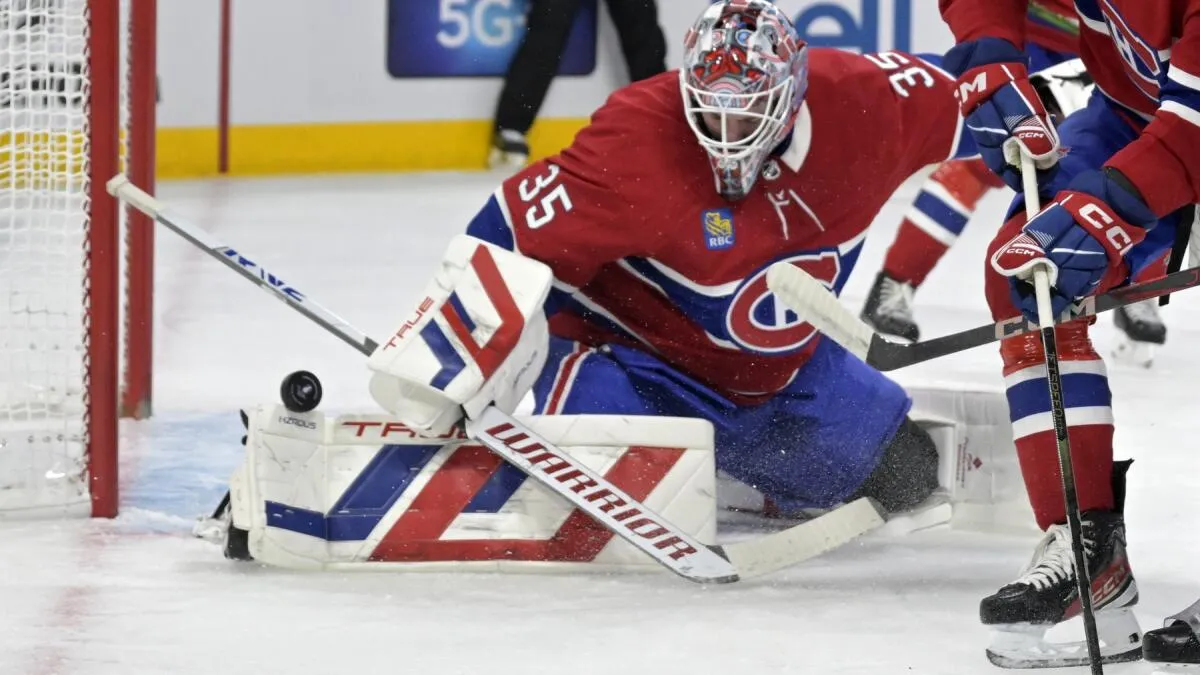
Current goaltending depth chart for Montreal Canadiens 2025-26
The Canadiens’ NHL goaltending tandem has never looked more stable. Samuel Montembeault enters his second season as the clear starter after appearing in 62 games during the 2024-25 campaign, posting a 31-24-7 record. Behind him, the organization finally possesses legitimate NHL-caliber depth, a dramatic improvement from previous seasons when backup goaltending often proved disastrous.
Samuel Montembeault’s role as the established starter
At 28 years old, Montembeault has evolved from a waiver-wire claim to the backbone of Montreal’s goaltending. His 2024-25 performance demonstrated remarkable durability, though the heavy workload raised concerns about long-term sustainability. Projections for 2025-26 suggest a more manageable 55-start season, which should yield a 28-20-7 record with a 2.75 goals-against average and .905 save percentage. These numbers reflect both Montembeault’s steady improvement and the Canadiens’ strengthening defensive corps featuring Lane Hutson, Noah Dobson, and Kaiden Guhle.
Montembeault’s contract situation provides cost certainty, but his trade value has never been higher. While unlikely, the Canadiens must consider whether maximizing his value aligns with their competitive timeline. For now, he remains the perfect transitional starter—capable enough to keep Montreal competitive while prospects develop, but not so entrenched that he blocks future talent.
The battle for backup between Jakub Dobes and Kaapo Kahkonen
The most intriguing subplot in this Montreal Canadiens 2025-26 goaltending market analysis involves the competition for starts behind Montembeault. Jakub Dobes, 24, seized the backup role from Cayden Primeau last season and delivered a shutout in his NHL debut. His 16-game NHL audition showed flashes of competence, though consistency remains a question. Dobes represents the safe, known commodity—a goaltender who understands the organization and has proven he can handle spot duty.
Kaapo Kahkonen enters as the wildcard, signed to provide veteran insurance after uneven stints elsewhere. At 28, he brings 150 games of NHL experience and a career .904 save percentage. The organization views Kahkonen as a stabilizing presence who can deliver league-average goaltending if called upon for 25-30 starts. This competition creates a fascinating dynamic: Dobes offers youth and organizational familiarity, while Kahkonen provides proven NHL experience.
Montreal Canadiens prospect pipeline analysis for 2025-26
The Canadiens’ future in goal looks substantially brighter than their present, with multiple prospects ranked among hockey’s elite. This depth provides both excitement and difficult decisions, as the organization cannot possibly accommodate all its promising netminders.
Jacob Fowler’s emergence as the top prospect
Jacob Fowler’s meteoric rise represents the most significant development in Montreal’s goaltending pipeline. Ranked second among all NHL-affiliated goaltending prospects entering 2025-26, the 20-year-old dominated NCAA competition with a .940+ save percentage before excelling in limited AHL action. Fowler’s positional excellence, mental composure, and technical precision draw comparisons to elite modern goaltenders.
The organization plans to have Fowler spend most of 2025-26 in Laval, learning from veteran Kaapo Kahkonen while adjusting to professional hockey. This developmental approach mirrors how successful teams groom franchise goaltenders—patience now yields dividends later. Fowler’s timeline suggests he could challenge for NHL playing time as early as 2026-27, putting pressure on current backups to perform.
The Cayman Primeau situation and other developmental options
Cayden Primeau’s development has stalled, creating a difficult asset management situation. The 25-year-old’s AHL success hasn’t translated to NHL consistency, leading the organization to prioritize Dobes last season. Primeau’s $1.1 million cap hit through 2026 makes him tradeable but diminishes his value. A change of scenery might benefit both parties, though Montreal lacks obvious succession plans if they move him prematurely.
Beyond the top names, the Canadiens possess intriguing depth. Veterans in Laval provide organizational stability, while European prospects like Jakub Dobeš (no relation to Jakub Dobes) offer long-term lottery tickets. The sheer volume of goaltending prospects forces Montreal to make strategic choices about who receives development resources.
2025-26 NHL goaltending trade market and free agent landscape
The external market for goaltending talent presents both opportunities and threats for Montreal’s planning. With several teams facing cap constraints and others rebuilding, unexpected options may emerge throughout the season.
Potential trade targets for Montreal Canadiens
The goaltending trade market typically features three categories of available players: veterans on expiring contracts, blocked prospects seeking opportunities, and cap casualties. For Montreal, the most logical targets would be established backups on non-contending teams or prospects stuck behind entrenched starters.
Teams like San Jose, Chicago, and Anaheim could become trade partners if they decide to accelerate their rebuilds by moving veteran goaltenders. Montreal’s cap flexibility and prospect depth give them the assets to acquire help if injuries strike or if the current tandem underperforms. However, the organization appears committed to its internal development track.
Free agent considerations beyond 2025-26
Looking ahead to the 2026 free-agent class, Montreal must weigh whether to extend Montembeault or explore external upgrades. The goaltending free-agent market has traditionally been unpredictable, with teams overpaying for past performance. The Canadiens’ advantage lies in having Fowler ready to assume a larger role just as Montembeault’s contract expires.
The salary cap implications are significant. Montembeault’s $3.15 million cap hit represents excellent value, but he’ll command a raise if his performance continues. The organization must decide whether to commit long-term to a good-but-not-elite starter or transition to Fowler while Montembeault still holds trade value.
Strategic implications for Montreal Canadiens roster building
Every goaltending decision ripples throughout the roster, affecting cap allocation, prospect development, and competitive timeline. The Canadiens find themselves navigating competing priorities that require careful calibration.
Balancing development with competitiveness
The central tension in Montreal’s goaltending strategy involves preserving developmental opportunities while fielding a competitive NHL team. Playing Montembeault 60+ games might secure a playoff berth but stunts Dobes’ growth and delays Fowler’s timeline. Conversely, forcing prospects into roles they’re unprepared for damages confidence and potentially costs the team valuable standings points.
Martin St. Louis and his coaching staff must manage this balance daily. The early-season emergence of Jakub Dobes as Montembeault’s equal, as documented in recent analysis, creates a beneficial 1A/1B dynamic that serves both competitive and developmental goals. This arrangement keeps both goaltenders fresh while providing NHL experience to a key prospect.
Salary cap management and asset optimization
Montreal’s goaltending represents approximately $6 million in cap allocation—remarkably efficient for a tandem with Montembeault’s ability and Dobes’ potential. This frugidity allows greater investment in scoring and defense, critical for a team still building its core. However, inefficiency in backup goaltending, a problem detailed in historical analysis of Montembeault’s 2024-25 season, forced the starter into an unsustainable workload.
The organization must optimize this asset efficiency. Trading Primeau for a mid-round pick clears cap space and roster spots while allowing him a fresh start. Maintaining Dobes and Kahkonen as a competitive backup tandem ensures NHL-quality depth without premium cost. When Fowler graduates to the NHL, the Canadiens will face difficult decisions about which veterans to retain.
What the Montreal Canadiens 2025-26 goaltending market analysis means for the future
Montreal enters 2025-26 with its best goaltending situation in a decade—stable at the top, promising in the pipeline, and flexible enough to adapt to changing circumstances. This positions the organization to be patient with Fowler’s development while competing for a playoff spot.
The ideal scenario involves Montembeault delivering solid starter-quality goaltending, Dobes or Kahkonen providing reliable backup minutes, and Fowler dominating in Laval. This would validate the organization’s developmental approach while keeping Montreal competitive. If Fowler accelerates his timeline, the Canadiens could face pleasant complications, potentially creating a tradable asset in Montembeault or a surplus that addresses other roster needs.
Ultimately, the Canadiens’ goaltending strategy reflects a mature, long-term approach that prioritizes sustainable success over short-term fixes. With elite prospects on the horizon and a competent tandem holding the fort, Montreal can focus its resources on building a championship-caliber team around a position that no longer represents a weakness. The decisions made in 2025-26 will determine whether this goaltending renaissance translates into the franchise’s first Stanley Cup contention since 1993.
Frequently Asked Questions

Par Mike Jonderson
Mike Jonderson is a passionate hockey analyst and expert in advanced NHL statistics. A former college player and mathematics graduate, he combines his understanding of the game with technical expertise to develop innovative predictive models and contribute to the evolution of modern hockey analytics.