







The Montreal Canadiens find themselves at a crossroads in their rebuild, and veteran center Nazem Kadri has emerged as the most realistic trade target to address their most pressing need. With the Calgary Flames spiraling out of contention and Kadri’s willingness to waive his no-move clause for Montreal, the pieces appear to be falling into place for what could be one of the most impactful moves of the 2025-26 season. The 35-year-old forward represents everything the Canadiens are missing: veteran leadership, two-way excellence, and a proven track record of playoff success.
As general manager Kent Hughes continues to build a competitive roster around young stars like Nick Suzuki and Cole Caufield, the addition of a player like Kadri could accelerate Montreal’s timeline without mortgaging their future. The question isn’t whether Kadri would fit in Montreal—it’s whether Hughes can navigate the financial complexities and find the right package to convince Calgary to pull the trigger.
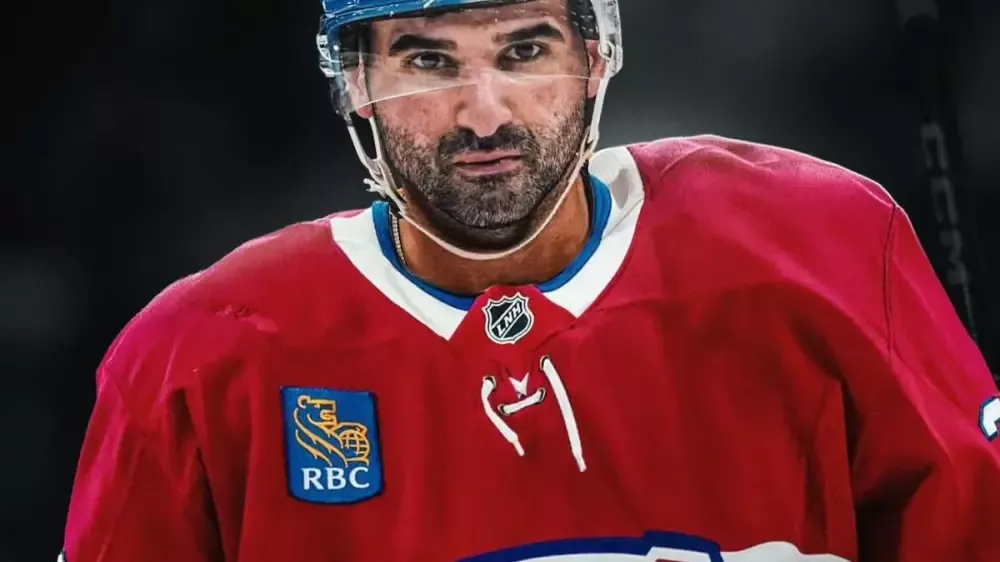
Why the Nazem Kadri trade to Montreal Canadiens makes perfect sense
From an on-ice perspective, Kadri checks every box the Canadiens need in a second-line center. Coming off a 67-point campaign in 2024-25 where he notched 35 goals and 32 assists, the London, Ontario native has shown no signs of decline despite entering his mid-30s. His production has actually improved with age, following up a 75-point season in 2023-24 with another stellar performance that demonstrated his ability to drive offense while maintaining defensive responsibility.
Former Canadiens center Maxim Lapierre recently called Kadri “the perfect fit” for Montreal during an episode of The Sick Podcast. Co-host Pierre McGuire agreed, emphasizing Kadri’s experience playing under different coaching styles, his Stanley Cup championship pedigree with Colorado, and the “street cred” he brings to the locker room. These intangibles matter significantly for a young Canadiens team still learning how to win consistently at the NHL level.
Kadri’s playing style aligns seamlessly with Montreal’s identity. He plays a heavy, physical game that resonates with the Bell Centre faithful, yet possesses the skill and vision to elevate his linemates. His defensive reliability would allow head coach Martin St. Louis to deploy him in all situations, from power plays to penalty kills to crucial late-game defensive zone faceoffs. This versatility is exactly what championship-caliber teams deploy down their lineup.
The cultural fit cannot be overstated. Kadri has built his career on proving doubters wrong, overcoming suspensions and criticism to become a Stanley Cup champion and consistent point-producer. That chip-on-the-shoulder mentality would resonate in a hockey-mad market like Montreal, where passion and effort are celebrated as much as skill. His ability to embrace pressure situations makes him ideal for the intense scrutiny that comes with wearing the bleu-blanc-rouge.
The Calgary Flames’ motivation in a Nazem Kadri trade to Montreal Canadiens
Calgary’s season has been nothing short of disastrous. After their recent overtime loss to Montreal, Flames goaltender Dustin Wolf expressed visible frustration, noting he can’t score goals for a team that struggles to generate offense. The irony isn’t lost that Kadri, one of their most productive offensive players, is being discussed in trade scenarios while the team desperately needs scoring. This paradox highlights exactly why the Flames might need to embrace a full rebuild.
According to The Hockey Writers, there are serious questions about how veterans like Kadri, Blake Coleman, and Rasmus Andersson will handle the continued losing. Elliotte Friedman has suggested these players might be looking for fresh starts if the struggles continue. For a proud veteran like Kadri, who has experienced playoff success and knows his window for another championship run is closing, the appeal of escaping a sinking ship is obvious.
The financial motivation for Calgary is equally compelling. Kadri carries a $7 million cap hit through 2028-29, and while his production justifies the salary, a rebuilding team needs that cap space for younger players and potential free agent additions down the line. Trading Kadri would open significant financial flexibility and allow the Flames to accelerate their rebuild by acquiring draft picks and prospects—the currency of future success.
Calgary’s front office has already shown a willingness to be realistic about their situation. If they continue their downward trajectory, becoming sellers at the trade deadline becomes inevitable. Moving Kadri sooner rather than later could actually maximize his return value, as contending teams will be hungrier to add impact players before the deadline rush drives up prices. The Flames learned this lesson during their previous rebuild cycles and won’t want to miss the opportunity to capitalize on Kadri’s value.
General manager Craig Conroy faces a difficult decision, but the writing is on the wall. With a younger core that isn’t ready to compete and veterans who deserve better than a lottery team, the humane and strategic choice is to grant Kadri’s wish and send him to a contender. Montreal represents an ideal destination—a team on the rise with the assets to make a deal happen and the motivation to add a missing piece to their puzzle.
Financial obstacles in the Nazem Kadri trade to Montreal Canadiens
The most significant hurdle facing any potential deal is salary cap mathematics. Kadri’s $7 million cap hit presents a challenge for Montreal, which currently has approximately $5.1 million in available cap space. This means the Canadiens would need to either send salary back to Calgary or get creative with the structure of the deal. Neither option is impossible, but both require careful maneuvering.
One potential solution involves Calgary retaining a portion of Kadri’s salary. If the Flames retain 25-30% of his cap hit, that brings his number down to around $5 million, making him immediately affordable for Montreal without significant roster gymnastics. For a rebuilding team like Calgary, eating salary isn’t ideal but it’s a necessary cost of doing business when moving expensive veterans. The Flames have the cap space to absorb retained salary without impacting their rebuild timeline.
Alternatively, Montreal could package a player like Christian Dvorak, who carries a $4.45 million cap hit through 2024-25, to offset the financial difference. While Dvorak hasn’t lived up to expectations in Montreal, he could provide Calgary with an experienced center who fits their timeline better as a veteran presence during a youth movement. This type of hockey trade—swapping players of similar positions but different trajectories—often makes sense for both sides.
NHL Trade Talk notes that with Montreal’s current cap situation and the strength of their prospect pool, they have the flexibility to take on Kadri’s contract without compromising their long-term financial health. The Canadiens aren’t yet in “win-now” mode where every dollar must be maximized, giving them room to absorb a slightly inefficient contract if it means upgrading their immediate competitiveness.
The term remaining on Kadri’s deal—three more seasons after this one—actually works in Montreal’s favor. It provides cost certainty during the prime years of Suzuki and Caufield’s careers while still expiring before the Canadiens need to extend their young core to second contracts. By 2028-29, when Kadri’s deal concludes, players like Lane Hutson, Juraj Slafkovský, and potentially Ivan Demidov will be ready for significant raises. The timing aligns perfectly with Montreal’s competitive window.
Kent Hughes has proven adept at navigating complex cap situations, from the Kirby Dach trade to acquiring Patrik Laine’s contract. His background as a player agent gives him unique insight into contract structures and creative solutions that traditional hockey executives might overlook. If Hughes wants Kadri badly enough, he’ll find a way to make the numbers work without handicapping Montreal’s future flexibility.
What Montreal would need to surrender in the Nazem Kadri trade to Montreal Canadiens
Determining fair value for Kadri requires balancing his current production and experience against his age and contract status. Calgary will want assets that contribute to their rebuild, meaning draft picks and prospects rather than established NHL players. Montreal’s deep farm system positions them perfectly to meet this demand without gutting their future.
A realistic package might center around a second-round pick in 2026 and a prospect like Owen Beck or Joshua Roy—players with NHL upside but not considered untouchable within Montreal’s system. Beck, a defensive-minded center, offers the type of responsible two-way play that could eventually replace what Kadri provided Calgary. Roy, an offensive winger with scoring touch, gives the Flames a young player who could grow with their core.
If Calgary pushes for a first-round pick, Montreal would need to attach conditions—perhaps making it a 2027 first-rounder with lottery protection, or converting to a second-round pick if the Canadiens make the playoffs. Hughes has been strategic about preserving draft capital, understanding that sustainable success requires constant talent infusion. Giving up a first-rounder for a 35-year-old, even one as productive as Kadri, would need significant safeguards.
The inclusion of a salary-cap dump from Montreal’s side could actually decrease the prospect cost. If the Canadiens take on Kadri’s full cap hit and also send back a contract like Joel Armia’s ($3.4 million for one more season), Calgary gets additional cap relief and Montreal reduces the talent going the other way. These types of ancillary pieces often make or break trade negotiations, turning “no” into “yes” by addressing both teams’ needs.
One wildcard is whether a third team gets involved. If Montreal lacks the exact pieces Calgary wants, a three-way trade could facilitate the deal. Perhaps Vancouver, desperately seeking a center, enters the conversation by sending assets to Calgary while Montreal receives Kadri. These complex arrangements have become increasingly common as general managers leverage relationships and creative thinking to accomplish their goals.
Ultimately, Hughes will need to weigh the cost against the potential reward. Kadri isn’t a rental—he’s a three-year commitment that could define Montreal’s competitive trajectory. If the Canadiens believe they’re one piece away from playoff contention and that Kadri is that piece, the price becomes almost irrelevant. Championship windows are narrow and unpredictable; sometimes you need to be aggressive when opportunity presents itself.
How a Nazem Kadri trade to Montreal Canadiens impacts the lineup
From a tactical standpoint, Kadri’s arrival would immediately reshape Montreal’s forward deployment. He would slot in as the second-line center, flanked by versatile wingers who could maximize his playmaking ability and goal-scoring touch. A line featuring Kadri between Josh Anderson and Juraj Slafkovský would provide size, skill, and sandpaper—exactly the type of combination that succeeds in playoff hockey.
This acquisition would push other players into more appropriate roles. Kirby Dach could move to wing, a position some analysts believe better suits his skating and offensive instincts. Christian Dvorak could shift to a third-line shutdown role where his defensive acumen would be maximized. The depth created by adding Kadri creates a cascading effect where every player benefits from deployment matching their skill set.
Special teams would see immediate improvement. Kadri’s career 18.9% shooting percentage on the power play demonstrates his ability to finish around the net, providing Montreal with another legitimate goal-scoring threat on the man advantage. His penalty-killing experience adds versatility, allowing St. Louis to use him in any situation without worrying about defensive lapses. This multi-dimensional capability is rare in today’s increasingly specialized NHL.
The mentorship aspect cannot be ignored. Having Kadri work daily with young centers like Nick Suzuki and Dach would accelerate their development, exposing them to the habits and details that separate good players from great ones. Kadri’s Stanley Cup experience—scored the game-winning goal in Game 4 of the 2022 Final—provides credibility that young players respect and absorb. This educational component extends his value beyond statistics.
Culturally, Kadri brings an edge that Montreal has occasionally lacked. He plays with controlled aggression that energizes teammates and intimidates opponents. The Canadiens have talented skill players but sometimes need that spark plug who refuses to be pushed around. Kadri provides that element while maintaining enough skill to punish opponents on the scoreboard, the ultimate form of revenge in hockey.
The broader implications of a Nazem Kadri trade to Montreal Canadiens
Beyond the immediate on-ice impact, acquiring Kadri would signal Montreal’s intentions to the rest of the NHL. It announces that the Canadiens are no longer content with incremental progress—they’re ready to compete now. This message resonates with free agents, current roster players, and most importantly, the fanbase that has endured years of rebuilding with remarkable patience.
For Kent Hughes, this type of move represents a calculated risk that could define his tenure as general manager. If Kadri helps propel Montreal back to playoff relevance and perhaps even a deep postseason run, Hughes becomes the architect of the Canadiens’ renaissance. If the move fails—either because of injury, decline, or poor fit—the criticism will be fierce and lasting. High-stakes decisions separate good executives from great ones.
The psychological impact on Montreal’s young core shouldn’t be underestimated. When management adds a player of Kadri’s caliber, it tells Nick Suzuki, Cole Caufield, and the rest of the roster that the organization believes in them. It says, “We think you’re ready to compete with the best teams in the league, and we’re willing to invest in winning now.” That confidence can be transformative for young players still finding their identity.
From a fan engagement perspective, acquiring Kadri would electrify a market that craves hockey relevance. Montreal has one of the most passionate fanbases in professional sports, but years of losing have created frustration. A splashy move for a proven winner would reignite excitement, boost ticket sales, and restore the buzz that makes the Bell Centre one of hockey’s most intimidating venues. Never underestimate the home-ice advantage generated by invested fans.
The timing of such a trade matters significantly. Making the move during the season—rather than waiting until the trade deadline—allows Kadri maximum time to integrate with his new teammates and learn Montreal’s systems. Chemistry isn’t instant; it develops through repetition and shared experiences. Getting Kadri into the lineup earlier rather than later maximizes Montreal’s investment and increases the likelihood of playoff success.
The Nazem Kadri trade to Montreal Canadiens represents more than a simple hockey transaction—it’s a statement about where the franchise stands in its competitive arc. After years of patient rebuilding, accumulating young talent and draft picks, the Canadiens have reached the point where adding proven veterans makes strategic sense. Kadri embodies the perfect blend of skill, experience, and character that accelerates a rebuild without compromising future flexibility.
Whether this move happens depends on Kent Hughes’ willingness to be aggressive and Calgary’s acceptance of their current reality. The framework exists for a deal that benefits both organizations: Montreal gets its second-line center and Calgary receives assets for their rebuild. As the Flames continue to struggle and Kadri’s willingness to join Montreal becomes increasingly clear, the pressure to execute this trade will only intensify. If Hughes can navigate the financial complexities and assemble the right package of picks and prospects, the Canadiens could land the piece that transforms them from promising young team to legitimate playoff contender. The hockey world is watching to see if both sides can make this logical fit become reality.

Par Mike Jonderson
Mike Jonderson is a passionate hockey analyst and expert in advanced NHL statistics. A former college player and mathematics graduate, he combines his understanding of the game with technical expertise to develop innovative predictive models and contribute to the evolution of modern hockey analytics.