In the fast-paced world of professional hockey, staying ahead of the game means having access to the most current information before puck drop. Every day during the NHL season, fans, bettors, and fantasy hockey managers scramble to find the latest roster changes, injury reports, and most critically, which goaltenders will be between the pipes. The difference between an elite starter and a backup netminder can completely shift game dynamics, betting odds, and fantasy point projections. Understanding where to find reliable NHL daily lineup projections and starting goalie updates has become essential for anyone looking to make informed decisions about their hockey interests.
The landscape of hockey information has evolved dramatically in recent years, with multiple platforms now offering real-time updates that can make or break your game day strategy. From line combination shuffles to last-minute goalie confirmations, the volume of information available requires knowing which sources provide the most accurate and timely data. Whether you’re building a daily fantasy lineup, placing a wager, or simply want to know if your favorite team’s star goalie is getting the start, having a streamlined approach to accessing this information is invaluable.
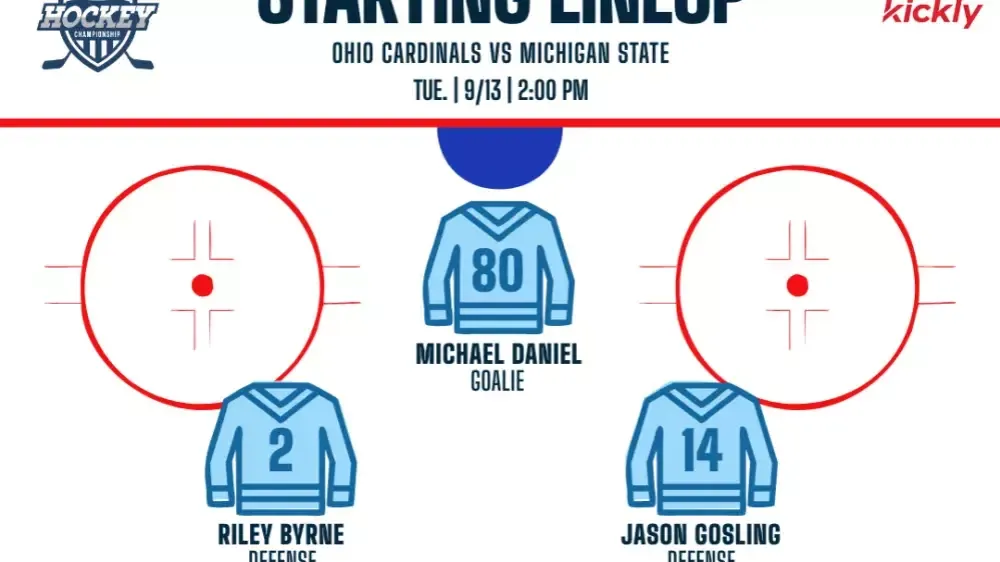
Why NHL daily lineup projections and starting goalie updates matter
The strategic importance of knowing lineup configurations and goaltending assignments extends far beyond casual interest. For fantasy hockey participants, a starting goalie can represent anywhere from 30 to 50 percent of a team’s weekly scoring potential, making these updates arguably the most critical piece of information available. Goals-against average, save percentage, and win probability all hinge on which netminder takes the ice, and being first to know can provide a competitive advantage in daily fantasy contests where thousands of dollars are at stake.
Betting markets react swiftly to goaltending announcements, often causing significant line movements within minutes of confirmation. A team facing a back-to-back situation might start their backup goalie, fundamentally altering the expected outcome of a matchup. According to Daily Faceoff’s starting goalie tracking, the average NHL goal total line shifts by 0.5 to 1 full goal depending on the goaltender announcement, directly impacting over/under betting strategies.
Line combinations equally influence game outcomes in ways that casual observers might miss. When a team’s top line gets shuffled due to injuries or performance issues, it affects everything from power-play efficiency to offensive zone time. A player who typically skates alongside elite linemates may see dramatically reduced ice time or opportunity if demoted to a third or fourth line role. For fantasy managers tracking daily matchups, understanding these nuances can mean the difference between selecting a player poised for success versus one likely to disappoint.
The ripple effects of lineup changes extend throughout entire team systems. When a top-pairing defenseman misses time, it not only affects defensive stability but can also impact breakout passes, transition play, and even power-play quarterback duties. Teams often juggle multiple positions to accommodate a single injury, creating opportunities for depth players while potentially exposing weaknesses that sharp bettors and fantasy managers can exploit.
Sources for reliable NHL daily lineup projections and starting goalie updates
Finding trustworthy sources that update information quickly and accurately has become a competitive advantage in itself. The Hockey Writers provides comprehensive daily projections that include not only starting goalies but also complete forward lines, defensive pairings, scratches, and injury designations. Their morning updates typically arrive several hours before game time, giving users ample opportunity to adjust their strategies.
Several specialized platforms have emerged as industry leaders for this type of information. Daily Faceoff has built a reputation for real-time goalie confirmations, often beating official team announcements by monitoring morning skates, practice jerseys, and insider reports. Their probability ratings indicate confidence levels for each goaltending projection, helping users understand whether a starter is confirmed or merely expected. RotoWire offers similar services with a focus on fantasy-relevant information, including recent performance metrics and matchup analysis alongside their projections.
The NHL’s official website publishes projected lineups for each game day, sourced directly from team correspondents and beat writers. While sometimes slower to update than independent platforms, these projections carry the weight of official verification and include detailed injury reports with specific body part designations and estimated return timelines. Teams are required to submit injury reports, making this source particularly valuable for long-term planning and understanding the severity of player absences.
Social media has become an increasingly important distribution channel for breaking lineup news. Team beat writers and credible hockey insiders often tweet goaltending confirmations immediately following morning skates, sometimes hours before official announcements. Following verified journalists who cover specific teams can provide an edge, though this approach requires curation and verification since misinformation can spread quickly. Many experienced fantasy managers and bettors maintain Twitter lists of trusted sources to efficiently monitor breaking news throughout the day.
How to interpret NHL daily lineup projections and starting goalie updates
Understanding the language and indicators used in lineup projections helps separate confirmed information from educated speculation. Most platforms use confidence ratings or terminology like “probable,” “likely,” or “confirmed” to indicate certainty levels. A “confirmed” starter typically means the coach has publicly announced the decision or the goaltender has been observed taking starting position during morning skate. “Probable” or “expected” designations suggest strong indicators point toward a particular goalie but lack official confirmation.
Morning skate participation provides crucial clues about lineup configurations and goaltending assignments. Goalies who take the ice first during morning skate and face the bulk of shots are typically that night’s starters, though coaches occasionally deploy decoy tactics in playoff situations or rivalry games. Forwards and defensemen wearing different colored jerseys or sitting out morning skate entirely often indicate healthy scratches, though veterans on maintenance days might skip morning skates despite playing that evening.
Back-to-back situations represent one of the most predictable patterns in goaltending decisions. Modern NHL coaching philosophy rarely sees the same goalie start consecutive nights, with teams protecting their starter’s workload throughout the 82-game season. Understanding each team’s goaltending tandem and their typical rotation pattern helps anticipate announcements before official confirmation. Some teams employ strict alternating schedules, while others ride hot hands or play matchups based on opponent strength.
Injury designations come with varying degrees of transparency and accuracy. Teams are required to report injuries but not specific diagnoses, leading to vague “upper-body” and “lower-body” classifications. A player listed as “day-to-day” might return within a week, while “week-to-week” suggests a multi-week absence. Players on injured reserve must miss a minimum number of games, providing clearer timelines. For those seeking understanding of NHL daily projected lineups and starting goalie updates, recognizing these patterns becomes second nature over time.
Maximizing value from NHL daily lineup projections and starting goalie updates for fantasy hockey
Fantasy hockey success increasingly depends on daily roster management, particularly in formats that include starting goalie requirements. Identifying streaming opportunities—picking up available goalies for favorable matchups—represents one of the highest-value tactics available. A backup goalie facing a weak offensive team might offer better point potential than a middling starter facing an elite offense. Daily lineup projections help identify these situations early, before other managers claim available goalies.
Stacking strategies in daily fantasy hockey involve selecting multiple players from the same line or power-play unit, multiplying potential returns when that combination produces goals. Lineup projections reveal which players skate together, allowing managers to identify cost-effective stacking opportunities. A third-line player elevated to first-line duty alongside elite talent presents tremendous value at their lower salary cost, but only if identified before public knowledge drives up their selection percentage.
Injury news creates immediate value opportunities as replacement players assume larger roles. When a star forward misses time, someone must fill those minutes, power-play time, and scoring opportunities. Lineup projections show which players benefit from these situations, whether through line promotions or increased ice time. The key lies in acting quickly, as fantasy waiver wire markets respond rapidly to injury news and role changes.
Matchup analysis becomes far more sophisticated when combined with lineup information. A typically strong defensive team missing their top pairing creates offensive opportunities for opponents. A backup goalie making a rare start against a potent offense suggests targeting that team’s forwards in fantasy lineups. For those tracking daily NHL projected lineups and starting goaltenders, these situational advantages compound over a full season, separating championship-caliber fantasy managers from the rest.
The impact of NHL daily lineup projections and starting goalie updates on betting strategy
Timing represents everything in sports betting, and nowhere is this more apparent than in NHL markets reacting to goalie announcements. Early bettors who wager before starting goalies are confirmed face increased variance but potentially favorable odds if they correctly anticipate the starter. Once a top-tier goalie is confirmed, betting lines typically move a half-goal in the total and several cents on the moneyline. Sharp bettors exploit this timing differential, betting backups at inflated odds before casual bettors recognize the goaltending disadvantage.
Over/under betting strategies fundamentally shift based on goaltending matchups. When two elite goaltenders face off behind strong defensive teams, the under becomes significantly more attractive despite public betting patterns often favoring overs. Conversely, backup goalies making rare starts often lack the consistency and confidence of regular starters, potentially leading to higher-scoring affairs. Analyzing recent save percentages, goals-against averages, and team defensive metrics alongside goaltending announcements provides crucial context for total predictions.
Puck line betting—hockey’s equivalent to spread betting—becomes particularly interesting when significant goaltending disparities exist. A team starting their elite goalie against an opponent trotting out their third-string emergency recall might justify taking the favorite at -1.5 goals, despite lower payout odds. Understanding the magnitude of goaltending differences helps assess whether puck line value exists or if moneyline bets make more sense.
Live betting opportunities emerge when starting goalies perform poorly or suffer in-game injuries. A struggling goalie might get pulled after allowing several early goals, bringing in an untested backup who could either stabilize the situation or compound the problem. Bettors monitoring games while referencing goaltending depth charts can identify these opportunities faster than sportsbooks adjust their live odds. The ability to quickly reference backup goalie statistics and recent performance provides an edge in these fast-moving situations.
Understanding coaching tendencies in NHL daily lineup projections and starting goalie updates
Different coaching philosophies dramatically affect how teams approach lineup construction and goaltending rotations. Some coaches maintain strict veteran preferences, rarely deviating from established lines even during slumps. Others embrace meritocracy, frequently shuffling combinations in search of optimal chemistry. Understanding each coach’s historical patterns helps predict how they might respond to various situations, from injury replacements to performance struggles.
Goaltending rotation philosophies vary significantly across the league. Some teams commit to a clear starter who plays 60-65 games annually, with the backup relegated to lighter duty and back-to-back situations. Others employ tandem approaches where two goalies split duties more evenly, sometimes platooning based on matchups. Coaches known for riding hot hands might deviate from planned rotations if one goalie strings together exceptional performances, impacting predictions for upcoming starts.
Line-matching strategies during games provide additional context for lineup projections. Coaches with last change at home can dictate matchups, often deploying their top defensive pairing against opponents’ best forwards while sheltering offensive lines against weaker competition. These tactical adjustments don’t appear in pre-game lineup projections but significantly impact individual player performance and game flow. Understanding which coaches aggressively match lines versus those who roll balanced deployments adds depth to game analysis.
Special teams configurations often differ from even-strength combinations, creating additional layers in lineup analysis. A player skating on the fourth line but quarterbacking the first power-play unit maintains fantasy relevance despite limited even-strength opportunity. Penalty-kill specialists might see increased ice time against undisciplined opponents, while offensive specialists could face reduced roles if the game becomes defensively focused. Comprehensive lineup projections include these special teams assignments, revealing hidden value opportunities.
Common pitfalls when using NHL daily lineup projections and starting goalie updates
Over-reliance on projected lineups without considering their speculative nature represents a frequent mistake. Until coaches officially confirm lineups, projections remain educated guesses based on patterns and available information. Unexpected late scratches, illness, or family emergencies can alter lineups minutes before game time. Successful fantasy managers and bettors build flexibility into their strategies, avoiding situations where they’re locked into decisions that can’t be adjusted based on breaking news.
Confirmation bias leads users to seek information supporting pre-existing beliefs while dismissing contradictory data. A fantasy manager who drafted a particular goalie high might overweight positive projections while rationalizing negative matchups or recent poor performance. Objective analysis requires evaluating all available information equally, even when it contradicts preferred narratives. The best decision-makers remain flexible, adjusting strategies when evidence suggests their initial assumptions were incorrect.
Ignoring context behind lineup changes causes misinterpretation of opportunity. A player promoted to the first line might seem like an automatic fantasy add, but if that promotion results from injuries to multiple teammates and places the player in an unfamiliar role, the expected production boost might not materialize. Similarly, a goalie starting several consecutive games might indicate hot-hand riding or simply reflect the backup’s injury or poor performance. Understanding why changes occur provides crucial context for evaluating their significance.
Recency bias causes overreaction to small sample sizes, particularly with goaltending performance. A backup who posts a shutout in their only start this month isn’t necessarily a better option than an established starter who had one poor outing. Goaltending statistics require larger sample sizes to become meaningful, with save percentage stabilizing around 1,000 shots faced. Successful analysis balances recent form with established track records, avoiding the temptation to chase single-game performances.
Advanced strategies for using NHL daily lineup projections and starting goalie updates
Contrarian approaches in daily fantasy hockey involve identifying situations where public perception diverges from actual expectation. When a backup goalie’s start becomes public knowledge, casual players often avoid that team’s skaters, assuming offensive production will suffer. However, teams frequently compensate for weaker goaltending with increased offensive aggression, and if the backup actually provides competent performance, the team’s skaters remain valuable at decreased ownership levels. Finding these inefficiencies requires deep understanding of team systems and player roles beyond surface-level analysis.
Correlation strategies involve recognizing how different lineup elements relate to each other. When targeting a particular game for high scoring, stacking multiple players from both teams maximizes exposure to that outcome. Conversely, rostering a goalie alongside opponent skaters creates negative correlation—if the goalie performs well, opposing skaters likely underperform and vice versa. Understanding these relationships helps construct balanced portfolios in multi-entry daily fantasy contexts.
Workload management tracking helps predict rest days and maintenance scratches before official announcements. Star players on the wrong side of 30 might sit out less important games during dense scheduling stretches. Teams safely in playoff position late in the season often rest key players, while those fighting for positioning play their stars heavy minutes. Historical patterns for specific players and teams provide predictive value when projecting availability and role changes.
Cross-referencing multiple information sources helps verify accuracy and identify discrepancies. When different platforms project different starting goalies, the conflict signals uncertainty worth investigating further. Perhaps one source received updated information, or maybe the situation genuinely remains undecided. These discrepancies sometimes reveal opportunities when betting markets or fantasy pricing reflects outdated information. Due diligence in verifying information through multiple channels reduces exposure to inaccurate projections.
The NHL season’s daily rhythm demands constant information gathering and strategic adjustment. From morning skate observations to last-minute injury announcements, staying current with lineup projections and goaltending decisions provides competitive advantages across fantasy hockey, sports betting, and general fan engagement. The platforms and strategies outlined above represent starting points for developing comprehensive information gathering systems tailored to individual needs and goals.
Success ultimately comes from combining reliable information sources with analytical frameworks that extract meaningful insights. Understanding not just what the projections say but why they matter, how coaching tendencies influence decisions, and where opportunities hide separates casual participants from serious competitors. As the season progresses and patterns emerge, those who diligently track NHL daily lineup projections and starting goalie updates position themselves for sustained success regardless of their specific hockey interests.

Par Mike Jonderson
Mike Jonderson is a passionate hockey analyst and expert in advanced NHL statistics. A former college player and mathematics graduate, he combines his understanding of the game with technical expertise to develop innovative predictive models and contribute to the evolution of modern hockey analytics.