













Understanding the intricacies of daily hockey matchups requires staying current with the most critical pre-game information. For fans, fantasy players, and bettors alike, having access to accurate NHL daily projected lineups starting goalies and injury updates can mean the difference between making informed decisions and flying blind. The landscape of professional hockey changes rapidly, with coaches juggling line combinations, goaltenders confirming their starters just hours before puck drop, and injury reports evolving throughout the day.
The importance of these daily updates extends far beyond casual interest. Every lineup change can shift the momentum of a game before it even begins. When a star player moves to a different line or an elite goaltender gets the start, the entire complexion of a matchup transforms. Teams constantly adjust their strategies based on player health, recent performance, and matchup considerations, making real-time information essential for anyone invested in the outcome.
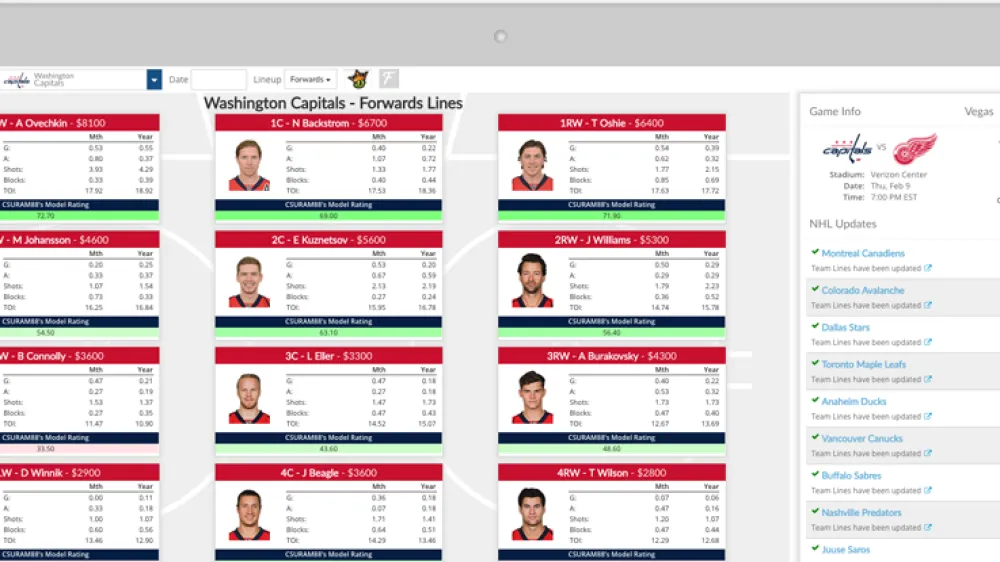
How NHL daily projected lineups starting goalies and injury updates are compiled
Multiple sources contribute to the comprehensive picture of daily NHL readiness. League-affiliated writers, team beat reporters, and independent correspondents work together to gather the most current information from morning skates, optional practices, and official team announcements. This collaborative approach ensures that fans receive updates from every corner of the league simultaneously.
The process typically begins with morning skates, where coaches test line combinations and evaluate player health. Reporters observe these sessions closely, noting which players participate in line rushes and which goalies take the starter’s net for extra work. These observations form the foundation of projected lineups, though they remain tentative until teams make official confirmations.
Injury updates add another layer of complexity to daily reporting. Teams often use vague terminology like “upper-body injury” or “day-to-day” status, requiring reporters to read between the lines and gather additional context. When Edmonton Oilers coach Kris Knoblauch recently indicated that Zach Hyman “could make his season debut against the Columbus Blue Jackets on Thursday or the Carolina Hurricanes on Saturday” after recovering from wrist surgery, it provided fantasy players and bettors with valuable timeline information despite the uncertainty.
The reliability of these projections increases as game time approaches. Morning confirmations carry more weight than previous-day speculation, and official team announcements eliminate all doubt. Services like The Hockey Writers aggregate this information from multiple NHL.com staff writers and correspondents, creating a centralized resource that updates throughout the day.
Understanding starting goalie confirmations in NHL daily projected lineups starting goalies and injury updates
Goaltending decisions often remain the most fluid element of pre-game preparation. Coaches strategically delay announcements to avoid giving opponents advance notice, though patterns usually emerge from morning skate observations. When a goaltender takes the starter’s net during morning preparations and faces extra shots, reporters classify him as the projected starter with high confidence.
Three classification levels typically define goalie status: confirmed, probable, and questionable. Confirmed starters have received official team announcements or reliable source verification. Probable designations indicate strong morning skate evidence without official confirmation. Questionable status applies when uncertainty exists due to injury concerns or unclear coaching decisions.
Recent examples illustrate how goaltending news impacts game preparation. When Igor Shesterkin drew his third consecutive start for the New York Rangers against Tampa Bay, it signaled both his strong recent performance and the team’s confidence in riding a hot goalie. Conversely, Stuart Skinner’s return to Edmonton’s net after sitting out Game 5 demonstrated coaching staff adjustments based on series dynamics.
The timing of goaltender confirmations varies across the league. Some coaches announce their starters the day before games, providing maximum preparation time for both the goalie and opposition. Others wait until game day, preserving tactical flexibility. Understanding these team-specific patterns helps interpreters of daily lineup projections anticipate confirmations before they become official.
Backup goalies also merit attention in daily updates. When teams play back-to-back games or travel extensively, backup starters become more likely. Tracking recent workloads helps predict these rotations, particularly for teams managing veteran goalies through the grueling 82-game schedule.
The impact of line combinations in NHL daily projected lineups starting goalies and injury updates
Forward line configurations represent chess matches within the larger game. Coaches constantly experiment with combinations, seeking chemistry that maximizes offensive production while maintaining defensive responsibility. A single line change can create ripple effects throughout the entire lineup, shifting players up or down and altering power-play units.
Top-line assignments carry particular significance. When elite centers like Connor McDavid or Brayden Point receive new linemates, scoring potential fluctuates dramatically. The recent pairing of McDavid with Matt Savoie and Andrew Mangiapane showcased Edmonton’s depth-building efforts while Leon Draisaitl anchored a separate scoring threat with Jack Roslovic and Vasily Podkolzin.
Middle-six configurations often determine game outcomes in tightly contested matchups. Teams with balanced scoring across three lines possess distinct advantages over top-heavy opponents. The Philadelphia Flyers’ deployment of Trevor Zegras alongside Sean Couturier and Matvei Michkov on their top line, while maintaining Owen Tippett with Travis Konecny on the second, exemplifies strategic depth distribution.
Fourth-line compositions reveal coaching philosophy and roster management. Some teams prioritize grinding, physical play from their bottom unit, while others seek speed and energy. When players move between the third and fourth lines, it often signals performance-based adjustments or injury-related shuffling rather than permanent demotion.
Special teams assignments frequently appear in comprehensive lineup updates. Power-play units and penalty-kill formations provide critical context for understanding player roles and ice-time expectations. A player on the top power-play unit carries significantly more fantasy value than one relegated to secondary special teams duties, regardless of even-strength linemates.
Interpreting injury reports in NHL daily projected lineups starting goalies and injury updates
NHL injury reporting follows league-mandated disclosure requirements while allowing teams considerable discretion in specifics. The standard “upper-body” or “lower-body” designation protects competitive information while satisfying transparency obligations. This vague terminology forces observers to rely on contextual clues and reporter insights for accurate assessment.
Injury timelines vary from day-to-day designations to season-ending placements on long-term injured reserve. Day-to-day status indicates imminent return potential, though players can remain in this category for extended periods. Week-to-week classifications suggest more significant concerns, while month-to-month or season-ending designations allow teams to make roster adjustments and salary cap maneuvers.
The Tampa Bay Lightning’s recent injury situation illustrates the complexity of NHL health reporting. Victor Hedman’s undisclosed injury and day-to-day status left observers uncertain about the star defenseman’s availability, while Nick Paul’s upper-body designation came with coach confirmation that he “will not return until next week at the earliest,” providing clearer timeline expectations despite the vague injury description.
Scratches versus injuries represent another critical distinction in daily updates. Healthy scratches indicate coaching decisions based on performance, matchup considerations, or roster management rather than physical limitations. When Juuso Parssinen and Jonny Brodzinski appeared as scratched rather than injured for the Rangers, it signaled they were available if needed but not in the immediate game plan.
Players returning from injury often undergo graduated participation before full clearance. Morning skate attendance without line rush participation typically indicates progress without game readiness. When players like Tyson Foerster became “game-time decisions” after participating in optional morning skates, it represented the final evaluation stage before activation or continued absence.
Leveraging NHL daily projected lineups starting goalies and injury updates for fantasy and betting decisions
Fantasy hockey success demands constant attention to lineup changes and injury developments. Even small adjustments can significantly impact player production and lineup optimization. When star players receive new linemates or power-play promotions, their fantasy value increases immediately. Conversely, demotions or injury concerns require swift roster adjustments to maintain competitive advantage.
Starting goalie confirmations hold particular weight for fantasy managers. Goalies accumulate points through wins, saves, and shutouts, but only when they actually start games. Early confirmation allows managers to set lineups confidently, while late-breaking changes can devastate weekly matchups if managers miss notification windows. Tracking patterns like Stuart Skinner’s three consecutive starts helps predict future deployments and maximize goaltender utilization.
Betting markets react dynamically to lineup and injury news. Bookmakers adjust lines based on confirmed starters, key injury announcements, and significant lineup changes. Bettors who access information quickly gain advantages through more favorable odds before markets correct. The insights provided by comprehensive daily updates enable informed wagering decisions that account for the most current team compositions.
Daily fantasy sports participants face even tighter deadlines than season-long managers. DFS lineups lock at game time, requiring split-second decisions based on the latest available information. Salary considerations add complexity, as players’ costs reflect expected production. Identifying undervalued players who receive unexpected promotions or favorable matchups creates competitive edges in large-field tournaments.
Prop betting has grown increasingly popular, with wagers available on individual player performances. Knowing that Connor McDavid will play with skilled linemates rather than depth forwards dramatically affects his point-scoring probability. Similarly, understanding that Igor Shesterkin will make his third consecutive start influences over/under betting on Rangers team totals and game outcomes.
Resources for accessing NHL daily projected lineups starting goalies and injury updates
Multiple platforms specialize in aggregating and presenting daily NHL information. Each offers distinct advantages in format, timing, and comprehensiveness. NHL.com’s official projections provide league-sanctioned information directly from team sources, ensuring accuracy though sometimes lacking the earliest speculation that independent reporters offer.
Independent hockey media outlets combine official sources with reporter observations and insider information. These services often provide context beyond raw lineup data, explaining the reasoning behind changes and offering injury timeline predictions. The integration of multiple correspondent reports creates comprehensive pictures of league-wide developments updated throughout the day.
Social media has become increasingly important for real-time updates. Beat reporters frequently break news on Twitter before formal articles appear, giving followers advance notice of lineup changes and injury developments. Following team-specific reporters provides the earliest information, though aggregator accounts compile league-wide news for broader coverage.
Mobile applications offer convenience for on-the-go updates with push notifications for breaking news. Fantasy-focused apps integrate lineup information with player statistics and performance projections, streamlining research processes. Betting-oriented platforms combine odds movements with lineup news, allowing users to identify value opportunities as they emerge.
The timing of information access creates competitive advantages. Morning skate observations typically surface several hours before game time, followed by official confirmations in the final hours before puck drop. Setting up notification systems for preferred sources ensures immediate awareness of developments that could influence fantasy lineup decisions or betting strategies.
Staying current with NHL daily projected lineups starting goalies and injury updates represents an essential practice for anyone seriously engaged with professional hockey. The constant flux of roster adjustments, health developments, and strategic decisions creates an information environment where knowledge equals advantage. Whether optimizing fantasy rosters, placing informed wagers, or simply understanding team dynamics as an engaged fan, access to accurate and timely lineup information enhances the hockey experience at every level.
The evolution of information distribution has democratized access to the same data that professional analysts once exclusively possessed. Modern fans can track morning skates, interpret injury reports, and predict lineup configurations with remarkable accuracy. As the 2025-26 season progresses, the teams that best manage their rosters and the observers who most effectively track these changes will find themselves consistently ahead of the competition. The daily ritual of checking lineup updates has become as integral to hockey culture as the games themselves, connecting millions of fans to the intricate preparation that precedes every puck drop.

Par Mike Jonderson
Mike Jonderson is a passionate hockey analyst and expert in advanced NHL statistics. A former college player and mathematics graduate, he combines his understanding of the game with technical expertise to develop innovative predictive models and contribute to the evolution of modern hockey analytics.