







The NHL has made a notable shift in how it handles player discipline. Starting this season, the department of player safety is now responsible for supplemental discipline across all league rule violations, not just physical infractions.[1] Previously limited to in-game hits and injuries, the department under senior vice president George Parros will now oversee fines and suspensions for a broader range of issues.
This change consolidates decision-making under one roof, aiming for consistency in enforcement. The league confirmed the update to ESPN, marking a protocol evolution discussed for years but implemented only now.[1]
Historical context of NHL discipline
The department of player safety was established before the 2011-12 season to focus on dangerous plays. It reviewed video of hits, slashes, and boarding that risked injury, issuing suspensions like the recent three-game ban for Pittsburgh Penguins forward Bryan Rust for an illegal check to the head of Vancouver Canucks’ Brock Boeser.[2][3]
Non-physical violations fell to Colin Campbell, the executive vice president of hockey operations. Issues like trash-talking referees or gestures were his domain, creating a split system that sometimes led to perceptions of inconsistency.
Over time, the league eyed unification. Players and teams pushed for streamlined processes amid growing scrutiny on conduct.
This season’s adjustment reflects that push. It aligns with broader efforts to modernize rules, similar to helmet mandates for warmups introduced years ago.
The change builds on precedents like diving fines, now fully under player safety.
Details of the new protocol
Player safety now covers all on-ice and arena-related player infractions. This includes obscene gestures, abusive language, and abuse of officials alongside traditional physical penalties.[1]
Fines cap at $5,000 for first offenses under the CBA, as seen in multiple cases this year. Suspensions vary based on severity, from one game for roughing to longer for repeat issues.
The department uses its New York video room for reviews, ensuring thorough analysis. Hearings, like Rust’s, allow players to explain actions.
Implementation started this 2025-26 season. Early signs show quick action on non-physical cases.
League statements emphasize the code of conduct’s reach. It applies everywhere in the arena, even press boxes.
William Nylander case as key example
Toronto Maple Leafs forward William Nylander became the first high-profile test. On January 25, 2026, while sidelined by a lower-body injury, he flipped off a TSN camera from an arena box during a game against Colorado.[4][1]
Parros issued a $5,000 fine, the maximum allowed. Nylander violated the policy on “inappropriate and offensive remarks, and the use of obscene, profane or abusive language or gestures.”
“This serves as a reminder the code of conduct governing players extends throughout the arena at NHL games and in public game situations,” Parros stated. Read the full NHL announcement.[4]
The fine goes to the players’ emergency assistance fund. It underscores broadcast visibility’s role in enforcement.
Nylander watched from the press box with teammates, caught live on air. No suspension followed, but it set a tone.
Exceptions and ongoing roles
Not all discipline shifts. Commissioner Gary Bettman retains major off-ice cases, like last year’s Hockey Canada sexual assault trial suspensions for players such as Alex Formenton and Carter Hart.[3]
Campbell continues overseeing coaches and executives. Examples include preseason fines for Tampa Bay Lightning’s Jon Cooper.
Player safety focuses on players’ supplemental discipline. On-ice majors and game misconducts remain referee calls.
This carve-out maintains hierarchy for severe or non-game issues. Bettman’s involvement ensures high-stakes uniformity.
Campbell’s role persists for bench penalties and staff conduct. It prevents overload on player safety.
Broader implications for the 2025-26 season
Consistency may improve with one department deciding fates. Wikipedia tracks over 130 games suspended and numerous $5,000 fines already.[3]
Non-physical examples abound:
- Brad Marchand: $5,000 for unsportsmanlike conduct.
- Evgeni Malkin: $5,000 for slashing (repeat).
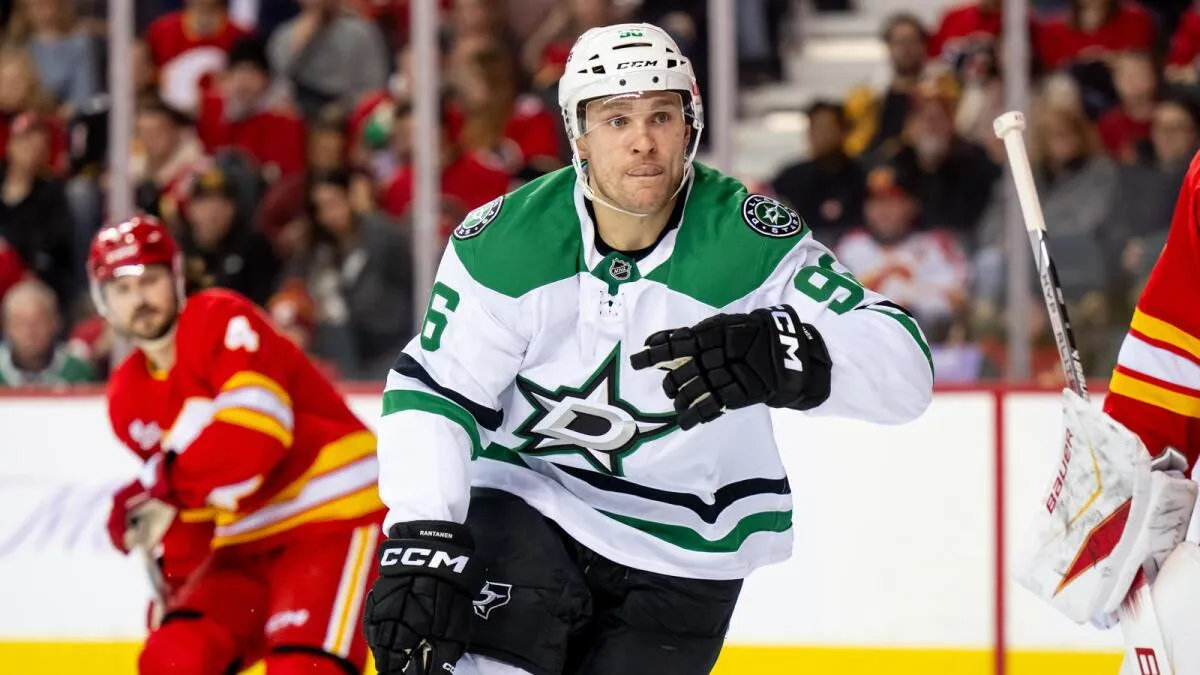
- Mikko Rantanen: $2,000 for diving.
Physical ones like Bobby McMann’s one-game high-stick suspension show continuity. More gestures could draw fines, deterring antics.
Teams adapt to unified oversight. Fewer appeals over split rulings expected.
For more on season fines, see the full list.[3]
This evolution signals stricter conduct standards. Players must mind manners on and off ice.
The NHL’s player safety department stands at a pivotal moment. By centralizing discipline, the league promotes fairness and accountability across the board. Expect refined enforcement as the season progresses, with Parros’ team shaping player behavior long-term.[1] What it means for the playoffs remains to be seen, but early fines like Nylander’s suggest a no-nonsense approach. Fans and analysts will watch how this impacts game intensity and respect for officials.
Frequently Asked Questions

Par Mike Jonderson
Mike Jonderson is a passionate hockey analyst and expert in advanced NHL statistics. A former college player and mathematics graduate, he combines his understanding of the game with technical expertise to develop innovative predictive models and contribute to the evolution of modern hockey analytics.