









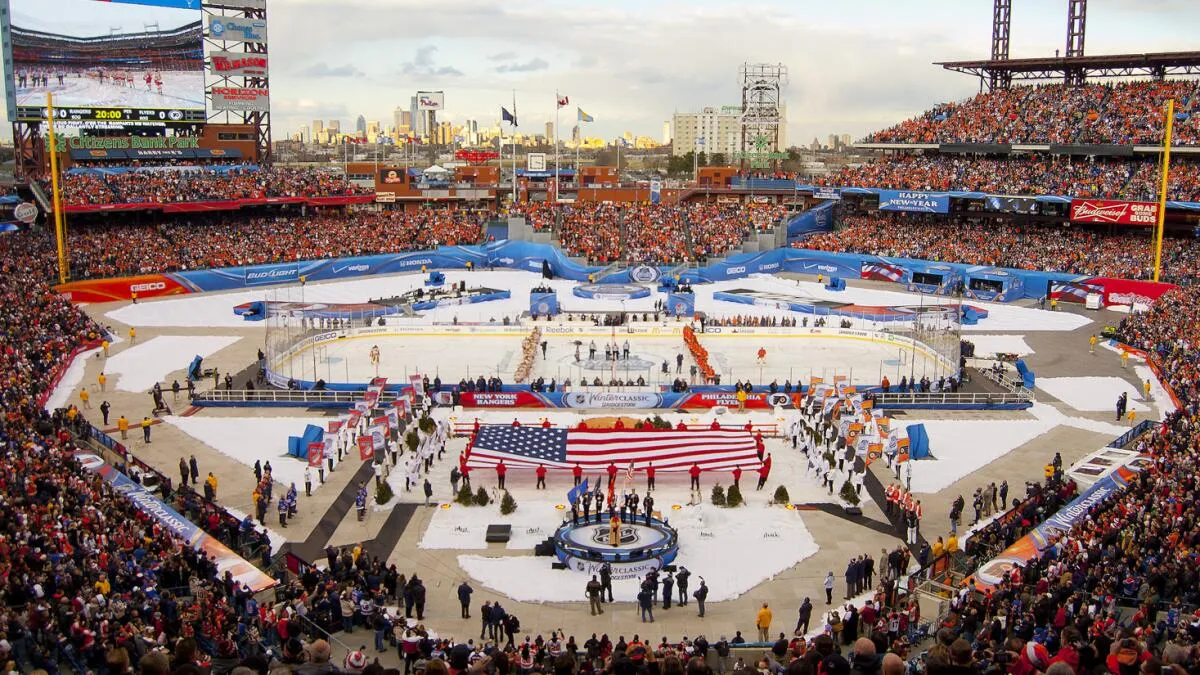
The NHL’s outdoor game spectaculars have become a cornerstone of hockey’s marquee events calendar, drawing massive crowds and generating television ratings that rival playoff matchups. From the inaugural Winter Classic in Buffalo’s Ralph Wilson Stadium to this year’s dual Florida showdowns in Miami and Tampa Bay, the league has proven its ability to transform football stadiums and baseball parks into hockey cathedrals. Yet as the novelty of stadium-based games begins to fade, fans and executives alike are asking: where should the NHL take its outdoor showcase next?
With 43 regular-season outdoor games in the books since 2003, the league faces both opportunity and challenge. The formula works—stadiums provide infrastructure, seating, and commercial appeal—but the visual repetition risks diminishing the “event” status that makes these games special. Steve Mayer, president of NHL content and events, remains bullish on the concept: “I’ve heard some people claim outdoor games are a dying breed. No they’re not. We believe in outdoor games. We still think that they’re significant. They’re a big part of our season, definitely our highest rated games.”
Iconic stadiums that still deserve their shot
While many legendary venues have hosted outdoor games, several remain on the league’s wish list. The challenge isn’t lack of desire but scheduling conflicts and infrastructure requirements that make these partnerships complex dance negotiations.
College football’s biggest cathedrals
Penn State’s Beaver Stadium represents perhaps the most coveted remaining venue in American sports. With a capacity exceeding 106,000, the home of the Nittany Lions would instantly become the largest outdoor hockey venue in history. The NHL and Penn State have maintained dialogue for years, but a $700 million renovation project has pushed potential hosting dates to 2028 at the earliest. State College’s central location—140 miles from Pittsburgh and 193 miles from Philadelphia—makes it a perfect neutral site for a Keystone State rivalry matchup.
Ohio Stadium’s journey to hosting this year’s Stadium Series illustrates the infrastructure hurdles involved. For decades, the facility’s winterization limitations prevented any cold-weather events. “For a long time, we’d shut the stadium down in November and we wouldn’t really turn it back on until April,” explained Colin Thompson, Ohio State’s senior associate athletic director for facilities. The solution required installing heat trays to protect plumbing systems, a multi-million dollar investment that only became feasible when the expanded College Football Playoff required winter preparedness.
Other college venues still waiting their turn include:
- Tiger Stadium in Baton Rouge: SEC football’s Saturday night atmosphere could translate to a uniquely Southern hockey experience
- Rose Bowl in Pasadena: The “Granddaddy of Them All” offers California weather and Hollywood glamour
- Sanford Stadium in Athens: The hedges and intimate setting would create television magic
NFL stadiums with untapped potential
NFL venues offer turnkey solutions with professional operations staff and massive seating capacity. While the league has visited many, several intriguing options remain unexplored.
Lambeau Field in Green Bay represents the most obvious omission. The Frozen Tundra hosting actual frozen professional hockey seems like destiny, yet the Packers’ potential deep playoff runs create scheduling nightmares for January events. A Stadium Series game in February might work, but Wisconsin winters demand precise timing.
Arrowhead Stadium in Kansas City offers the league’s loudest fan environment and a passionate sports market that would embrace the novelty. The Chiefs’ recent dominance complicates winter scheduling, yet the visual of a rink set against the Arrowhead backdrop would be striking.
Allen High School Stadium in Texas—yes, a high school facility—boasts a $60 million, 18,000-seat palace that demonstrates how football infrastructure in the South could support innovative hockey events. While unlikely for a marquee game, it shows the expanding possibilities.
International expansion and frontier markets
The NHL’s commitment to growing hockey globally makes international outdoor games inevitable. The logistics increase exponentially, but the marketing rewards justify the investment.
Canadian heritage locations
Canada’s outdoor game history extends beyond NHL cities. The Heritage Classic has visited Regina, Saskatchewan and Hamilton, Ontario—markets without NHL teams but with deep hockey roots. Future destinations could include:
- Quebec City’s Plains of Abraham: History meets hockey in a setting that could host 100,000+ fans
- Saskatoon’s Credit Union Centre: A prairie setting that celebrates Western Canada’s hockey culture
- Stadium Series at Moncton Stadium: Highlighting Atlantic Canada’s passionate fan base
Steve Mayer acknowledges the regulatory challenges: “There’s red tape involved, but there are also some of these locations and landmarks that would give anything to have a special event come to their world.” Canadian federal regulations, particularly around advertising in national parks, complicate the most visually stunning locations like Lake Louise in Banff National Park.
European adventures
With the NHL staging regular-season games in Europe since 2017 and planning a World Cup of Hockey beginning in 2028, outdoor games across the Atlantic represent the next frontier. Potential venues include:
- Soccer stadiums in London: Wembley Stadium or Tottenham Hotspur Stadium offer modern facilities
- Scandinavian football venues: Stockholm’s Friends Arena or Helsinki’s Olympic Stadium would celebrate hockey’s Nordic roots
- Swiss alpine settings: A rink set against the Matterhorn or in the Swiss Alps would create unmatched visuals
Mayer confirms these discussions happen: “We get inquiries from around the world. We haven’t really focused on one particular area, one particular stadium, but we have had conversations about a potential outdoor game overseas. Nothing is imminent at all, but I could see down the line years as something in the future that is a possibility for sure.”
Breaking the stadium mold: revolutionary location ideas
The Lake Tahoe games in 2021 broke all the rules—no fans, natural settings, and production challenges that pushed operations to the limit. Yet these games drew over a million viewers for the delayed Flyers-Bruins matchup and created images that remain the most requested in NHL content archives. The lesson: calculated risks on unique locations generate unparalleled engagement.
Natural wonders and national parks
Lake Louise, Alberta: The Battle of Alberta between Oilers and Flames in this Banff National Park setting would be visually breathtaking. The NHL has researched this location extensively, but Canadian regulations around signage and construction on public lands present significant hurdles.
The National Mall in Washington D.C.: A Capitals-Penguins rivalry game between the Washington Monument and Capitol Building would offer patriotic pageantry unmatched in sports. Mayer suggests this could work: “If we built some sort of mini stadium somewhere and it was extraordinary and it offered fans something they’ve never seen before, I think we could pull something off.”
Niagara Falls: Sabres versus Maple Leafs with 700,000 gallons of water per second roaring in the background. The Canadian side provides superior views and could accommodate temporary seating infrastructure.
Urban icons and cultural landmarks
Central Park, New York: Rangers-Islanders at one of the world’s most famous parks. The natural amphitheater setting near the Great Lawn could host thousands while maintaining the park’s character.
Grant Park, Chicago: Blackhawks-Red Wings with Lake Michigan wind and the city skyline as a backdrop. The park already hosts Lollapalooza, proving it can handle major events.
Santa Monica Pier: Kings-Ducks on the beach with the Pacific Ocean literally yards away. The NHL proved ice can work in Los Angeles at Dodger Stadium; this would escalate the concept dramatically.
The truly audacious ideas
Mount Rushmore: Wild versus Utah Hockey Club with four presidential faces overlooking the action. The logistics would be nightmarish, but the imagery would be priceless.
Alcatraz Island: Sharks versus Avalanche with “The Rock” creating a natural arena. Wes McCauley’s famous calls would reach new heights: “Welcome to The Rock.”
Disney World: Panthers-Lightning at Cinderella’s Castle, combining the league’s Florida expansion with entertainment magic.
The business case for innovation
The financial reality tempers these ambitious ideas. Stadium games generate massive gate revenue—Michigan Stadium’s 2014 Winter Classic reportedly netted the league $20 million. Temporary venues like Lake Tahoe required significant investment without ticket revenue, a model that only worked because pandemic restrictions eliminated fan attendance anyway.
Mayer explains the current philosophy: “The league’s priority has always been to host games in packed stadiums, to bring the game to as many people as possible. Gary Bettman loves—and so do we—the energy of the live fans.”
Yet the television landscape demands differentiation. This year’s Winter Classic moved to New Year’s Eve to avoid NFL competition, illustrating the scheduling pressure facing these events. Unique locations create must-see TV that transcends traditional sports viewing habits.
The 4 Nations Face-Off’s success demonstrates the league’s willingness to reimagine signature events. Outdoor games must evolve similarly, balancing financial prudence with creative ambition.
What comes next: the road to 2027 and beyond
The NHL has announced its 2026 Florida games but hasn’t committed beyond them. This deliberate pause allows the league to reset its outdoor strategy. Several factors will shape the next generation of outdoor games:
Team participation: With the Utah Hockey Club set to make its outdoor debut soon, every NHL franchise will have appeared in at least one outdoor game. This milestone frees the league from obligation and enables pure strategic selection.
Venue availability: College football’s expanded playoff creates both opportunities and challenges. More stadiums will winterize, but scheduling around potential home playoff games becomes more complex.
International calendar: The 2026 Milan Olympics and 2028 World Cup of Hockey will influence how the NHL positions its outdoor games as either complementary events or standalone spectacles.
Mayer confirms no decisions have been made: “When this stretch is done, we’re all going to sit down and we’re going to figure it out. But we haven’t made any decisions yet.”
The path forward likely involves a hybrid approach: continue stadium games for financial stability while carefully selecting one or two “event” games annually at revolutionary locations. This strategy maintains revenue while generating the buzz and visual distinctiveness that made Lake Tahoe unforgettable.
The NHL’s outdoor game tradition stands at a crossroads. It can continue the safe, profitable stadium circuit or embrace calculated risks that push boundaries. Hockey’s unique relationship with outdoor play—from frozen ponds to championship games—demands ambition. The next Great Lakes, the next Lake Tahoe, the next unforgettable visual that captures imagination and grows the game globally.
The locations exist. The technology works. The audience awaits. The only question is whether the NHL will bet on itself and build something extraordinary rather than settling for another crowd in another stadium. The sport deserves nothing less.
Frequently Asked Questions

Par Mike Jonderson
Mike Jonderson is a passionate hockey analyst and expert in advanced NHL statistics. A former college player and mathematics graduate, he combines his understanding of the game with technical expertise to develop innovative predictive models and contribute to the evolution of modern hockey analytics.