







Now I have comprehensive information to write the article. Let me create a thorough blog post about NHL players whose careers were cut short by injury.
The National Hockey League has witnessed countless moments of brilliance throughout its storied history, but alongside these triumphs lie tales of unfulfilled potential and careers ended far too soon. Injuries are an unfortunate reality in professional sports, particularly in a physically demanding game like hockey where high-speed collisions, hard checks, and explosive movements are constant. While many players battle through injuries and continue their careers, some of the sport’s brightest stars have had their time on the ice tragically curtailed by debilitating physical setbacks. These are the stories of exceptional talent, lost opportunity, and the harsh reality that even the most gifted athletes are vulnerable to the fragility of the human body.
From chronic knee problems to devastating concussions, from cancer battles to freak accidents, the reasons behind these premature endings are as varied as they are heartbreaking. What makes these cases particularly poignant is not just what these players accomplished, but what they might have achieved had fate been kinder. Many of these athletes were operating at the peak of their powers when injury struck, leaving fans, teammates, and the players themselves to wonder what might have been.
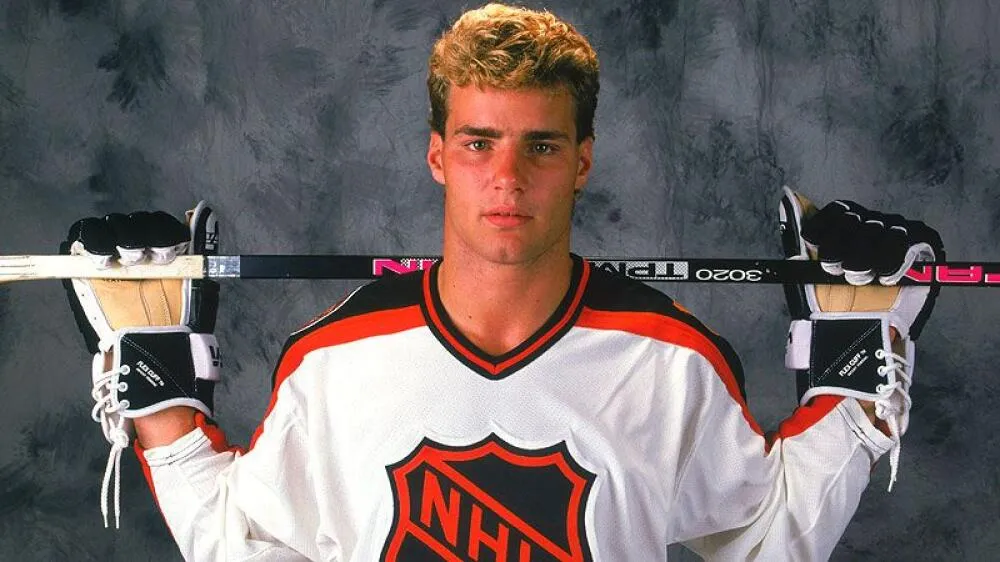
Bobby Orr and the knee injuries that robbed hockey of its greatest defenseman
When discussing NHL players whose careers were cut short by injury, no name resonates more profoundly than Bobby Orr. The Boston Bruins legend revolutionized the defenseman position, playing with a freedom and offensive creativity that had never been seen before. According to The Hockey Writers, Orr’s career wasn’t ended due to signing the first million-dollar contract in NHL history—it was a series of debilitating knee injuries that forced him into early retirement.
Orr’s knee problems began in his rookie season and plagued him throughout his career. Despite undergoing multiple surgeries, the damage proved irreversible. By the time he was 30 years old, his left knee had been effectively destroyed by repeated injuries and surgical interventions. After leaving Boston as a free agent to join the Chicago Black Hawks in 1976, Orr’s playing days were numbered. He managed only 26 games over two seasons with Chicago before retiring in 1978 at just 30 years of age.
The numbers Orr posted during his healthy years remain staggering. Between 1969-70 and 1974-75, he led all NHL players in scoring twice, finished second three times, and third once. He won the Norris Trophy as the league’s best defenseman eight consecutive times and was named to the All-Star First Team in each of those seasons. His plus-124 rating in 1970-71 remains an NHL record that seems untouchable in the modern era.
What makes Orr’s shortened career particularly tragic is the timing. His final full season in 1974-75 saw him score a career-high 46 goals and register 135 points while playing all 80 games. He was just entering what should have been the prime years of his career. Had he been able to play another half-dozen seasons at even a reduced level of production, the NHL record books would read very differently today. Instead, hockey lost its most revolutionary defenseman just as he was reaching his absolute peak.
Eric Lindros and the concussion crisis that defined an era
Few NHL players whose careers were cut short by injury have become as synonymous with a specific type of injury as Eric Lindros has with concussions. The hulking power forward was a generational talent—a 6-foot-4, 240-pound freight train who could skate like the wind and had the skill to match his size. He won the Hart Trophy as NHL MVP in 1995 and led the Philadelphia Flyers to the Stanley Cup Final in 1997, but his career was ultimately diminished and ended by a series of devastating concussions.
Lindros suffered at least eight documented concussions during his NHL career, a number that doesn’t account for the countless “minor” head injuries that went undiagnosed in an era when concussion protocols were virtually non-existent. The most infamous incident occurred on March 4, 2000, when a check from Boston Bruins defenseman Hal Gill left Lindros unconscious on the ice. That injury, combined with the cumulative effect of previous concussions, marked the beginning of the end for “The Big E.”
Despite attempts at comebacks with the New York Rangers and Toronto Maple Leafs, Lindros was never the same dominant force he had been in his prime. He played his final NHL game in 2007, retiring at age 34—far too young for a player of his caliber. The lasting impact of his concussions continues to this day, with Lindros becoming an advocate for better concussion awareness and player safety in hockey.
The tragedy of Lindros’s career isn’t just in what was lost, but in what might have been. In his prime years with Philadelphia, he averaged well over a point per game and was arguably the most physically dominant player in the league. Had he played in today’s era with modern concussion protocols and a greater emphasis on player safety, there’s little doubt his career would have lasted significantly longer. His case helped shine a light on the serious long-term consequences of repeated head trauma in hockey.
Marc Savard’s promising career silenced by devastating hits
Another prominent name among NHL players whose careers were cut short by injury is Marc Savard, whose story mirrors that of Lindros but occurred in a different era. The skilled playmaking center was enjoying the best years of his career with the Boston Bruins when a blindside hit from Pittsburgh Penguins forward Matt Cooke in March 2010 changed everything. Savard suffered a severe concussion on the play, and while he attempted to return, another hit by Colorado Avalanche forward Matt Hunwick in January 2011 ended his playing career for good.
Savard was just 33 years old when he played his final NHL game, right in the middle of what should have been his prime years. The 2009-10 season that was interrupted by Cooke’s hit saw Savard pace for career-high numbers, establishing himself as one of the league’s elite playmakers. His vision, passing ability, and hockey IQ made him the perfect complement to the Bruins’ talented roster.
What makes Savard’s case particularly frustrating is the preventable nature of his injuries. Both hits that ultimately ended his career were of the blindside variety that the NHL subsequently moved to ban. Had those rule changes come earlier, or had player safety been prioritized sooner, Savard might have enjoyed several more productive seasons. Instead, he became another casualty of hockey’s culture of violence, forced to watch from the sidelines as his teammates won the Stanley Cup in 2011—a championship he had helped build the foundation for.
The financial and emotional toll on Savard and his family has been immense. Years after his last game, he continues to deal with post-concussion symptoms that affect his daily life. His story stands as a stark reminder of the real human cost behind hockey injuries and the importance of protecting players from unnecessary harm.
Cam Neely’s power forward excellence cut down by knee and hip problems
When examining NHL players whose careers were cut short by injury, Cam Neely represents one of the most frustrating “what if” scenarios in hockey history. The prototypical power forward transformed from a role player with the Vancouver Canucks into a superstar with the Boston Bruins, terrorizing opponents with his unique combination of goal-scoring prowess and physical intimidation. However, a pair of knee injuries suffered during the 1991 playoffs against the Pittsburgh Penguins—particularly from a hit by Ulf Samuelsson—set in motion the eventual end of his career.
The knee injuries led to a rare and excruciating condition called myositis ossificans, where muscle tissue calcifies and turns to bone. This condition, combined with the subsequent hip problems that developed from compensating for his knee issues, limited Neely to just 162 regular-season games over his final five seasons. Despite the pain and limited mobility, he still managed to score 123 goals during those injury-plagued years, including a remarkable 50 goals in just 44 games during the 1993-94 season.
Neely’s peak years from 1987-88 through 1990-91 showcased what might have been. During that stretch, he averaged well over 50 goals per season while playing a punishing physical style. His goals-per-game average during those prime years was 0.61, and if extrapolated over a full 13-year career, would have resulted in approximately 575 goals. If Neely had been able to play additional seasons past age 31 when he retired, conservative estimates suggest he could have approached 700 career goals.
The premature end to Neely’s career robbed the Bruins of their most dangerous offensive weapon during years when they remained competitive. More broadly, it deprived hockey fans of watching one of the game’s most exciting players reach his full potential. His induction into the Hockey Hall of Fame in 2005 recognized what he did accomplish, but the ceremony was tinged with sadness for what could have been.
Pavel Bure’s electrifying speed diminished by chronic knee problems
Among NHL players whose careers were cut short by injury, few possessed the pure, breathtaking talent of Pavel Bure. “The Russian Rocket” was one of the most accomplished goal scorers of his generation, combining blazing speed with a lethal shot and an uncanny ability to score highlight-reel goals. However, his reliance on explosive skating took a devastating toll on his knees, ultimately forcing him to retire at age 34.
Bure’s injury troubles began early and occurred frequently throughout his career. A groin injury hampered him during the 1993-94 season, and the first of several knee injuries struck during the 1995-96 campaign. What should have been the prime years of his career were constantly interrupted by knee surgeries, contract disputes, and rehabilitation periods. The final straw came with a pair of knee injuries during the 2002-03 season that required surgery, costing him significant playing time. After missing the entire 2003-04 season and the lockout-cancelled 2004-05 season, Bure officially retired in November 2005, stating his knees could no longer handle the elite level he demanded of himself.
When healthy, Bure was virtually unstoppable. He hit the 60-goal mark twice in his career and won back-to-back Maurice Richard Trophies in 2000 and 2001 as the league’s top goal scorer. His 0.623 goals-per-game average ranks fifth all-time in NHL history, an extraordinary achievement considering the injuries that limited his career to just 702 games. Players of his caliber typically play well over 1,000 games—according to analysis from The Hockey Writers, had Bure remained healthy for a full career, projections suggest he could have scored anywhere from 900 to over 1,000 goals.
Bure’s international accomplishments further highlight what was lost. He dominated at World Championships and World Junior tournaments, winning multiple medals for Russia. At the 1998 Winter Olympics, despite Russia taking silver, Bure led all scorers with nine goals and was named the tournament’s top forward. His combination of speed, skill, and scoring ability made him one of the most exciting players to ever lace up skates.
Mike Bossy’s unmatched goal-scoring cut short by chronic back pain
Few stories among NHL players whose careers were cut short by injury are as purely tragic from a statistical perspective as Mike Bossy’s. The New York Islanders sniper posted the highest goals-per-game average (.762) in NHL history among players with at least 200 goals, yet chronic back problems forced him to retire after just 10 seasons at age 30. While many players are just entering their prime at that age, Bossy’s career was over, his back unable to withstand the physical demands of professional hockey.
Bossy’s accomplishments in his brief career remain staggering. He scored at least 50 goals in nine consecutive seasons, a record that still stands. He topped 60 goals five times and was instrumental in the Islanders’ dynasty, winning four consecutive Stanley Cups from 1980 to 1983. In his rookie season, he scored 53 goals, setting a rookie record that stood for 13 years until Teemu Selanne broke it.
The 1986-87 season proved to be Bossy’s last. He managed just 38 games before his back finally gave out completely. Medical examinations revealed that continuing to play would risk permanent damage, forcing him to make the difficult decision to retire. He was inducted into the Hockey Hall of Fame in 1991, but the ceremony served as a reminder of unrealized potential.
Conservative projections of what Bossy might have accomplished with a healthy back and a full career suggest he could have challenged Wayne Gretzky’s all-time goal-scoring record. The top retired goal scorers with full careers averaged around 1,500 games. At Bossy’s goals-per-game rate, even accounting for natural decline over time, he might have scored between 900 and 1,000 career goals. Instead, his career total stands at 573 goals in just 752 games—incredible, but far short of what he was capable of achieving.
Vladimir Konstantinov’s tragic limousine accident and unfulfilled defensive brilliance
Perhaps no story among NHL players whose careers were cut short by injury is more sudden and tragic than that of Vladimir Konstantinov. The Detroit Red Wings defenseman was at the peak of his career when a limousine crash just six days after winning the 1997 Stanley Cup left him with permanent brain damage and paralysis. Unlike gradual deterioration from repeated injuries, Konstantinov’s career ended in an instant, robbed by a senseless accident that had nothing to do with hockey.
Before the crash, Konstantinov had established himself as one of the NHL’s premier defensemen. Nicknamed “The Vladinator” and “Vlad the Impaler” for his punishing physical style, he combined shutdown defensive ability with impressive offensive contributions. In 1995-96, he recorded a plus-60 rating—the highest mark since Wayne Gretzky’s plus-70 in 1986-87. The following season, he finished second in Norris Trophy voting, establishing himself as arguably the best defenseman in hockey not named Chris Chelios or Brian Leetch.
Konstantinov’s role in Scotty Bowman’s innovative “Russian Five” unit revolutionized how hockey could be played. The high-flying, creative style of the unit anchored by Konstantinov’s physical presence and defensive reliability helped the Red Wings dominate the late 1990s. Red Wings legend Igor Larionov later stated that had Konstantinov remained healthy, the team would have won “two or three more Cups in a row” because he was such a vital component.
At just 30 years old when the accident occurred, Konstantinov was entering what should have been the prime years of his career. His teammate Nicklas Lidstrom would go on to win seven Norris Trophies after Konstantinov’s departure—but many wonder how those votes might have been split had both defensemen remained healthy. The tragedy of Konstantinov’s career is absolute: there was no gradual decline, no time to adjust or say goodbye. In one terrible moment, hockey lost a potential Hall of Famer, and the Red Wings lost a cornerstone of their dynasty.
The stories of these NHL players whose careers were cut short by injury serve as sobering reminders of the sport’s inherent dangers and the fragile nature of athletic careers. Bobby Orr’s knees, Eric Lindros and Marc Savard’s concussions, Cam Neely’s hip problems, Pavel Bure’s knee surgeries, Mike Bossy’s chronic back pain, and Vladimir Konstantinov’s tragic accident all represent careers that ended far too soon. These weren’t fringe players or career minor leaguers—they were superstars, future Hall of Famers, and in some cases, the best players of their generation. Their premature exits from the game changed the trajectory of franchises and left fans wondering what record books might look like had fate been kinder. While medical advances, better equipment, and improved safety protocols have helped reduce some injury risks in modern hockey, the fundamental reality remains unchanged: every time a player steps on the ice, they risk everything.

Par Mike Jonderson
Mike Jonderson is a passionate hockey analyst and expert in advanced NHL statistics. A former college player and mathematics graduate, he combines his understanding of the game with technical expertise to develop innovative predictive models and contribute to the evolution of modern hockey analytics.