











The National Hockey League has been shaped by remarkable talent from diverse backgrounds throughout its 100+ year history. Among the over 7,600 players who have suited up since 1917, approximately 80 have identified as Indigenous, representing just 1.5 percent of all NHL talent. Despite this small percentage, Indigenous players have left an indelible mark on the sport, winning multiple Stanley Cups, individual awards, and inspiring generations of young athletes from First Nations, Métis, and Inuit communities across North America. Their stories reflect resilience, excellence, and the power of representation in professional sports.
From the frozen ponds of Saskatchewan to the bright lights of NHL arenas, these athletes have overcome significant barriers while maintaining pride in their heritage. Their contributions extend far beyond statistics and championships—they’ve opened doors for future generations and demonstrated that Indigenous excellence belongs at hockey’s highest level. The journey from Fred Sasakamoose, who became one of the first Indigenous players in the league, to today’s stars like Carey Price and Ethan Bear, tells a story of both progress and the ongoing work needed to make hockey truly inclusive.
The trailblazers who paved the way for Indigenous representation
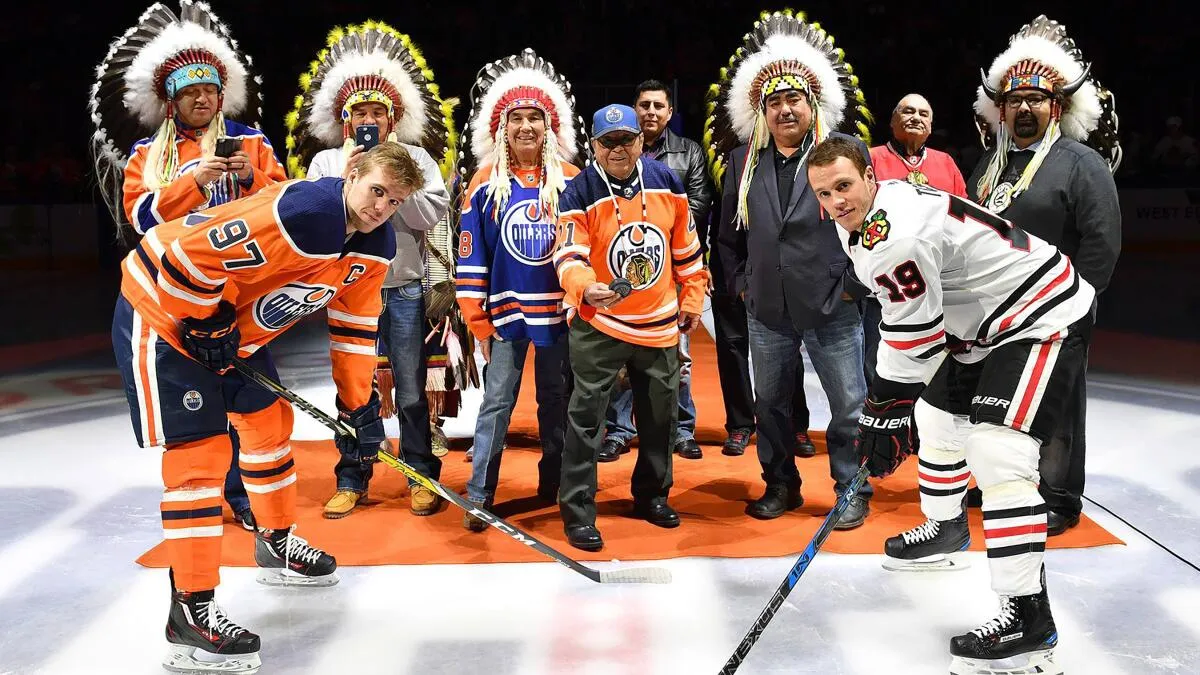
The path for Indigenous players in professional hockey was never straightforward. Early pioneers faced systemic barriers, racism, and isolation as they pursued their NHL dreams. Fred Sasakamoose, a Cree player from Saskatchewan, became one of the first Indigenous athletes to reach the NHL when he debuted with the Chicago Blackhawks in 1953-54. His journey from residential school survivor to NHL player remains one of the most powerful stories in hockey history, though it came with tremendous personal cost and challenges that players today thankfully don’t have to face alone.
Statistical analysis reveals the remarkable impact Indigenous players have had relative to their small numbers in the league. While representing less than two percent of total NHL talent, Indigenous players have won over 25 Stanley Cup championships, multiple Hart Trophies, Vezina Trophies, and Conn Smythe awards. This disproportionate success highlights not just individual brilliance but the depth of hockey talent within Indigenous communities that has historically been overlooked by scouts and development programs. Organizations like the National Aboriginal Hockey Championships have been instrumental in identifying and nurturing this talent pipeline.
The social impact of these trailblazers cannot be overstated. During an era when residential schools were still operating across Canada and Indigenous peoples faced systemic discrimination, seeing someone like Sasakamoose or later Bryan Trottier succeed at hockey’s highest level provided hope and pride to countless Indigenous youth. These players became community heroes, returning to their reserves and nations to inspire the next generation while carrying the weight of representation on their shoulders. As Trottier once reflected in a special essay for NHL.com, “There’s a certain pride I think we all have in where and how we grow up and our heritage.”
The greatest Indigenous players in NHL history
Bryan Trottier: the Metis champion who redefined excellence
Bryan Trottier stands as perhaps the most decorated Indigenous player in NHL history. The Metis forward from Val Marie, Saskatchewan, carved out an 18-year career that saw him win seven Stanley Cup championships—four with the New York Islanders dynasty of the early 1980s and two more with the Pittsburgh Penguins. Drafted by the Islanders in 1974, Trottier immediately made his mark, winning the Calder Trophy as rookie of the year in 1975-76 with 95 points. He would go on to capture the Hart Trophy as league MVP and Art Ross Trophy as top scorer in 1978-79, cementing his status among hockey’s elite.
Trottier’s heritage—Cree and Chippewa ancestry through his father—shaped his perspective throughout his career. He has spoken openly about experiencing name-calling as a youth but credits his parents for preparing him with thick skin. “My mom being Irish and my dad Cree Metis, they stressed to me how any name-calling that took place, even at a young age, was simply jealousy and to not let it hurt my feelings,” he shared in his NHL.com essay. This resilience carried him through his career and now fuels his passion for mentoring Indigenous youth. His 1,425 points in 1,279 games and 1997 Hockey Hall of Fame induction represent just part of his legacy.
Carey Price: First Nations goaltending excellence and leadership
Carey Price represents a new generation of Indigenous superstars who have embraced their heritage while reaching the pinnacle of their position. Born in Vancouver and a member of the Ulkatcho First Nation through his mother, Price grew up in Anahim Lake, British Columbia, where his father served as a goaltender and his mother became chief of their nation. His journey from remote British Columbia to becoming the Montreal Canadiens’ franchise goaltender embodies the modern Indigenous hockey experience.
Price’s list of accomplishments is staggering: Vezina Trophy winner, Hart Trophy recipient, William Jennings Trophy winner, and Ted Lindsay Award recipient in 2015, making him only the second Canadiens player to capture four major awards in one season. Internationally, he backstopped Canada to Olympic gold in 2014, World Junior Championship gold in 2007, and World Cup of Hockey victory in 2016. Beyond his on-ice success, Price has been a dedicated ambassador for Indigenous hockey, serving as honorary co-chair of the National Aboriginal Hockey Championships and consistently using his platform to highlight Indigenous issues in Canada.
Reggie Leach and Grant Fuhr: the 1970s-80s pioneers
The 1970s and 1980s saw several Indigenous players rise to prominence, none more notable than Reggie Leach and Grant Fuhr. Leach, an Ojibwe member of the Berens River First Nation in Manitoba, became one of the most feared goal-scorers of his era. His 1975-76 season with the Philadelphia Flyers remains legendary—he led the league with 61 goals and followed that with a record-setting 19 goals in 16 playoff games. Though the Flyers fell to Montreal in the Stanley Cup Final, Leach’s performance earned him the Conn Smythe Trophy as playoff MVP, making him one of only five players ever to win the award despite being on the losing team.
Grant Fuhr’s story is equally compelling. With an Enoch Cree mother and African American father, Fuhr was adopted and raised in Spruce Grove, Alberta. He became one of the greatest goaltenders in NHL history, backstopping the Edmonton Oilers dynasty to five Stanley Cups between 1984 and 1990. His rookie season in 1981-82 included a remarkable 23-game undefeated streak, and he would go on to win the Vezina Trophy in 1988. Fuhr holds numerous records for goaltenders, including most assists and points (61) in combined regular season and playoff careers. His 2003 Hockey Hall of Fame induction recognized his role as a trailblazer both for Indigenous players and for diversity in hockey.
Modern Indigenous stars continuing the legacy
Today’s NHL features a growing contingent of Indigenous talent carrying forward the legacy. T.J. Oshie, who learned of his Ojibwe heritage as a teenager, won the Stanley Cup with Washington in 2018 and has become a respected veteran presence. His journey from Warroad, Minnesota, to NHL stardom exemplifies how many Indigenous players discover and embrace their heritage throughout their careers. Oshie’s six 20-goal seasons and clutch playoff performances have cemented his place among the league’s reliable forwards.
Current players like Ethan Bear (Cree, Washington Capitals), Zach Whitecloud (Sioux, Vegas Golden Knights), Brandon Montour (Mohawk, Florida Panthers), and Travis Hamonic (Métis, Ottawa Senators) represent the next wave of Indigenous talent. Each brings their own connection to their heritage while competing at the highest level. The recent success of these players coincides with the NHL’s increased efforts at Indigenous recognition and reconciliation, including special heritage nights and community outreach programs designed to make hockey more accessible to Indigenous youth.
The next generation of Indigenous hockey talent
Current Indigenous NHL players making their mark
The modern NHL features more Indigenous players than at any point in league history, with approximately six active players bringing diverse Indigenous backgrounds to their teams. This generation benefits from improved scouting in Indigenous communities and dedicated development programs that didn’t exist for previous eras. Ethan Bear has become an advocate for Indigenous representation, regularly speaking about his Cree heritage and the importance of seeing Indigenous faces in professional hockey. Zach Whitecloud, from the Sioux Valley Dakota Nation, serves as a role model for youth in Manitoba and beyond.
The influence extends beyond just those currently playing. Many former Indigenous players remain active in hockey development, working with organizations like the Indigenous Hockey Federation and Hockey Canada to create pathways for young talent. These efforts are crucial in addressing the historical underrepresentation of Indigenous players in the NHL. While 1.5 percent representation still doesn’t reflect the broader population, the trend is moving in a positive direction as more resources are dedicated to Indigenous hockey development across Canada and the United States.
Growing the game in Indigenous communities
The future of Indigenous hockey looks brighter than ever, with grassroots programs flourishing in communities from coast to coast. The National Aboriginal Hockey Championships, which Carey Price has supported, provide a crucial showcase for young Indigenous talent. These tournaments not only identify future stars but also celebrate Indigenous culture within the sport. Community-based programs in places like Prince Edward Island are working to make hockey more accessible, while teams like the Vancouver Canucks have deepened their engagement with Indigenous communities, as detailed in our coverage of the Indigenous legacy in Vancouver Canucks history.
Investment in infrastructure, from outdoor rinks to arena accessibility, remains critical. Many Indigenous communities in remote areas lack the facilities and resources that urban centers take for granted. Organizations are beginning to address this gap, recognizing that talent exists everywhere but opportunity does not. The success stories of players like Price, who came from a community of just 1,500 people, prove that with proper support, Indigenous youth can reach the highest levels of hockey regardless of their geographic starting point.
The lasting impact of Indigenous excellence in hockey
The story of Indigenous players in the NHL is one of resilience, excellence, and gradual progress. From Fred Sasakamoose breaking barriers in 1953 to today’s six active Indigenous players, each generation has built upon the foundation laid by those before them. These athletes have won championships, captured individual awards, and proven that Indigenous talent belongs at hockey’s highest level. Their success has opened doors for future generations while forcing the hockey world to confront its past and work toward a more inclusive future.
As we celebrate these remarkable athletes, it’s important to recognize that their impact extends far beyond the rink. They’ve become cultural ambassadors, role models, and advocates for change within their communities and the broader hockey world. While representation remains far below where it should be, the trajectory is encouraging. The continued growth of Indigenous hockey programs, combined with the NHL’s increasing recognition of Indigenous heritage, suggests that the next decade could see even more Indigenous stars following in the footsteps of Trottier, Price, and others who have made history as the NHL top Indigenous players of all time.
For those interested in exploring how individual greatness fits into franchise histories, our analysis of the all-time best player from every NHL team provides additional context on where some of these Indigenous legends rank within their organizations’ pantheons.
Frequently Asked Questions

Par Mike Jonderson
Mike Jonderson is a passionate hockey analyst and expert in advanced NHL statistics. A former college player and mathematics graduate, he combines his understanding of the game with technical expertise to develop innovative predictive models and contribute to the evolution of modern hockey analytics.