The OHL will hold an in-person draft for the first time in the 21st century Friday night in Kingston, and you won’t be able to keep up without a program.
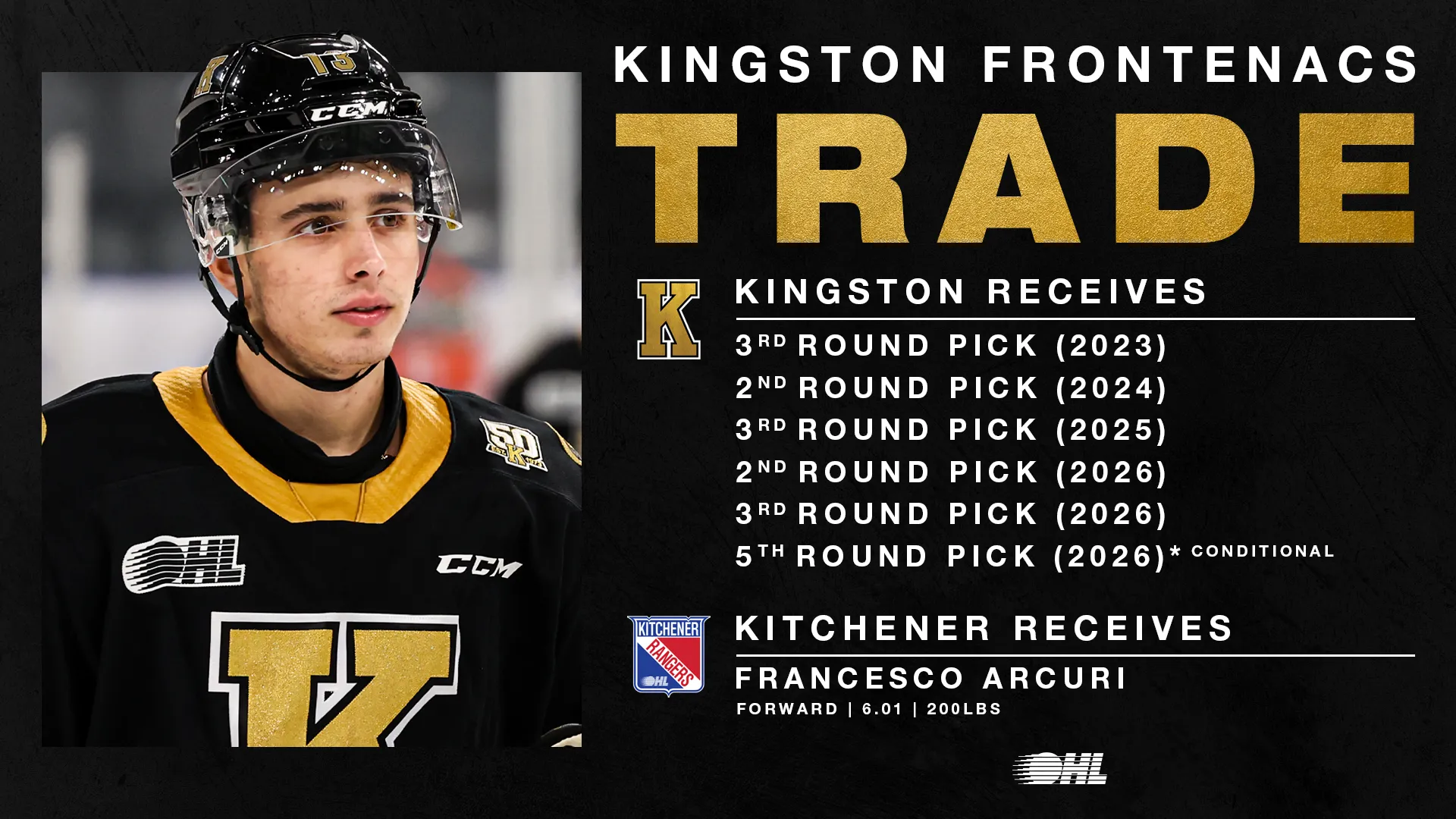
Trade volume overwhelms draft ownership
Not a single team owns its own third-round pick ahead of the Kingston event. Every third-round selection has already changed hands through prior deals. This complete turnover of assets traces directly to unrestricted trading that began accelerating after 2005.
GMs now execute sequences of up to eight separate transactions per team in a single offseason. Each deal funnels high picks toward clubs already positioned for immediate contention. The result leaves rebuilding franchises without foundational selections for multiple seasons.
Data from league tracking shows an average of 47 total picks exchanged in the weeks before recent drafts. That figure stood at 19 in 2004, the last comparable period before the in-person format returned.
Parity erosion follows unrestricted movement
Teams fall into two rigid categories once trading opens without limits. Contenders acquire veteran talent and future assets simultaneously while bottom clubs shed everything for draft capital that rarely stays local.
This binary produces a 38-point average spread between the top and bottom clubs in the 2025-26 standings. Playoff series therefore feature predetermined outcomes in 11 of 16 first-round matchups over the past five postseasons.
The pattern repeats across the CHL. WHL and QMJHL clubs report identical concentrations of assets among the same four or five organizations each spring. Historical records indicate that pre-2005 seasons produced at least three first-round upsets per conference when roster turnover remained lower.
Draft mechanics amplify imbalance
Kingston’s return to an in-person format highlights the problem because scouts can now witness the full scope of pre-draft maneuvering in real time. With zero third-round picks remaining with original owners, the board will feature only borrowed selections.
League officials recorded 62 distinct trades involving 2026 draft picks through May 2026. That volume exceeds the entire 1999-2003 period combined. Each transaction further concentrates talent rather than distributing it.
A single cap on total trades per club would force GMs to retain at least one asset from their own future classes. The mechanism would interrupt the current haves-versus-have-nots cycle without eliminating strategic movement entirely.
Teams would then enter seasons with mixed rosters instead of either stacked lineups or bare cupboards. Playoff variance would increase as middle-tier clubs retain enough core pieces to compete in any given spring.
Frequently Asked Questions
Sources

Par Mike Jonderson
Mike Jonderson is a passionate hockey analyst and expert in advanced NHL statistics. A former college player and mathematics graduate, he combines his understanding of the game with technical expertise to develop innovative predictive models and contribute to the evolution of modern hockey analytics.