









The Montreal Canadiens entered the 2025-26 season with legitimate playoff aspirations and a revitalized roster that finally seemed capable of competing in the demanding Atlantic Division. Much of that optimism stemmed from calculated gambles by general manager Kent Hughes, including the trade that brought Finnish sniper Patrik Laine to the Bell Centre. However, the announcement that Laine will miss three to four months following core muscle surgery has cast a shadow over those ambitions and raised serious questions about whether the 27-year-old winger has a future in Montreal beyond this season.
This latest setback marks yet another chapter in what has become a troubling pattern of unavailability for Laine. Since the 2020-21 campaign, he hasn’t played more than 56 games in a single season. For a player earning $8.7 million and expected to provide elite goal-scoring, the inability to stay healthy represents more than just bad luck—it suggests a fundamental question about whether his body can withstand the physical demands of an 82-game NHL schedule. With Laine set to become an unrestricted free agent next summer, this injury could very well signal the end of his tenure with the Canadiens before it truly began.
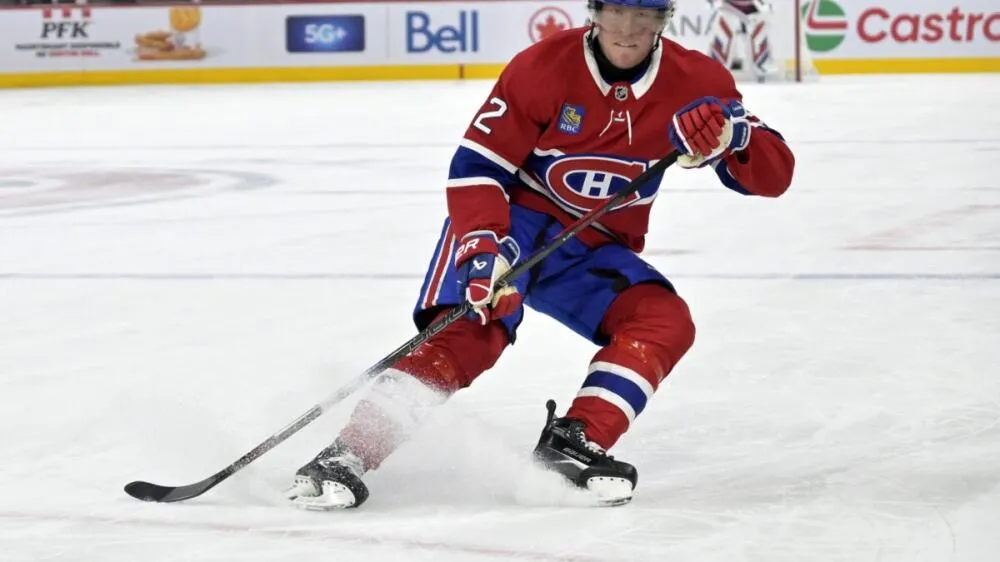
Patrik Laine injury jeopardizing future: the timeline and impact
The Canadiens officially announced the news on October 25, revealing that Laine underwent surgery to repair a core muscle injury that had been bothering him since mid-October. His last appearance came in a 3-2 overtime victory against the Nashville Predators on October 16, and he was subsequently listed as day-to-day with a lower-body injury before the team made the decision to proceed with surgery.
Core muscle injuries, often referred to as sports hernias, are notoriously difficult to manage and frequently require surgical intervention for athletes who rely on explosive movements and rotational power. The three-to-four-month recovery timeline means Laine won’t return until late January at the earliest, with late February being a more realistic target. This extended absence will see him miss approximately 40-50 games, roughly half of the regular season.
The timing couldn’t be worse for Montreal. The Canadiens started the season with six wins in their first nine games, positioning themselves among the NHL’s early leaders with their best start in years. According to ESPN, they were tied with the Vegas Golden Knights for the third-most points in the league when the injury was announced. Losing a proven goal-scorer during this crucial stretch could derail the momentum they’ve worked so hard to build.
Adding to the complications, this injury also jeopardizes Laine’s opportunity to represent Finland at the 2026 Milan-Cortina Olympics. The tournament runs from February 6 to February 22, which falls squarely within his recovery window. For a player who has represented his nation at various international competitions but never at the Olympics, missing this chance would be a devastating blow to what has been a career marked by increasing disappointment.
The troubling pattern behind the Patrik Laine injury
What makes this situation particularly concerning for the Canadiens isn’t just the current injury—it’s the pattern it represents. Laine’s career has been defined by two distinct phases: the electrifying early years when he looked like a generational talent, and the injury-plagued recent seasons where he’s become increasingly unreliable.
Drafted second overall in 2016 by the Winnipeg Jets, Laine burst onto the scene with 36 goals as a rookie, followed by seasons of 44 and 30 goals. He appeared destined to become one of the NHL’s premier snipers, a player who could challenge for the Maurice “Rocket” Richard Trophy year after year. His release was lethal, his one-timer devastating, and his confidence unshakeable.
But since 2020, the narrative has changed dramatically. Laine hasn’t approached those early-career totals, and more troublingly, he simply hasn’t been available. As reported by The Hockey News, he hasn’t played more than 56 games in a single season since 2020-21. His goal totals have steadily declined: 26 in 2021-22, 22 in 2023-24, and just 20 last season with Montreal. Through five games this season before the injury, he had managed only a single assist.
The string of injuries includes various lower-body ailments, a knee injury suffered during last season’s preseason that limited him to 52 games, and now this core muscle issue. Whether these injuries are interconnected or simply a run of bad luck, the result is the same: the Canadiens can’t build around a player who isn’t on the ice. For a team trying to establish chemistry and develop consistent line combinations, Laine’s absences create more problems than his presence solves.
This pattern raises legitimate questions about Laine’s physical durability and whether something deeper is at play. Athletes who suffer recurring lower-body injuries often develop compensatory movement patterns that stress other areas, creating a cascade effect. Core muscle injuries, in particular, can be linked to imbalances in hip strength, flexibility issues, or biomechanical problems in skating mechanics. Without addressing these underlying factors, surgical repairs may only provide temporary relief before the next injury occurs.
How the Canadiens must adapt without Laine
Montreal’s immediate challenge is reorganizing their lineup to compensate for Laine’s absence without disrupting the chemistry that has fueled their strong start. The good news is that Laine had been deployed in a somewhat limited role, skating on the second power-play unit and averaging fewer minutes than most regular forwards. His lack of production—just one assist in five games—suggests the team wasn’t heavily relying on him for offense in the early going.
The Canadiens had already recalled prospects Owen Beck and Joshua Roy from the Laval Rocket to address short-term injuries to other forwards. With Laine now sidelined long-term, these young players will have extended opportunities to prove they belong at the NHL level. Roy has demonstrated offensive creativity and playmaking ability, while Beck brings responsible two-way play and energy that can stabilize bottom-six minutes.
The expected bottom-six forward configuration will likely feature Josh Anderson, Zack Bolduc, Kirby Dach, and Brendan Gallagher rotating through various combinations. Anderson and Gallagher bring veteran presence and physical play, while Bolduc—acquired in a trade that has looked increasingly shrewd—provides youth and skill. Dach, returning from his own injury, will need to shoulder more responsibility as a playmaker and two-way center.
Montreal’s organizational depth will be tested further if another injury strikes. The loss of defenseman Kaiden Guhle for four to six weeks with a lower-body injury has already stretched the blue line thin. The Canadiens are walking a tightrope, and one more significant injury to a top-nine forward or top-four defenseman could expose the limits of their depth.
General manager Kent Hughes faces a decision about whether to seek external help. The waiver wire could provide a low-cost veteran option for bottom-six minutes, or Hughes could explore minor trades for experienced players who can provide stability without sacrificing future assets. The key is avoiding panic moves that mortgage the future for short-term fixes. The Canadiens remain a team in transition, and maintaining the long-term vision is crucial even as they navigate short-term adversity.
Contract implications and the Patrik Laine injury’s impact on free agency
Perhaps the most significant consequence of this injury is its impact on Laine’s impending free agency. Set to become an unrestricted free agent in the summer of 2026, Laine was hoping to use this season as a showcase to rebuild his value and secure a lucrative long-term contract. Instead, he’ll spend half the season recovering from surgery, with limited opportunities to prove he’s regained the form that made him a star.
At $8.7 million this season, Laine represents a substantial cap investment for the Canadiens. That figure was calculated based on his potential as an elite goal-scorer, someone capable of providing 35-40 goals in a full season. The reality has fallen far short of those expectations. Even before this injury, Laine’s declining production and persistent injury issues were raising questions about whether he deserved that salary level moving forward.
For the Canadiens, this injury may actually make the decision easier. Rather than facing pressure to re-sign Laine based on a strong season, they can now wish him well and allocate that cap space to more reliable options. The trade that brought Laine to Montreal—sending Jordan Harris to the Columbus Blue Jackets—was intended as a low-risk gamble on a buy-low candidate. If it doesn’t work out, the Canadiens can move on without significant regret.
From Laine’s perspective, this injury is devastating for his earning potential. Free agent contracts are determined largely by recent performance and perceived reliability. A player who misses half a season and finishes with minimal production will face a significantly depressed market. Teams might still take chances on Laine—he’s only 27, and his shooting talent is undeniable—but the days of $8 million-plus annual salaries are likely over unless he can stage a remarkable comeback.
The broader NHL market has grown increasingly cautious about rewarding players with injury histories. With the salary cap projected to rise but teams becoming more analytically sophisticated about risk assessment, players who can’t stay healthy face harsh consequences in contract negotiations. Laine’s situation exemplifies this trend: elite talent means little if it isn’t available when it matters most.
What this means for Montreal’s season and Laine’s legacy
Despite the loss of Laine, the Canadiens shouldn’t abandon their playoff hopes. Their strong start demonstrated that they have genuine depth and a system that works. The team’s success hasn’t been built on Laine’s contributions—in fact, they’ve thrived without him producing at a high level. Head coach Martin St. Louis has created an up-tempo, aggressive style that emphasizes youth, speed, and creativity, and those qualities don’t disappear because one player is sidelined.
The real test will be whether Montreal can maintain their defensive structure and goaltending performance while asking more from their depth forwards. Samuel Montembeault has been excellent in goal, and the defensive group, despite losing Guhle temporarily, has shown improvement. If those elements remain consistent, the Canadiens can weather this storm and remain competitive in the playoff race.
For Laine, this injury represents another frustrating chapter in what has become a career of unfulfilled potential. He entered the NHL as one of the most exciting young talents in hockey, a player whose goal-scoring prowess seemed destined for greatness. Instead, injuries and inconsistency have defined his recent seasons, transforming him from a cornerstone player into a risky reclamation project.
Whether Laine can resurrect his career remains to be seen. History offers both cautionary tales and success stories of players who overcame similar challenges. The difference often comes down to factors beyond pure skill: dedication to conditioning, willingness to address biomechanical issues, mental resilience, and sometimes simply finding the right situation. Laine still possesses one of the best shots in hockey, and there will be teams willing to bet on that talent if the price is right.
What’s clear is that the Canadiens are unlikely to be one of those teams. The Patrik Laine injury jeopardizing future with Montreal Canadiens isn’t just about the immediate absence—it’s about the culmination of missed games, declining production, and growing doubts about whether he can be the player everyone hoped he would become. Montreal will move forward, and Laine will need to prove himself all over again, somewhere else, if he wants to reclaim his place among the NHL’s elite.

Par Mike Jonderson
Mike Jonderson is a passionate hockey analyst and expert in advanced NHL statistics. A former college player and mathematics graduate, he combines his understanding of the game with technical expertise to develop innovative predictive models and contribute to the evolution of modern hockey analytics.