





The Philadelphia Flyers scripted another dramatic comeback narrative on Thursday night, transforming a two-goal first-period hole into a thrilling 3-2 overtime victory against the St. Louis Blues at Xfinity Mobile Arena. Travis Sanheim’s breakaway goal with 1:09 remaining in the extra frame capped a resilient performance that has become emblematic of this Flyers squad, marking their second win over the Blues in less than a week after erasing multiple deficits in their previous encounter.
Defenseman Justin Faulk’s pair of first-period tallies had St. Louis dreaming of snapping their losing streak, but Philadelphia’s methodical pressure and unwavering belief gradually eroded the Blues’ confidence. The victory improved the Flyers to 10-6-3 on the season while extending St. Louis’s misery to four consecutive defeats, leaving them searching for answers in a campaign defined by close losses.
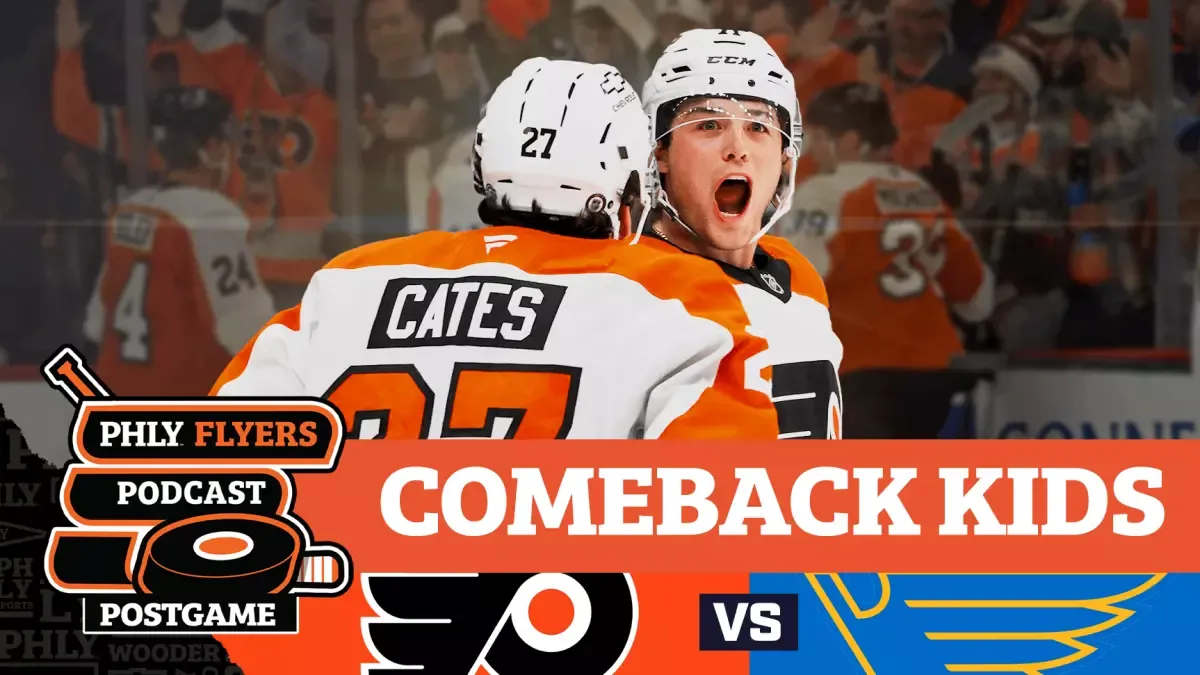
How the Philadelphia Flyers rallied from two-goal deficit to beat St. Louis Blues in overtime - Game breakdown
Early dominance from St. Louis
The Blues struck with ruthless efficiency in the opening frame, establishing their two-goal advantage through Faulk’s precision from the blue line. At 5:31, the veteran defenseman unloaded a slapshot through traffic that caught Flyers goaltender Dan Vladar by surprise, the puck finding its way past the Czech netminder’s glove. The second goal arrived on the power play at 12:08, with Faulk hammering a one-timer from the top of the left face-off circle after St. Louis executed their man-advantage setup with textbook precision.
Jake Neighbours, making his return after missing 12 games with a right leg injury, contributed an assist on the power-play marker, providing a rare bright spot for a Blues team desperate for positive momentum. Through 20 minutes, the Flyers found themselves trailing for the sixth consecutive game, a troubling pattern that head coach John Tortorella has repeatedly emphasized must change for sustained success.
The comeback begins in second period
Philadelphia’s response materialized late in the middle frame through an unlikely source. Rodrigo Abols, centering the fourth line, cut the deficit to 2-1 with just 2:03 remaining before intermission. Trevor Zegras initiated the sequence with dogged work along the boards against multiple defenders, sliding the puck to Owen Tippett positioned behind the Blues net. Tippett’s sublime between-the-legs feed found Abols cutting to the crease, and the Latvian forward made no mistake, roofing his shot over Joel Hofer’s shoulder for his first goal of the season.
The marker represented more than just a change on the scoreboard—it embodied Philadelphia’s depth scoring finally awakening after a dormant stretch. Abols’ linemates, Nic Deslauriers and Garnet Hathaway, controlled possession throughout their 8:15 of 5-on-5 ice time, generating a dominant 86.67 Corsi For percentage that foreshadowed the territorial advantage Philadelphia would enjoy in the final regulation period.
Third-period pressure and overtime heroics
Tyson Foerster completed the comeback at 11:49 of the third period, unleashing a wicked one-timer from the left face-off circle that beat Hofer clean. Emil Andrae’s intelligent hold at the blue line kept the play alive, while Travis Konecny’s vision created the shooting lane that Foerster exploited for his fifth goal of the season. The Flyers’ forecheck had progressively overwhelmed St. Louis, with the Blues defensemen committing repeated turnovers under heavy pressure.
The overtime session featured Vladar’s spectacular denial of Brayden Schenn during a Blues odd-man rush, a save that preserved the point and set the stage for Sanheim’s heroics. The winning sequence began innocuously with Sanheim attempting a simple rim around the boards intended for Konecny at the red line. When a Blues stick deflected the pass, Konecny recovered and drew two defenders before springing Sanheim and Sean Couturier on a 2-on-0 break. Rather than passing, Sanheim picked his spot over Hofer’s glove, securing Philadelphia’s tenth win and registering his 220th career point, surpassing Shayne Gostisbehere for fifth-most all-time among Flyers defensemen.
Key performances in the Philadelphia Flyers rally from two-goal deficit to beat St. Louis Blues in overtime
Travis Sanheim’s clutch gene emerges
Sanheim’s overtime winner marked his first goal in over a month, yet his overall impact transcended mere statistics. The 28-year-old defenseman has elevated his game to arguably the best hockey of his career, anchoring Philadelphia’s top pairing while contributing at both ends of the ice. His post-game comments revealed the calculated nature of the winning play: “I was trying to rim it to ‘TK’ at the red line. Their guy kind of got a stick on me and I fanned on it, so ‘TK’ was forced to come back, and he obviously makes a great play, sucking two guys to him and springs me on a breakaway.”
The victory carried additional significance for Sanheim, who nearly joined the Blues in a trade during the 2023 offseason. Poetically, he sealed the win against the very team that pursued him aggressively, a narrative that adds another layer to Philadelphia’s satisfaction with keeping their homegrown blueliner.
Dan Vladar’s redemption story
After surrendering Faulk’s two first-period goals, Vladar could have crumbled. Instead, he slammed the door shut, stopping all 24 remaining Blues shots, including his highway robbery of Jordan Kyrou in overtime. The performance exemplified mental resilience from a goaltender who admitted frustration after allowing a season-high five goals against Dallas just four nights earlier. Vladar’s 27-save effort represented his ability to compartmentalize early struggles and deliver when his team needed him most.
Coach Tortorella’s trust in Vladar has grown steadily since the season’s outset, and games like Thursday’s validate the organization’s decision to acquire the 6-foot-5 netminder. His positioning and rebound control improved dramatically after the shaky opening frame, providing the stable foundation Philadelphia required for their comeback.
Justin Faulk’s bittersweet brilliance for St. Louis
Faulk’s two-goal performance extended his season total to six, tying him with Cale Makar and Zach Werenski for second among NHL defensemen, trailing only Calder Trophy frontrunner Matthew Schaefer. His first multi-goal game since October 19, 2022, highlighted his offensive evolution in St. Louis, where he’s compiled 51 goals across 442 appearances. The seventh-year Blue joined elite company, becoming just the third active defenseman with at least 50 goals for multiple franchises alongside Brent Burns and Erik Karlsson.
Yet the individual achievement rang hollow in a losing effort. “There’s a lot to like about how we played tonight,” Faulk reflected post-game. “I thought we were pretty limiting, we were moving, we were competing. Energy was good. Just in that same situation we’ve got to find a way to seal it and whether that’s keeping it a 2-1 game or getting an insurance goal there and having pressure that way.” His candid assessment captured St. Louis’s frustration—they’ve now lost all six games that have gone past regulation, holding leads in five of those contests.
Tactical insights from the Philadelphia Flyers rally from two-goal deficit to beat St. Louis Blues in overtime
Forecheck evolution
Philadelphia’s third-period dominance stemmed from an aggressive forecheck that exploited St. Louis’s defensive zone exits. The Flyers generated 17 five-on-five scoring chances in the opening period alone, establishing territorial control that eventually yielded results. Nick Seeler articulated the team’s mindset: “Not the start we wanted, but I didn’t think we were ever out of it. I thought we were competitive the whole game. You could just feel it coming.”
The systematic pressure forced Blues defensemen into rushed decisions, creating turnovers that led directly to sustained offensive zone time. Philadelphia’s ability to maintain puck possession below the goal line enabled cycle plays that fatigued St. Louis’s top defenders, particularly in the latter stages of the third period when the Flyers tied the game.
Special teams battle
St. Louis capitalized on their power-play opportunity through Faulk’s one-timer, but Philadelphia limited subsequent chances effectively. The Flyers killed off a crucial third-period minor that could have extinguished their momentum, with penalty killers disrupting passing lanes and forcing the Blues to settle for perimeter shots. Meanwhile, Philadelphia’s power play created the near-goal that Joel Hofer robbed from Trevor Zegras, a sequence that demonstrated the unit’s improved puck movement and creativity.
Fourth line impact
Abols’ goal represented the first tally from a Flyers fourth-liner this season, but his line’s contribution extended far beyond the scoreboard. The trio’s 86.67 Corsi For percentage reflected their ability to drive play against St. Louis’s bottom six, providing coach Tortorella with reliable minutes that allowed his top forwards to rest without sacrificing momentum. This depth scoring development could prove crucial as Philadelphia navigates a demanding schedule featuring numerous Metropolitan Division battles.
What the Philadelphia Flyers rally from two-goal deficit to beat St. Louis Blues in overtime means for both teams
Flyers’ resilience becoming identity
Philadelphia’s tendency to fall behind early represents a concerning trend—they’ve earned a first-period lead just once in their last eight games. However, their capacity to overcome adversity has forged a resilient identity that serves them well in tight playoff races. The victory marked their second comeback from multiple goals down against these same Blues in under a week, suggesting a mental toughness that can’t be quantified through advanced metrics alone.
The win also highlighted Philadelphia’s improved depth scoring, with Abols and Foerster contributing crucial tallies while Konecny’s two-assist performance continued his strong playmaking stretch. As the Flyers prepare to face Metropolitan Division opponents more frequently, including Saturday’s clash with New Jersey, their ability to generate offense throughout the lineup becomes increasingly valuable. For a preview of their upcoming divisional matchup, fans can check out the St. Louis Blues at Philadelphia Flyers Preview for November 20, 2025 that correctly anticipated the competitive nature of Thursday’s contest.
Blues’ crushing pattern continues
St. Louis’s 0-6 record in games extending beyond regulation represents the league’s worst such mark, with Thursday’s loss continuing a pattern of late-game collapses. Coach Jim Montgomery’s post-game sentiment captured his team’s plight: “We’re trying to scrape out two points. We haven’t been able to. I liked our effort. I liked the way we’re playing hard for each other. We’ve got to find ways to extend leads. We’ve got to find ways to close out games.”
The Blues’ inability to protect third-period advantages stems from a combination of conservative play with leads and suspect defensive zone coverage under pressure. With four straight losses and a season-long five-game road trip continuing Saturday against the New York Islanders, St. Louis faces a critical juncture where moral victories must translate to actual points. Their defensive structure shows promise, as evidenced by limiting Philadelphia’s high-danger chances early, but mental lapses and poor puck management under forechecking pressure continue to undermine their efforts.
For additional perspective on how these teams match up and what tactical adjustments might define their next meeting, readers can explore the Friday night game preview analysis that examines momentum swings and key player matchups. The recurring themes from Thursday’s contest—Philadelphia’s persistence and St. Louis’s late-game vulnerability—will likely shape both teams’ approaches as the season progresses.
Philadelphia’s dramatic victory showcased their emerging identity as a never-say-die squad, while exposing St. Louis’s ongoing struggles to finish games. As both teams navigate the grueling NHL schedule, Thursday’s result could prove pivotal—one building confidence through adversity, the other searching for solutions to stem a concerning tide.
Frequently Asked Questions

Par Mike Jonderson
Mike Jonderson is a passionate hockey analyst and expert in advanced NHL statistics. A former college player and mathematics graduate, he combines his understanding of the game with technical expertise to develop innovative predictive models and contribute to the evolution of modern hockey analytics.