











The New York Rangers’ 2025 season presents one of hockey’s most baffling paradoxes: a team that dominates on the road while looking completely lost on their own ice. Through the first two months of the campaign, the Rangers have built the NHL’s best road record with 11 wins away from Madison Square Garden, yet their home performance has been historically inept. The numbers are stark—2-8-1 at home, with just three goals scored across eight regulation defeats—creating a crisis that has players, coaches, and fans scrambling for answers in what should be a championship-caliber season.
This unprecedented split personality has turned the Garden into a house of horrors rather than the fortress it once was. Just two seasons ago, the Rangers posted a 30-11-0 home record on their way to a league-best 114 points. Now, they’ve become the first team in 98 years to be shut out in five of their first seven home games, tying a record set by the defunct 1928-29 Pittsburgh Pirates. The contrast between their confident, high-scoring road identity and their timid, goal-starved home version represents not just a statistical anomaly, but a psychological mystery that threatens to derail their championship aspirations.
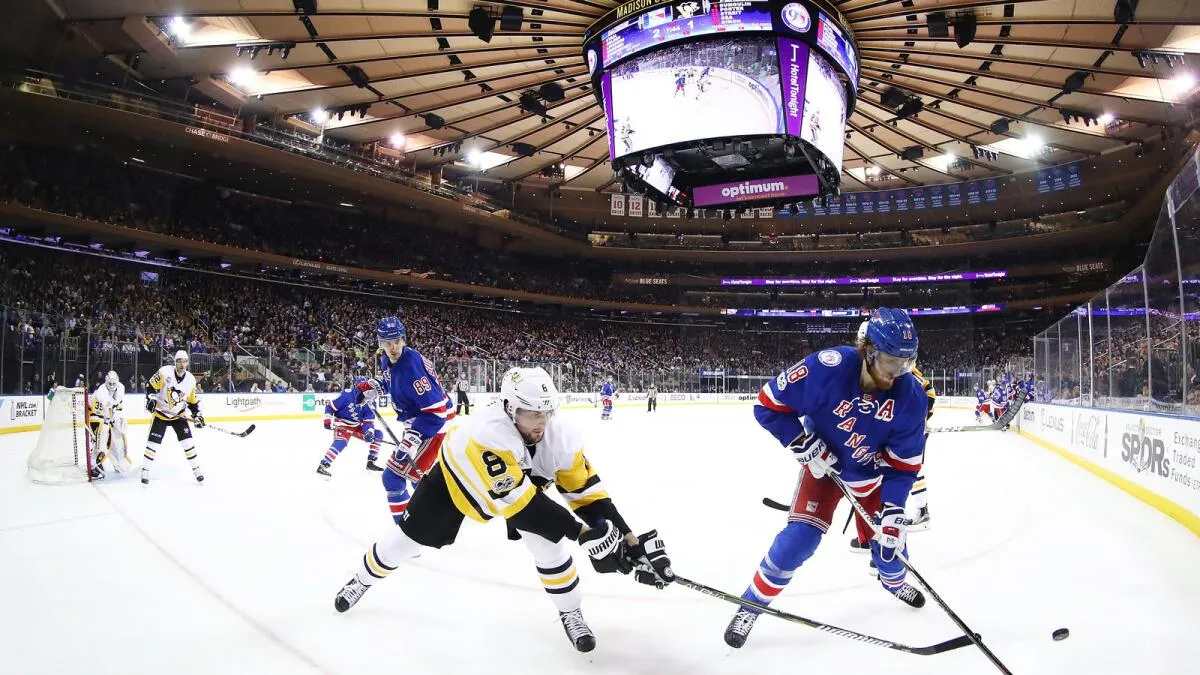
The historic scale of the 2025 Madison Square Garden crisis
The Rangers’ home ice struggles at Madison Square Garden in 2025 have reached levels that defy modern hockey logic. Their 2-8-1 record through late November represents the worst home start in franchise history, a stunning collapse for an organization with nearly a century of tradition. The offensive production—or lack thereof—tells the most damning story: six goals in 421 minutes of home play, including five shutout losses that have left fans staring in disbelief at the familiar blue jerseys.
The statistical split between home and road performance has created a gap rarely seen in professional sports. While averaging 3.43 goals per game on the road, the Rangers manage just 1.7 goals per game at Madison Square Garden. The shot differentials paint an equally grim picture, as evidenced by the November 29 loss to Tampa Bay where New York managed only 11 shots total while surrendering 35. The first period saw the Lightning attempt 17 of the first 18 shots, with Rangers goaltender Igor Shesterkin essentially playing a shooting gallery defense for 60 minutes.
“We didn’t have our best,” coach Mike Sullivan admitted after the Tampa Bay loss. “I’m stating the obvious.” His understatement reflects the broader organizational bewilderment. The problem extends beyond mere slumping—it’s systemic. When a team that scores freely on the road becomes the first in nearly a century to suffer this many home shutouts, conventional explanations fail. As analyzed in this deep dive into their home record crisis, the Rangers’ struggles represent hockey’s most puzzling anomaly, where tactical preparation seems to evaporate the moment they step onto their own ice.
On-ice symptoms of the Rangers’ home ice struggles
The on-ice product reveals a team playing with visible hesitation and without the assertive style that fuels their road success. In their 4-1 loss to Tampa Bay, captain J.T. Miller didn’t mince words: “There was no urgency. We dipped our toe into the game. We got outplayed basically the whole time. It’s unacceptable.” Miller’s goal stood as New York’s only offense, a tap-in from an Adam Fox cross-ice feed that momentarily gave false hope before the Lightning restored their two-goal lead.
The pattern repeats across nearly every home defeat. The Rangers fall behind early, struggle to generate sustained offensive zone time, and appear reactive rather than proactive. Against the Islanders on November 8, the team generated quality chances—Mika Zibanejad hit a crossbar, Artemi Panarin nearly scored on an early rebound—but each near-miss seemed to tighten the grip on their sticks rather than fuel determination. “I feel like we’re pressing, we’re getting away from our game, we’re gripping onto our sticks a little bit too much,” Zibanejad observed after the shutout loss to their rivals.
Assistant captain Vincent Trocheck emphasized the mental component: “This game is majority mental. It’s up to you to fight off the negativity.” Yet fighting negativity becomes harder when fans serenade the team with boos during yet another dispiriting loss. The November 29 defeat to Tampa featured sarcastic cheers when the Rangers finally recorded their first shot on goal nearly 10 minutes into the contest. Such moments create a feedback loop—players press harder, make mistakes, fans grow more frustrated, and the pressure intensifies with each home game.
Psychological factors behind the Rangers’ MSG mystery
The psychological weight of the Rangers’ home ice struggles at Madison Square Garden in 2025 has become the elephant in the locker room. Players and coaches alike acknowledge the mental burden while struggling to articulate why their home barn feels so foreign. “I wish I could put my finger on the struggles we’ve had at home to this point,” Sullivan admitted—a sentiment echoed throughout the organization. The mystery deepens because the same group that plays free and fast on the road becomes tentative and error-prone at home.
Leadership has taken ownership of the crisis, with Miller accepting personal responsibility. “It’s disappointing and it starts with me. I gotta be better and lead better. We can’t have this anymore,” he stated after the Tampa loss. His trade from Vancouver last January brought him back to New York with expectations of stabilizing a franchise that missed the playoffs last season. While Miller leads the team with seven goals, his frustration mirrors that of his teammates who can’t explain why their game abandons them in Manhattan.
The fan dynamic adds another layer of complexity. Madison Square Garden should provide energy, yet it’s become a source of pressure. “I understand the reaction from our fans,” Zibanejad said. “We’re more frustrated than they are.” The boos that rained down during the Lightning loss represent a fanbase spoiled by recent success and confounded by the current collapse. This analysis of their poor home record explores how the Garden’s atmosphere has shifted from celebratory to toxic, creating an environment where players might subconsciously fear mistakes rather than create freely.
Looking ahead: Can the Rangers solve their Madison Square Garden puzzle?
The schedule offers both opportunity and danger for resolving the Rangers’ home ice struggles. With seven of their next 10 games at Madison Square Garden, they have abundant chances to reverse the trend—or risk burying their season. The compressed home stretch begins with Dallas on December 2, followed by the league-leading Colorado Avalanche and defending champion Vegas Golden Knights. These aren’t opponents that forgive mistakes, making the urgency for solutions even greater.
“We say all the right things about keep trusting the process, keep trusting the process, but the longer you go without getting the result it becomes a very hard thing,” Miller noted. The mental battle will define whether this team can turn its home season around. Trocheck suggests the path forward requires singular focus: “It’s just about focusing on one game at a time.” That cliché becomes critical advice when each home loss adds another brick to the psychological wall they must climb.
The potential injury to Adam Fox, who left the Tampa game after a hard hit, compounds concerns. Fox leads the team with 26 points and quarterbacks the power play. If he misses time, the already-struggling offense loses its primary catalyst. Yet the Rangers’ road success proves the talent exists. The question is whether they can replicate that confidence and execution in front of their home crowd before the hole becomes insurmountable in the playoff race. As detailed in this analysis of hockey’s biggest mystery, the Rangers must solve their identity crisis soon or risk wasting one of the league’s most talented rosters.
The New York Rangers’ home ice struggles at Madison Square Garden in 2025 represent more than a slump—they’re a historical anomaly that challenges everything we know about home-ice advantage. With each passing home game, the pressure mounts and the solutions become more elusive. Yet the team’s road dominance provides proof that championship-level hockey still lives within this roster. Whether they can unlock it at the Garden will determine if this season becomes a footnote of frustration or a legendary tale of overcoming adversity. For now, the mystery remains unsolved, but the clock ticks loudly toward December’s critical stretch that will define their season.
Frequently Asked Questions

Par Mike Jonderson
Mike Jonderson is a passionate hockey analyst and expert in advanced NHL statistics. A former college player and mathematics graduate, he combines his understanding of the game with technical expertise to develop innovative predictive models and contribute to the evolution of modern hockey analytics.