






Buffalo erased a two-goal deficit in the third period to defeat the Boston Bruins 4-3 in game 1 of their first-round series. Mattias Samuelsson scored the go-ahead goal with 3:24 remaining, capping a frantic comeback that ignited KeyBank Center. Tage Thompson tallied two goals just 3:42 apart to tie the game, and Alex Tuch added an empty-netter with 1:12 left to seal it. Ukko-Pekka Luukkonen made 17 saves in net for the Sabres.
This marked Buffalo’s first playoff game in 15 years, ending an NHL-record 14-season drought after winning the Atlantic Division this season. The victory was their first at home in the postseason since a 1-0 win over Philadelphia in 2011. Fans erupted as the Sabres nearly blew the roof off the arena.
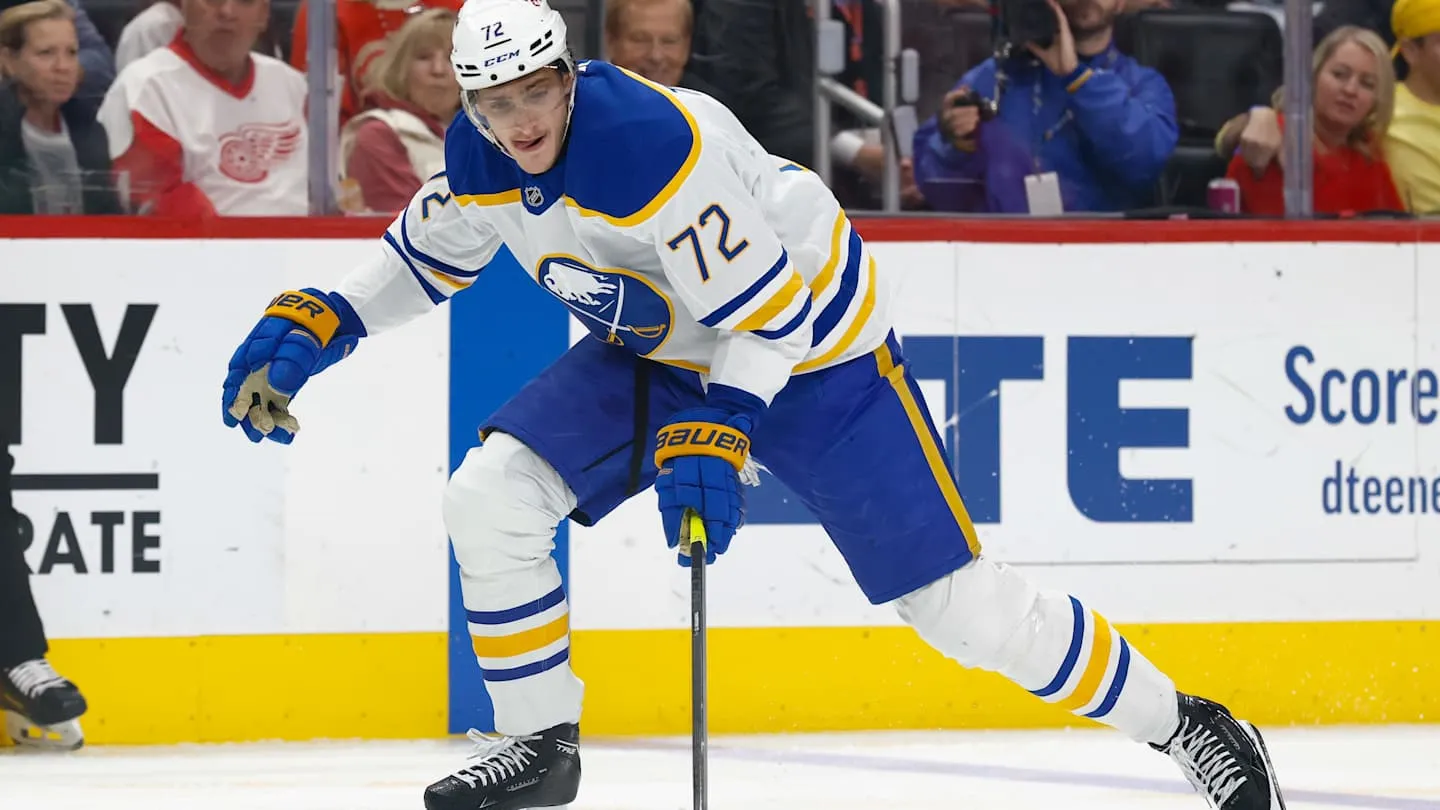
Third-period explosion
The Bruins carried a 2-0 lead into the third after goals from Morgan Geekie and Elias Lindholm, the latter coming 1:08 in. Boston had been 33-2-4 when leading after two periods in the regular season.
Thompson sparked the rally with a wraparound backhander at 7:58, cutting the deficit to one. He tied it 4:16 later by pouncing on a loose puck left of the net and firing low inside the far post. The crowd’s energy surged with each goal.
Just 52 seconds after Thompson’s second, Samuelsson snapped a high shot from the left circle off a Jack Quinn feed deep in the zone. Tuch then iced it into the empty net as Boston pressed forward.
Jeremy Swayman stood tall with 34 saves, but the Sabres’ four third-period goals overwhelmed the Bruins’ defense. David Pastrnak answered with 7 seconds left, his third point of the night with two assists.
This comeback echoed Buffalo’s resilience, overcoming a multi-goal deficit late in a high-stakes game.
Standout performers
Tage Thompson led with his two goals, building on his regular-season-leading 40 tallies for Buffalo. His quick strikes shifted momentum decisively.
Mattias Samuelsson’s timely marker proved pivotal, showcasing defensive poise turning into offense. Alex Tuch’s empty-net goal calmed nerves in the final minutes.
Ukko-Pekka Luukkonen faced limited action but stopped all 17 shots cleanly. For Boston, Pastrnak’s late push highlighted his playoff prowess, boosting his career total to 909 points and ninth on the Bruins’ all-time list.
Swayman’s workload reflected Buffalo’s shot advantage, yet he couldn’t stem the tide.
- Sabres goals: Thompson (2), Samuelsson (1), Tuch (1)
- Bruins goals: Geekie (1), Lindholm (1), Pastrnak (1)
- Shots: Buffalo 38, Boston 20
Historical context
Buffalo’s win was just the second time they overcame a two-goal third-period playoff deficit, the other against Boston in 1993’s game 4 “May Day!” overtime thriller. Brad May’s winner clinched that series for the Sabres.
The franchises have met in the playoffs eight times, with Boston holding a 6-2 series edge historically. Recent regular-season clashes were tight, including overtime losses for Buffalo.
This series revives a Northeast Division rivalry, with the seventh-seeded Bruins returning after a one-year absence. Check NHL.com for full highlights.
After 5,473 days without a playoff game, the Sabres delivered. Their division title fueled this breakthrough.
Path forward
Game 2 shifts to Buffalo on Tuesday night, where the Sabres host with momentum. Boston must regroup after unraveling late.
The Bruins’ experience contrasts Buffalo’s hunger, setting up an intense series. Pastrnak’s output signals danger, but Luukkonen’s poise offers hope.
Buffalo’s fans, starved for playoffs, now dream bigger. Overcoming deficits like this bodes well for deeper runs.
This victory validates the rebuild, snapping the drought and honoring long-suffering supporters. As the series unfolds, the Sabres aim to build on game 1’s fire. For more on the matchup history, see playoff recaps at NHL.com.
Frequently Asked Questions

Par Mike Jonderson
Mike Jonderson is a passionate hockey analyst and expert in advanced NHL statistics. A former college player and mathematics graduate, he combines his understanding of the game with technical expertise to develop innovative predictive models and contribute to the evolution of modern hockey analytics.