









The top five NHL goaltenders of the 1970s: legends who defined a decade
The 1970s represented a golden age of NHL goaltending, where legends were forged between the pipes and the modern butterfly style began taking shape. This transformative decade saw the Montreal Canadiens dynasty dominate, the Philadelphia Flyers’ “Broad Street Bullies” revolutionize team defense, and the emergence of international talent that would forever change how we evaluate greatness. Unlike today’s game with its specialized coaching and advanced analytics, 1970s goaltenders relied on instinct, positioning, and an almost superhuman mental fortitude.
Selecting the top five NHL goaltenders of the 1970s requires balancing statistical excellence, individual accolades, and championship pedigree against the era’s unique challenges. The decade was complicated by the World Hockey Association (WHA) siphoning talent, limited international exposure for Soviet stars, and dramatically different playing conditions. The following ranking considers goals-against average, wins, shutouts, Vezina Trophies, Conn Smythe performances, and the ever-important eye test that separated good from legendary.
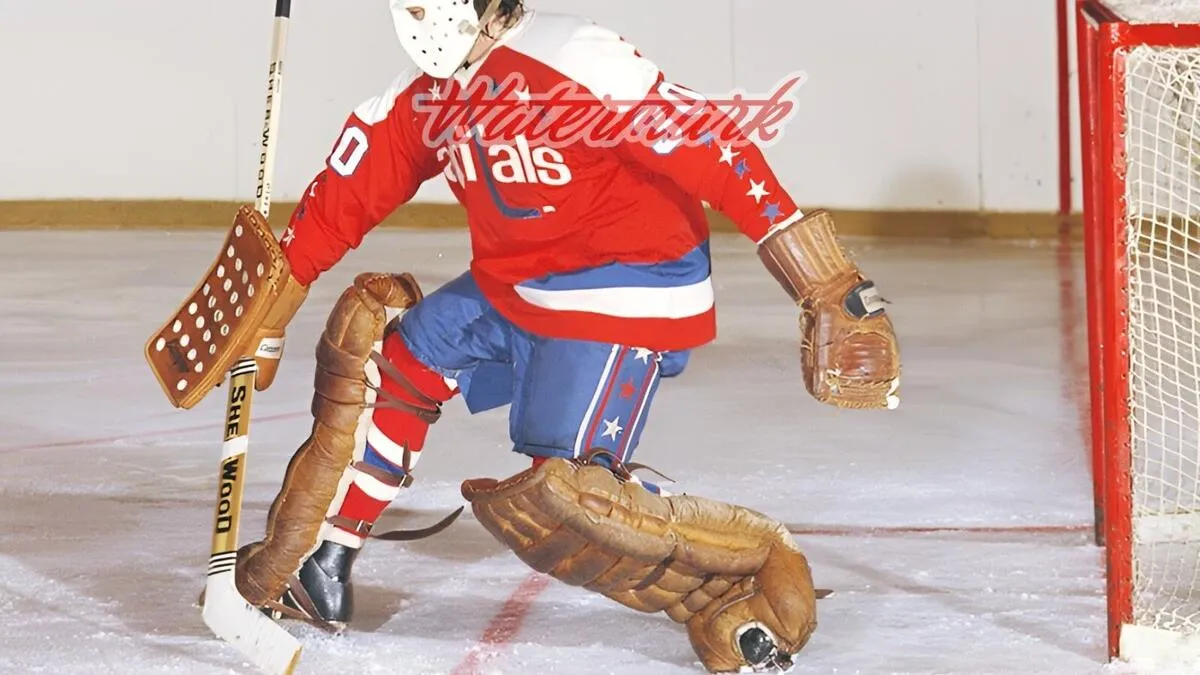
Evaluating 1970s goaltenders: beyond the basics
Traditional statistics only tell part of the story when assessing 1970s goaltending excellence. While modern analysts obsess over save percentage and goals saved above expected, historians of this era must account for contextual factors that skewed numbers dramatically. The decade featured watered-down talent pools due to WHA expansion, smaller goaltending equipment, and a culture where playing through injuries was expected rather than exceptional.
The most reliable metrics for this period include:
- Goals-against average (GAA): The primary statistic cited during the era, with elite performers consistently posting sub-2.50 numbers
- Shutouts: A testament to a goalie”s ability to completely dominate games
- Wins: Especially crucial given the shorter schedules and parity between leagues
- Championship pedigree: Six Stanley Cups were awarded during the decade, with only truly elite goaltenders lifting multiple
- Award recognition: Vezina Trophies (then awarded to the goaltender(s) with the lowest GAA) and Conn Smythe Trophies carried immense weight
Context matters enormously. A goalie playing behind the Canadiens” defense-first system faced different challenges than one backstopping an expansion franchise like the Vancouver Canucks. The WHA’s emergence in 1972 also complicates evaluations—Gerry Cheevers lost three prime seasons to Cleveland, while Bernie Parent briefly defected to Philadelphia”s WHA club before returning to NHL dominance.
The contenders who just missed the cut
Before revealing the top five, several outstanding goaltenders deserve recognition for their contributions to 1970s hockey. Rogie Vachon posted impressive numbers across multiple teams, finishing with a 3.03 GAA and 224 wins, but lacked the championship hardware to crack the elite tier. Glenn Resch emerged late in the decade with the New York Islanders, showcasing a 2.50 GAA that hinted at his future stardom.
Eddie Giacomin, who shared the Vezina Trophy with Rangers teammate Gilles Villemure in 1971, exemplified the talented netminders whose legacies were somewhat overshadowed by the decade”s giants. His 300 games played and 3.02 GAA place him firmly in the era”s upper echelon, though his Rangers teams consistently fell short of championship glory—a fate shared by many great players in that franchise”s history. For a deeper dive into Rangers goaltending legends, including Giacomin”s impact at Madison Square Garden, see this comprehensive analysis.
The statistical leader in games played was Tony Esposito with 635 appearances, followed by Rogie Vachon”s 546—numbers that highlight the incredible durability required of starting goaltenders in an era when backups rarely saw meaningful action.
#5 Gerry Cheevers: the ultimate clutch performer
Gerry Cheevers occupies a unique place in 1970s goaltending lore, as much for what he didn’t accomplish statistically as for what he did on hockey”s biggest stages. After backstopping the Boston Bruins to Stanley Cup victories in 1970 and 1972, Cheevers controversially jumped to the WHA”s Cleveland Crusaders for a seven-year, $1.4 million contract. This decision cost him approximately one-third of his potential decade-long statistics, yet his NHL resume remains remarkably compelling.
Despite ranking just 23rd in games played among 1970s goaltenders, Cheevers finished seventh in wins with 149 victories—an efficiency ratio that underscores his dominance when present. His 2.83 GAA and .895 save percentage appear modest by today”s standards but were elite numbers for the early 1970s, particularly on Bruins teams that prioritized offensive firepower over defensive structure.
What elevates Cheevers beyond pure statistics was his reputation as perhaps the greatest “big-game” goaltender of his generation. As documented in historical accounts, his 32-game unbeaten streak in 1972 remains an NHL record that has withstood decades of challengers. Bruins teammates and opponents alike consistently referenced his uncanny ability to make the critical save at the critical moment, a psychological advantage that cannot be quantified.
Cheevers” iconic stitch-pattern mask, where he had teammates mark each spot an opponent struck him with a puck, became one of hockey”s first pieces of goaltending personality. This combativeness, combined with his unorthodox but effective style, made him a fan favorite and eventual Hockey Hall of Fame inductee in 1985. While others posted superior regular-season numbers, few could match Cheevers” ability to elevate when championships were at stake.
#4 Tony Esposito: the iron man innovator
If Gerry Cheevers represented clutch excellence, Tony Esposito embodied workhorse durability and technical innovation. The Chicago Blackhawks” stalwart appeared in 635 of Chicago”s 800 regular-season games during the decade, logging nearly 37,637 minutes—numbers that dwarfed his contemporaries and have rarely been approached since. To contextualize this workload, even Martin Brodeur”s legendary durability in the 2000s fell short of Esposito”s decade-long dominance.
Esposito”s statistical resume reflects both his heavy usage and exceptional skill. He was the decade”s only goaltender to surpass 300 wins (304), led the NHL with 56 shutouts, and maintained a 2.70 GAA that ranked fourth among goalies with at least 115 games played. His trophy case includes two Vezina Trophies (1972, 1974) and four end-of-season All-Star selections, with first-team honors coming eight years apart—demonstrating remarkable longevity.
What truly separated Esposito was his pioneering of the butterfly style. While Jacques Plante had experimented with dropping to his knees in the 1960s, Esposito systematized the approach, using his flexibility and quick reflexes to close the five-hole while maximizing coverage along the ice. This technique, revolutionary for its time, would become the foundation for modern goaltending instruction.
The one glaring omission from Esposito”s resume is team championship success. While every other goaltender on this list won at least one Stanley Cup during the 1970s, the Blackhawks” postseason shortcomings kept Esposito from hockey”s ultimate prize. Despite this, his entertainment value and technical contributions to the position cement his place among the decade”s elite. As the statistical leader in wins and shutouts, his inclusion is non-negotiable, even without a championship ring.
#3 Vladislav Tretiak: the international phenomenon
Ranking a goaltender who never played a single NHL game requires justification, but Vladislav Tretiak transcends traditional evaluation methods. As the Soviet Union”s starting goaltender throughout the 1970s, Tretiak”s performances against NHL competition in international play and the legendary 1972 Summit Series demonstrated he belonged among hockey”s elite, regardless of league affiliation.
Tretiak”s international statistics are staggering: across 207 games spanning 1968-1984, he posted a 2.21 GAA while capturing three Olympic gold medals and ten World Championship titles. However, it was his specific domination of NHL talent that secured his place on this list. During the 1972 Summit Series, Tretiak”s hybrid stand-up/butterfly style baffled Canadian superstars like Phil Esposito and Paul Henderson, forcing North American hockey to reconsider its perception of Soviet skill.
His quick footwork and ability to read plays before they developed represented a quantum leap in goaltending intelligence. Canadian legend Ken Dryden, who faced Tretiak in multiple international exhibitions, later wrote extensively about the Russian”s revolutionary approach to positioning and puck tracking. While he benefited from the dominant Red Army team in front of him—a luxury comparable to Dryden”s Montreal Canadiens—his individual brilliance was undeniable.
Historical footage and contemporary accounts describe a goaltender who moved with a fluidity foreign to North American netminders of the era. His influence extended beyond his own play; numerous young NHL goaltenders began incorporating elements of Tretiak”s style into their games, accelerating the position”s evolution. Though traditionalists may argue against including a non-NHL player, Tretiak”s impact on how goaltending was taught and evaluated in the 1970s cannot be overstated.
#2 Bernie Parent: the Flyers” foundation
Bernie Parent”s 1970s journey reads like a Hollywood screenplay—complete with a dramatic departure to the WHA, triumphant return, back-to-back championships, and a career-altering injury that robbed hockey of his prime. Yet even with these interruptions, Parent”s peak performance remains arguably the most impressive two-season stretch in goaltending history.
After enduring the chaotic 1972-73 season with the WHA”s Philadelphia Blazers, where he faced over 40 shots per game, Parent”s return to the NHL with the Flyers triggered dominance unprecedented in professional hockey. Between 1973-1975, he played 141 games, compiling a 91-27-22 record with a microscopic 1.96 GAA and 24 shutouts. His playoff numbers were even more absurd: 22-10 with a 1.96 GAA and six shutouts in leading Philadelphia to consecutive Stanley Cup victories.
Parent”s impact extended beyond statistics. As the cornerstone of the “Broad Street Bullies,” he provided the stability that allowed the Flyers” aggressive, penalty-prone style to thrive. Head coach Fred Shero”s defensive system relied on Parent”s ability to erase mistakes and control rebounds, effectively neutralizing opponents” counterattacking opportunities. His back-to-back Conn Smythe Trophies in 1974 and 1975 remain a testament to his postseason indispensability.
The tragedy of Parent”s career is the neck injury that limited him to just eleven games in 1975-76. Though he played three additional seasons after recovery, he never regained his elite form. Still, his decade-long performance—second in GAA (2.34), third in shutouts (45), and fourth in wins (210) despite playing only 393 games—places him firmly in the conversation for the decade”s best. Few goaltenders in hockey history have reached Parent”s heights, even if his prime was cruelly brief.
#1 Ken Dryden: the cerebral champion
Selecting the top NHL goaltender of the 1970s requires no debate. Ken Dryden”s career, though abbreviated to just seven full NHL seasons and 397 games, represents the most efficient accumulation of championships and individual honors in hockey history. The Cornell graduate didn”t simply play goal; he revolutionized how the position was approached intellectually and technically.
Dryden”s statistical dominance is staggering. His 2.24 GAA led all 1970s goaltenders, while his 258 wins and 46 shutouts ranked second only to Tony Esposito”s massive workload. Crucially, Dryden achieved these numbers while backstopping the Montreal Canadiens to six Stanley Cup championships during the decade—including his 1971 Conn Smythe Trophy performance as a rookie, preceding his 1972 Calder Trophy win.
What separated Dryden was his cerebral approach to goaltending. At 6-foot-4, he used his size to eliminate shooting angles while maintaining positioning that made him appear motionless despite constant lateral movement. Former teammate Guy Lafleur noted Dryden”s unique ability to “make the difficult saves look routine and the routine saves look effortless,” a skill that demoralized opposing shooters.
His famous 1973-74 contract dispute, which saw him sit out an entire season to pursue his law degree at McGill, only enhanced his legend. Returning in 1974-75 without missing a beat, Dryden led Montreal to additional championships in 1976, 1977, 1978, and 1979. His five Vezina Trophies during the decade reflect both individual brilliance and team defensive excellence, but his playoff performances against the era”s best teams cemented his superiority.
When evaluating the top five NHL goaltenders of the 1970s, Dryden stands alone—a goaltender whose combination of size, intelligence, technical refinement, and championship pedigree created a standard that remains the benchmark for excellence decades later.
The legacy of 1970s goaltending excellence
The five goaltenders who defined 1970s hockey—Ken Dryden, Bernie Parent, Vladislav Tretiak, Tony Esposito, and Gerry Cheevers—left an indelible mark on how the position is played and evaluated. Their collective innovations, from Dryden”s positional mastery and Tretiak”s hybrid style to Esposito”s butterfly technique, created the foundation for modern goaltending instruction. Each brought unique strengths: Dryden”s intellectual approach, Parent”s clutch performances, Tretiak”s international influence, Esposito”s durability, and Cheevers” big-game reputation.
What makes this era particularly fascinating is the diversity of paths to greatness. Unlike today”s pipeline of elite prospects funneled through identical development systems, these five netmenders arrived at excellence through varied routes—college hockey, junior systems, international competition, and even law school. Their stories reflect a period of hockey history where individual style was celebrated rather than standardized.
For contemporary analysis of goaltending evolution and more historical perspectives, the comprehensive statistics from QuantHockey provide essential context for how these legends compared statistically. Meanwhile, detailed narratives of their careers can be found in the historical archives at The Hockey Writers, which offer deeper insights into their impact on team success.
Ultimately, these five goaltenders didn”t just dominate their decade—they redefined the position”s possibilities and established benchmarks for greatness that continue influencing how we evaluate championship-caliber netminding in the modern NHL.
Frequently Asked Questions

Par Mike Jonderson
Mike Jonderson is a passionate hockey analyst and expert in advanced NHL statistics. A former college player and mathematics graduate, he combines his understanding of the game with technical expertise to develop innovative predictive models and contribute to the evolution of modern hockey analytics.