














Toronto Maple Leafs injuries and defensive depth analysis 2025: how the blue line is holding up halfway through the season
Halfway through the 2024-25 campaign the Toronto Maple Leafs find themselves in an eerily familiar place: near the top of the Atlantic standings yet staring at a medical report that keeps growing faster than the wins column. A flurry of lower-body injuries to key defenders has forced Brad Treliving’s front office to test the organisation’s much-debated depth, and the early returns suggest the pipeline is deeper than most outsiders expected—though not without red flags. Below is a data-driven look at who is hurt, who has stepped in, and what the next three months could look like if the Leafs want to avoid another spring of “what might have been.”
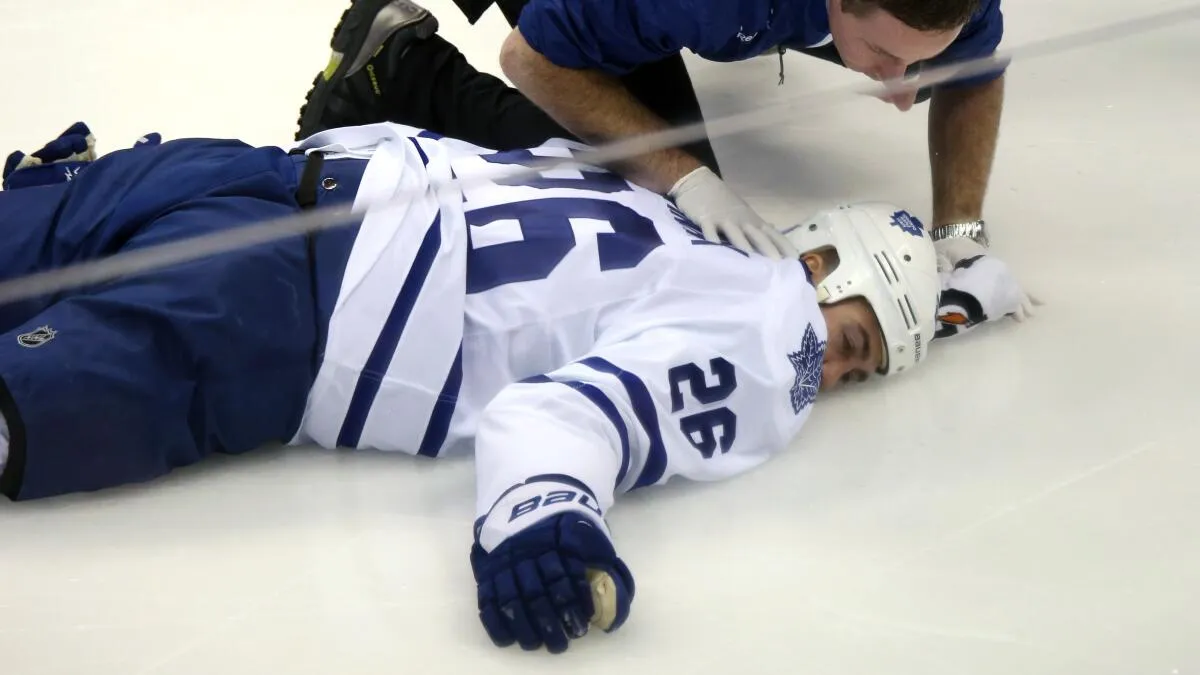
Toronto Maple Leafs injuries and defensive depth analysis 2025: the walking wounded
Jake McCabe’s Grade-2 MCL sprain on 3 November against Florida was the tipping point; it left Toronto without two of its top-four minute eaters (Morgan Rielly’s nagging oblique strain already had him on injured reserve). Add Conor Timmins’ recurring ankle issue and Mark Giordano’s 41-year-old body finally asking for maintenance days, and suddenly the club was icing only three defenders who began the year on the NHL roster. The cumulative man-games lost on the blue line reached 54 on 15 November, fifth highest in the league, yet the Leafs still rank eighth in goals against per game (2.78) and third in expected-goals percentage (54.1). That paradox is the starting point for any serious Toronto Maple Leafs injuries and defensive depth analysis 2025.
Sheldon Keefe has leaned on a simple survival tactic: limit risk. Toronto’s defensive-zone possession time has dropped from 41.7% last season to 36.2% so far in 2024-25, the lowest mark since the Babcock era. The coaching staff is funnelling everything toward the boards and trusting goalie tandem Ilya Samsonov and Joseph Woll to handle the point shots. It is not pretty, but it bought time until reinforcements arrived.
Next man up: how the call-ups are faring
William Lagesson, claimed off waivers from Edmonton in October, has become the feel-good story. The 29-year-old Swede played 14 straight games after McCabe went down, averaging 19:14 TOI and posting a 52.1% shot-attempt share, the best among any Leafs defender with 100-plus minutes during that span. His partner, 24-year-old rookie Mikko Kokkonen, has looked less overwhelmed with each outing; Kokkonen’s breakout pass that sprung Matthew Knies for the overtime winner in Seattle on 9 November already lives in team-lore highlight reels.
Toronto’s AHL affiliate, the Toronto Marlies, have produced two other surprises:
- Topi Niemelä, the 2021 third-rounder, was recalled 7 November and has quarterbacked the second power-play unit to a 25% conversion rate in eight games.
- 6’8” rookie Ben Meech has been stapled to the penalty-kill rotation, helping the Leafs kill 24 of their last 27 shorthanded situations.
Internally, the organisation believes the development program installed under new Marlies coach John Gruden is paying off. “We’re not asking them to be Cale Makar,” assistant general manager Curtis Sanford told reporters last week. “We’re asking them to move the puck north in five seconds or less, and so far they’re executing.”
Trade winds: cap space and potential targets
Because LTIR relief created by Rielly and McCabe temporarily pushes Toronto’s effective ceiling above $92 million, Treliving has roughly $4.8 million in deadline-day cap space, according to PuckPedia. That number matters in any Toronto Maple Leafs injuries and defensive depth analysis 2025 because it dictates whether the front office can shop in the “top-four rental” aisle or settle for insurance pieces. Names circulating in league circles include:
- Shayne Gostisbehere (DET) – UFA, $4.125 M cap hit, 45 points in 60 games last year, power-play specialist.
- Ian Cole (VAN) – UFA, $3 M cap hit, left shot, Stanley Cup pedigree, willing to block a bus.
- Dante Fabbro (NSH) – RFA, $2.8 M cap hit, younger pedigree, analytics community favourite.
The catch is term. Toronto already has $72 million committed to 15 players for 2025-26, and new deals for Knies and Timothy Liljegren loom. One rental is palatable; two would require money going the other way. A more creative route could see the Leafs weaponise their 2025 first-round pick—projected late 20s—to acquire a cost-controlled second-pair defender such as Calgary’s 23-year-old Jeremie Poirier, though Calgary’s front office is reluctant to deal within the division.
What the numbers say about sustainability
Any Toronto Maple Leafs injuries and defensive depth analysis 2025 must confront one uncomfortable truth: the goaltending is masking warts. Samsonov’s .921 five-on-five save percentage is 10 points above his career average, while Woll’s high-danger SV% of .857 ranks third among goalies with 200-plus minutes. If those numbers regress toward league average (.913 and .800 respectively) during a compressed March schedule, Toronto could leak goals unless the blue line is healthier.
Micah Blake McCurdy’s model at HockeyViz projects a 38% probability the Leafs allow 3.2 goals per game or worse the rest of the way if Rielly and McCee remain out into January. That would drop their playoff probability from 92% to 74%, essentially turning the Atlantic race into a coin flip. On the other hand, getting even one of the veterans back by 1 February pushes the expected goals-against back under 2.9 and restores a 90% postseason chance. In short, health, not talent, is the swing factor.
Forward-looking notes: how the next 60 days will define the season
The Leafs have 23 games before the 7 March trade deadline, including a four-game western swing and back-to-back against Boston and Tampa. Keefe has already hinted at a “20-game evaluation window” for the youngsters; if Lagesson and Kokkonen survive that stretch with positive goal shares, management could pivot from rental hunt to long-term insurance, preserving draft capital for a forward upgrade instead. Conversely, another wave of injuries—knock on wood—would green-light an aggressive move, cap gymnastics be damned.
One silver lining: the organisation’s emphasis on drafting mobile defenders the past three years means help is coming. In addition to Niemelä, 2023 second-rounder Hudson Malinoski is playing 22 minutes a night in the NCAA and could sign an ELC this spring, giving Toronto an extra recall option under the 23-man limit. That flexibility was unthinkable during the Lou Lamoriello era, when the prospect pool was barren, and it underscores why many inside the dressing room remain cautiously optimistic despite the daily ice-bath head-count.
The next checkpoint is 15 December, when McCabe is eligible for re-evaluation. If the MRI shows full ligament healing, he could return before Christmas, allowing Keefe to pair him with Liljegren and roll three credible pairings for the first time since opening night. Until then, the Toronto Maple Leafs injuries and defensive depth analysis 2025 remains a living document—one that will decide whether this roster is remembered as resilient or simply repeating history.

Par Mike Jonderson
Mike Jonderson is a passionate hockey analyst and expert in advanced NHL statistics. A former college player and mathematics graduate, he combines his understanding of the game with technical expertise to develop innovative predictive models and contribute to the evolution of modern hockey analytics.