NHL commissioner Gary Bettman addressed the hotly debated question of Russia’s participation in the upcoming 2028 World Cup of Hockey during the league’s GM meetings in Florida. “We’re going to see how things develop. Time will tell,” Bettman stated, emphasizing there’s no immediate pressure to decide.[1][2] This comes amid ongoing geopolitical tensions that have sidelined Russian teams from international competition since 2022.
The tournament, a best-on-best showcase co-hosted by the NHL and NHLPA, is set for February 2028 across Calgary, Edmonton, and Prague. With eight teams competing, the absence of Russia could reshape the field, sparking discussions on what constitutes the ultimate hockey showdown.[3]
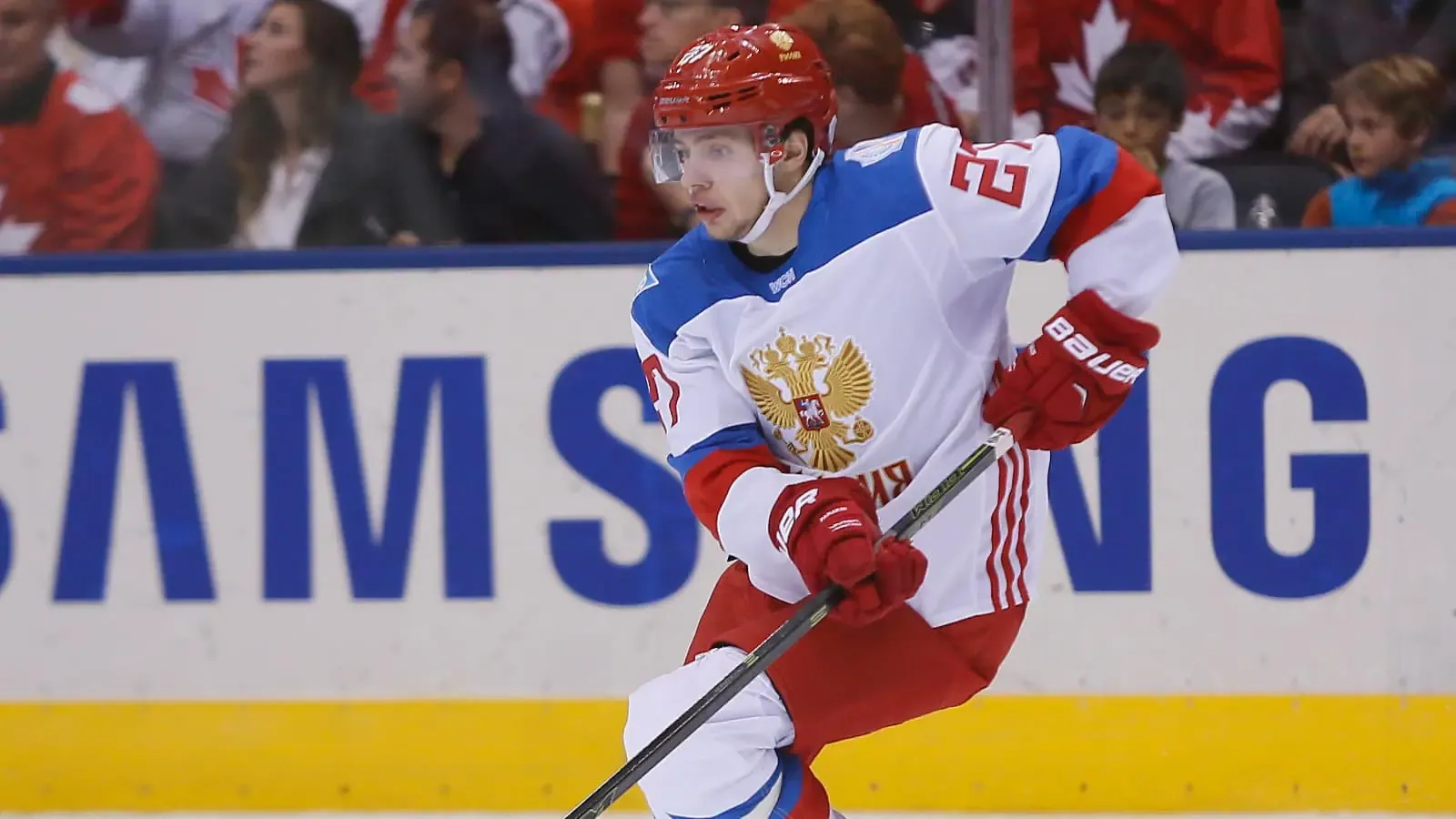
The IIHF ban and its impact
Russia’s exclusion stems from the International Ice Hockey Federation’s (IIHF) ban imposed after the 2022 invasion of Ukraine, citing security risks across all age groups. This has prevented Russian national teams from competing in IIHF events, including world championships.
The NHL, while not bound by IIHF rules for its own events, has signaled it will align with broader international athletic standards. Bettman reiterated, “I don’t see any need for us to weigh in separately,” echoing past comments on following the global community’s lead.[4]
Recent IIHF developments offer a glimmer of hope. President Luc Tardif noted potential reintegration starting with under-18 competitions in the 2027-28 season, calling it “a first step.” This follows IOC guidance allowing youth athletes from Russia and Belarus to compete under national flags.[5]
However, senior-level bans persist, as seen in the recent Milan Olympics where neither Russia nor Belarus fielded teams. The IIHF continues to prioritize safety, with no firm timeline for full return.
The NHL’s deference to the IIHF means Russia’s fate for 2028 hinges on these bodies. Earlier in February, Bettman indicated no current plans for reintegration, but the March update suggests patience.[2]
Russia’s star power in the NHL
Russian players remain among the league’s elite, bolstering arguments for their inclusion in a true best-on-best event. As of recent games, three of the top 20 NHL scorers hail from Russia: Nikita Kucherov of the Tampa Bay Lightning, Kirill Kaprizov of the Minnesota Wild, and Artemi Panarin of the Los Angeles Kings.
Goaltending boasts arguably the world’s best trio: Andrei Vasilevskiy (Lightning), Ilya Sorokin (New York Islanders), and Igor Shesterkin (New York Rangers). These stars have driven their teams deep into playoffs and shattered records.
- Nikita Kucherov: Lightning sniper and perennial scoring leader.
- Kirill Kaprizov: Wild’s dynamic winger, known for highlight-reel goals.
- Artemi Panarin: Kings’ playmaker with elite vision.[1]
Their absence would diminish the tournament’s star appeal, much like recent Olympics. For context on Russian stars’ frustrations, see our piece on Russian NHL players voice disappointment over 2026 Olympics absence.
NHLPA executive director Marty Walsh voiced support last year: “They’re incredible hockey players. The issues are political… I’m hoping that as we get closer to the World Cup, we will start seeing Russian athletes back in the competition.”
Lessons from past international events
The scrapped 2024 World Cup of Hockey exemplifies the challenges. Security concerns and opposition from nations like Finland prompted its replacement with the successful 4 Nations Face-Off in February 2025, featuring USA vs. Canada thrillers.
That event delivered massive returns, validating the NHL’s pivot. Yet, it fueled calls for Russia’s return to elevate competition.
The World Cup’s history—1996, 2004, 2016 (Canada’s win)—highlights its prestige. NHL deputy commissioner Bill Daly predicts even fiercer play in 2028: “We’re going to be in a situation where the hockey is really good right away.”
Prague’s inclusion nods to Europe, but Russia’s ban complicates logistics. Related discussions on potential Russian rosters appear in our analysis of what a Russian Olympic hockey team would look like in 2026.
Tournament format and expectations
Eight teams will divide into two pools of four, with the top three from each advancing. This setup promises non-stop intensity from the outset.
Hosts Calgary and Edmonton will handle North American games, Prague the European slate. Bettman praised the venues: “We think all three cities are going to do great things for this event.”
The NHL envisions alternating World Cups with Olympics every two years, expanding its global footprint. Success here could pave the way for more.
Fan excitement builds post-4 Nations and Olympics. For full details, check the 2028 World Cup of Hockey page on Wikipedia.[3]
Looking ahead
As geopolitical winds shift, Russia’s inclusion remains fluid—no rush, per Bettman. The IIHF’s youth steps could signal broader thaw, benefiting NHL stars longing for national glory.
Ultimately, a decision will balance elite hockey with international norms. Fans await clarity, knowing a full-strength Russia elevates any tournament—what it means for 2028’s legacy hangs in the balance. For the latest, follow ESPN’s NHL coverage.[1]
Frequently Asked Questions

Par Mike Jonderson
Mike Jonderson is a passionate hockey analyst and expert in advanced NHL statistics. A former college player and mathematics graduate, he combines his understanding of the game with technical expertise to develop innovative predictive models and contribute to the evolution of modern hockey analytics.