







The Washington Capitals entered the 2025-26 season with expectations of maintaining their competitive edge in the Metropolitan Division, but a troubling trend has emerged early in the campaign. The team’s power play, once a reliable weapon in their offensive arsenal, has become a glaring weakness that threatens to derail their momentum. With a conversion rate hovering around 14.9 percent through their first 15 games and ranking among the bottom third of the league, the Capitals’ man-advantage struggles have become impossible to ignore.
The numbers tell a sobering story. Through 40 power-play opportunities, Washington has managed to convert on just a handful, leaving fans and coaching staff searching for answers. This deficiency has proven costly, with multiple one-goal games slipping away during a four-game losing streak in early November where the power play failed to score on 13 consecutive opportunities. As the team navigates through what should have been a favorable early-season schedule, their inability to capitalize with the extra man has exposed fundamental issues that extend beyond simple execution.
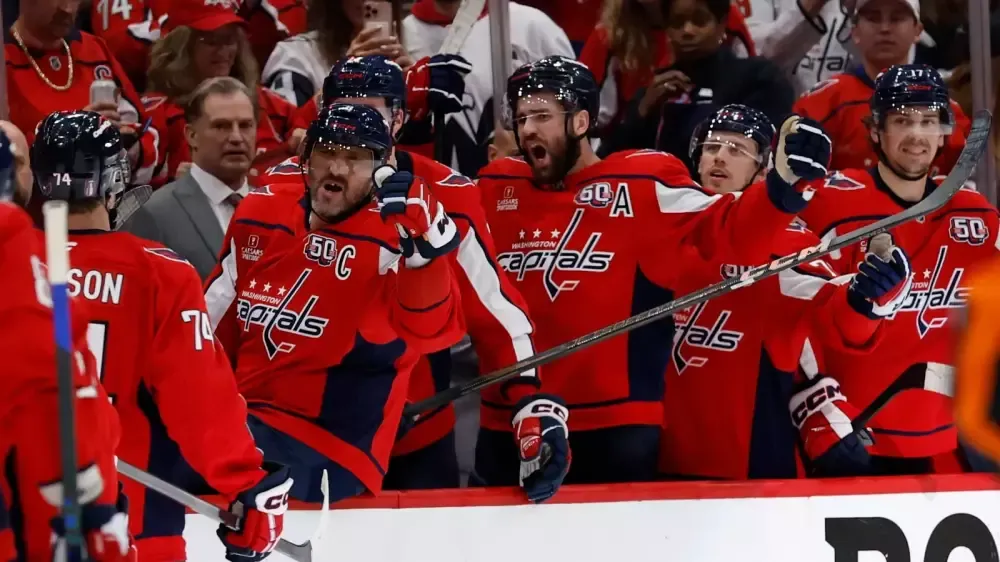
The alarming statistics behind Washington Capitals power play struggles in 2025-26 season
The raw data reveals just how dramatic the decline has become for the Washington Capitals power play in the 2025-26 season. With only six goals scored across 40 power-play chances, their 14.9 percent success rate places them firmly in the bottom half of NHL special teams rankings. To put this in perspective, last season’s Capitals power play operated at a much healthier clip, making the current struggles all the more perplexing.
Perhaps more concerning than the conversion rate is the underlying process that generates those opportunities. According to advanced analytics, Washington ranks 30th in offensive-zone time during power plays, indicating that the problem begins well before they even attempt shots on goal. The Capitals are averaging just 85.4 shot attempts per hour during five-on-four situations, worse than every team except the Chicago Blackhawks. An average NHL power play typically generates around 100 shot attempts per hour, while elite units push closer to 115.
The shot volume deficiency reveals the core issue: Washington isn’t establishing zone possession. They’re being turned away at the blue line repeatedly, unable to execute clean entries that allow them to set up their attack. This transition struggle has cascaded into every other aspect of their power play, from generating quality chances to maintaining offensive pressure.
Dylan Strome addressed the execution problems candidly after one early-season game, stating, “We had some decent looks, but obviously, not enough sustained pressure. After the first game, obviously it’s been an emphasis for us, we’re trying to get better at the power play and just try to create momentum.” His assessment highlights the team’s awareness of the problem, even if solutions have remained elusive.
When examining the underlying metrics, the Capitals rank fifth in high-danger chances generated during five-on-five play, demonstrating that their offensive talent remains intact at even strength. The power play breakdown appears to be more systematic than personnel-based, suggesting issues with structure, strategy, and execution rather than a simple lack of skill.
The Washington Capitals October 2025 scoring struggles extended beyond just the power play, but their man-advantage failures amplified every other offensive challenge the team faced during that difficult stretch.
Zone entry problems plague the Washington Capitals power play struggles 2025-26 season
The most glaring technical deficiency in the Capitals’ power play has been their inability to gain the offensive zone with possession. Zone entries serve as the foundation for any successful power play, and Washington’s struggles in this area have created a domino effect throughout their man-advantage opportunities. When teams can’t establish zone presence, they can’t generate shots, and without shots, goals become nearly impossible.
Video analysis reveals that opposing penalty kills have identified and exploited Washington’s entry patterns. Defenders are aggressively challenging at the blue line, forcing turnovers and creating the need for line changes that further disrupt the Capitals’ rhythm. This has resulted in multiple frustrated attempts per power play, with precious seconds ticking away as the team regroups in the neutral zone.
The problem compounds when considering the personnel. Alex Ovechkin, the team’s primary power-play threat, has seen his mobility decline slightly this season. NHL EDGE tracking data shows his maximum skating speed has dropped nearly two miles per hour compared to last season, making it more difficult for him to create separation or drive entries himself. While this shouldn’t define the entire power play’s success, it does require adjustments that haven’t fully materialized.
Strome also pointed to faceoff performance as a critical factor, noting, “Maybe better at face-offs and then winning those pucks back and winning the draws is probably the first step. Get through that, and we should be okay.” Clean faceoff wins in the offensive zone would bypass the entry problem altogether, but Washington has struggled in the dot during power plays, forcing them to attempt controlled entries more frequently than they’d prefer.
The coaching staff has experimented with different breakout strategies, attempting to find combinations that create more space and better timing through the neutral zone. However, these adjustments take time to implement effectively, and early returns have been inconsistent. The team’s 47.5 percent faceoff win percentage in some games has only exacerbated the challenge, creating more situations where they must navigate through structured penalty kills.
Personnel adjustments fail to spark the Washington Capitals power play struggles 2025-26 season
When Pierre-Luc Dubois went down with a lower-body injury early in the season, head coach Spencer Carbery inserted Sonny Milano into the top power-play unit alongside Ovechkin, John Carlson, Tom Wilson, and Strome. The move aimed to inject fresh legs and a different dynamic into a struggling unit, but results remained elusive. Milano’s skill set theoretically fit the role, offering puck distribution and a willingness to attack high-danger areas, yet the chemistry never fully developed.
The second power-play unit, featuring Jakob Chychrun, Rasmus Sandin, Aliaksei Protas, Connor McMichael, and Ryan Leonard, has shown flashes of competence but lacks the finishing touch needed to capitalize on their opportunities. Ryan Leonard even managed to score shortly after a power play expired against the New York Islanders, demonstrating the unit’s ability to create momentum if not always convert during the actual man advantage.
Personnel shuffling has become a regular occurrence, with power-play coach Kirk Muller constantly tinkering with combinations in search of chemistry. The frequent line changes, however, have prevented any particular group from developing the timing and anticipation required for high-level power-play execution. Players need repetitions together to understand positioning, passing lanes, and shooting tendencies instinctively.
The absence of a true net-front presence has also hampered Washington’s power play effectiveness. While Wilson typically fills this role on the top unit, opposing goalies have maintained clear sight lines more often than desired. Screens, tips, and deflections have been minimal, allowing goaltenders to track shots cleanly and make routine saves on attempts that should carry higher danger.
Furthermore, the lack of legitimate shooting threats from the point on the second unit has allowed penalty kills to collapse aggressively on perimeter passers. When defenders don’t respect the shot from the blue line, they can cheat positioning to intercept cross-ice passes and disrupt the offensive structure. This imbalance has limited the second unit’s effectiveness and reduced the overall depth of Washington’s special teams.
Comparing Washington Capitals power play struggles 2025-26 season to divisional rivals
The Metropolitan Division features several teams navigating their own special teams challenges, but the Capitals’ power play struggles stand out even in this context. The New York Rangers power-play struggles in 2025-26 have followed a similar trajectory, with that team falling from elite status to league average. Both franchises are searching for answers as traditionally strong man advantages have mysteriously evaporated.
The New Jersey Devils, by contrast, have maintained a more functional power play despite their own inconsistencies. Their ability to gain the zone cleanly and generate sustained pressure has kept their conversion rate above league average. The Devils’ success offers a blueprint for what Washington needs to recapture: clean entries, puck movement, and shot volume from dangerous areas.
Carolina Hurricanes have experienced shooting percentage variance on their power play, but they continue generating high volumes of attempts, ensuring that even with cold streaks, goals eventually come. Their systematic approach prioritizes getting pucks through traffic to the net, creating rebounds and second chances. Washington’s shot attempt rate pales in comparison, highlighting the structural differences in how these units operate.
Pittsburgh Penguins have benefited from Sidney Crosby’s continued excellence on faceoffs and playmaking, allowing their power play to function more smoothly despite aging personnel. Their ability to win draws and establish immediate zone possession circumvents many of the entry problems plaguing the Capitals. This efficiency has helped Pittsburgh maintain respectability on the man advantage even as their overall roster has shown signs of decline.
The statistical comparison reveals that Washington’s problems aren’t isolated but are more severe than most competitors. While other teams deal with finishing issues or temporary slumps, the Capitals face foundational challenges in gaining the zone and establishing possession. Until these basics improve, conversion rates will remain stubbornly low regardless of which skilled forwards occupy the ice.
The psychological impact of Washington Capitals power play struggles 2025-26 season
Beyond the tactical and statistical dimensions, the power play failures have begun affecting the team’s overall confidence and momentum. When a team consistently fails to capitalize on man advantages, especially during crucial moments, frustration builds. Players begin pressing, forcing plays that aren’t available, and compound mistakes with poor decisions driven by desperation rather than execution.
The four-game losing streak in early November illustrated this psychological toll perfectly. With the power play failing on 13 consecutive opportunities during that stretch, each subsequent chance carried increased pressure. Players who would normally make routine plays began rushing, and what should have been calculated offensive possessions devolved into chaotic, low-percentage attempts.
Alex Ovechkin’s slow start, with just two goals through 12 games, added another layer of concern. While Ovechkin has historically rebounded from slow starts throughout his career—including an identical goal total after 12 games in 2023-24 before finishing with 31 goals—the timing coincided awkwardly with the power play struggles. The team’s most dangerous weapon appearing diminished amplified questions about whether the entire system had broken down.
Opponents have also taken notice, becoming more aggressive with penalties knowing that Washington’s power play poses limited threat. This emboldens penalty kills to take chances, pressure more aggressively, and potentially create shorthanded opportunities that further demoralize the Capitals. The psychological edge that comes with a lethal power play—one that makes opponents fearful of taking penalties—has completely evaporated.
Team meetings and video sessions have emphasized the need to remain patient and trust the process, but trust erodes with each failed opportunity. Strome’s comment that “I just think we’ve tried a few different things with our breakout this year and we’re just trying to get a little bit more set up in the zone” suggests ongoing experimentation, but constant changes can also breed uncertainty. Players need clarity and repetition, not constant adjustment.
Path forward for resolving Washington Capitals power play struggles 2025-26 season
Despite the concerning trends, the season remains young enough for meaningful correction. Kirk Muller and the coaching staff face the challenge of simplifying the approach while maintaining enough creativity to keep penalty kills honest. The immediate priority must be establishing reliable zone entries, even if it means temporarily accepting less dynamic setups in favor of consistent possession.
One potential solution involves utilizing more dump-and-chase strategies on the power play—an unconventional approach but one that could help Washington bypass the blue line congestion they’ve struggled to navigate. With the extra man, winning battles along the boards and behind the net becomes more favorable, potentially creating better offensive opportunities than failed entry attempts that result in turnovers and line changes.
The coaching staff should also consider deploying their most skilled puck handlers specifically for entry duties, potentially rotating personnel after successful zone gains. This specialized approach could maximize each player’s strengths rather than expecting every forward to be equally adept at all aspects of power play execution. Creativity in deployment could unlock better results than traditional static lineups.
Faceoff work must improve immediately. Dedicating practice time specifically to power-play draws, including studying opponent tendencies and developing set plays off clean wins, would provide the foundation for better zone possessions. Even marginal improvements in faceoff success rate could translate to meaningful increases in offensive-zone time and shot attempts.
The Capitals also need to rediscover their shooting mentality. Ovechkin built his career on releasing pucks quickly from his office, and while his mobility may have decreased slightly, his release remains lethal. Getting him volume shooting opportunities, even from less-than-perfect positions, could ignite both his personal production and the power play’s overall effectiveness. One goal often leads to a flood of confidence and better results.
The Washington Capitals power play struggles in the 2025-26 season represent more than a simple slump—they’ve exposed fundamental issues in zone entries, personnel deployment, and execution that threaten the team’s playoff aspirations. With a conversion rate languishing around 14.9 percent and ranking among the league’s worst in key underlying metrics like shot attempts and offensive-zone time, the path forward demands both strategic adjustments and renewed commitment to basic principles.
However, the season’s early stages offer reasons for optimism beyond the power play numbers. Washington controls play effectively at five-on-five, generating the fifth-most high-danger chances in the league and maintaining possession rates that typically correlate with long-term success. If Kirk Muller and the coaching staff can solve the zone entry puzzle and restore confidence to their power-play units, this team possesses the talent to compete at the highest level. The coming weeks will determine whether these struggles represent a temporary setback or a more persistent challenge that defines their season.

Par Mike Jonderson
Mike Jonderson is a passionate hockey analyst and expert in advanced NHL statistics. A former college player and mathematics graduate, he combines his understanding of the game with technical expertise to develop innovative predictive models and contribute to the evolution of modern hockey analytics.