















The parity problem and the overtime surge
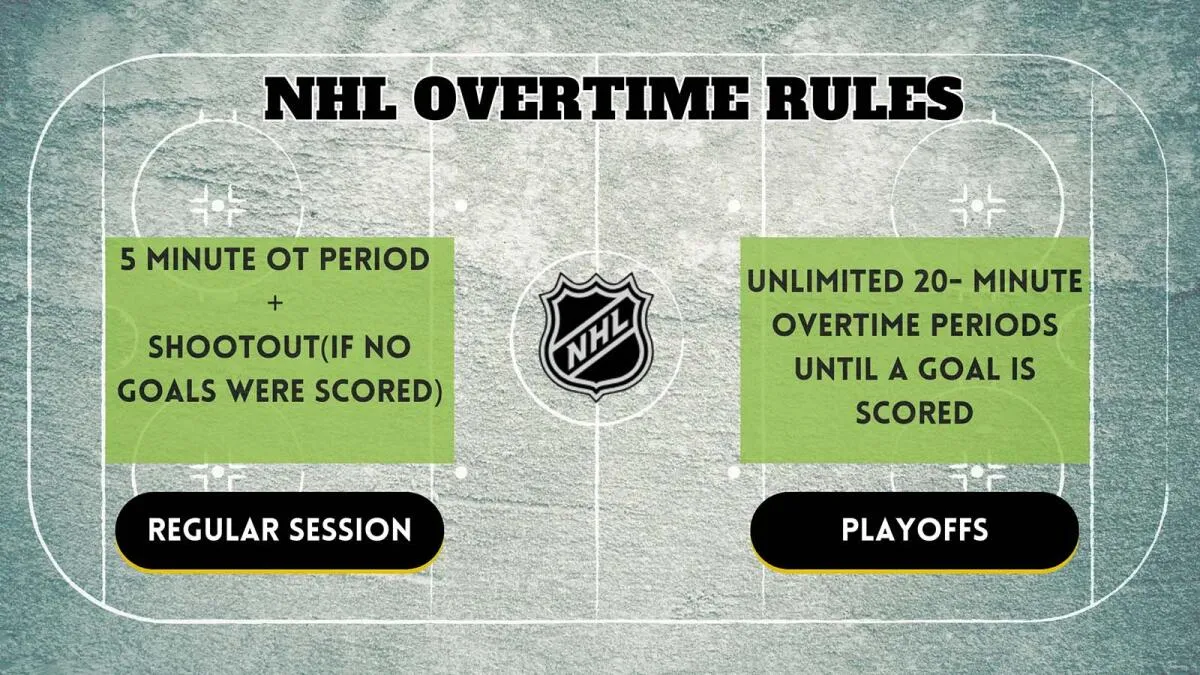
Through the first 425 games of the 2025-26 NHL season, an unprecedented 27.3% have required extra time, marking the highest rate since the shootout’s introduction in 2005-06. This dramatic spike from last season’s 20.7% has left players gasping for breath, coaches recalibrating strategies, and fans wondering if regulation hockey has become an endangered species. The phenomenon represents more than statistical noise—it signals a fundamental shift in how teams approach the final minutes of regulation when every standings point carries playoff implications in a league defined by razor-thin margins.
The overtime surge touches every corner of the NHL ecosystem. It affects superstar health as Connor McDavid logs career-high ice time through his 10 overtime appearances. It distorts standings as teams like the Boston Bruins gain 10-point swings through shootout success while division rivals suffer. It even influences how coaches manage backup goaltenders and line changes. Understanding why so many games extend beyond 60 minutes reveals uncomfortable truths about competitive balance, strategic incentives, and whether the current points system still serves its intended purpose.
The parity problem: How salary cap creates the “squished can” effect
Dallas Stars coach Glen Gulutzan coined the perfect metaphor for today’s NHL when he described the league as a “squished can.” His imagery captures how talent compression has flattened the competitive landscape, forcing elite and rebuilding teams into an unprecedented middle ground. The salary cap mechanism, designed to maintain competitive balance, has finally achieved its logical extreme—28 of 32 teams entered Thursday’s action with points percentages at or above .500, compared to just 23 teams at season’s end last year.
The compression stems from two simultaneous forces pulling teams toward the center. Established powers have hemorrhaged key players to cap constraints, while rebuilding franchises have accelerated their timelines through excellent drafting and development. The San Jose Sharks, Chicago Blackhawks, and Anaheim Ducks—expected cellar-dwellers—have combined for 23 overtime games in their first 81 contests, forcing opponents into coin-flip scenarios they anticipated as easy victories.
New Jersey Devils forward Connor Brown, a 10-year veteran, confirms the phenomenon. “There’s a record level of parity in the league. I mean from last to first, I mean the points differential and stuff, I can’t remember that really being the case in my 10 years. I think it’s just a really competitive league right now.” This sentiment echoes across dressing rooms where players recognize that the gap between playoff contenders and lottery teams has narrowed to historical lows.
The danger of almost-winning
The Montreal Canadiens exemplify how parity translates directly into overtime action. The Canadiens have played a franchise-record 21 overtime games through early December, with Cole Caufield potting his 11th overtime goal against the Rangers in a pivotal Atlantic Division clash. As detailed in our analysis of Montreal Canadiens overtime wins becoming a defining feature, the Canadiens have mastered the art of hanging around in regulation before striking in 3-on-3 situations. Their success reveals how teams with limited regulation dominance can thrive by mastering overtime’s unique rhythm.
This pattern extends league-wide. Detroit Red Wings coach Todd McLellan describes the standings as a forest rather than a mountain. “You look at the standings, and if you’re on top of the mountain, you’re really not on top of the mountain. You’re in the middle of the forest. It’s so tight.” His observation highlights how parity eliminates the psychological safety net that once protected third-period leads, forcing every team to play desperate hockey regardless of score.
Strategic conservatism: Why teams play for the tie
The NHL’s guaranteed point system creates a powerful mathematical incentive to reach overtime. When regulation ends tied, both teams secure one point before the extra session determines who claims the second. In a league where 90 games had already gone to overtime at the quarter mark—shattering the previous record of 87—coaches have internalized this arithmetic.
Stars forward Jason Robertson pulls no punches about late-game mentality. “When there are a couple minutes left, I think no one’s really pressing,” he admitted. This tactical retreat becomes more pronounced as standings compress. Devils coach Sheldon Keefe notes the trend begins earlier in contests. “Teams maybe are a little more conservative in nature to just make sure you get the least the one [point]. So a lot of that’s coming through what’s happening through the first two periods to set the table for that.”
The numbers support this strategic shift. Scoring chances in the final 10 minutes have declined 5.57% since 2015, according to hockey data analyst Meghan Chayka. Coaches increasingly defend one-goal leads by collapsing around their goaltenders, trading offensive opportunities for defensive stability. When opponents inevitably pull their goaltender, the empty-net goal that follows provides a statistical boost to third-period scoring while masking the underlying conservatism that preceded it.
Backup goaltender usage compounds this effect. In 2015, 10 goalies played 60-plus games, with the workload leader hitting 68 appearances. Last season, only five goalies crossed that threshold, maxing out at 63 games. When backups start, coaches instinctively adopt more conservative systems, turning games into low-event coin flips that frequently reach overtime.
No lead is safe: The rise of third-period comebacks
Anaheim Ducks general manager Pat Verbeek never feels comfortable, even with multi-goal advantages. “Every team that you’re playing against, they have game breakers,” he explained. “You get down two goals, it’s not the end of the world. We’ve battled back from two goals down numerous times.” His anxiety reflects a league where 43% of games featured comeback victories last season—the second-highest rate in NHL history.
The third period has transformed into the most volatile 20 minutes in hockey. The NHL averages 2.14 goals per third period, a figure that has remained remarkably consistent for seven consecutive seasons. What changed is the conversion rate. Power-play success has exploded, with last season’s 21.6% conversion rate marking the highest since 1985-86. Through December, teams were clicking at 19.9% this season. These “manufactured goals” allow trailing teams to erase deficits that would have been insurmountable a decade ago.
Gulutzan identifies special teams as the primary catalyst. “These power plays have gotten so good that over the last years, the game can turn on offensive swings,” said the former Oilers power-play architect. When officials call penalties in the third period—and they show no hesitation to do so—skilled teams gain a realistic path back into games they had no business winning.
The psychological impact cannot be overstated. Players on teams with leads face unprecedented pressure as opponents maintain offensive zone possession with increasing sophistication. The assist data reveals this evolution: two-assist goals jumped 18.2% in second periods during 2023-24, indicating teams are stringing together more passes to tire defenders and create high-quality chances. When these tactics carry over to third periods, leads evaporate with alarming regularity.
Tactical evolution: How the long change impacts scoring
The “long change” in the second period—where teams defend the far goal and bench access becomes a 50-foot longer journey—has proven more consequential than many realize. During the 2023-24 season, second periods saw 403 more goals than first or third periods, representing a 17.2% scoring increase. This isn’t random variance; it’s systematic exploitation of tired defenders trapped on extended shifts.
Power-play opportunities spike dramatically during long-change situations. Penalties called increased 21.4% in second periods, while power-play goals surged 30.9%—the highest percentage jump of any scoring category. Teams have learned to sustain offensive zone possession, cycling the puck until exhausted penalty killers make critical mistakes. The wrist shot, preferred method for 47.5% of all NHL goals, saw its second-period success rate jump 21.8% as shooters faced increasingly fatigued goaltenders.
Interestingly, shot attempt rates remained essentially flat across all periods, increasing just 3.7% in second periods. This suggests the scoring surge isn’t about volume but quality. Teams are generating fewer attempts but converting at dramatically higher rates, particularly on plays requiring multiple passes. Two-assist goals—representing sustained offensive zone control—accounted for 332 additional tallies during long-change periods.
The Seattle Kraken’s struggles highlight how failing to exploit this dynamic proves costly. They were one of only two teams that didn’t score more second-period goals than first-period goals in 2023-24, finishing fourth-worst in overall scoring. Their inability to trap opponents in their own zone during line changes directly correlated with their offensive anemia.
The Olympic factor: Compressed schedule effects
The 2025-26 season’s compressed schedule—designed to accommodate the Olympic Winter Games Milano Cortina in February—has created a relentless pace that leaves teams perpetually in “game mode.” Coaches and players interviewed for our NHL morning recap of November 14’s overtime heroics consistently mentioned how the packed calendar eliminates practice time and recovery days.
Seattle Kraken center Chandler Stephenson, an 11-year veteran with two Stanley Cup rings, describes the sensation bluntly: “It almost feels like playoffs.” When teams play every other night or on consecutive days, they lack the energy to mount aggressive third-period pushes. Instead, they default to conservative structures that preserve at least one point, accepting overtime as a reasonable outcome rather than a failure.
The schedule compression also impacts goaltender management. Starting netminders face difficult workload decisions, leading to more backup appearances. As previously noted, backups trigger conservative systems. The result: games that remain tight through 60 minutes despite talent disparities, producing the record 90 overtime games at the quarter mark that shattered the previous record of 87 set in 2019-20.
Red Wings coach McLellan acknowledges the emotional toll. “It’s taxing. It’s emotional. It keeps you focused. You’ve got to kind of be on right away, no matter the game.” When mental and physical fatigue intersect, players default to safe plays, reluctant to risk the catastrophic mistake that costs a regulation win. Overtime becomes the path of least resistance.
The points system paradox: Why regulation wins are undervalued
The NHL’s refusal to adopt a 3-2-1 points system—where regulation wins earn three points, overtime/shootout wins two, and overtime losses one—creates perverse incentives that directly fuel the overtime surge. Three-point games reward teams equally for winning glorified skills competitions and dominating regulation, fundamentally distorting the standings.
Boston and Pittsburgh’s divergent overtime fortunes illustrate the absurdity. The Bruins are 5-0 after regulation while the Penguins are 0-5, creating a 10-point swing based largely on coin-flip scenarios the NHL would never allow to decide playoff series. Yet both teams receive identical credit for these outcomes under the current system, devaluing Pittsburgh’s superior regulation play.
The consequences extend beyond individual teams. The standings have become almost meaningless indicators of true quality. Edmonton has played only five regulation wins in 25 games yet remains in playoff contention, while San Jose, Philadelphia, and Columbus similarly feast on loser points despite rarely controlling games. The NHL is on pace for a record 369 loser points—98 more than last season—flooding the standings with empty calories that mask genuine performance differences.
This inflation fundamentally alters how teams approach games. With so many points available, the incentive to push for regulation victories diminishes. Why risk a late-game collapse when overtime guarantees at least one point and offers a roughly 50% chance at a second? The math becomes irresistible, particularly for bubble teams clinging to playoff dreams.
The international solution
The Professional Women’s Hockey League and international competitions use a superior system that rewards regulation excellence. Under their structure, regulation wins count for three points, making the risk-reward calculation completely different. Teams trailing late have more incentive to gamble, while teams leading have less incentive to park the bus.
Former NHL GM Brian Burke once argued against this change, claiming teams would be “mathematically eliminated from the playoffs by Christmas.” Yet the evidence suggests the opposite—more teams remain relevant under the current system precisely because losing is so generously rewarded. The question isn’t whether three-point regulation wins would create earlier eliminations, but whether artificially prolonging relevance through loser points actually serves competitive integrity.
What this means for the championship race
As the season progresses toward what promises to be the tightest playoff race in salary cap history, the overtime trend will likely moderate but not disappear. The current 28.1% rate should regress toward the historical 21-24% range as underachieving contenders like Florida and Edmonton find their footing and overachieving rebuilders like Chicago and San Jose fade. However, the structural factors—parity, the points system, power-play excellence, and conservative coaching—aren’t going anywhere.
The real impact will be felt in April and May when star players like McDavid, already logging 23:11 per night with 10 overtime games under his belt, face their third consecutive deep playoff run. The cumulative fatigue from extra minutes in track-meet 3-on-3 situations could prove decisive in postseason series where health and energy separate Cup winners from early exits. As acclaimed in our recap of November 14’s dramatic overtime finishes, these thrilling moments come with hidden costs that teams may not fully appreciate until spring.
Ultimately, the overtime surge reflects a league that has achieved its parity goals too completely. When 28 of 32 teams can reasonably believe they’re playoff-caliber clubs, the margins become microscopic and the incentive to play for overtime becomes overwhelming. Whether that’s good for hockey depends entirely on whether you value competitive balance over competitive excellence. For now, the NHL has chosen the former, and we’re all working overtime as a result.
Frequently Asked Questions

Par Mike Jonderson
Mike Jonderson is a passionate hockey analyst and expert in advanced NHL statistics. A former college player and mathematics graduate, he combines his understanding of the game with technical expertise to develop innovative predictive models and contribute to the evolution of modern hockey analytics.