

The Columbus Blue Jackets find themselves in a delicate situation with Yegor Chinakhov, a young Russian winger whose trade value has become a source of considerable debate within hockey circles. After publicly requesting a trade during the summer of 2025, Chinakhov’s value has fluctuated significantly, creating challenges for general manager Don Waddell as he navigates the complexities of player personnel decisions. The 24-year-old’s situation encapsulates the broader challenges facing rebuilding franchises: balancing the desire to maximize return on assets with the need to maintain organizational leverage and reputation.
Understanding Chinakhov’s current market value requires examining multiple factors, from his contract structure and injury history to his on-ice performance and the circumstances surrounding his trade request. While some Blue Jackets fans may believe his worth is higher than reality suggests, the truth lies in a nuanced assessment of what he brings to the table and what competing teams are willing to offer. This evaluation becomes even more critical as the organization attempts to rebuild its roster and establish a winning culture for the future.
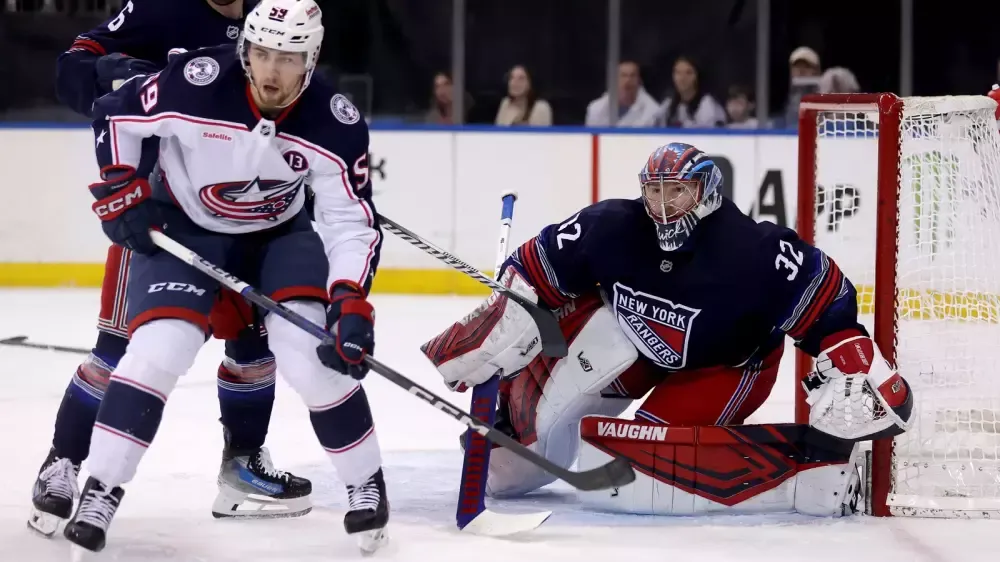
Assessing Yegor Chinakhov trade value for Columbus Blue Jackets through contract analysis
The financial aspect of Chinakhov’s situation plays a significant role in determining his trade value. On June 21, 2024, he signed a two-year contract extension with the Blue Jackets worth $4.2 million, carrying an average annual value of $2.1 million per season. This contract structure presents both advantages and challenges for potential suitors. On the other hand, the $2.1 million cap hit represents reasonable value for a player with offensive upside and a lethal shot. Teams operating near the salary cap ceiling can absorb his contract without significant financial gymnastics.
However, the contract also highlights Chinakhov’s position as a mid-tier asset rather than a premium acquisition. The modest AAV reflects his inconsistent production and injury concerns that have plagued his young career. For rebuilding teams with ample cap space, the financial commitment is negligible. For contenders seeking depth scoring, the price point is acceptable but not indicative of a high-impact player who can dramatically alter a roster’s fortunes.
An important consideration is Chinakhov’s impending restricted free agency status after the 2025-26 season. This gives the Blue Jackets significant leverage in negotiations, as Columbus retains his rights even if he plays out his current deal. Any team acquiring him would face similar contract negotiations within a year, adding an element of uncertainty to his long-term value. Teams must evaluate whether they can re-sign him to a reasonable extension or risk losing him after investing assets in a trade.
The timing of his trade request, made public shortly after signing his extension, has complicated matters further. According to The Hockey News, the public nature of the request immediately diminished his value by signaling to other organizations that the Blue Jackets might be motivated sellers. This transparency, while unfortunate for Columbus, has given opposing general managers additional negotiating leverage as they assess what to offer for a player who clearly wants out.
How injuries impact Yegor Chinakhov trade value for Columbus Blue Jackets
Perhaps no single factor has damaged Chinakhov’s trade value more than his persistent injury problems. Throughout his NHL career, he has never played more than 62 games in a single season, with various ailments limiting his availability year after year. This durability concern creates significant hesitation among teams considering a trade, as acquiring a player who cannot stay healthy represents a substantial risk regardless of talent level.
The 2024-25 season proved particularly devastating for his value. After starting strong with 14 points in 21 games, showcasing the offensive potential that made him a first-round selection in the 2020 NHL Draft, Chinakhov suffered a back injury that sidelined him for 39 games. Back injuries are particularly worrisome in professional hockey, as they can linger and affect a player’s skating mechanics, shooting motion, and overall effectiveness. The long-term implications of such injuries often extend beyond the initial recovery period.
Upon returning late in the season, Chinakhov managed just nine games, recording only a single assist while registering just 13 shots on goal. His inability to produce when Columbus was battling for a playoff position in the Eastern Conference not only cost him ice time but also damaged his standing within the organization. Head coach Dean Evason made the decision to healthy scratch Chinakhov multiple times down the stretch, a clear indication that the coaching staff had lost confidence in his ability to contribute when games mattered most.
The combination of extended absence and ineffective play upon return has created a perfect storm of depreciated value. Teams scouting Chinakhov cannot ignore the reality that they would be acquiring a player coming off a significant back injury with no recent evidence of sustained production. Medical evaluations would certainly be part of any trade negotiation, but the uncertainty surrounding his physical condition makes him a speculative acquisition rather than a reliable addition. As The Hockey Writers noted, his value is currently at an all-time low due to these injury concerns.
Evaluating Yegor Chinakhov trade value for Columbus Blue Jackets based on offensive capabilities
Despite the concerns surrounding injuries and consistency, Chinakhov possesses undeniable offensive talent that prevents his trade value from completely bottoming out. His greatest asset remains his shot, described by scouts and analysts as one of the hardest and most dangerous in any game he plays. Both his wrist shot and slap shot carry exceptional velocity and accuracy when he’s healthy and confident, giving him legitimate goal-scoring potential at the NHL level.
During the 2023-24 season, Chinakhov set career highs across the board despite playing only 53 games. His ability to find the back of the net and contribute on the power play demonstrated flashes of the player Columbus envisioned when selecting him 21st overall. Those glimpses of brilliance remind evaluators that untapped potential still exists, particularly if he lands in a situation better suited to his playing style and development needs.
Offensively, Chinakhov shows awareness and quick decision-making ability with the puck. He moves the puck efficiently, supports the play well in the offensive zone, and demonstrates hockey IQ that suggests he could thrive with better linemates or in a more structured system. The challenge has been consistency and health, not a fundamental lack of skill. Teams looking for buy-low candidates with upside might see value in gambling on his talent if the acquisition cost remains minimal.
His 30-goal potential at the NHL level represents the ceiling that makes him intriguing despite his flaws. In today’s NHL, goal scorers command premium value, and players who can consistently beat goaltenders are increasingly difficult to find. If Chinakhov can overcome his injury issues and find stability in his game, he could develop into a legitimate second-line scoring winger. However, potential alone doesn’t translate to current trade value, and teams must weigh the gamble of what he could become against the reality of what he’s shown.
Understanding Yegor Chinakhov trade value for Columbus Blue Jackets in current market conditions
The realistic return Columbus can expect for Chinakhov falls well short of what fans might hope for based on his draft pedigree and offensive potential. Multiple analysts have suggested that a fourth or fifth-round draft pick represents the most likely compensation, with some suggesting even that might be optimistic given the public nature of his trade request. This modest return reflects the confluence of negative factors weighing down his value: injuries, inconsistency, public trade demand, and unproven production.
Comparing Chinakhov’s situation to similar trades in recent years provides context for realistic expectations. Players with first-round pedigree who request trades while dealing with injury concerns typically fetch minimal returns, especially when their organizations lack leverage. The market for “buy-low” candidates is competitive, but teams are increasingly analytical and risk-averse, unwilling to surrender significant assets for players with red flags.
Some teams might view Chinakhov as a reclamation project worth pursuing, particularly organizations with strong development programs and the patience to work through his issues. The New Jersey Devils were mentioned in trade speculation, viewing him as a potential depth addition who could benefit from a fresh start. However, interest from teams doesn’t necessarily translate to valuable trade offers, and Waddell has made clear he won’t give away assets simply to accommodate a player’s wishes.
The Blue Jackets’ leverage stems from Chinakhov’s restricted free agency status and his contractual obligation to play where the team dictates or sit out entirely. This gives Columbus the ability to be patient and wait for his value to rebound rather than accepting minimal returns immediately. If Chinakhov begins the 2025-26 season strong and stays healthy through the first half, his trade value could increase substantially by the March trade deadline when contending teams become more aggressive in seeking depth additions.
Strategic considerations for Yegor Chinakhov trade value for Columbus Blue Jackets moving forward
Don Waddell’s approach to handling the Chinakhov situation demonstrates sound asset management principles that should serve as a model for dealing with trade requests. By refusing to capitulate to pressure and holding firm on his valuation, Waddell maintains organizational credibility while preserving the possibility of extracting better value down the line. His public statements have made clear that Columbus will only make moves that benefit the team, not individual players seeking departures.
The strategy of attempting to rebuild Chinakhov’s value before trading him makes practical sense, even if it creates uncomfortable dynamics. Playing him consistently when healthy, deploying him in situations where he can succeed, and allowing him to demonstrate his abilities to the broader NHL marketplace all serve the organization’s interests. If he responds positively and produces, his value rises. If he continues struggling, the Blue Jackets are no worse off than they are currently and can still retain his rights through restricted free agency.
This situation also sends important messages to other players in the organization and across the league. By not simply granting trade requests when players become disgruntled, Columbus establishes that it operates on organizational timelines and priorities rather than bending to individual demands. This strengthens the front office’s negotiating position in future scenarios and prevents setting precedents that could encourage other players to request moves whenever circumstances become challenging.
The relationship between Chinakhov and head coach Dean Evason represents another complicating factor. Reports indicated “misunderstandings” between player and coach, euphemistic language that often masks deeper philosophical disagreements about usage and expectations. If these tensions persist and affect Chinakhov’s play, the situation could deteriorate further. However, professional athletes routinely navigate difficult coaching relationships, and there’s no reason Chinakhov cannot do the same if he chooses to embrace the challenge rather than resist it.
Looking ahead, the most likely scenarios involve either a deadline deal if Chinakhov’s value rebounds through strong play, or the player completing his contract with Columbus and entering restricted free agency negotiations. Either outcome requires patience from all parties involved. For the Blue Jackets, maximizing return on their investment means playing the long game rather than accepting pennies on the dollar for a former first-round pick who still has considerable upside despite his setbacks.
The Yegor Chinakhov trade value situation encapsulates the complexities inherent in modern NHL roster management. His combination of tantalizing talent and concerning red flags creates a valuation puzzle that won’t be easily solved. For Columbus, the path forward requires balancing competitive aspirations with asset management principles, ensuring that whatever decision they make serves the franchise’s long-term interests rather than simply resolving an uncomfortable situation. As the 2025-26 season progresses, Chinakhov’s performance will ultimately determine whether he becomes a valuable trade chip or remains in Columbus through restricted free agency, providing one more opportunity to prove his worth to the organization that drafted him.

Par Mike Jonderson
Mike Jonderson is a passionate hockey analyst and expert in advanced NHL statistics. A former college player and mathematics graduate, he combines his understanding of the game with technical expertise to develop innovative predictive models and contribute to the evolution of modern hockey analytics.